Today, the activist group Art Not Genocide Alliance (ANGA) formally delivered a letter to the Venice Biennale’s president and board, requesting the exclusion of Israel from the 2026 exhibition. The letter, which follows an initial demand by ANGA last October, was signed by 182 artists, curators and art workers participating in the Biennale.
The letter states that the call ‘responds to the appeal issued by Palestinian civil society to challenge the normalisation of Israeli apartheid and occupation within international cultural platforms. In this context, the Venice Biennale cannot be exempt from scrutiny.’
Signatories include Miet Warlop, Belgian pavilion artist; Jenna Sutela, Finland pavilion artist; Yto Barrada, France pavilion artist; Nolan Oswald Dennis, In Minor Keys artist; Sohrab Hura, In Minor Keys artist; Alfredo Jaar, In Minor Keys artist and Gala Porras-Kim, Applied Arts pavilion artist.
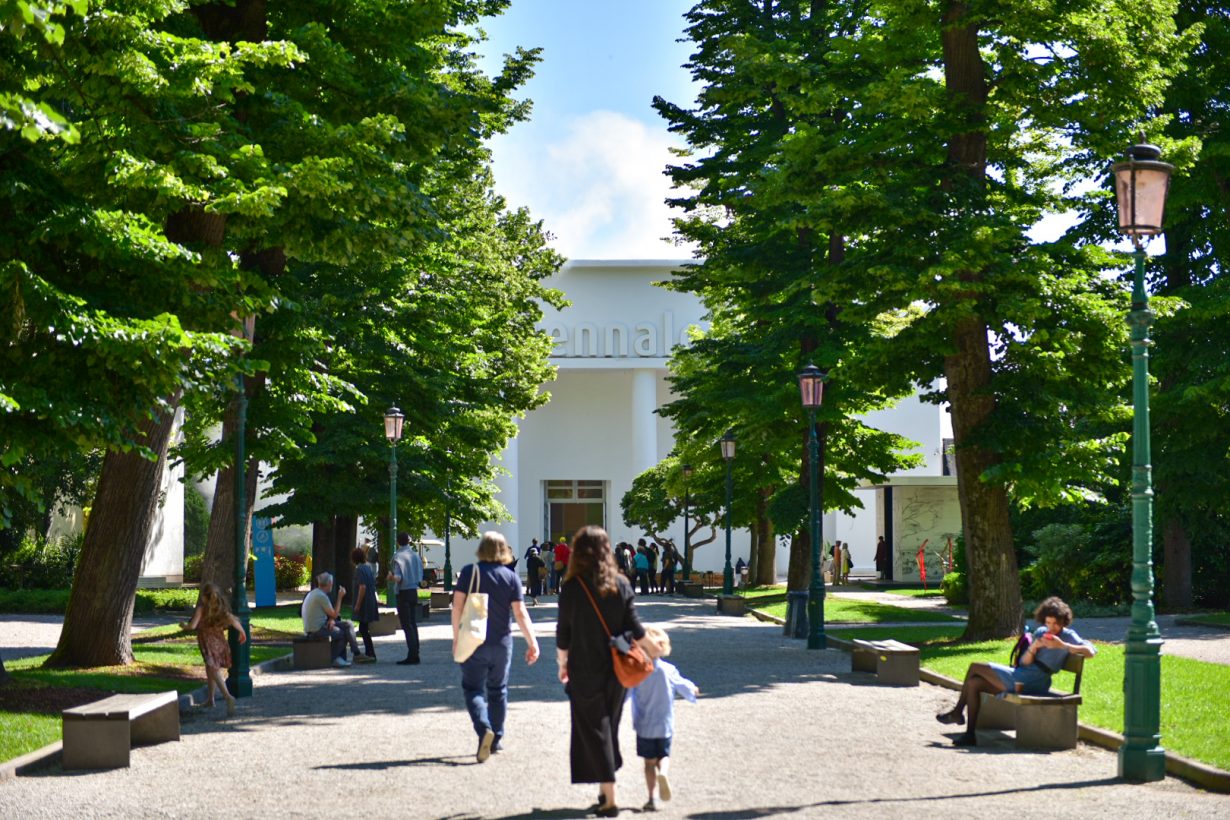
ANGA’s letter is the latest of several events that have marked an increasingly politicised lead-up to the Biennale’s 61st edition, which will open to the public on 9 May.
Last year, Lebanese-Australian artist Khaled Sabsabi and curator Michael Dagostino were dropped then reinstated by Creative Australia as the artistic team for the Australia pavilion following a debate around Sabsabi’s 2007 film You, which features an address by the former leader of Hezbollah, Hassan Nasrallah.
In January, the South African culture minister cancelled Gabrielle Goliath’s presentation for the South African pavilion. The exhibition was meant to include her Elegy series, which features the Palestinian poet Hiba Abu Nada, who was killed during an Israeli airstrike in October 2023. The minister stated that ‘It would not be wise nor defensible for South Africa to support an art installation against a country currently accused of genocide [Israel] while we as South Africa are also fielding unjustified accusations of genocide.’ The South African pavilion will remain empty.
Earlier this month, the announcement that Russia would participate in the Venice Biennale for the first time since 2019 was met with outcry: the European Commission threatened to suspend or terminate its ongoing grant to the Biennale Foundation, while 22 European culture ministers signed a letter expressing their concern over Russia’s participation and an open letter expressing similar concerns, initiated by the Arts Against Aggression International Movement, has gathered over 8500 signatories so far. The Italian minister of culture, Alessandro Giuli, called for Tamara Gregoretti, the ministry’s representative on the Biennale’s board of directors, to step down following the controversy, citing a loss of trust.
Meanwhile, a statement released on the Biennale website on 4 March states that ‘In response to the communications and requests for participation from Countries, La Biennale di Venezia rejects any form of exclusion or censorship of culture and art. La Biennale, like the city of Venice, continues to be a place of dialogue, openness, and artistic freedom, encouraging connections between peoples and cultures, with enduring hope for the cessation of conflicts and suffering.’