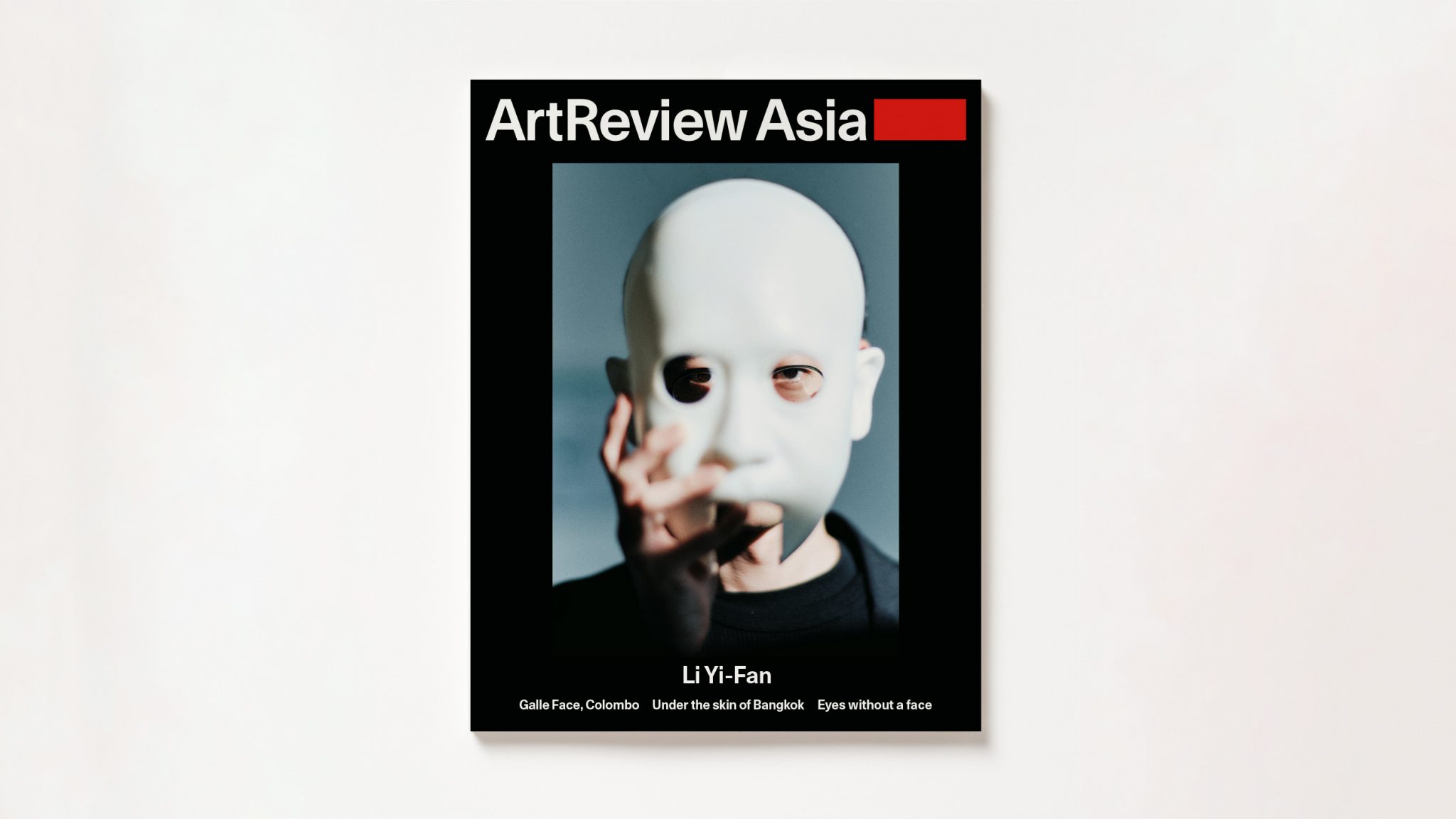
All set to present at this year’s Venice Biennale, the Taiwanese artist is preparing us for the age of man-versus-software – but watch out for the cock-and-balls humour
The machine is not our friend: this is the harsh, ongoing lesson that the twenty-first century is teaching us, as it callously and relentlessly sets upon its task to rob us of agency, algorithmicise our minds, with the full intention of turning us into bots, political and consumer subjects whose sole use-value resides in our ability to follow instructions and push the buttons that guarantee the smooth transactional flow of the system. It all comes down to programming. Taking for granted that we, ourselves, are machines, complex iterations of body-mind vehicularity, the impetus for cognisance of these conditions and the wilful disruption of their processes is likely to be the fundamental aesthetic act moving forward; the only role for art if it is to survive as an autonomous functional agent.
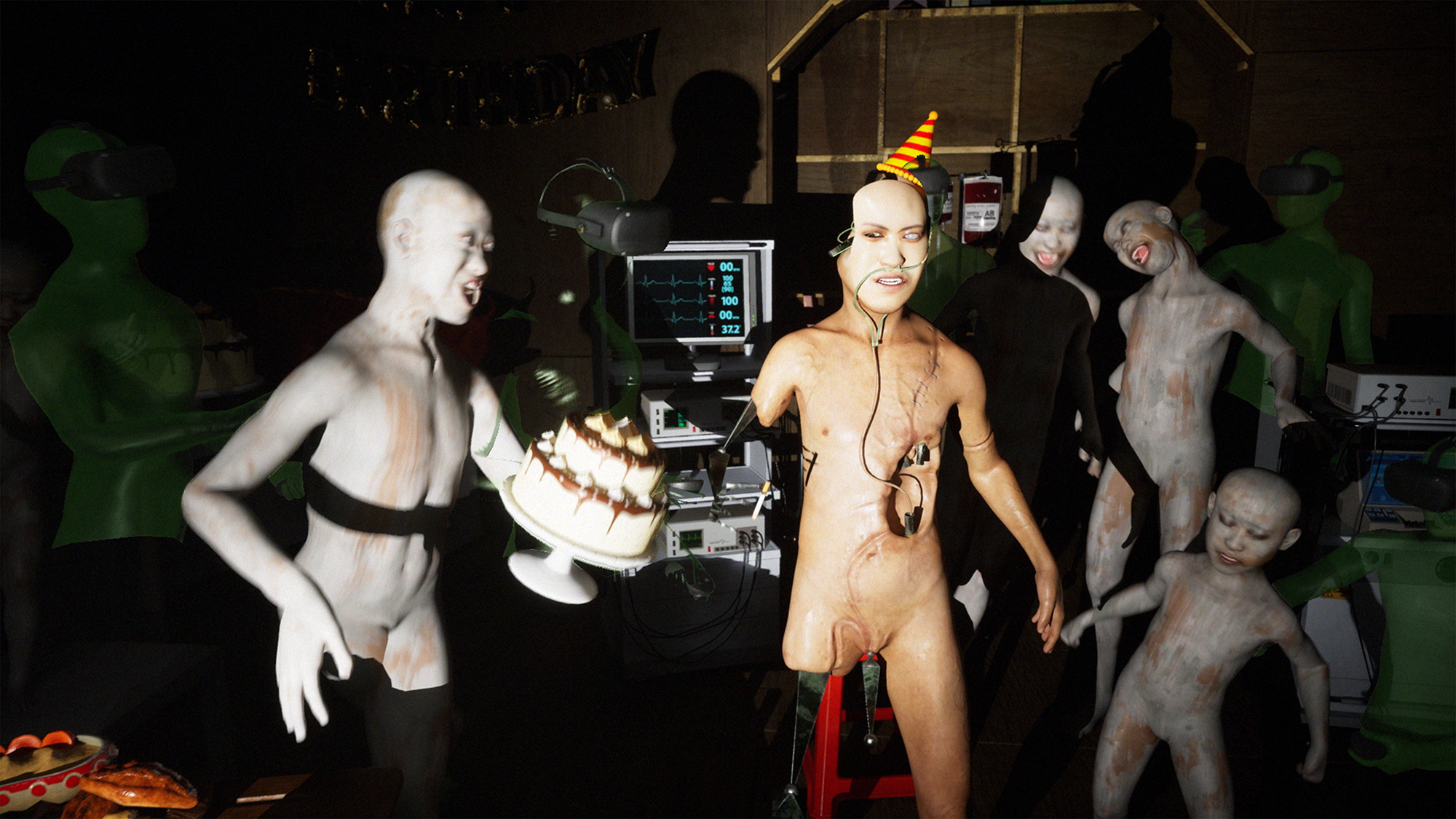
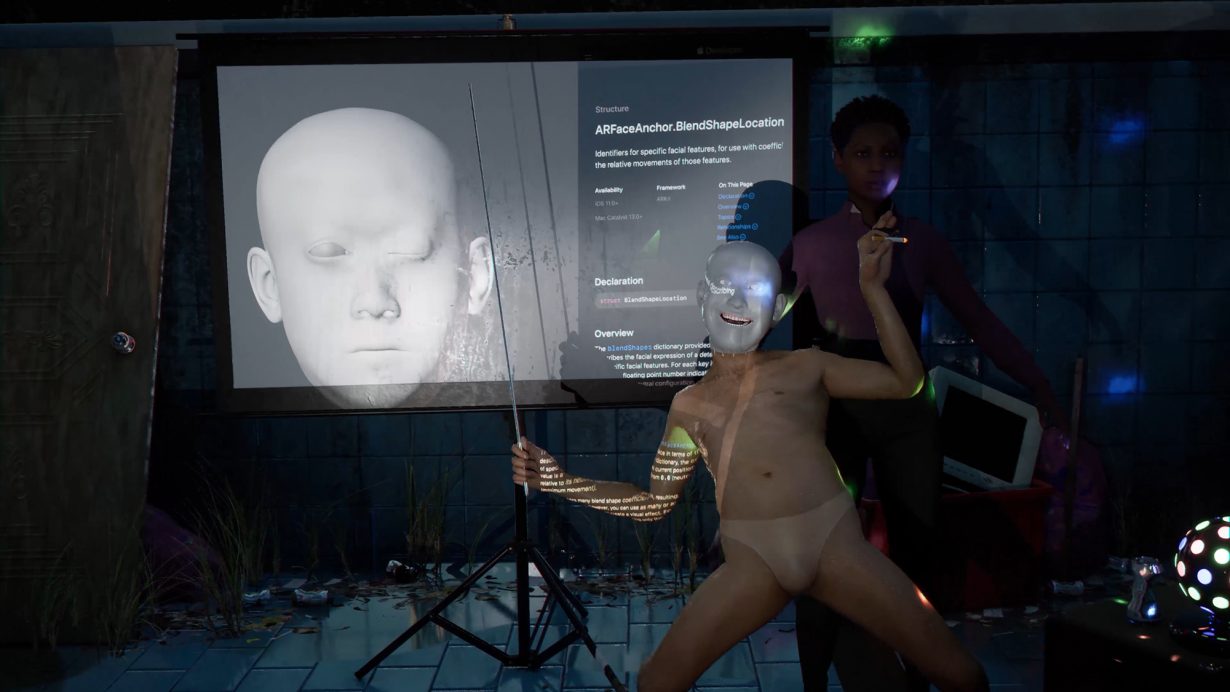
Amsterdam-based Taiwanese artist Li Yi-Fan’s work is perhaps prophetic but certainly reflective of these deeply entrenched technoses, from which it takes its departure point. Utilising ‘free’ gaming software that ultimately demands a paid subscription from its users for enhanced features, Li’s recent videoworks feature a nameless ‘character’, as Li calls it, voiced by Li himself, who also orchestrates its movements – oftentimes his puppeteering figure can be discerned onscreen, in green suit with game consoles in hand – while wildly discoursing on the current state of tech, like a TED Talk gone mad. In 2021’s howdoyouturnthison, the character is in a darkened basement space, naked save for a pair of underwear, a lit cigarette appearing and disappearing from his hand. His thin body moves around snakelike, spineless, gesturing as he speaks, introducing a large drawing of a robot, inspired by the movie Terminator (1984), that he declares he made as a child.
This personal reflection is the departure point for the lecture-performance – which, we might say, is the fundamental medium in which Li’s work is grounded, albeit ensconced in video format. These disruptive, stream-of-discourse performances are improvised, according to Li, and are animated by a punkish energy, the rebellious verbiage of a smart, nerdy adolescent wise enough to assume an air of defiance against all perceived forms of convention.
These reflections come sprouted from the character’s cartoonish grey head, which, he informs us, was bought on Taobao, the Chinese ‘everything’ online retailer (akin to Amazon in the West). After it was purchased, for 5 RMB, the vendor sent it to Li via the instant messaging app QQ, installed with 50 expressions. “Those expressions were standardised for digital humans after Apple acquired Faceshift in 2015,” the character informs us. “Fifty-one expressions to cover all emotional expressions of future men. But I only have 50 out of the 51. Ninety percent of digital humans don’t have number 51: tongue out.”
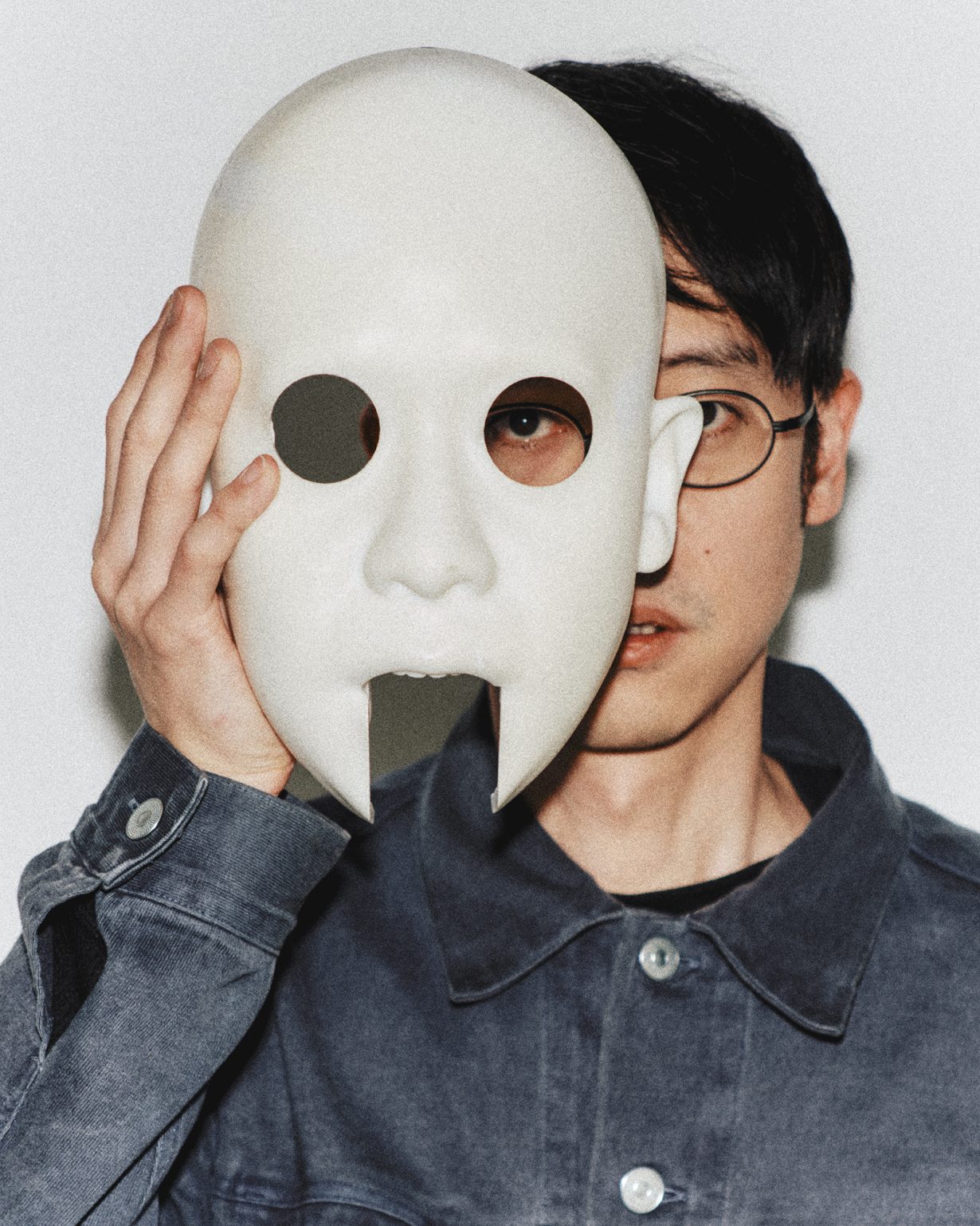
The first time I met Li in person (he is in Amsterdam for a residency at the Rijksakademie), I instantly recognised his voice from the videos, though there was something off that I couldn’t quite put my finger on. I asked him if he somehow digitally manipulated his voice in the videos. Li smiled. “I try to speak without moving my tongue,” he says. This is because the tongue on these pre-bought digital heads is either missing or else, when visible, is the one piece of anatomy that appears identical across all the models. While Li is quiet and soft-spoken in real life, in the videos his character’s speech is imbued with a certain dumb thuggishness that is an intentional enactment of this physical anomaly. His inchoate ramblings – on roboticisation, past and present, as well as the potentialities of digital human-making circa 2021, when the video was made – oscillate between object and self-as-object, the artist’s presumably autobiographical recollections and the character’s meditations on the state of digital humanity, which he is in the process of assuming before our eyes. His body, the character further explains, was purchased from Daz3d, a platform that enables the user to “build your own 3D universe”: Mister Woo, the only grown Asian male available – reflecting, inevitably, the in-built racial biases that aren’t difficult to detect in the technosphere – for $89.95. Bemoaning the absence of genitals on these digital humans, the character says he took care of that by ordering from “a special website” a ginormous set of cock and balls, which he puts on for the remainder of the video.
If the free-wheeling, free-associative feel of howdoyouturnthison feels like a playful assault on the lecture format, with the character occasionally appearing onstage in an auditorium and projected on (often obsolete) monitors, the effect is heightened in his best-known video, 2023’s What Is Your Favorite Primitive, which is set in an abandoned theatre. To use a sweeping statement, we might say that the realms of tech and the digital entail a great flattening – not merely on the visual plane, wherein three-dimensional objects are so violently squashed into two dimensions, their perceived depth and dimensionality severely reduced – but also on the humanistic plane (the level of pathos, knowledge, perception, etc), where a parallel flattening is simultaneously carried out. What Is Your Favorite Primitive is a remarkable attempt of one artist-cum-character’s attempt to come to terms with this flattening. Throughout the 37-minute-long video, we follow the character’s peregrinations within an abandoned, darkened theatre, the sole illumination usually coming from the iPhone on which it was ostensibly filmed.
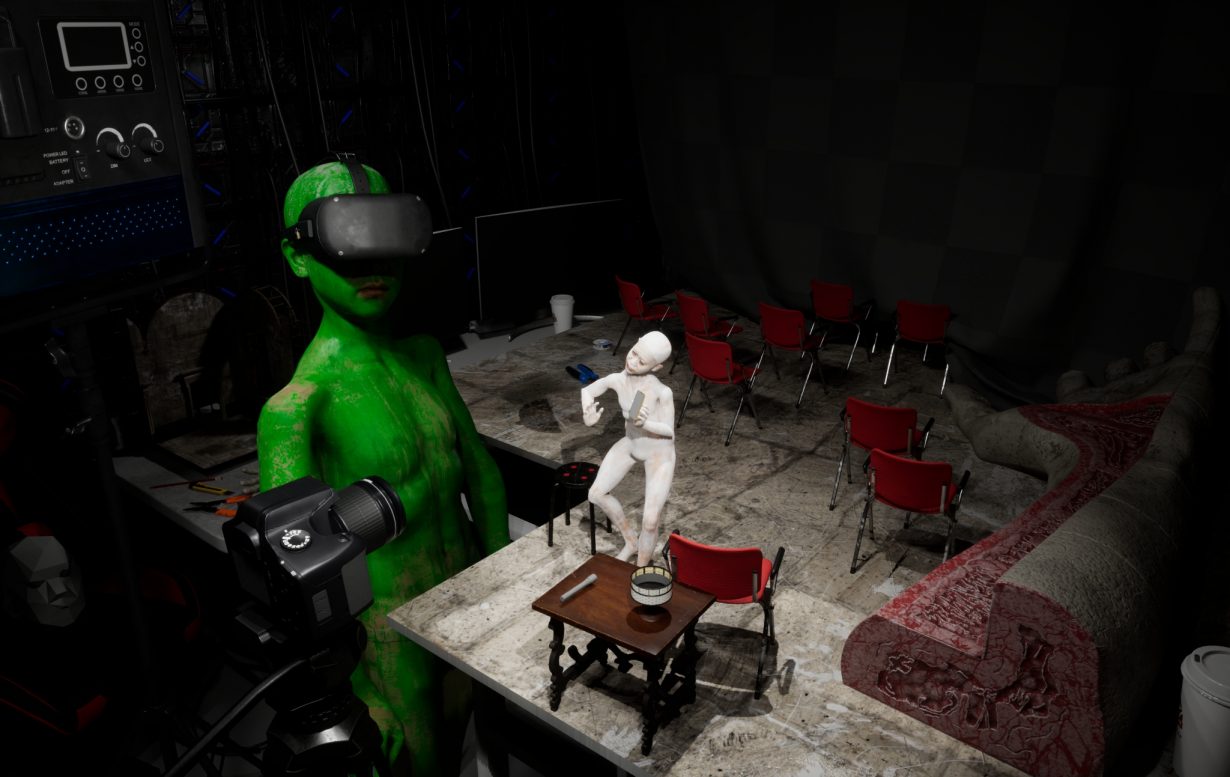
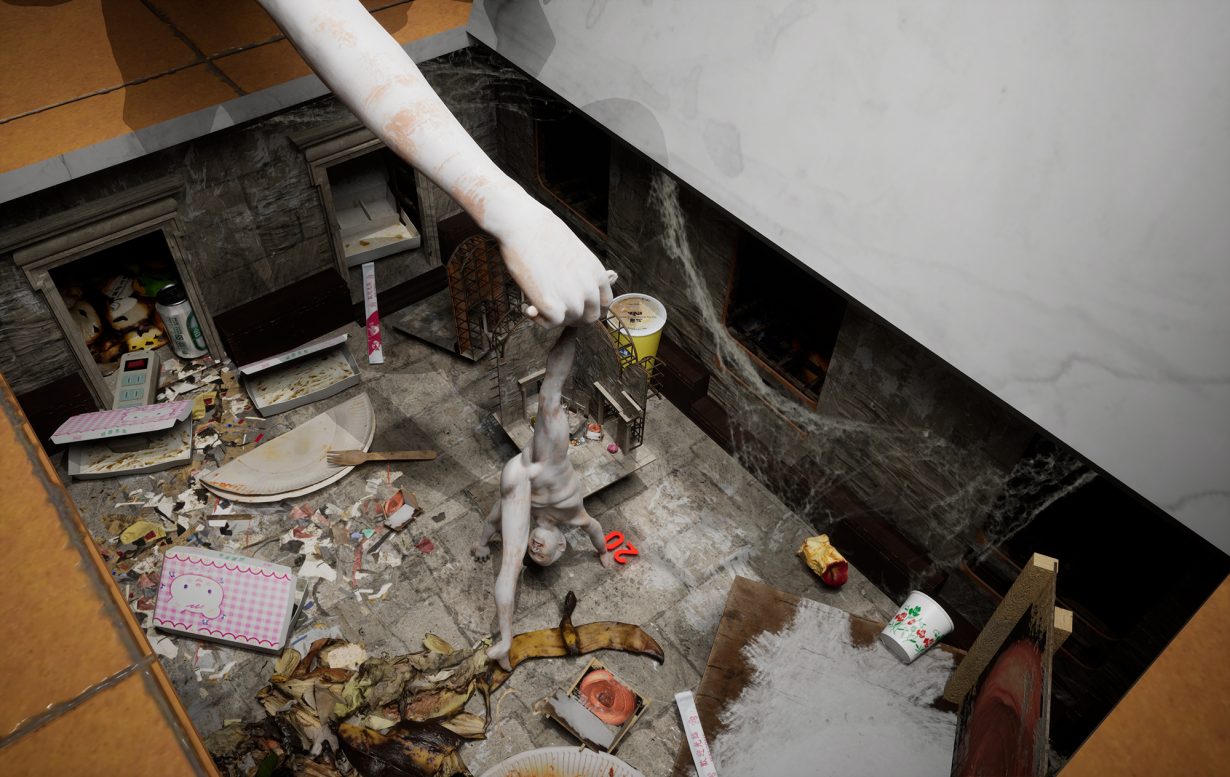
In fact, this setting highlights a key facet of Li’s work, which might be said to have equal standing in the theatre of the absurd. What Is Your Favorite Primitive is also hysterically funny, replete with stunts like talking buttholes, putting him in league with artists like Radu Jude, whose 2025 film Dracula, similarly rife with theatrical metaphors and settings, relentlessly exploits ai’s shortcomings to hilarious satirical effect. It is a weaponised humour, to be sure, one that demands that we push ourselves to go beyond the staring-in-dumb-amazement phase of these rapidly evolving technologies, where the status quo (and its investors) wish us to remain, and into a counterprogramming, where we interrogate these new entrapments before the psychological warfare they are implicitly waging against us has a chance to emerge triumphant.
AI is alleged to be the focal point of Li’s upcoming presentation at the Taiwan Pavilion at the 2026 Venice Biennale; he has been mum on the details as of the time of writing – fair enough, the work is still in progress – but it will feature the character once again, forming yet another chapter in the artist’s unfurling discourse on technosis, the darkest of all morbidities of the age in which we are currently living and/or wilting. We are in the late stages of what the Canadian-British writer Cory Doctorow terms ‘enshittification’ – the internet’s devolution into a consumption-driven mind-control device by a rapidly consolidating group of uber-powerful corporations; the increasing slavery of the mind to the algorithm, the tentacles of the corporate- and state-controlled marketing apparatuses; the social-media echo chamber that helps mould paranoid and conspiracy-driven worldviews to ensure social isolation and an inherent feeling of powerlessness… These things are, of course, all connected, and Li, in a way, plays out all these anxieties. In recent conversations and interviews, he is constantly expressing his apprehension about the current state of enshittified software arrangements; software is now no longer available for purchase, but rather strictly on a subscription basis. The result is a closed system in which one’s personal income is wholly tied to one’s ability to use this software and vice versa.
It is, one might argue, a whole new form of copyright infringement – of corporations potentially gaining control over artists’ works, or at least artists’ ability to make and store their work using these tools – one that has cleverly evaded more conventional forms of regulation. Li, the artist, is forced into a position of servitude to the software, becoming its puppet. Li then enacts this servitude by endowing the character, his puppet, with his own mutilated (castrated, tongueless) voice. There is, I wager, some further metaphorage at play here, between Li’s enacted situation and our own condition as twenty-first-century puppets, well on our way towards becoming machine.
Can we resist that becoming? Or else transform these machinations into a device for resistance? Man versus machine: encapsulated in a phrase, the anxious ethos of the Industrial Revolution. Adapted to the information age, we might refine it to ‘man versus software’; at least this is how Li Yi-Fan has come to appraise his own approach to artmaking in the enshittosphere.
Being has never before appeared as fragile as it is today. Ultimately, Li Yi-Fan’s work underwrites the necessity for an attack on these machinations: one that must come from the domain of art, one that is anti-systemic in nature, hence able to aid us in the task of overcoming the moulding and melding of these forces upon us – before we wake up one day to find that we ourselves are only capable of 50 expressions, or perhaps even less.
Li Yi-Fan’s project for the Taiwan Pavilion will be on view during the 61st Venice Biennale, 9 May – 22 November
From the Spring 2026 issue of ArtReview Asia – get your copy.
Read next AI Is Nothing Without Its Theatre