A new exhibition at PoMo in Trondheim centres on the vibrant gouaches created towards the end of the artist’s life
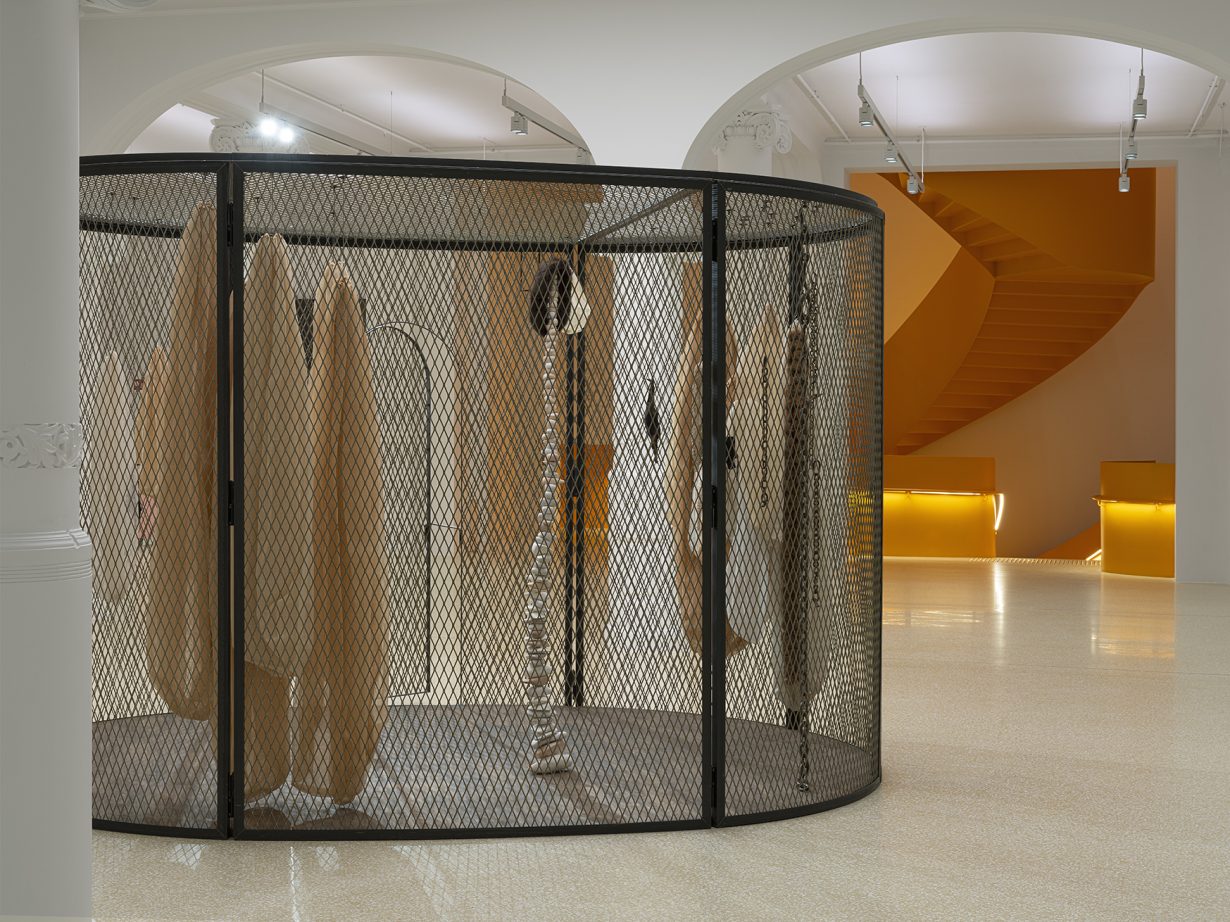
The door of an ovular steel-meshed cage stands open. Inside, flesh-coloured sacks are suspended from the ceiling like deflated breasts or soured bedsheets hung up to dry: they sag, slouched as though they gave up long ago. Alongside them are metal chains, cold and hard, and small textile figures hung upside down from string. A tower of stacked white pebbles reaches upwards from the wooden-boarded floor, curving slightly like a spinal column or an impossible cairn while an animal-fur collar sits precariously on top. Still, absent of life, but with the possibility of movement, there’s something fragile about this arrangement, like everything could collapse at any moment, though you’re not quite sure whether the function of the cage is to protect the viewer from the objects, or the objects from the viewer. This ambiguity raises a further question. If this is a physical manifestation of ageing, then what needs protection: the mind from your body, or the body from your mind? And are those stones a metaphor for tallying up your days, or counting them down? Either way, the work leaves you with the sense that time is something to be endured, not overcome, like an inescapable cycle rather than the space between the starting gun and finish line.
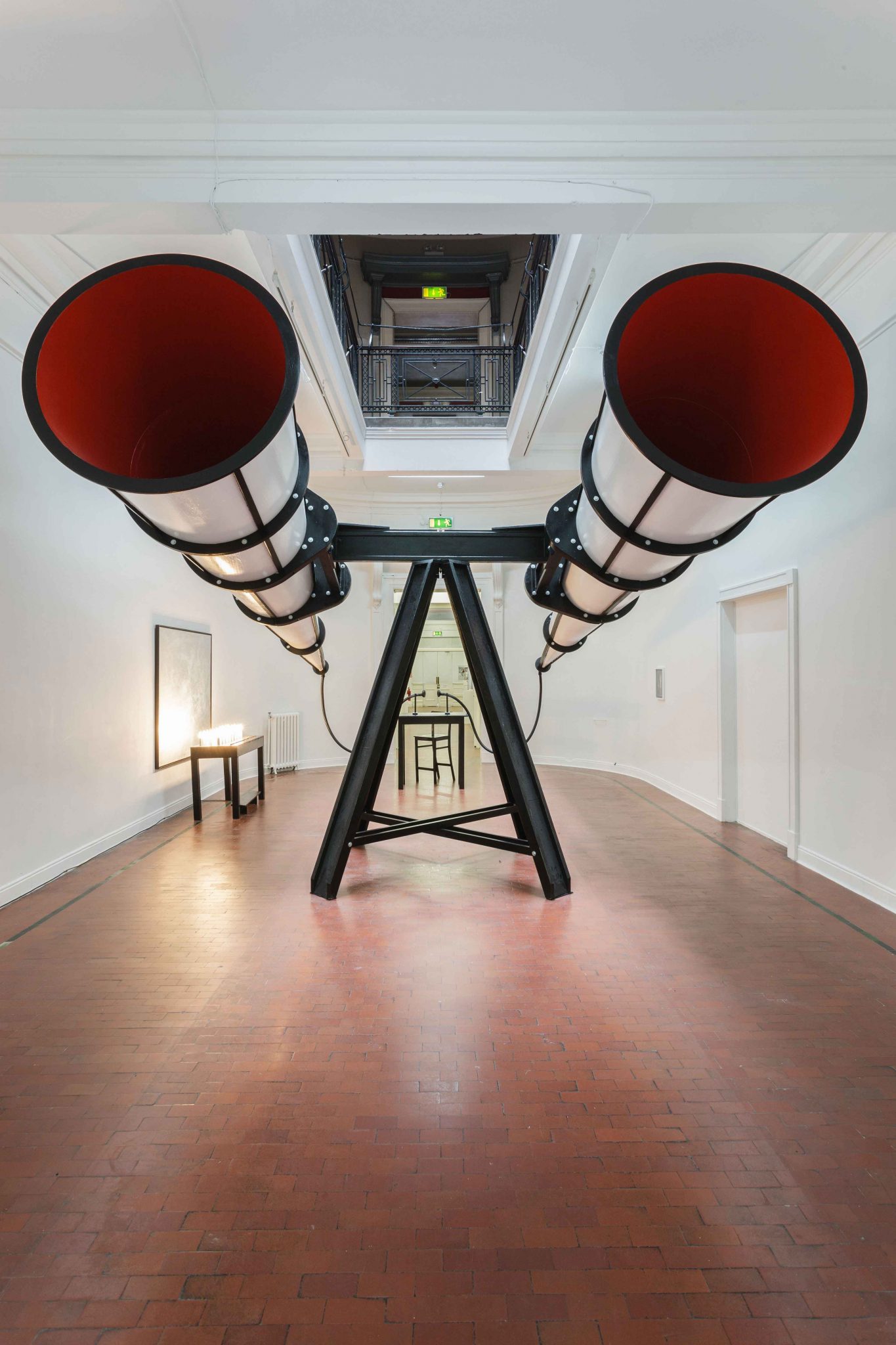
Ageing is one of the central themes in Louise Bourgeois: Echoes of the Morning, an exhibition at the year-old PoMo museum (the name derives from the original function of the building as a post office, rather than any art-historical-ism) in Trondheim. Centring on a series of gouaches that the French-American artist made during the last four years of her life and presented in dialogue with some of her largescale works, including the gargantuan bronze arthropods of Spider Couple (2003), this is a substantial yet focused show that offers an obvious psychoanalytical reading of Bourgeois’s maternal anxieties alongside a more material examination of her practice as an interrogation of time and the human body.
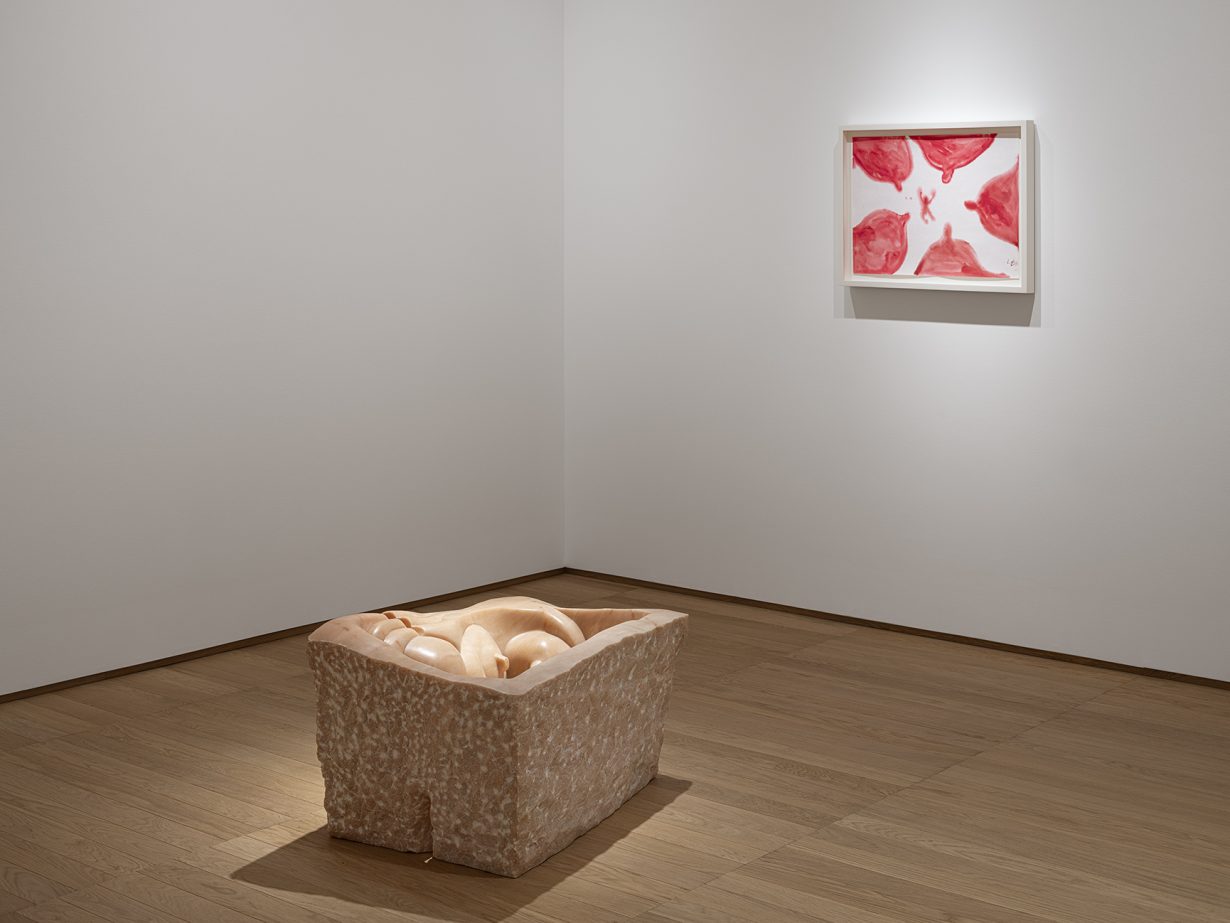
While that ovular cage, Peaux de lapins, chiffons ferrailles à vendre (2006), occupies centre stage on entry to the groundfloor gallery, the majority of the exhibition takes place upstairs on the first floor, unfolding across several intimate rooms to allow for a closer reading of the works in tandem, with various sculptures positioned beside paintings and installation. Nature Study #5 (1995) is a hollowed basin carved from a thick slab of pink marble, its surface veined with soft blue lines, a series of smooth, udderlike forms growing inwards from its edges. It sits on the floor in front of The Feeding (2008), a roughly rendered gouache in red of an anonymous embryonic figure surrounded by five breasts facing inwards. The number five is a recurring motif in Bourgeois’s work and references the total number in her family unit, though in the hard stone, the breasts multiply and merge into 11, or perhaps more, transforming an image of offered nourishment into something more ambiguous or even faintly hostile – as though the maternal body has been turned back on itself, caught between the weight of obligation and the freedom of withholding. The result is as beautiful as it is frightening.
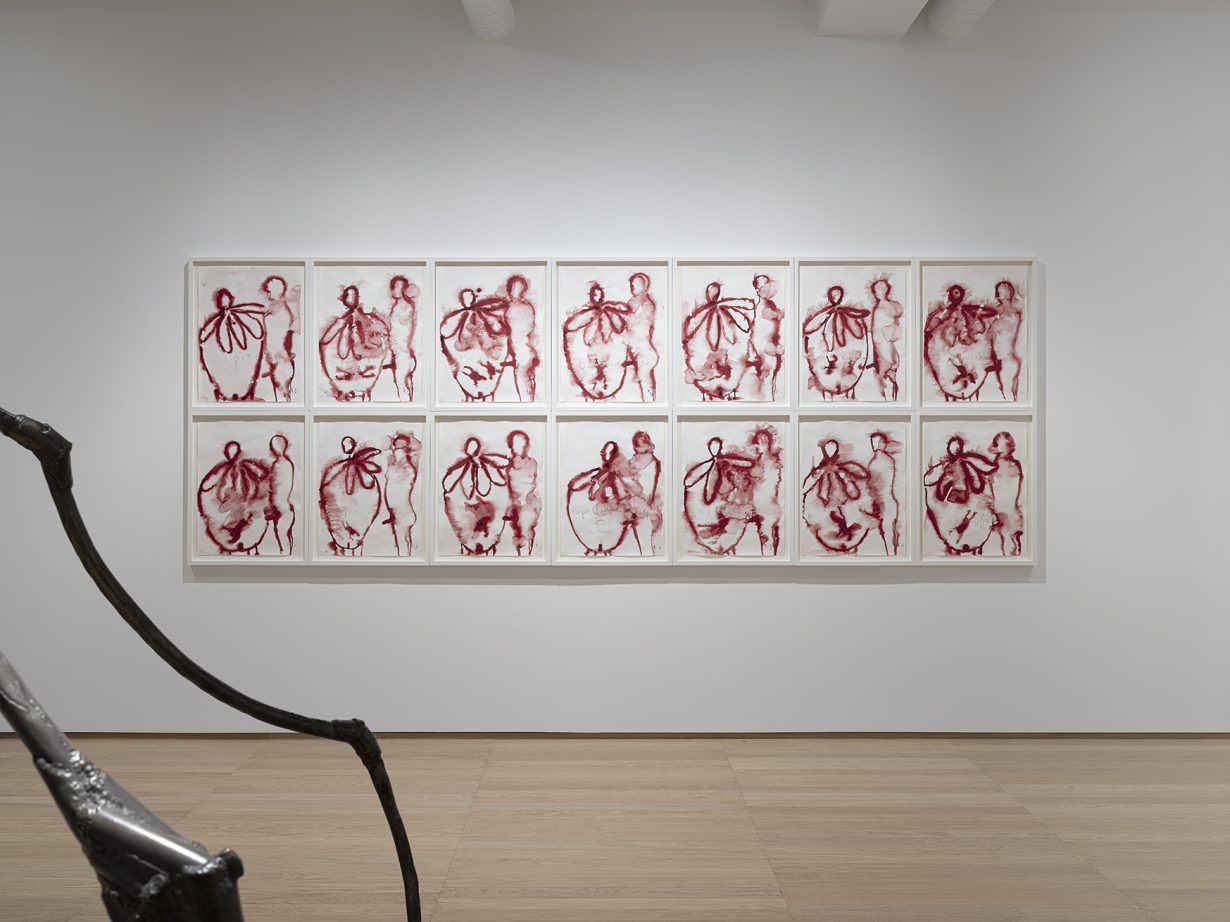
The gouaches themselves are visceral and often violent things. The exhibition text explains that Bourgeois used a ‘wet on wet’ technique, ‘introducing an element of chance to the final result’, suggesting they were created at speed, in one take, with the pigment bleeding of its own accord into patterns resembling arteries or blood blots. In their shades of magenta on white paper, they present obvious associations with menstruation and childbirth, evoking the cycle from conception to birth to family that is frequently referenced throughout Bourgeois’s practice. Indeed, Bourgeois spent a significant part of her life working with the second-generation Freudian psychoanalyst Henry Lowenfeld to interrogate her own well-documented childhood trauma, and considered her art to be a way of accessing her unconscious workings. The gouache series is a key example of this method, displayed on the walls beside text from several of her reflective writings.
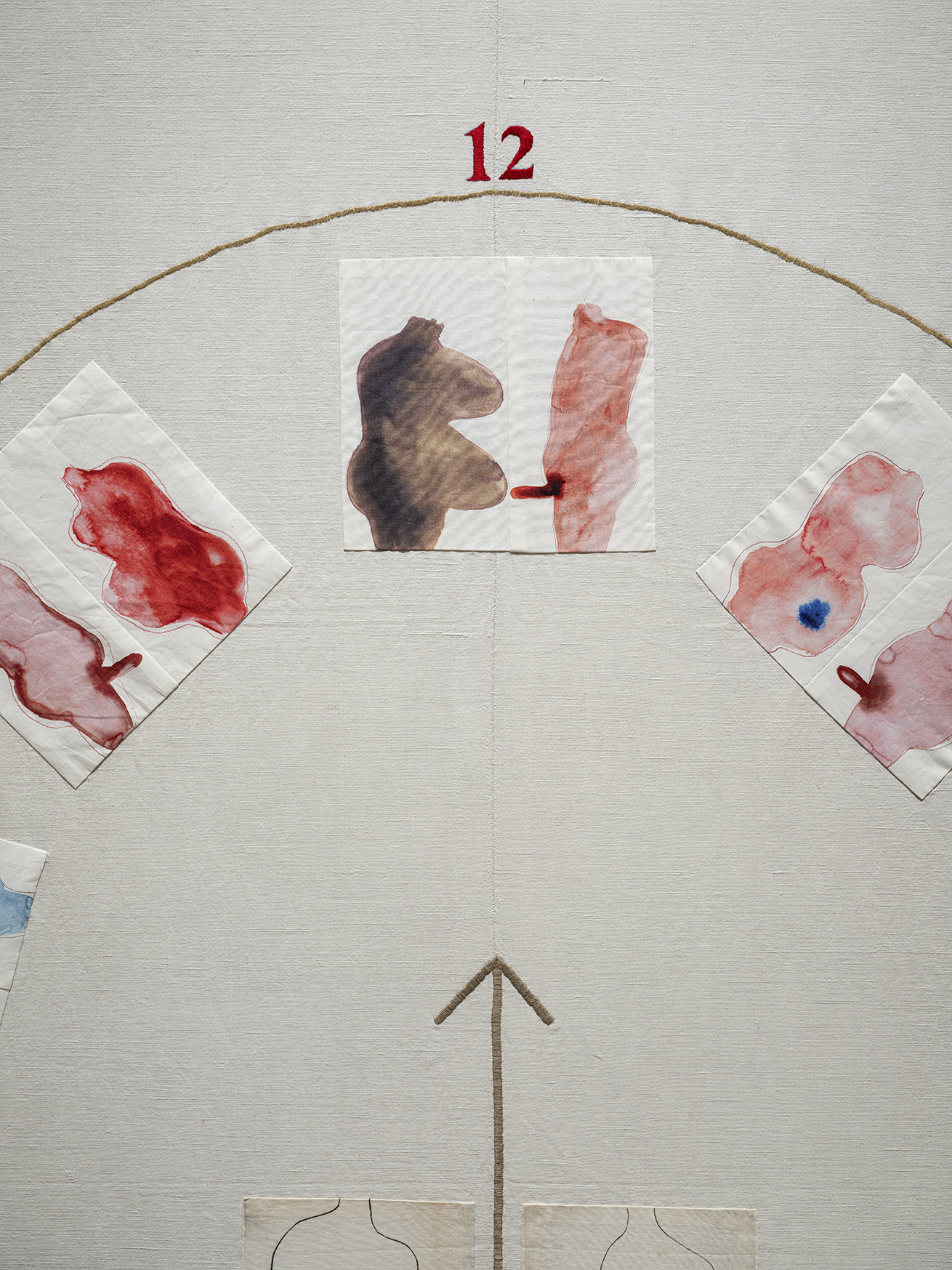
These instinctive, bodily fluid-like paintings stand in stark contrast to the careful stitching in the artist’s tapestry works, including Eternity (2009), a fabric embroidering of a 12-hour clockface with each number aligning with a painting of an aroused male body facing a pregnant female, created using digital print and drypoint techniques on a bedsheet. It is displayed opposite Self-Portrait (2009), which expands the clock digits to 24 beside diaristic drawings referencing sex, pregnancy, childbirth and, as the numbers mount, more equivocal references to dysmorphia and death. Her initials are elaborately rendered below the clock in cursive white stitching. Bourgeois’s family made a living restoring antique tapestries, and the layers of biography – from her relationship with her mother to raising her own son – are sewn into this work with a depth of nuance of which the previously viewed gouaches, many created the year prior in 2008, only scratched the surface.
Louise Bourgeois has become something of a touchstone for a generation of feminist contemporary artists emerging from the 1990s with a particular focus on body politics and psychological trauma, and is a well-known crowd-pleaser for Trondheim’s fledgling museum. Her gouaches, in particular, reveal a deeply intimate insight into the psyche, offering viewers a compelling entry point into her catalogue. Whether the exhibition actually breaks new ground is another matter, though it certainly succeeds in hitting a particularly current nerve as we see increasing extremes of antiageing protocols entering the mainstream vernacular – for men, but still most notably women, who are well socialised to resist time and perform a kind of eternal youth. Bourgeois’s work, however, insists we do otherwise. The body carries time inescapably: it is etched into its memory, its knowledge, its flesh. We can attempt to outrun it, but our cycles, periods and maternal rhythms mark us insistently, delineating the contours of our identities, whether we like it or not.
Louise Bourgeois: Echo of the Morning is at PoMo, Trondheim, through 31 May
Read next Munch Triennale Review: The Unreality of Contemporary Art