The artist speaks to ArtReview about her prizewinning work, Overnight Coup Plan
The 2025 edition of the St. Moritz Art Film Festival (SMAFF) returned with a programme that foregrounded expanded cinema, experimental moving image and artist-made film under the theme of ‘Emerging Virtualities’. Each year, SMAFF recognises innovation across the field, awarding selected artists for their work in the following categories: ‘Best Feature Film’, ‘Love art First Sight’ and ‘Best Art Film’. This year the Best Art Film award was selected in partnership with ArtReview – and continues to highlight works that push at the boundaries of narrative, form and visual inquiry. The 2025 winner of this award, Marina Xenofontos, was chosen for a film that extends her ongoing enquiry into memory, the ways in which histories are narrated and the representation of personal and collective identities. Working across video, sculpture and installation, Xenofontos often weaves autobiographical fragments with the material and ideological residues of her native Cyprus, tracing how individual lives are shaped by the infrastructures around them. Her winning work deepens this exploration, pairing emotional precision with a meticulous approach to image-making. What follows is a conversation with the artist about the project and its wider context.
ArtReview The title Overnight Coup Plan alludes to both a historical event and an act of improvisation. How did you approach the tension between the suddenness implied in the title and Cyprus’s loaded history that runs through the film?
Maria Xenofontos The working title throughout the development process and even during the shoot, was Things We Lost. In the end, the titles Overnight Coup for theatre viewings and Overnight Coup Plan for the exhibition cut of the film felt right, as I found it captured a kind of dual urgency: it reflects both a historical weight and something more personal at the heart of the film. It’s not just about the coup as a historical event, but how that kind of rupture lingers, present at our most intimate, daily moments.
The film was shot during the 50th anniversary of the 1974 coup d’état in Cyprus, carried out by the far-right group EOKA B with the backing of the Greek military junta. For me, those days always carry a strange feeling as it was during summertime – supposedly a time of having fun and letting go. And yet, I always seem to not be able to fully surrender to that feeling.
AR Staying with the working title Things We Lost, for a moment: there’s a sense that the film moves through fragments and absences. Could you tell us a bit more about how the narrative structure deals with uncertainty both through the experiences of the teenagers and the histories you’re addressing?
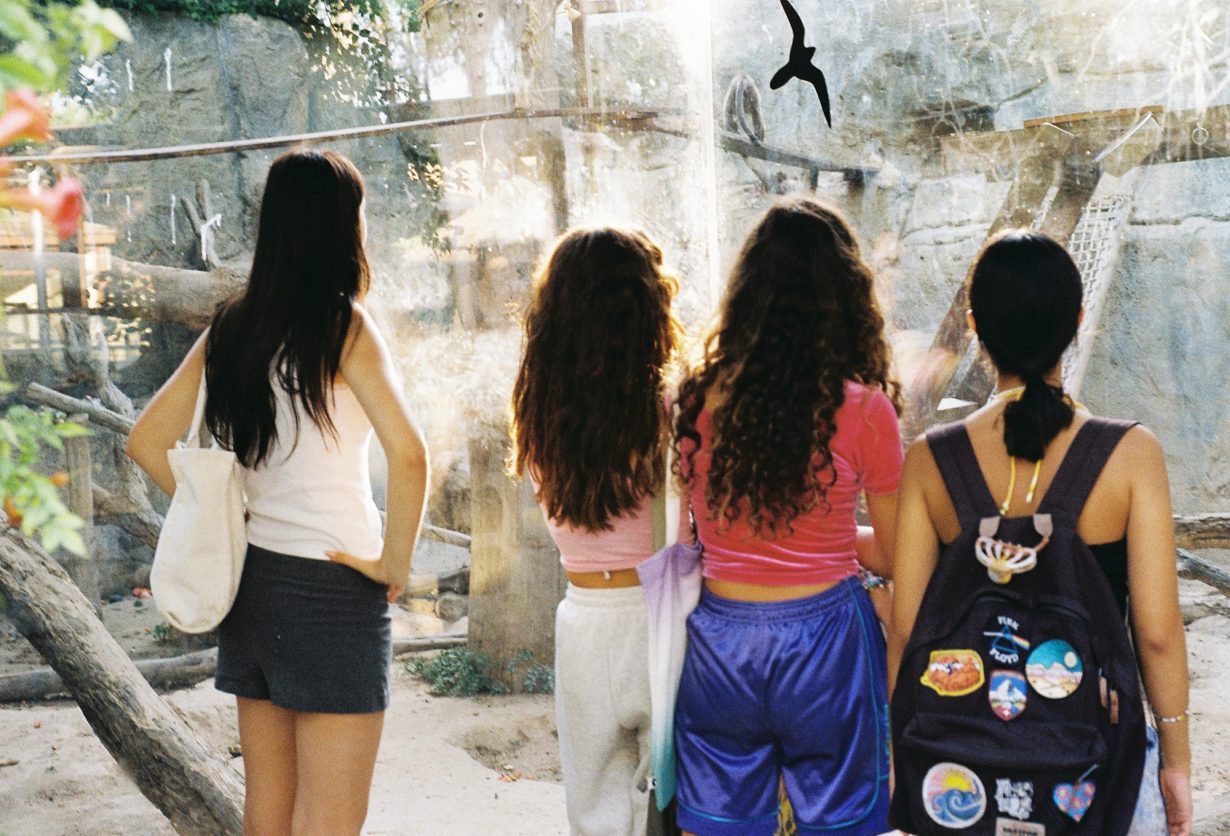
MX The narrative structure was originally based on a script that leaned more towards a short feature, on biographical signifiers and the importance of specific locations: the teenage bedroom, the underpass, the zoo as a surreal observational space, the Ayia Napa strip and the hotel room that ultimately leaves us with a sense of disorientation and absence. As we were filming, there were complications around how to narrate moments that were quite fragile, and how they might find their strength through fragmentation and absence. There was also this constant interplay between the girls observing and being observed, by those around them, and others, ourselves behind cameras and behind screens.
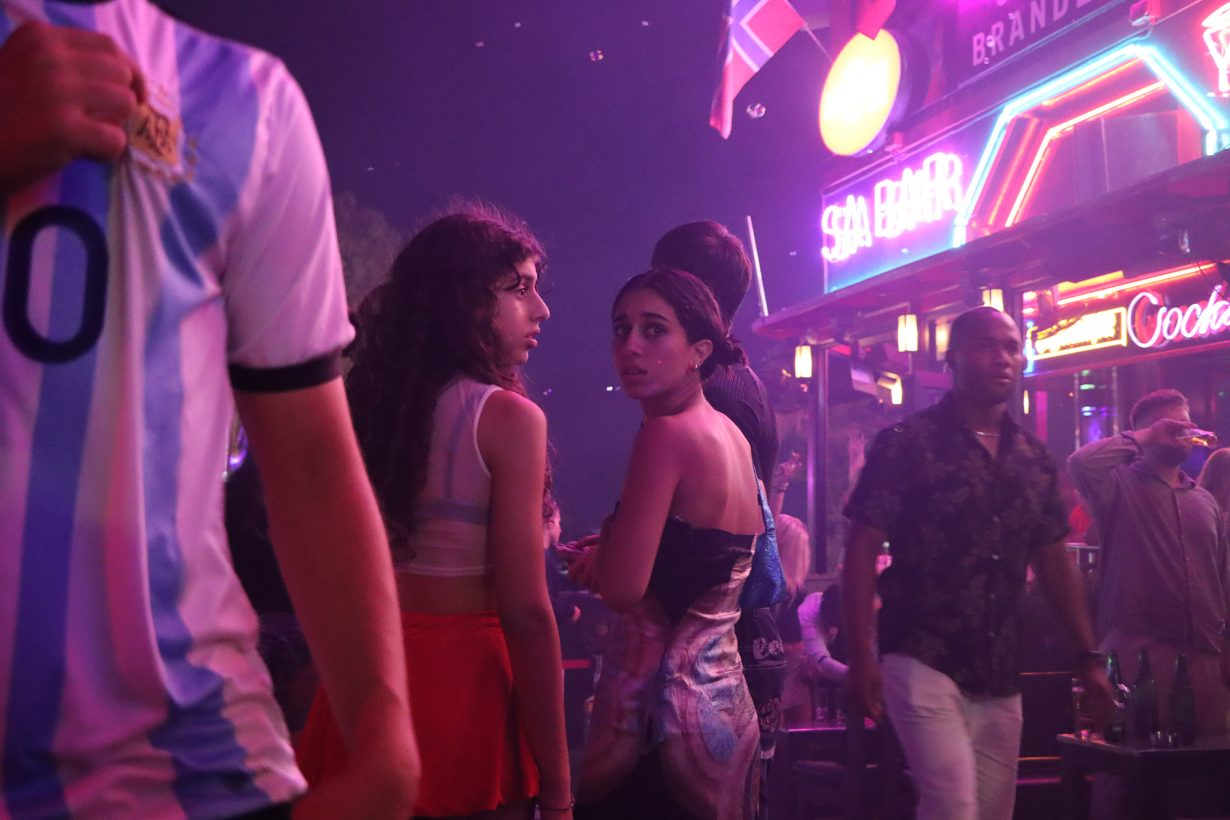
The film tells just one story, a single night in the lives of these teenage girls, revealing only aspects of their being. It follows a coming-of-age one-day ‘adventure’ on an island that is itself confused about its identity. To some, it is a place of heavy memory, to others, a place of leisure and entertainment, a land of opportunity and investments, a land to grab, a place of happy memories, fleeting, a home. All of which happens in the same place for different people. This multiplicity of meanings and faces mirrors the uncertainty that the girls experience: their world is full of desires, fears and questions, yet it is only ever partially revealed, just as the country’s histories and present-day contradictions are glimpsed and suggested. The intention was for the narrative structure to reflect this uncertainty by moving between intense moments, and silences, intercut between the home, a club night out and an uncomfortable ride back home.
AR How did you think about the role of the body – your own or others’ – in this film?
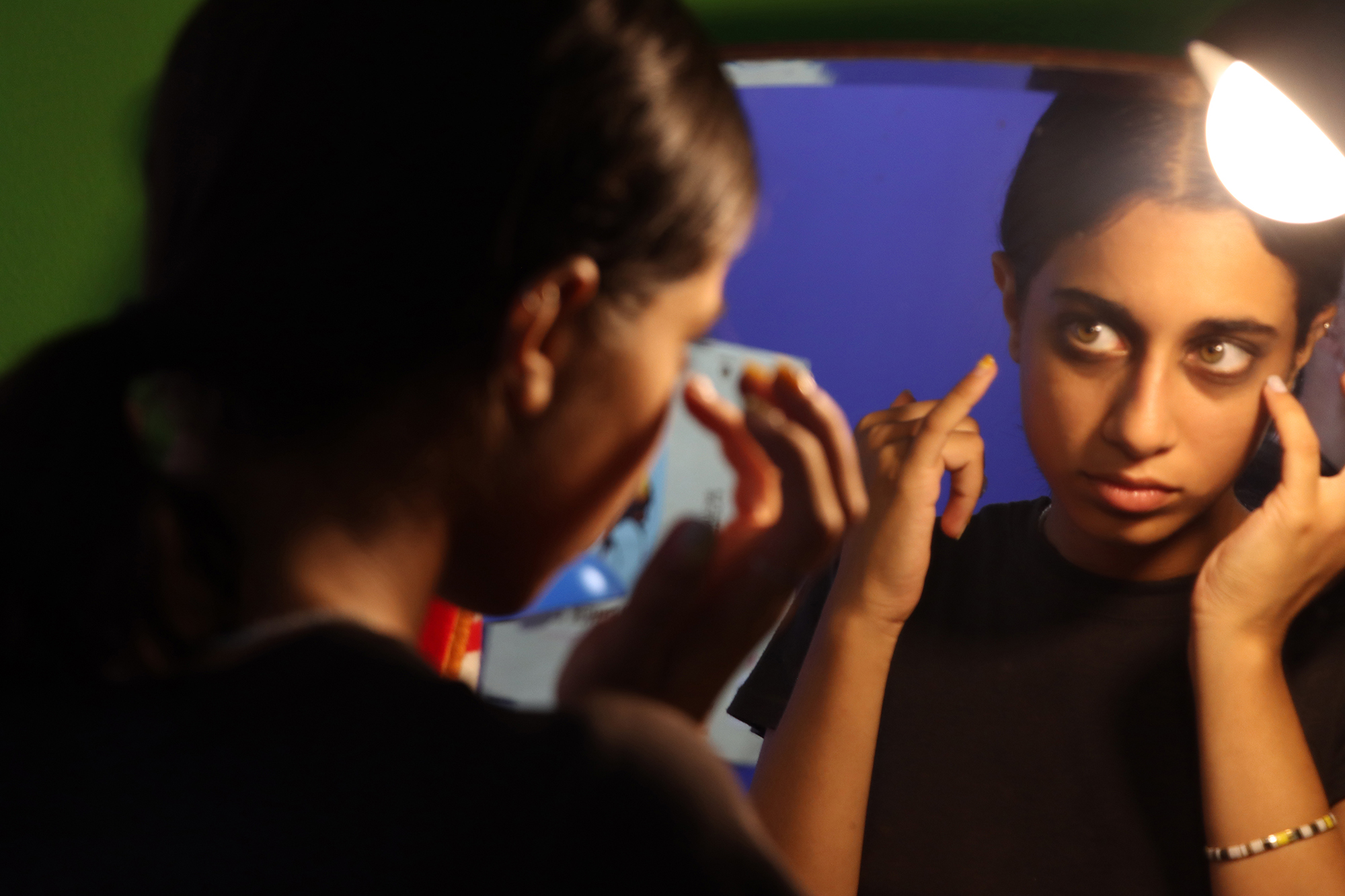
MX I saw the bodies of the girls as some kind of unity and collective presence and I wanted to embrace them mostly as portraits. To get to know them by observing them in real time. The boys appear more like fleeting figures, coming in and out of frames and the narrative. There was always a tension in the girls looking and being looked at. This was underlined by the camera work and the perspectives given by the main film camera and the second mini-dv silently catching glimpses of them from afar or closer without them being so conscious of it as they were focusing on the main camera.
The girls go to a party area, a place built for tourism, pleasure and extreme partying, which can also be violent. The intensity and speed of the surroundings, along with quieter, more introspective, emotional moments, highlight the richness and complexity of their experiences, not as passive subjects, but as active agents following their own journey, negotiating risk, desire and self-discovery.
AR The film feels haunted by a language of failed utopias (girlhood friendships, the funfair, the lure of nightlife). What kinds of belief systems or inherited hopes did you find yourself grappling with while making it?
MX Maybe it’s about my own shortcomings, my own failed high school friendships or relationships that ran their course. I think the belief system at the core of the film is friendship. While editing the exhibition cut of the film, Yashwini Raghunandan – who worked on the sound for the exhibition cut and the editing process – mentioned something that stayed with me: she saw a symbolic link between Cyprus and the teenage experience or Cyprus as a teenager. Like a young country that hasn’t quite grown up yet. I see myself as a teen in that, and I recognise it in others who’ve shared similar experiences with me: the strong sense of unfinished things that linger on the island, the unfulfilled promises of glory or peace that make any sense of the future feel hazy and far away, almost out of reach. Yet somehow, friendship even in its (inevitable I suppose) failures, remains a belief, a small act of hope.
AR Can you tell us more about how moments of humour or absurdity in Overnight Coup Plan operate within the wider narrative?
MX It was difficult to keep the humour out of it… The pre–Ayia Napa scene was actually filmed by the girls using their phones while they were mocking my script in their downtime, and then I re-filmed it in 16mm. The pool scene was an improvisation by the artists Kyriacos Kyriakides and Tom Hardwick-Allan. The whole crew has an artistic background, and I think each of us felt like or went back to a version of ourselves as teenagers, not taking anything too seriously which I believe permeated into the narrative.
AR You worked with a group of teenage girlfriends for this film – how far did collaboration play a role in this dynamic? And did you become immersed within their world, or did you remain detached?
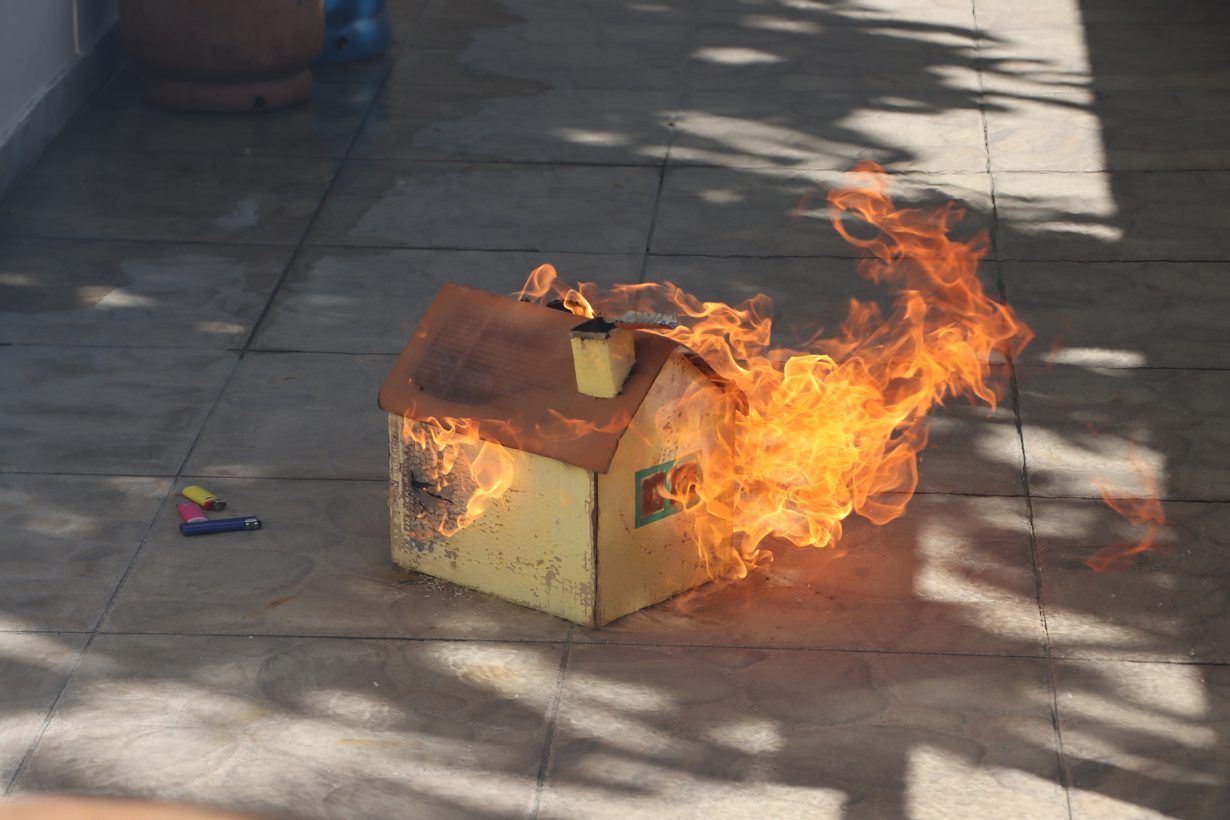
MX Early on, while casting some trained young actresses and actors, I realised that such an approach wouldn’t work for this specific project. How can one interpret awkwardness, fragility and youth? I wanted these qualities to be captured spontaneously. I’ve known Lily since she was a young kid. I used to make portraits of her and her mum (who is an art historian). Marina is the daughter of a dear artist friend Kyraki Costa and Ifigeneia reminded me of my best friend in terms of looks (the one who lip-syncs Marilyn Manson), but with the idiosyncrasies of another friend of mine as a teenager. Ifigenia also ended up studying architecture, just like that friend. And as for the youngest, she is my niece, Nefeli (the one burning the little house, jumping off the cliff) and she’s been my muse ever since she was a child. We had a series of rehearsals with the actress Polyxenie Savva. I felt that I was in their world, but only as much as they allowed me to be. I didn’t want to break through their boundaries, I respected their lives, and they respected that this was important work for me. I think we were all vulnerable. But I think there was a shared, underlying urge, something primary, to keep going together.
AR There’s a strong sense of tenderness and solidarity between the young women in the film. Is there something in the idea of female friendship as a form of quiet resistance – a way of subverting the political alliances and betrayals that the film touches on?
MX Absolutely. I do think of the idea of women’s friendship as a quiet form of resistance. The instinct is one of protecting one another, of creating small networks of care in environments that often feel hostile or indifferent. There’s something inherently political in that tenderness, such as the act of choosing solidarity over competition. The dynamics of teenage friendship reveal both cruelty and intimacy, power and vulnerability. Navigating together through a heavy night, wandering over the quiet violence of ordinary things, the girls in the film inhabit, enjoy and survive a place that quietly feeds on their presence, that is essentially trying to take something from them.
AR Were there particular archives, personal histories or unofficial records that shaped Overnight Coup Plan?
MX The film itself is an archive, in a way. For the storyboard and clothes, I worked closely with Giorgos Tigkas, we looked through all my teenage photos with friends from trips to Ayia Napa. Many moments in the film are biographical and repeated. The teenage room, for example, is a replica of my own, we re-created it exactly in my parents’ basement, which became one of the film’s sets. A set suspended between what is real, what is a memory, residue and ultimately fictional. The diaries, the books, the conversations… all of that came from personal material.
St. Moritz Art Film Festival has announced an open call for submissions from artists and filmmakers for the 5th edition of the festival. The next season of SMAFF will be programmed under the theme ‘If Music’, asking artists to ‘imagine what cinema becomes when thought musically – when approached as vibration, resonance, and rhythm.’