One year into a new government, and 25 years into ruangrupa, Indonesia is the setting for lively debates around counterculture and capitalism
The programme lineup on the first weekend of October at the Jakarta International Expo (jiExpo) – the largest convention hall facility in the Indonesian capital – seemed uniquely focused on juxtaposing the two extremes of the city’s art scene. First, its mercantile side: Art Jakarta, the country’s flagship art fair, which is held in three halls and features 75 galleries from 16 countries from across the Asian continent. This midsize fair, which is often seen as warmer, cozier and more regionally proud than the bigger, more internationally focused fairs in Singapore and Hong Kong, was opened with the playing of the national anthem, with a batik-clad government contingent including the country’s culture and cultural economy ministers in attendance.
While Art Jakarta is all about buying, selling and pro-establishment gentility, a few doors down the focus is on sharing and sticking it to the man. More specifically, a celebration of a kind of anti-commodity, social intervention school of art in which the lines between cultural work and the rest of life are blurred. This is ruru25: Poros Lumbung, the 25-year anniversary exhibition based around the various activities of the Jakarta-based artist collective ruangrupa, whose methods of collective governance and knowledge-sharing have become global touchstones for nonhierarchical ways of practising art, making exhibitions and, well, living together.
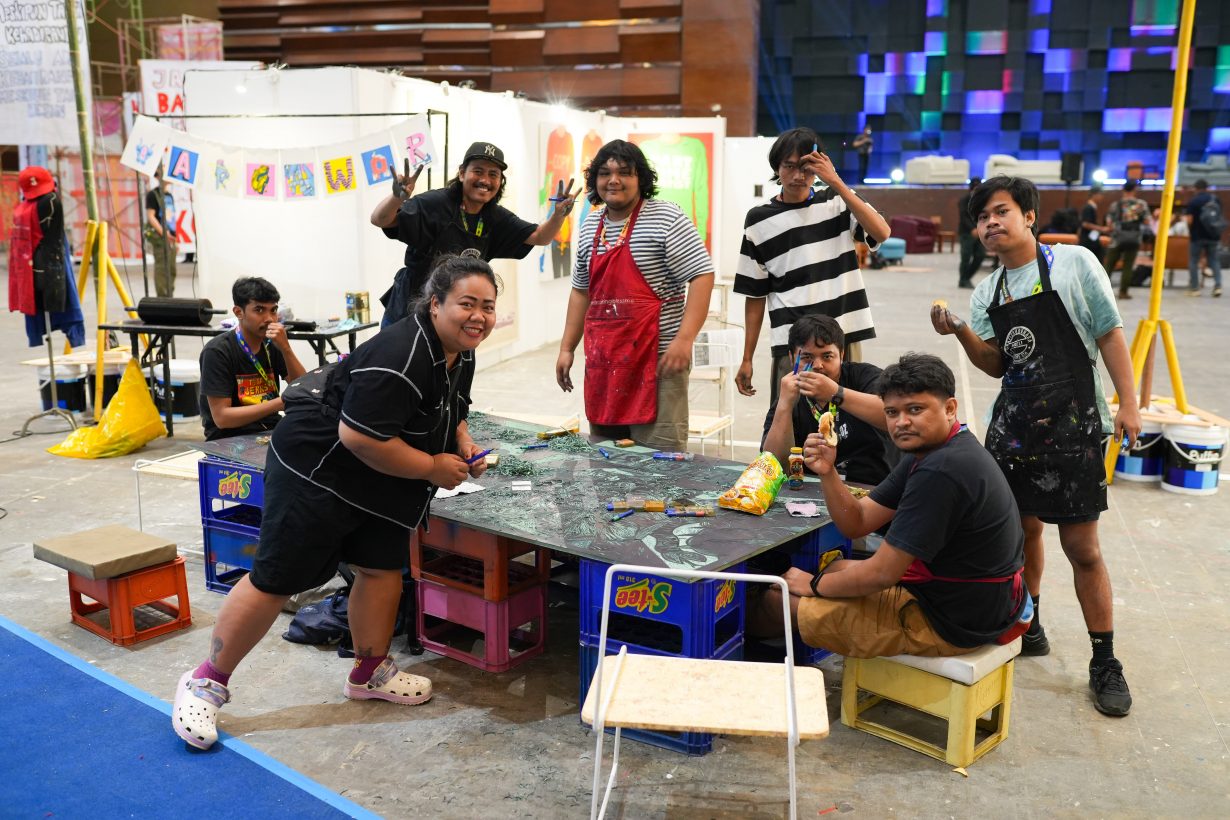
Billed as ‘not merely a retrospective, but an invitation to collectively imagine the future’, the show features 48 projects, seven by the group and the rest by various collaborators. What the show demonstrates is how far-reaching, interdisciplinary and tentacular its practices and networks are, in Jakarta and beyond. Ruangrupa was formed during reformasi, a period of political liberalisation and economic reform that followed the fall of the authoritarian New Order Regime (1966–98) led by President Suharto. Over the past two decades, ruangrupa developed a cheerfully multidisciplinary practice that resists any simple label, having run arts festivals, art labs and workshops, and published journals. At ruru25, you can sample a slate of initiatives, such as OK. Video, a biennial media-arts festival running since 2003, represented by a display of old-school tv screens showing archival videos; and RURUradio, an online streaming radio channel, which is broadcasting playlists and discussions live on location.
Authorship is blended in the cavernous event-hall space; it is hard to tell which is a ruangrupa project and which belongs to the group’s allies and networks. With showcases of collectives, and collectives made out of other collectives, the result is a free-flowing, semi-chaotic display, with most texts in Indonesian. Even with Google Translate, the experience is overwhelming, to say the least, so the best way to experience the show is by participation and a kind of openminded process of immersion. Sixpack, which comprises five art collectives from different parts of Indonesia, is running a barter market, inspired by the larger Wulandoni Market in Lembata Island in East Nusa Tenggara, where farmers and fisherfolk come together to trade produce without money. Visitors can bring anything they want in exchange for drinks, snacks, recipe zines or art. Or you could try your hand at the various stations at the ‘Studio on the Spot’ by Grafis Huru Hara (GHH), a graphic artist collective from Jakarta started in 2012, where visitors can experiment with silkscreenprinting and stampmaking. (GHH, together with ruangrupa and art collective Serrum, is one of the founders of Gudskul in South Jakarta, an art school that teaches collectivity.) The ethos of ruru25 is arguably best summed up in one of GHH’s monumental woodblock banners that sets out one of its famous maxims, reiterated at Documenta 15 and elsewhere, ‘make friends not art’, depicting a group of bemasked individuals clustering around a boombox.
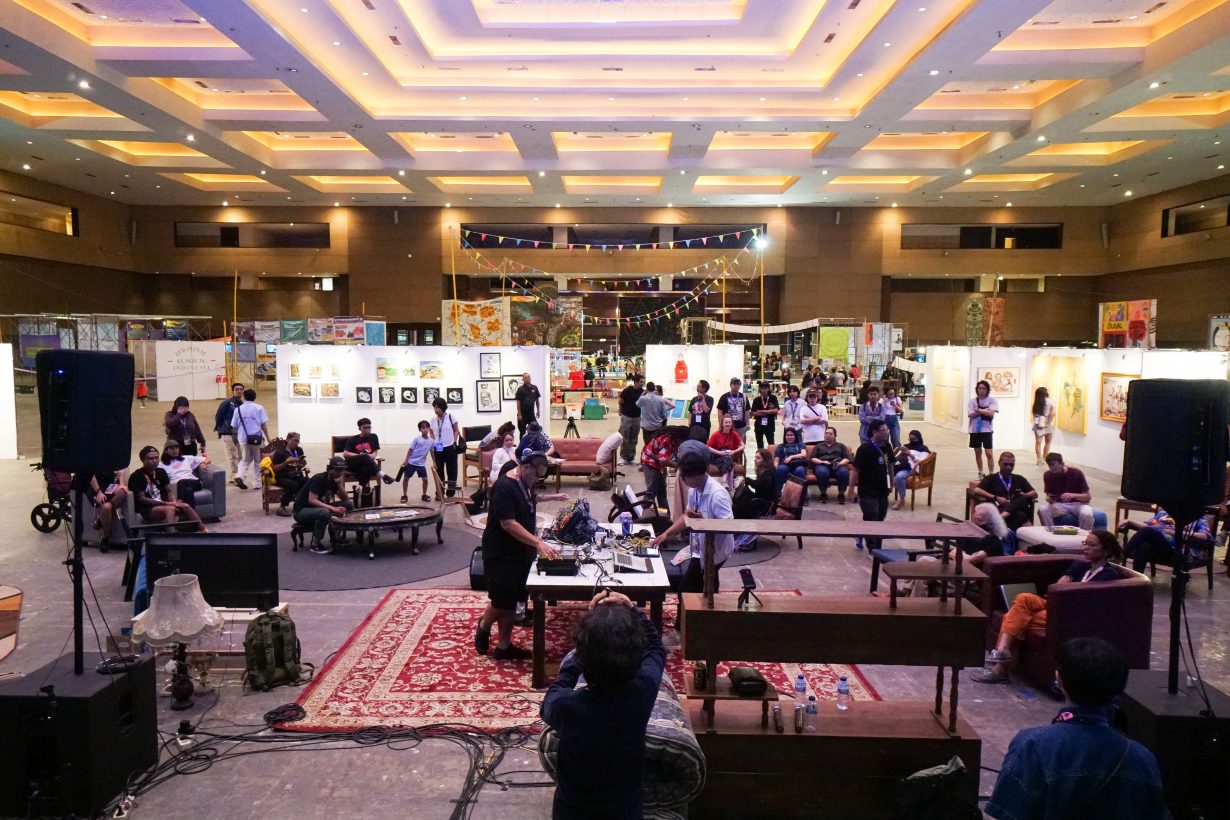
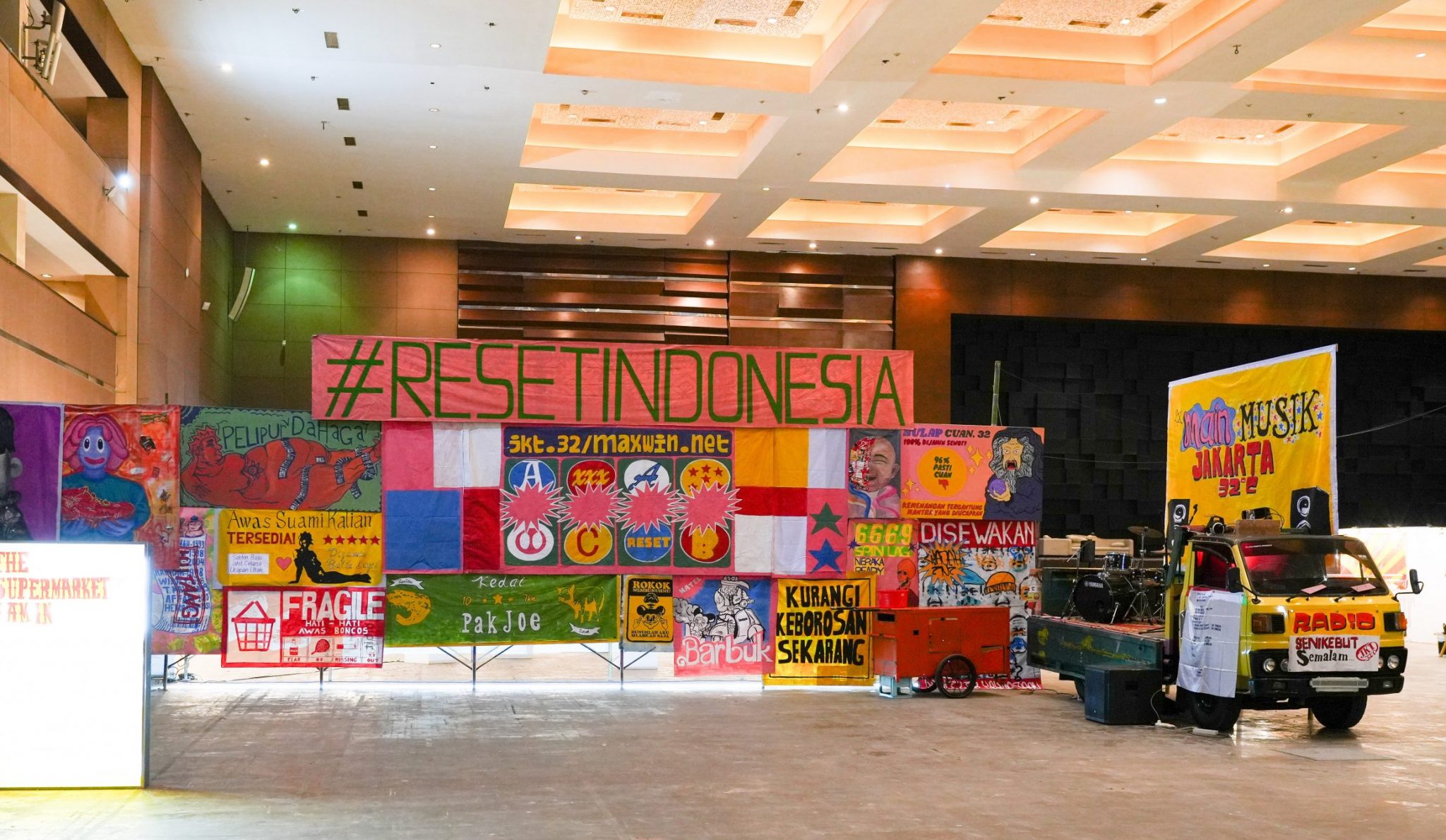
#ResetIndonesia, one of the hashtags during the anti-corruption, anti-government protests that rocked Indonesia a few weeks prior, was painted on several banners. While the exhibition is broadly leftwing and on the side of social justice and democracy, the show also taps into a proud history of art collectives and resistance movements in the country. A prime example being Yogyakarta-based Taring Padi, which is showing a monumental painting, Retomar Nossa Terra/Rebut Tanah Kita (‘Reclaiming the Land’, 2023), which was made in partnership with Casa do Povo and Movimento dos Trabalhadores Rurais SemTerra (MST), the Brazilian landless workers’ movement. At the centre of the painting stands Samaúma, the mother tree of the Amazon. To the left is a triumphant march of Indigenous people, farmers and factory workers; on the right, the evils of capitalism are symbolised by bulldozers and a cow in a suit, with the ‘finger gun’ hand gesture often used by rightwing former Brazilian president Jair Bolsonaro.
ruru25 also allows you to encounter ruangrupa’s more traditionally artistic output in a puckish back-catalogue that sometimes blends fiction and reality to tackle local histories elliptically. There is Kuda: The Untold Story of Indonesian Underground Music in the 70s (2012), which is an exhibition about a punk rock band from Indonesia called The Kuda (meaning ‘horse’). Mixing fact and fiction – there is indeed such a band, but ruangrupa made up some of their history and cowrote some songs with them – the show presents artefacts such as old musical instruments, magazine articles and album covers, while a timeline details how the rise of Kuda was intertwined with political changes in Indonesia during the 1970s, when the band was allegedly actively involved in the student movement that protested against corruption by President Suharto.
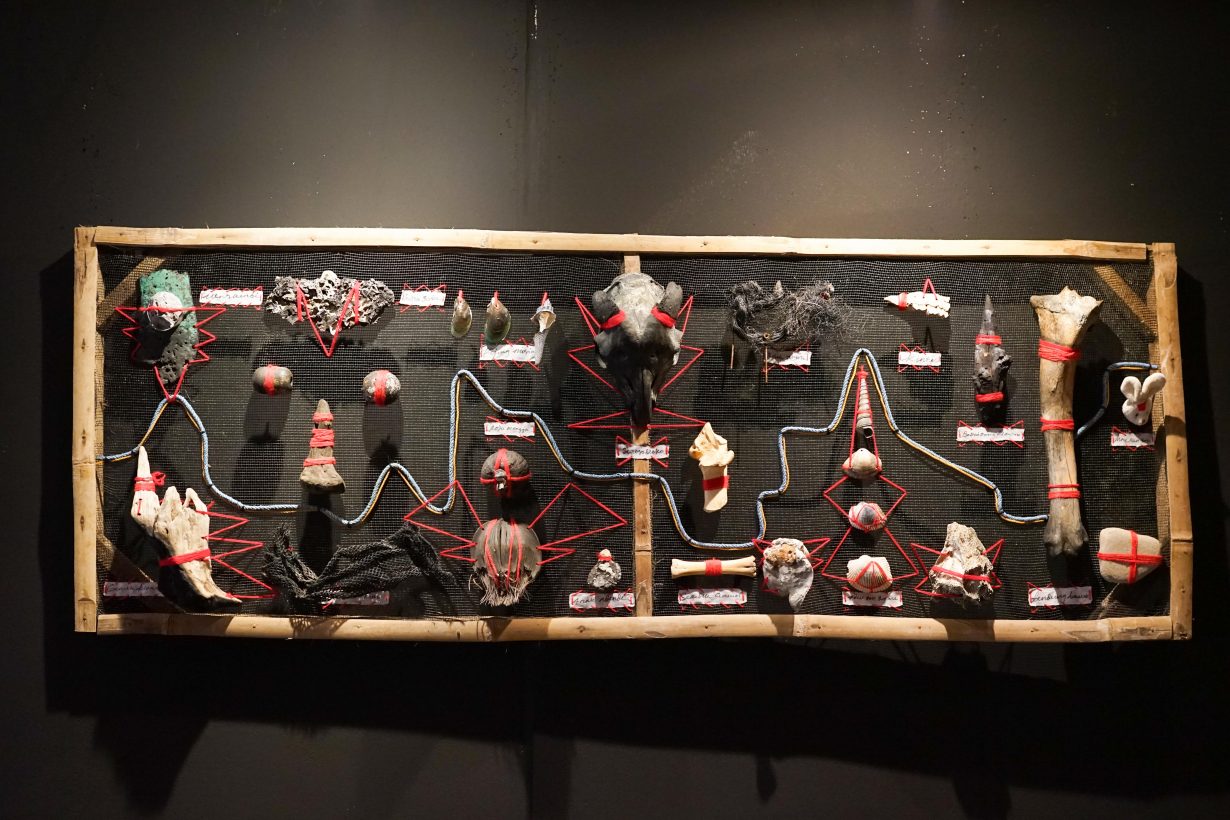
After 25 years of operation, including a controversial outing as artistic directors of Documenta 15 and propulsion to the global stage, ruangrupa has a moment of stocktaking and self-reflection in Siasat 2.0 (2025), an installation of banners with slogans and a free booklet for visitors to take away. In the tradition of art manifestos, these banners are snappy, defiant statements of ethical positions and visions for art. ‘We exist as a sign of certain failures of the nation-state system. Do not expect us to act as a United Colours of Benetton campaign in your public programme.’ ‘Better to be bankrupt than corrupt.’ ‘Horizontality is a myth, but a useful myth nonetheless.’ The handout booklet is an updated version of ruangrupa’s 2011 manifesto and aims to serve as a guidebook for collective survival in changing cultural, social and political conditions. It ends with an invitation to readers and funders to build ‘an arts economy based on a different set of values than the default ones imposed by our neoliberal societies’.
In Jakarta, these default neoliberal values are, as in most places, alive and pervasive, because state funding of art is limited and the art ecosystem is largely powered by private money from commercial gallerists and influential collectors. The only contemporary art museum in the city is Museum MACAN, opened by private collector and billionaire chemicals and petroleum mogul Haryanto Adikoesoemo. While the museum provides public access to art through a regular roster of exhibitions and programmes, Adikoesoemo’s personal collection, from which a semipermanent exhibition is built, remains closely aligned with the market. In his stable are Western and Asian blue-chip darlings such as Jeff Koons, Robert Rauschenberg, Gerhard Richter, Andy Warhol and Yayoi Kusama.
Adding to that is a chilling atmosphere of conservatism and politicisation of culture under the new administration of President Prabowo Subianto, who took offce in October 2024. Among a slew of disturbing news is the announcement of a new ten-volume series of history books meant to be released by the government in August next year, on Indonesia’s Independence Day (it has since been pushed back to November), with critics worrying about historical revisionism and the omission of human rights abuses by Prabowo. Culture Minister Fadli Zon had also controversially (and sceptics say sycophantically) designated 17 October – also President Prabowo’s birthday – as the country’s National Culture Day.
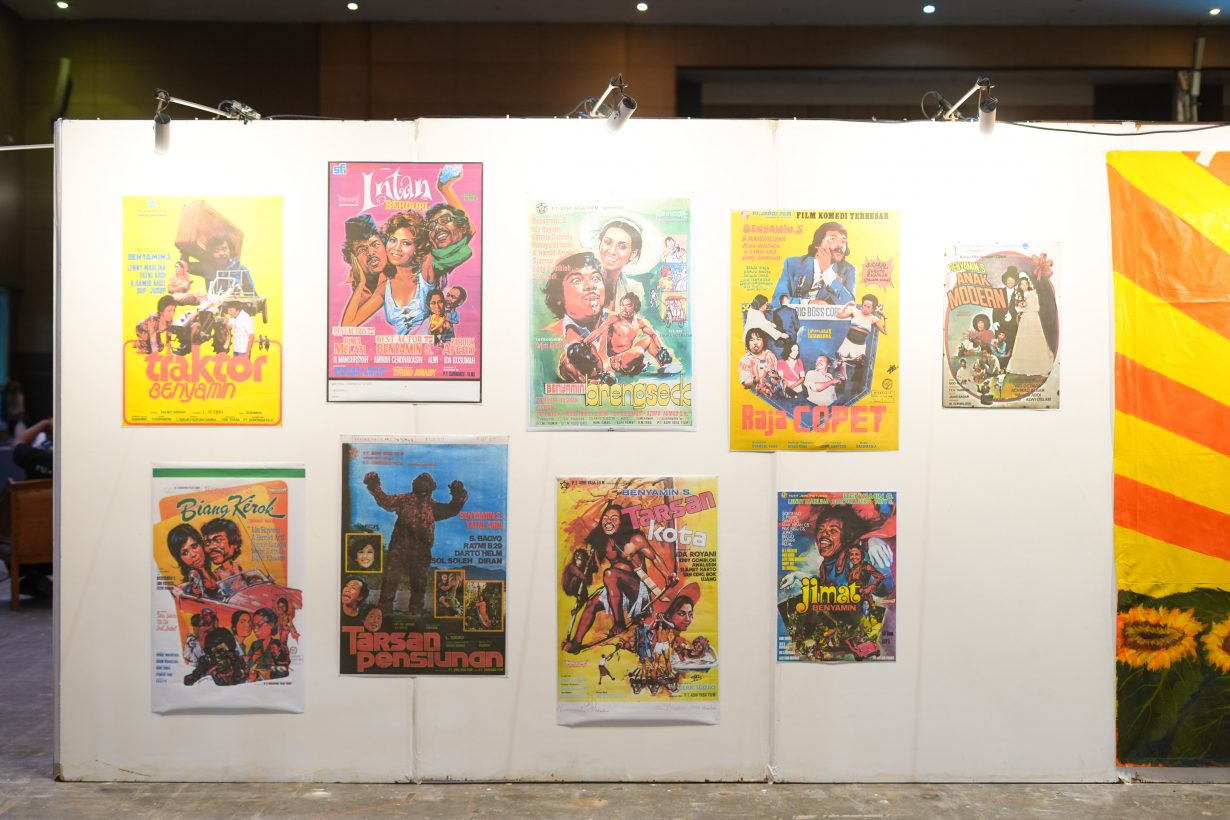
In this regard, ruru25 is an affirmative reminder of the crucial countercultural spaces that resist the capitalistic logic of the local arts ecosystem and state instrumentalisation of culture. The exhibition speaks of ongoing, rolling processes of collaboration, self-organisation and public engagement outside the privileged and fundamentally transactional modes of cultural production. Ruangrupa has developed several images to help organise its methodologies. Two in particular stand out at ruru25: one is of the lumbung (a communal rice barn that is both a metaphor and a practical framework for sharing resources and knowledge among the group and with broader communities) and the other is rumahruru (or ruru house), which, quoting from the Siasat 2.0 book, ‘reflects ruangrupa’s enduring belief in art as a form of hosting: hosting ideas, strangers, communities, and sometimes even chaos’. Both are powerful lodestars of the possibilities of communal living and open-ended, unpredictable artistic experimentation that stresses relationships and processes over outcomes.
From the Winter 2025 issue of ArtReview Asia – get your copy.
Read next Worrying the Seams of History