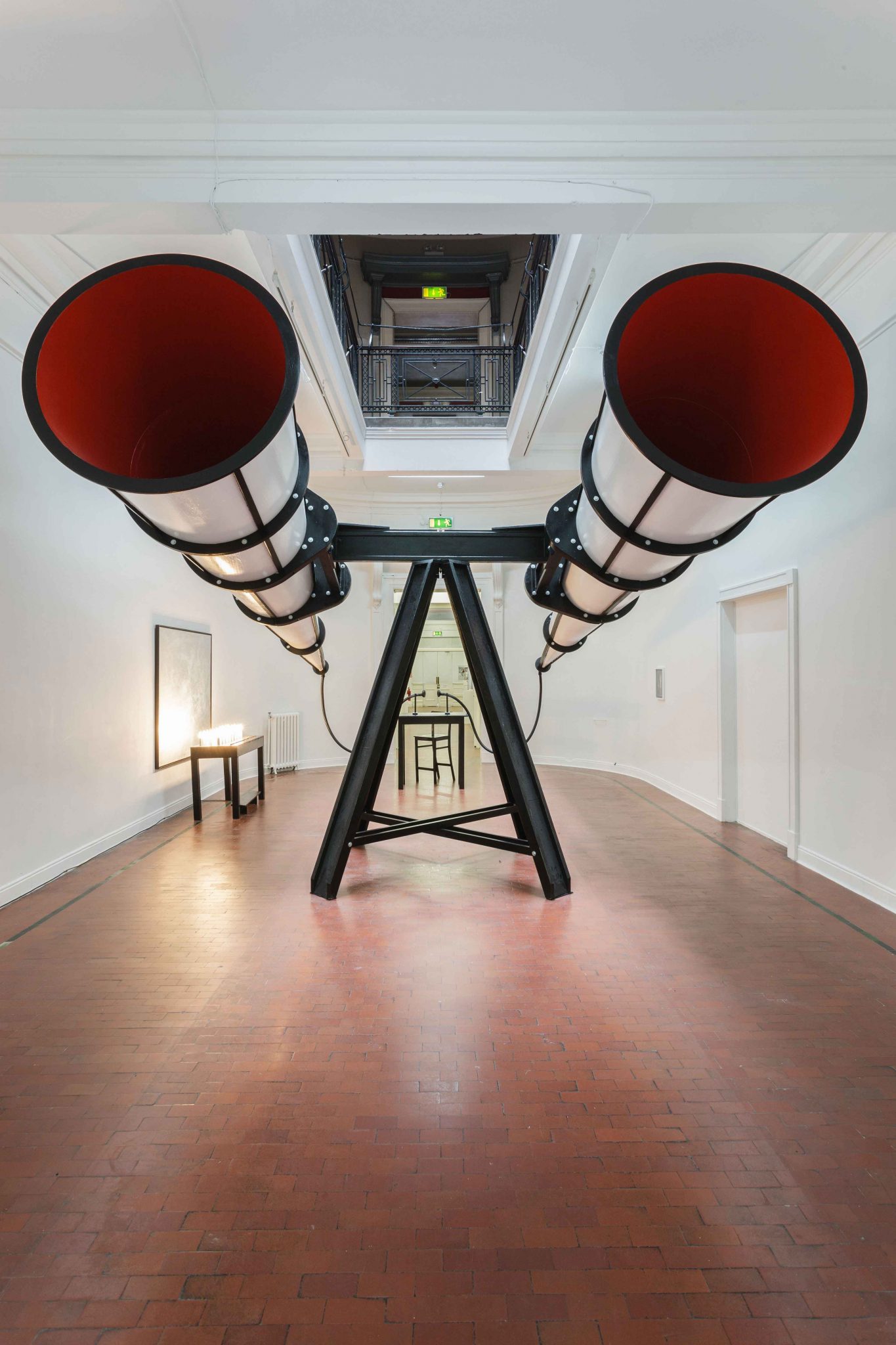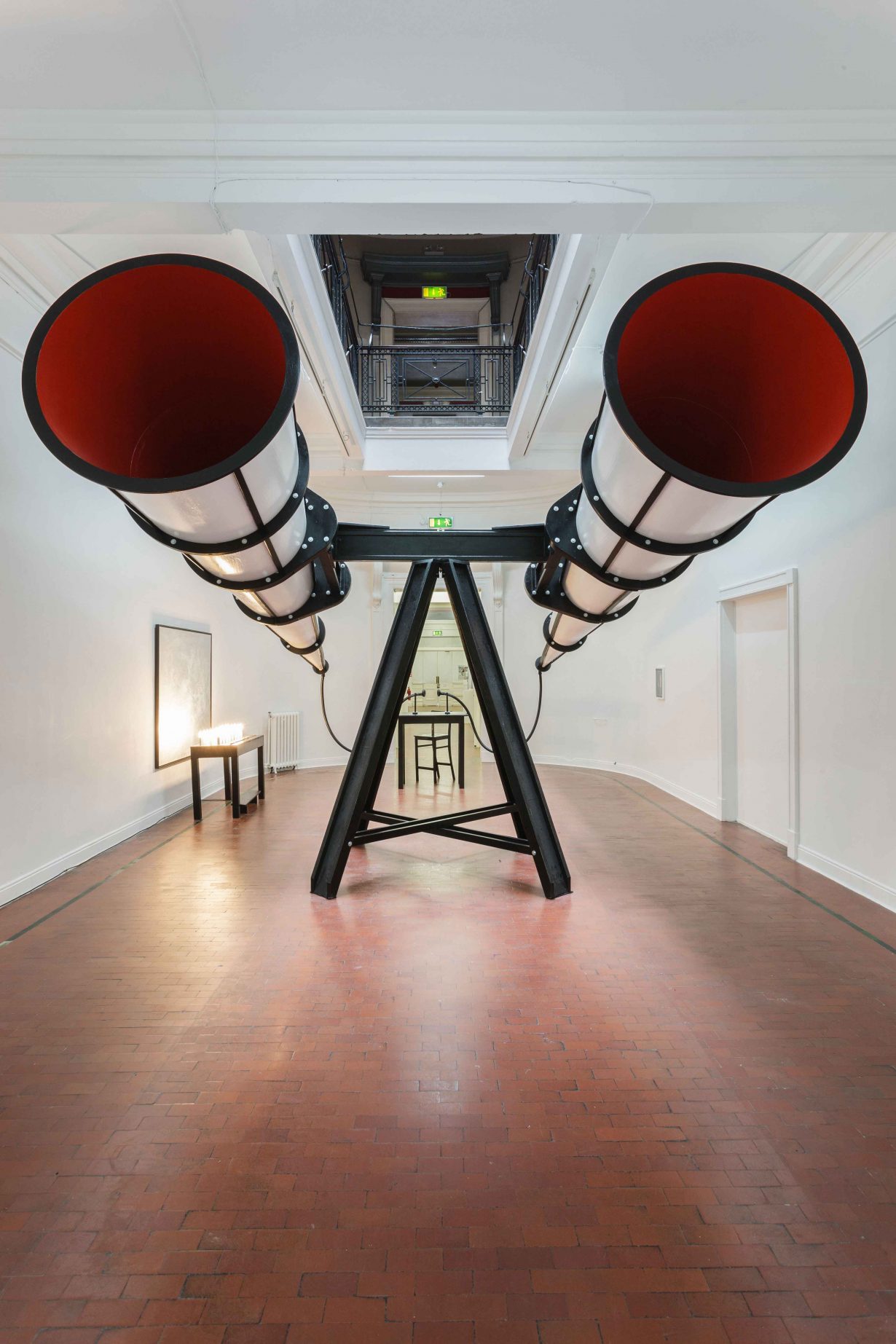
Thomas Zipp, whose art was infused with a punk sensibility and sideways sense of history, has died.
In painting (occasionally layered over photography), scenographic installation and sculpture, Zipp made complex and occasionally opaque connections between politics, economics, pharmaceutics, medicine, religion, neuroscience and art history.
This Dadaist sensibility was clear in his largescale work for the 2013 Venice Biennale, Comparative Investigation about the Disposition of the Width of a Circle, its title a reference to David Bowie’s 1970 song ‘The Width of a Circle’. Taking the form of a sanatoria, filling the Palazzo Rossini, the artist adopting the persona of both doctor and patient: visitors made their way through offices, clinics, washrooms and operating theatres, the interiors making reference to the idea of hysteria and its history and current resonance.
The nuclear bomb was another recurring motif: for a 2006 exhibition at Alison Jacques Gallery in London, Zipp ssuspended a large black balloon from the gallery ceiling, while in 2005 for his exhibition at Galería Heinrich Ehrhardt, Madrid, the artist produced a series of paintings of explosions and skeletons.
In ArtReview March 2007, critic Melissa Gronlund described Zipp’s works as ‘dimly lit by the conflagrations of the past: atomic explosions and the bombs dropped on Germany during the second world war, glimmers of scientific and artistic achievements. A confused historical consciousness and a dose of black humour permeate his canvases, collages, sculptural objects and pseudo-mathematical diagrams.’
Born in Heppenheim, Germany, Zipp studied at the Städelschule, Frankfurt, under Thomas Bayrle, and the Slade School in London, graduating 1998.
Immersed in the punk scene, the artist was a member of a number of bands including ZLW-Trio with fellow artist Felix Weber and electronic musician Sepp Löbert, followed by DA (‘Dickarsch’, meaning fat ass in English). Zipp would often stage concerts around his gallery openings, one Artforum critic noting that a 2008 performance at Alison Jacques made ‘the smoke-filled room more redolent of a methadone clinic than a swish art gallery.’