The third edition of the Diriyah Biennale, In Interludes and Transitions, strikes a reassuring, familiar note
In the Gulf, SUVs aren’t just vehicles so much as they are sacred symbols of desert resilience. And none are more potent than the Toyota LC79 pickup, or ‘shass’: variously revered as a noble Bedu chariot, the king of dune bashing and drifting culture, or rural workhorse with animal fodder in the back.
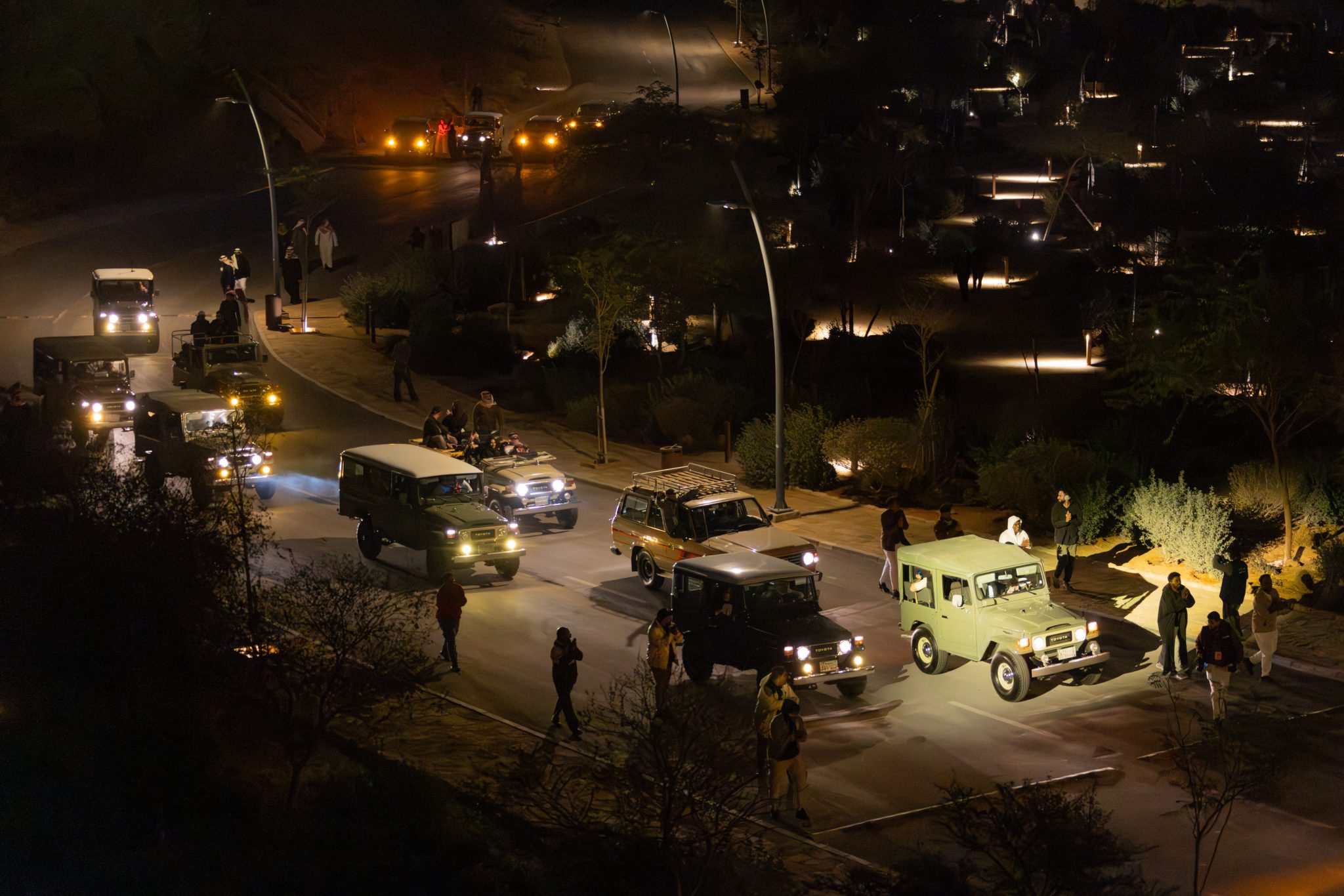
So it is that on the opening night of the third Diriyah Contemporary Art Biennale, held in Riyadh, visitors thronged to terrace railings to watch a cavalcade of shasses, along with revellers on foot and the odd camel cresting the hill of the wadi below. A crowd swelled as biennalegoers joined the back of the procession, which culminated in a show by rapper Shab Shabjdeed upon arrival at the biennale entrance. The procession was a commissioned performance, Folding the Tents (2026), by Saudi artist Mohammed AlHamdan, also known as 7amdan, and was grounded in Bedouin sonic folkways based on oral poetry, from the Gulf’s sheilat to the Amazigh Al Majrouda. These were meshed with references to contemporary culture, as reflected in the SUVs: if the shass symbolises youth culture rooted in ancient heritage, the stately patriarch of the LC40 model operates as a visual shorthand, harking back to an older, harsher era and the early decades of the kingdom. In this performance, the shass functions as a thesis statement for the biennale, exploring movement, migration and the cultural production that emerges from it.
Titled In Interludes and Transitions, the framework for the 2026 Biennale emphasises cycles of motion and pause, staying and departing, while the Arabic title fil hil wal-terhal takes a phrase that is used to connote a kind of steadfast loyalty through all cycles of life. Curated by Dubai-based Nora Razian (deputy director of Art Jameel) and Sabih Ahmed (associate director of the Ishara Art Foundation), the exhibition is smaller than previous editions, featuring around 70 artists and 20 commissions, unfolding across five main warehouses, with a number of larger site-specific commissions installed within, between and adjacent to the buildings. There was something comfortable about this spatially scaled-down biennale: like a warm hand supporting your back.
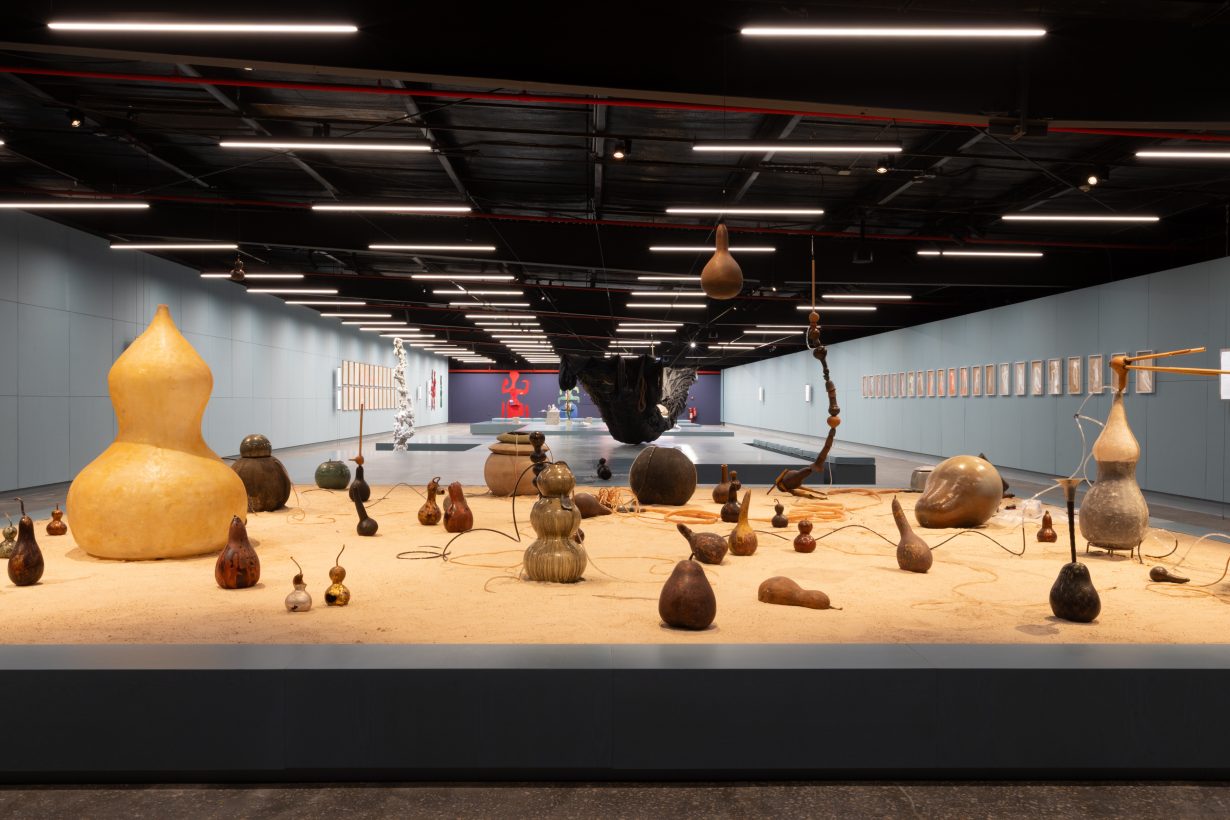
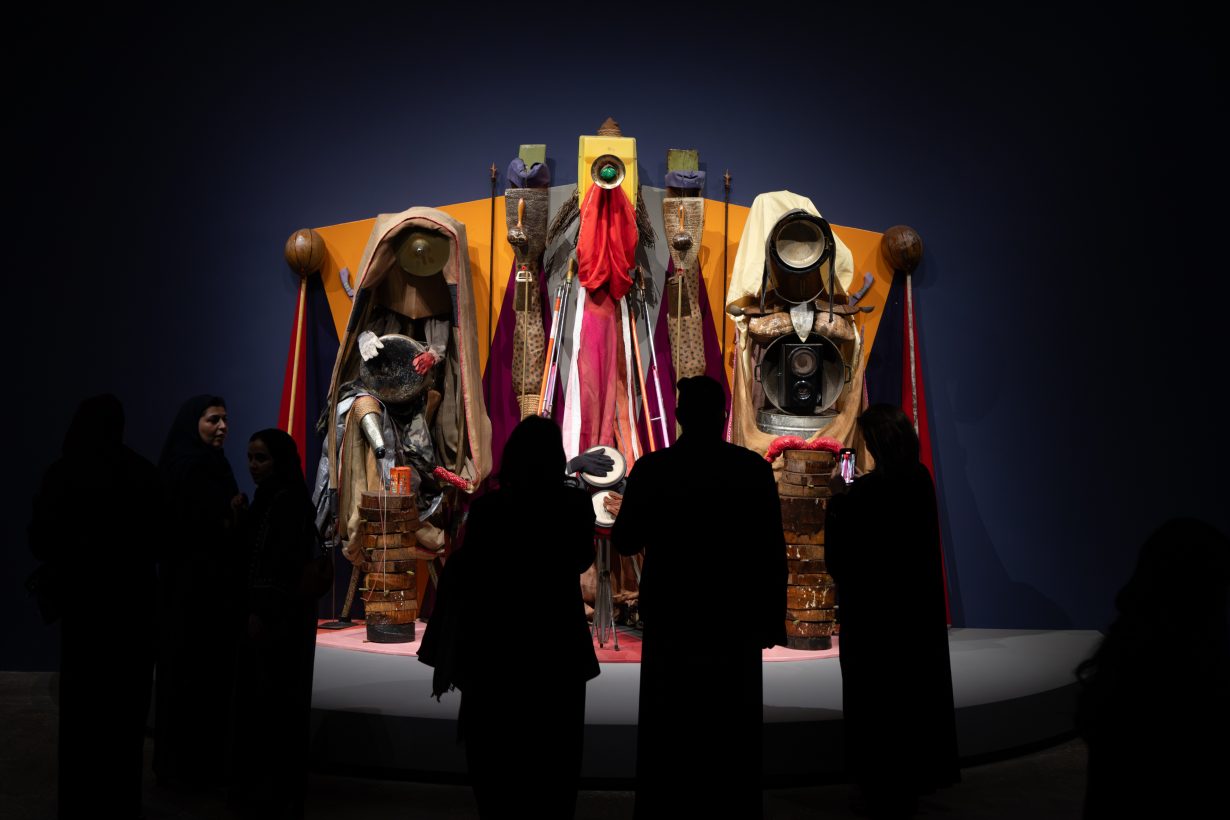
Folding the Tents is the first ‘movement’ of six that comprise the exhibition’s programme, the last of which explores the medium of music and poetry. Sonic and theatrical language abounds, particularly in the titles of each thematic movement. The second, Disjointed Choreographies, looks to the past, to personal histories and enduring cultural legacies. It feels like a major 7th chord. Many works have a sculptural, bricolage feel, most rewardingly in the Puerto Rican Daniel Lind Ramos’s large assemblages and Vietnamese Trương Công Tùng’s kinetic installation of networked calabash gourd fountains, both of which index vernacular epistemologies in a particularly visceral way. This section is particularly interesting for how its register emphasises the collective over the solidaristic: what unspools is not a hermetically sealed curatorial vision, but rather a way of thinking that takes KSA and the broader Gulf as its fulcrum.
The next section, A Hall of Chants, takes on a more modal register. There’s a kind of call-and-response media archaeology at play between the Saudi modernist Mohammed Al Ghamdi’s mixed-media canvases made from industrial detritus and Ethiopian artist Elias Sime’s crewel-like junk assemblages. The thread continues elsewhere in Saudi artist Ruba Al Sweel’s video Machine Tongues (2026), which traces the dissonant journey of a stolen phone with a side of brainrot and surveillance-state body horror. A highlight is a display installation by Amman-and-Cairo-based publishing initiative Kayfa Ta, which convenes new-media pioneers along with some of the most exciting young artists working in the region today, including Bin Hattan, Salim Badawi, Fai Ahmed and Ali Majnooni, and Bady Dalloul, and with research strands ranging from the history of Arab computing to 1990s Saudi internet-café culture and pan-Arab sci-fi. Like the opening procession, it sutures this edition to both its site and its history.
Among the many works in the show that index peripatetic lifeways (digging, running, driving through the desert) is Afghan-Australian poet Elyas Alavi’s video installation about nineteenth-century migrant cameleers in the outback and the folk songs and poetry that accompanied their journeys. It is found in the final, cybernetics-leaning section, A Forest of Echoes, which underscores the biennale’s invitation for visitors to imagine an alternate timeline for the country: if Saudi Vision 2030 (a government initiative launched in 2016 that aims at diversifying the Kingdom’s economy) never happened, but technological development continued apace.
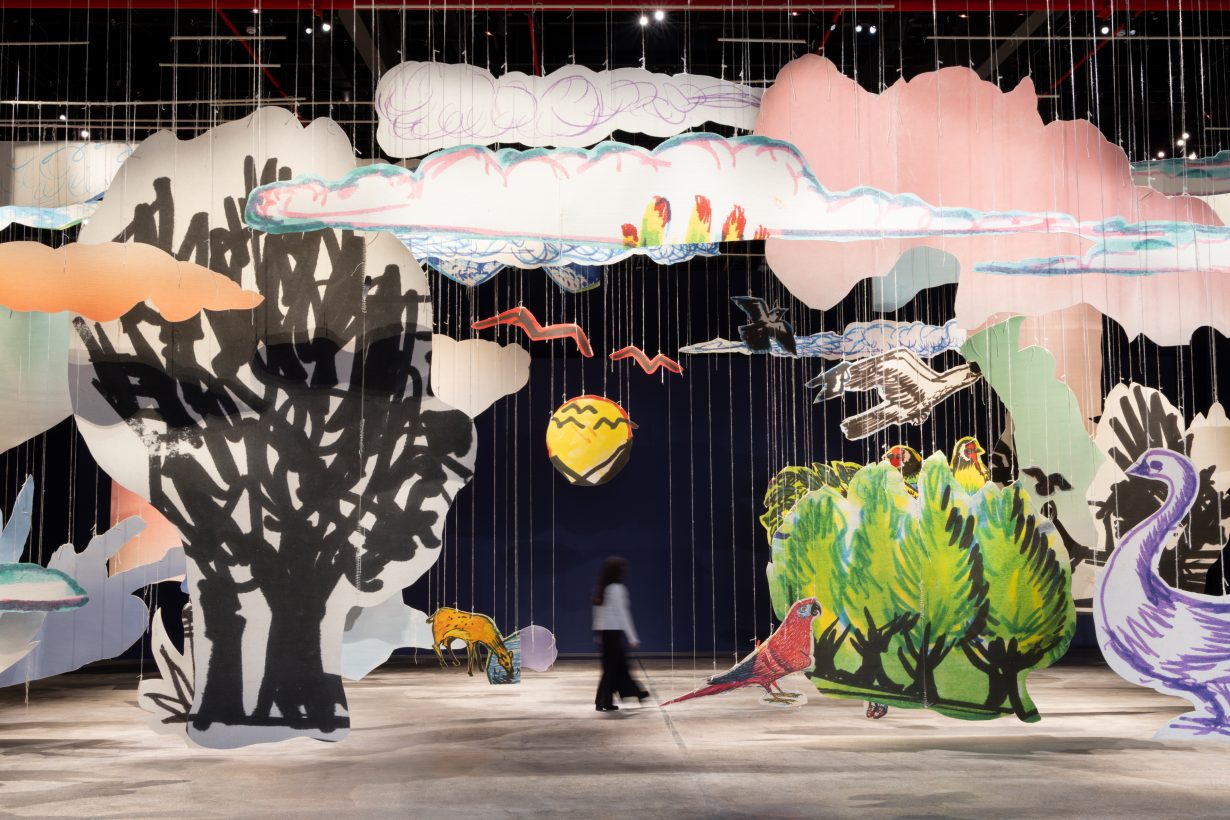
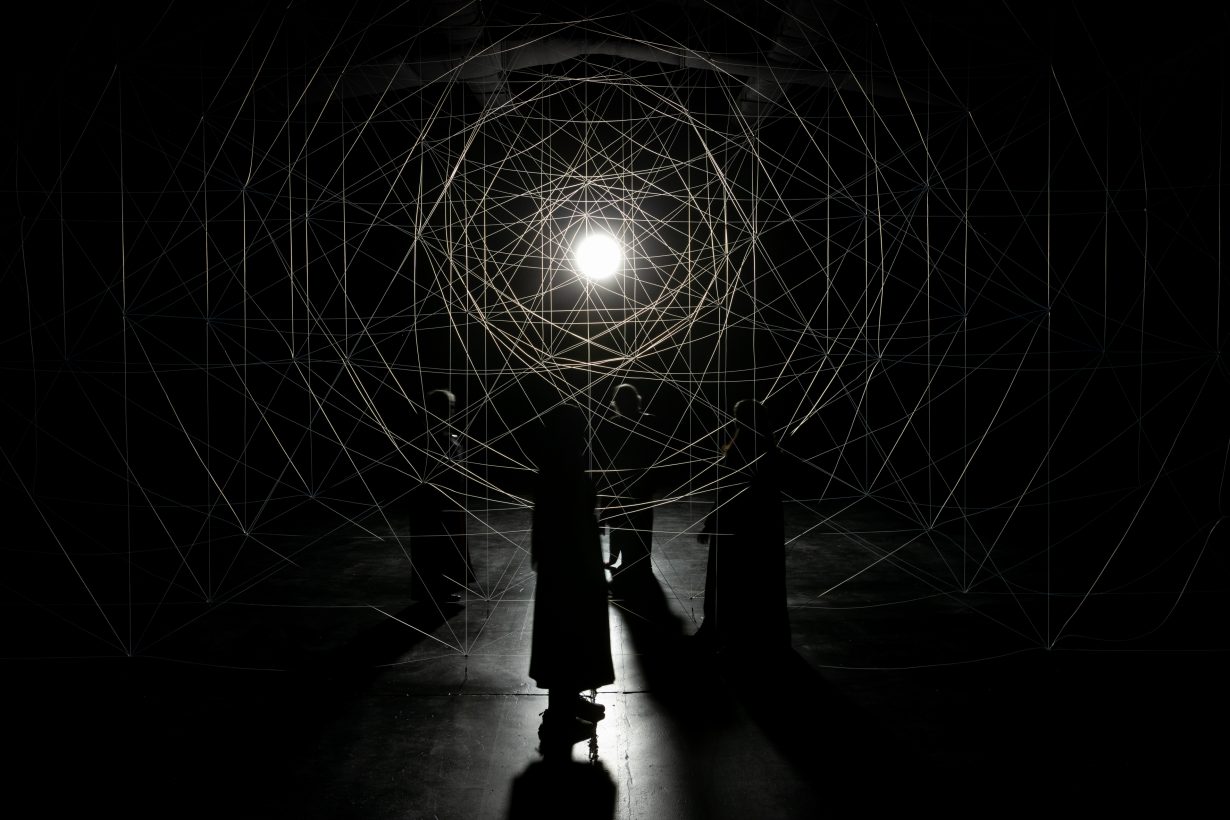
While much of this section doesn’t cohere, there is still visual pleasure to be found elsewhere, particularly in Turkish artist Mügg Yilmaz’s future-archaeological sculptural pantheon and Adivasi artist Rajesh Chaitya Vangad’s intricate Warli painting, though a materially sumptuous throughline is strongest in the A Collective Observation section, vaguely focused on mapping. Here lie South African Moshekwa Langa’s mixed-media cartographies collaged from plastic sheeting and the Colombian-Korean-American Gala Porras-Kim’s meticulous drawings that collapse the distance between museum and mausoleum. There’s also Karan Shestra’s beautifully carved wooden, well-like pool, accompanied by an audio piece splicing together oral histories and the sounds of water and a dreamy suite of paintings annotated with stories of the Nepali littoral. Especially compelling are Palestinian artist Taysir Batanji’s blurry oils from his Remnants (2025) series that depict the lazy loading of images of the Gazan genocide as they inch over an unstable internet connection. Along with Saudi painter Lulua Alyahya’s untitled, moodily ashy canvases elsewhere, they seem to condense the feeling of this edition as a whole: a little elegiac and suspended out of time, on the precipice of something unknown while never feeling apolitical.
The Diriyah Biennale tends to be an immaculately choreographed soft-power handshake – most overtly in the first edition in 2021, curated by (then) Beijing-based Philip Tinari and intended to coincide with the inaugural China–Saudi year of culture. It is postwestern without ever performing postcoloniality, tending towards a ‘West Asia looks farther east’ formula. In 2026 however, the sense of region is rather more oblique. More than anything, this biennale felt uncannily like the departures hall at Terminal 2 of Dubai Airport and so many other airports like it: a gathering of the kinds of countries whose passports arrest mobility and whose carriers are relegated to landing at remote stands, from which passengers have to be bused to the terminal, rather than taking the airbridge. Somehow, it feels lived-in, familiar and very much of its place.
Diriyah Contemporary Art Biennale 2026 is at JAX District in Riyadh, Saudi Arabia, through May 2, 2026
From the Spring 2026 issue of ArtReview Asia – get your copy.
Read next Munch Triennale Review: The Unreality of Contemporary Art