At an annual gathering of global museum professionals, Mariacarla Molè finds that actions are more effective than words
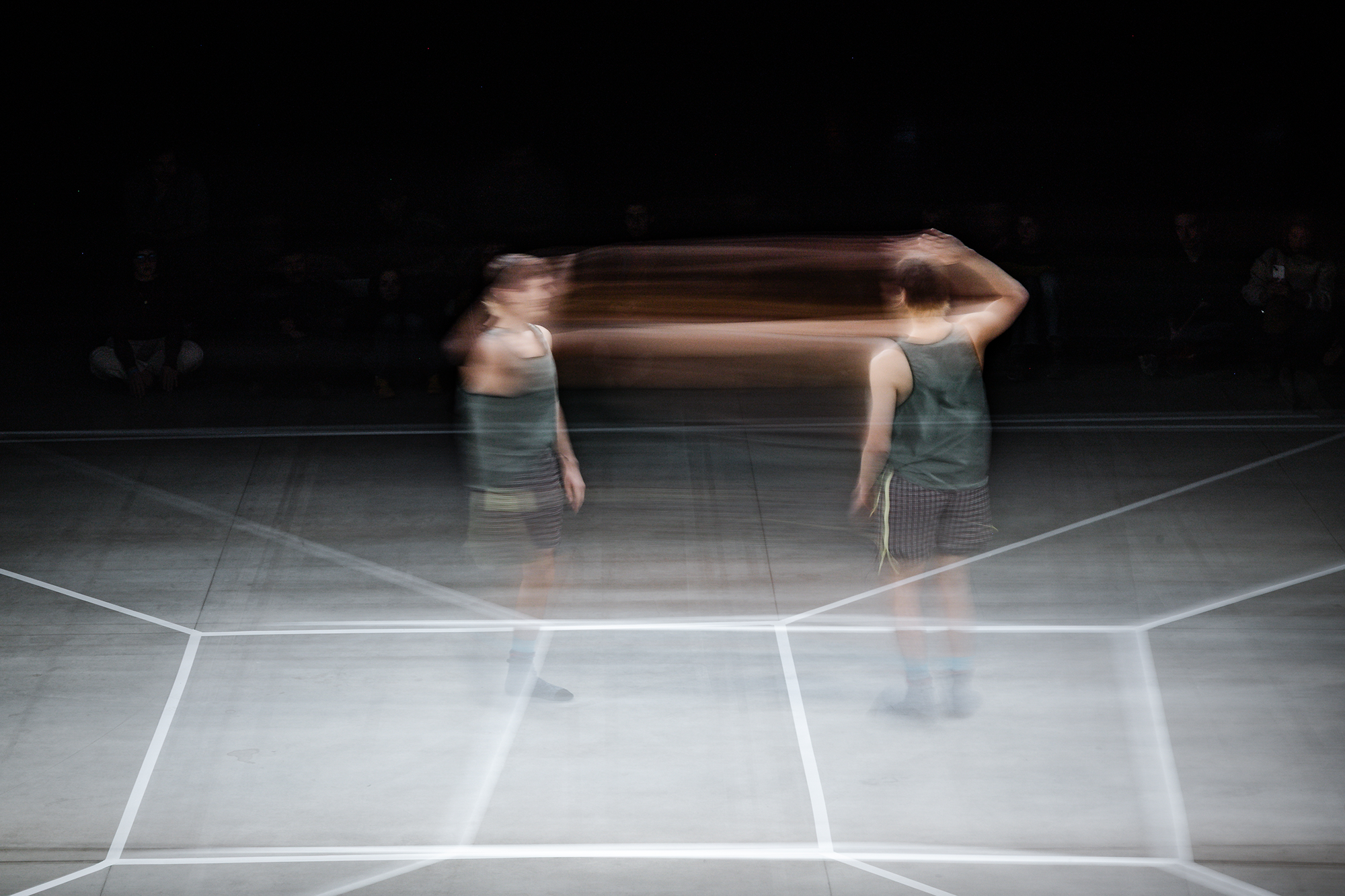
The image I took away from the opening of the 57th CIMAM Annual Conference, held for the first time in Turin, was that of all 300 lanyard-wearing members gathered tightly around the perimeter of a square traced on the floor: the stage for a performance choreographed by Alessandro Sciarroni titled Don’t Be Frightened of Turning the Page (2017). The Annual Conference aims at gathering museum professionals to discuss the most pressing issues facing them as a community, so what better representation of that than this. At the centre of the space, within a smaller square, the performer Marco Bertani began to rotate, repeating this single movement for about 40 minutes, changing only the position of his arms and his facial expression. The effect was hypnotic. It is a work that grew out of a study of animal migration: from storks returning to breed in the nests where they were born, to salmon swimming upstream to reproduce where they originated, arriving thus at the circle as the movement of migration, evolution and transformation.
The image of the flock returned as a metaphor for the collective body in the opening remarks by curator Chus Martínez, who borrowed, from language relating to the physics of complex systems, the image of a model that does not rely on central control but functions through a system of relationships, listening and continuous adaptation. According to this metaphor, CIMAM members would be components of a single body, and their mere presence, gathered on a supportive platform, would constitute a political act. An act that for many, it must be said, involved a prohibitive financial commitment; only institutions with considerable economic resources could take part. Less encouraging were political scientist Francoise Vergès’s perspectives, which through a discussion on the politics of breathing highlighted the power structures that determine who is allowed to breathe and who isn’t, and on how collective breathing can embody resistance. In a sense her words did put us all on the same page, but it was a page studded with well-known and terrible -isms: capitalism, colonialism, neoliberalism, extractivism, individualism, racism.
On the second day, Elizabeth A. Povinelli, the day’s keynote speaker, revealed that she was chosen to guide what she called the “positive day” (which would suggest that the first was the negative, critical one, and that, following this Hegelian game, the next might aim to overcome them both). She addressed the concept of counterflow, understood as the resistant flows that challenge dominant circuits of power, such as Indigenous practices and alternative social-projects that circulate outside or against dominant systems of recognition, governance or capital accumulation. Once again, however, what seemed to bring everyone together was the performance of the day: Peacock Dreams (2025) by Abdullah Miniawy, performed with Jules Boittin and Robinson Khoury on trombones. Their sounds draw from the Egyptian Sufi tradition, from Qur’anic recitation and contemporary sacred chants. The effect was cathartic and moving, but rather than being uplifting, as this type of singing traditionally aims to be, it seemed to ground the entire CIMAM audience in a shared sensibility shaped by the emotions evoked in the songs.
At this point I begin to wonder why performances work better than traditional lectures and speeches. And then I wondered more. The following day the economist Mariana Mazzucato in her forceful keynote reclaimed the narrative around the importance of public funding for the arts and reaffirmed the central role that art and culture play in society. But again, in her performance, Diana Anselmo, onstage with Daniel Bongioanni and Antonio Dominelli, presenting an adaptation of Pas Moi (2025), a lecture performance in sign language, convinced me that it is a matter of language more than funding. Here, the language of performance, through affective forms never fully translatable into concepts, managed to overcome the multiplicity of languages present in the room and the respective worldviews attached to them. Pas Moi is conceived on early sound reproduction devices, apparently designed to hear in place of Deaf people (radio, telephone and the phonograph were originally intended as ‘cures’ for the Deaf), and on their responsibility in denying the Deaf community the possibility of recognising itself as such and of speaking its own language (in 1880, the Milan Congress decided to ban sign language in Europe, considering it an obstacle to healing). Sign language and subtitles never overlap, the latter follow the former with a rhythm that allows both languages to breathe. Every pause, every silence, in an international context such as CIMAM’s, becomes an opportunity to reflect on translation as a relational practice and an act of mutual care. And finding a shared glossary across the more than 90 countries represented at the conference seems to be the greatest challenge for a collective body that wishes to call itself such. Otherwise, that evoked sense of community remains a hollow slogan rather than something put into effective practice, and what should resemble a flock risks remaining instead a gathering of strays, each following its own path, drawn together only by a sense of individual advantage.
From the March 2026 issue of ArtReview – get your copy.