“Art can change the world by respecting individual dignity”
ArtReview sent a questionnaire to artists and curators exhibiting in and curating the various national pavilions of the 2026 Venice Biennale, the responses to which will be published daily in the leadup to and during the Venice Biennale, which runs from 9 May through 22 November.
Amina Agueznay is representing Morocco; the pavilion is in the Arsenale.
ArtReview Tell ArtReview what you plan to exhibit in Venice. What has influenced or inspired you?
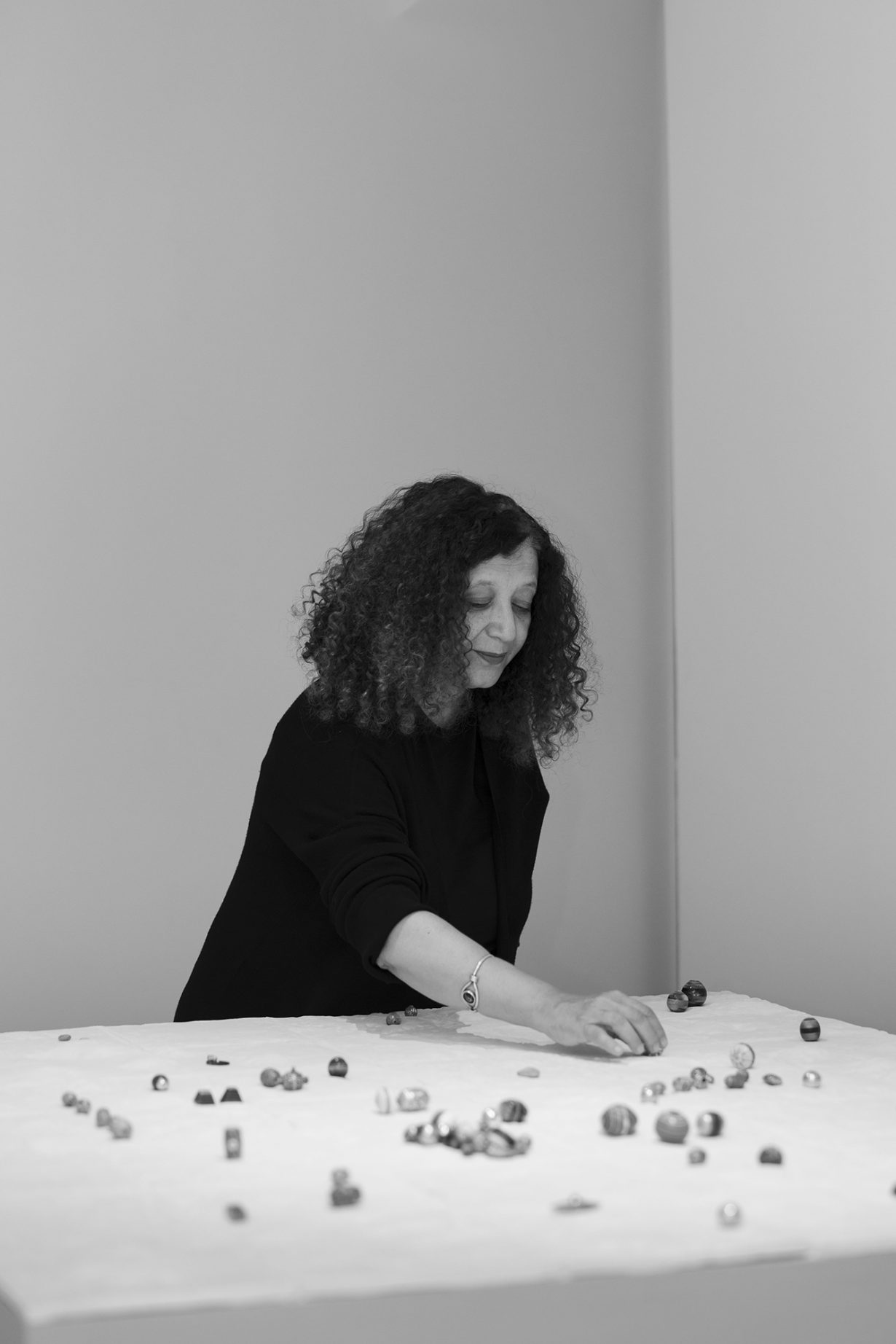
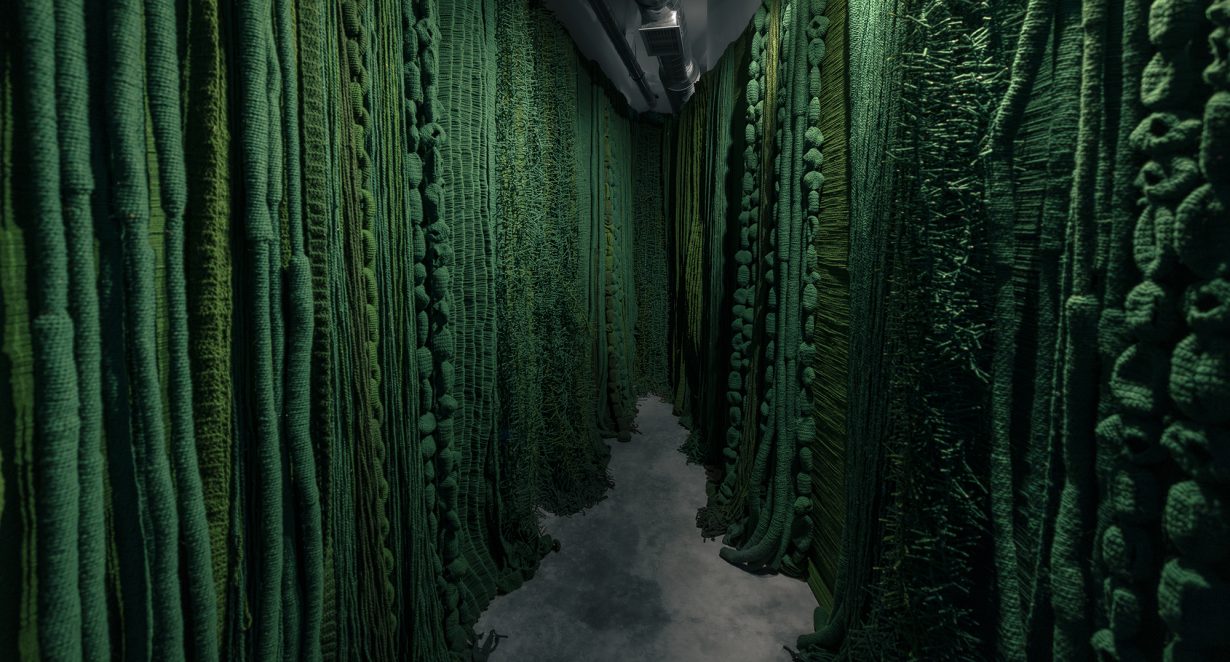
Amina Agueznay The intention of the Moroccan Pavilion project is to highlight those discreet gestures and stories which, through their transmission, shape the history of territories – past, present and future. Specifically designed for the Biennale, Asǝṭṭa is a monumental installation focusing on collaborative practices passed down through generations, embodying ancestral narratives that have always held deep significance, never more so than now.
In terms of influence, everything comes from my fieldwork. Learning from weavers, metalsmiths and other artisans allows me to deconstruct and reinvent my technique and methodology: making new connections, using things I discover in the field that can be articulated in the installation. In Asǝṭṭa for example, I incorporated traditional mozone (silver sequins) like water to explore the connection between the Middle Atlas Mountains region and the canals of Venice. I am also inspired by the architecture of the Arsenale. I read the walls, taking in their history, activating sealed passages and defining new pathways within the space.
AR In what ways (if at all) does your work relate to the theme of the Biennale exhibition, In Minor Keys?
AA In her curatorial text, Koyo Kouoh describes In Minor Keys as proposing ‘a radical reconnection with art’s natural habitat and role in society: that is the emotional, the visual, the sensory, the affective, the subjective.’ This premise holds special meaning for me, as my practice combines lived experience with raw material, architecture and craft, individual and collaborative initiatives. The Asǝṭṭa project evolves from the role of each contributing craftsperson, echoing the theme’s musical metaphor: working in concert, their individual gestures contribute their own vital notes to the final melody. And, just as with music, moving away from the major key opens up new possibilities of expression: one finds depth in intimacy, emotions are not dictated but allowed to permeate, new sensations surface, note by note, and step by step.
AR Why is the Venice Biennale still important, if at all?
AA The Venice Biennale is a historical cornerstone of the art world. Every two years, the city becomes a meeting point for artists, curators, critics, art historians and curious souls from all around the world, all gathered to confront global narratives. It seems to me that the team behind this edition is striving particularly hard to make this venue a space for dialogue. As such sites become increasingly rare, the Biennale takes on particular importance.
AR What role does a national pavilion play at a time of increasing confrontational nationalisms? Is it about expressing difference or commonality?
AA I feel that the Biennale’s true force resides less in each national pavilion in isolation and more in the creation of a network linking these different spaces and their visitors. It’s about bringing situated perspectives into dialogue and revealing oneself, quite literally, to the other. Asǝṭṭa explores the concept of the threshold (âatba in Arabic): this space between the interior and the exterior, between the private and the public but also between the past and the future. My intention for this national pavilion is to create an ‘in-between’ space that offers a shelter from the outside world and an opening to the world within.
AR Who, for you, is the most important artist (in any discipline) that your country has produced?
AA That is an impossible question, but here you go: the most important artists of Morocco are the people who have carried forward a way of seeing and making that is unique to our collective way of life. Thanks to them, the artisans, we remain connected to the past as we experiment with new forms of expression.
AR What is something you want people to know about your nation that they might not know already?
AA I think Morocco benefits from a particular international profile due to its thriving tourism industry. While this means the country is not unknown to most people, it also brings its share of clichés. Like all countries, Morocco is a complex territory with many layers. There is incredible diversity in the landscapes, inhabitants and traditions. I’ve travelled across most of the country’s regions for my research in general and for this project in particular. For me, Morocco is a place where stepping off the beaten track can be immensely rewarding. You’ll discover a deep sense of hospitality, inventiveness and positive energy, where the past is continuously reimagined.
AR Given that you are exhibiting in a national pavilion, is there something (a quality or an issue or attitude) that distinguishes the art of that nation from that of others? That makes it particular? Are there specific contexts that it responds to? Or do you think that art is a universal language that goes beyond social, political or geographic boundaries?
AA It is my belief that human creation – whether art, literature, music or architecture – is inherently situated. Paradoxically, the more deeply rooted these works are in a specific context, the more they will transcend borders to resonate with a larger audience. That said, an artist’s country of origin is not the only force at play; artistic expression is shaped by a complex set of factors. In terms of context, the installation will be presented in the Arsenale, which is steeped in its own history. I am manifesting the Moroccan Pavilion into that space, which is both a humbling and inspiring experience.
AR What, other than art, are you looking forward to seeing – or doing – while you are in Venice?
AA I will take the time to visit Murano and watch the glassblowers at work. They have been at it for centuries and I find the process fascinating. I often use beads in my own work, and the history of Murano’s glass beads and the journeys they have made around the world inspire me.
AR Could you give us a brief overview of your average working day while creating your presentation in Venice?
AA An average working day for me might involve a six-hour drive across the Atlas Mountains or the Souss Massa region to reconnect with artisans, then back to our makeshift exhibition area where we can imagine the work translated into the space of the Arsenale. I am fortunate to have an amazing curatorial and production team, working together with over a hundred artisans with the single objective of making this artistic vision a reality. Organisation is key to preparing an exhibition of this magnitude but there is always space in my process for the unexpected.
AR Can art really change the world?
AA Of course it can! I can’t imagine a more powerful vector of change than art in all its forms. This is where we discover our shared humanity. I also think it is a bold choice for Morocco to choose a female artist and curator (Meriem Berrada), for its inaugural pavilion, and our project, Asǝṭṭa, tells the stories of our collaborators. I am proud to represent my country, but Asǝṭṭa is not a single story: it is the story of many. Art can change the world by respecting individual dignity while embracing the power of collaborative creation.
The 61st Venice Biennale runs 9 May through 22 November 2026