Everyday detritus and specialist vocabulary help the artist to reflect on material transformations
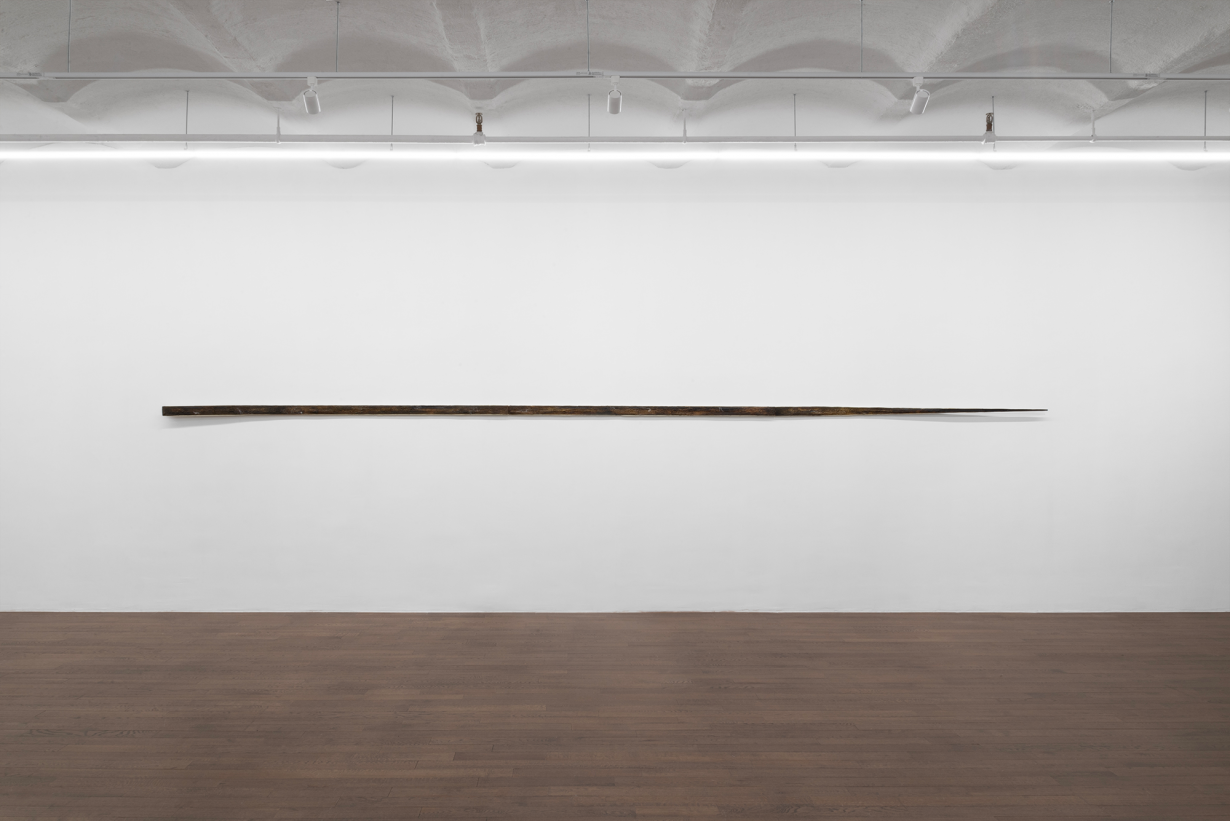
Four works, mounted at uniform height across the gallery walls at Derosia, establish a strong visual horizontal in the otherwise empty space. The assemblages (all untitled, 2025), each several metres in width and only six centimetres in height, produce a new relation to the shape of this whitewashed gallery. One, facing the entrance, tapers at one end, like a long, sharpened splinter, introducing a fragility and precision that runs throughout the exhibition. To perceive these works from a distant vantage point risks forsaking their parts for the whole. Apprehension of their dusky tones and scummy textures requires moving beside and along their extreme horizontal stretch, which forces a sustained and deliberate observation of details.
Broken umbrella spokes and loose, tangled silk threads appear to have been accidentally caught and sedimented onto a slick layer of a tarlike substance on their narrow surfaces, yet their placement suggests careful orchestration. It turns out that these low materials are affixed onto their linen substrates with tiny nails. The spokes bear the patina of exposure at their joints, evoking opposing sensations of protection and degradation, against the desaturated surfaces composed of wax and oil paint. The residue of passing days is collapsed here into dense, weathered assemblages in matt, grungy palettes.
The assemblages metabolise what the city has discarded in the crevices of its streets – objects thrown away, scorned or crushed underfoot. It brings to mind the nineteenth-century image of the ragpicker, by whom detritus is reorganised and redeemed according to its form rather than its use value. Such a negation of modernity is elsewhere present through the reuse of past materials to forge new poetics in current works. The reappearance of a warped chequerboard pattern, for example – a motif seen in the artist’s last show at Derosia, within a different composition – suggests a recursive aspect to the artist’s practice, taking past works into new iterations, generating variations that suggest the everyday circulation of fragments. Absent that context, though, the assemblages remain finely crafted objects from found materials, exquisite as they are.
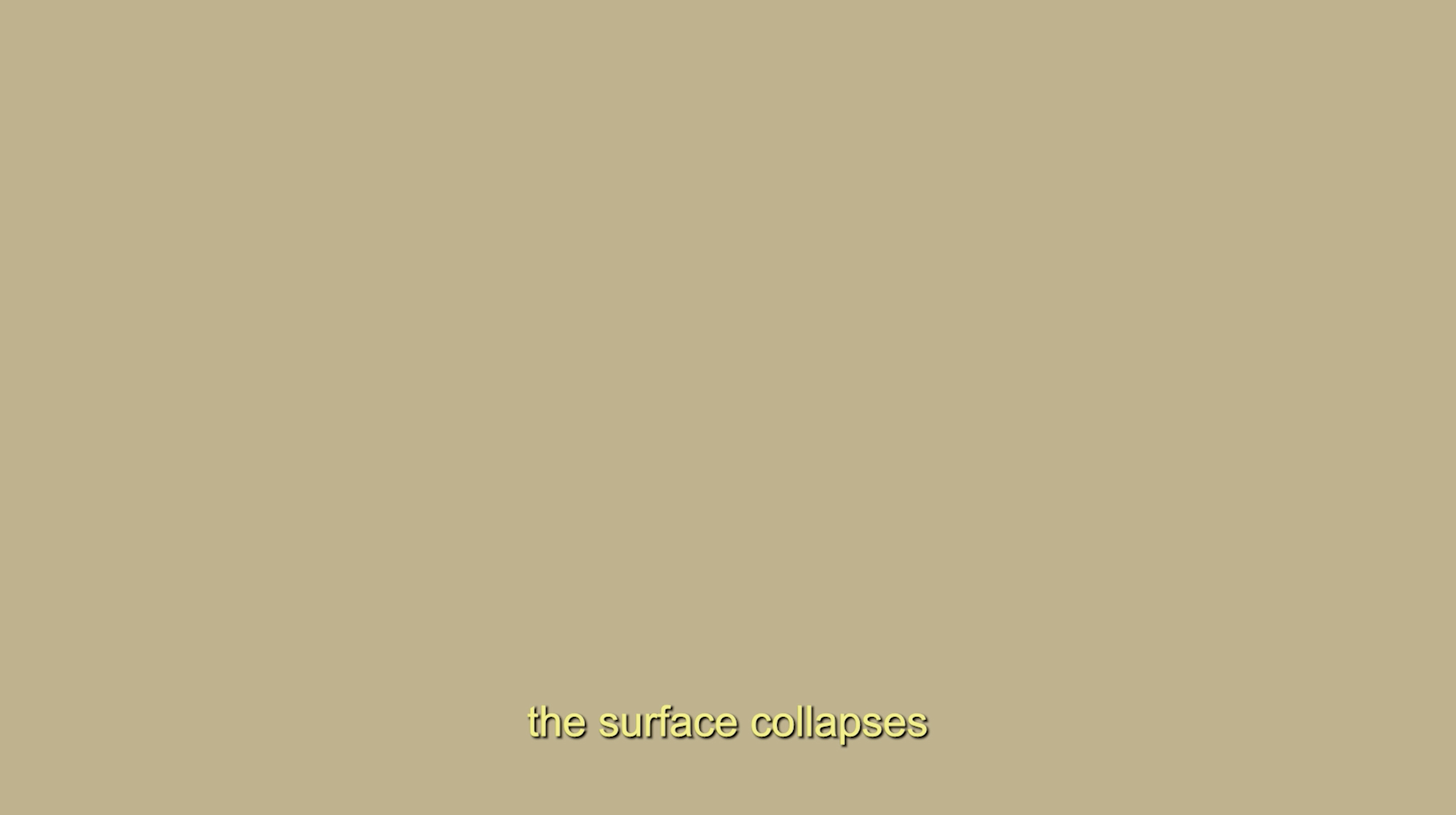
In an adjacent room, the video Voices (2023–25) is projected onto a wall. Throughout the video, the screen remains a monotone chemical colour – putrid but also neutral, like a slightly acidic khaki. The only visuals are subtitles to the audible voices of what might be chemists in conversation. Most noticeable is the lyricism of the exchange. Lines like “ethers always have that sulphur whisper” and “it’s colourless… faint petroleum note” describe molecules by way of their fragrance. Just as meteorology and astrology can be summoned to explain the rhythms of the world, the conversation suggests, so too can the odour of a chemical’s molecular makeup. But seeing the dialogue spelled out, one is reminded of how vocabulary in one specialist field resonates just as abstractly or opaquely as contemporary art language can do outside of its bubble. Voices ends with a few words on chemical catalysts: “the structure changes… the surface collapses”. This language could very well describe de La Tour du Pin’s assemblages. Ultimately, her atmospheric meditation on material transformations appears to rely more on elegant ambiguity than on conceptual rigour. Meaning here is replaced by metaphor, cast into the air and forbidden to land.
Clémence de La Tour du Pin at Derosia, New York, through 7 March
From the March 2026 issue of ArtReview – get your copy.
Read next Who Doesn’t Have Daddy Issues?