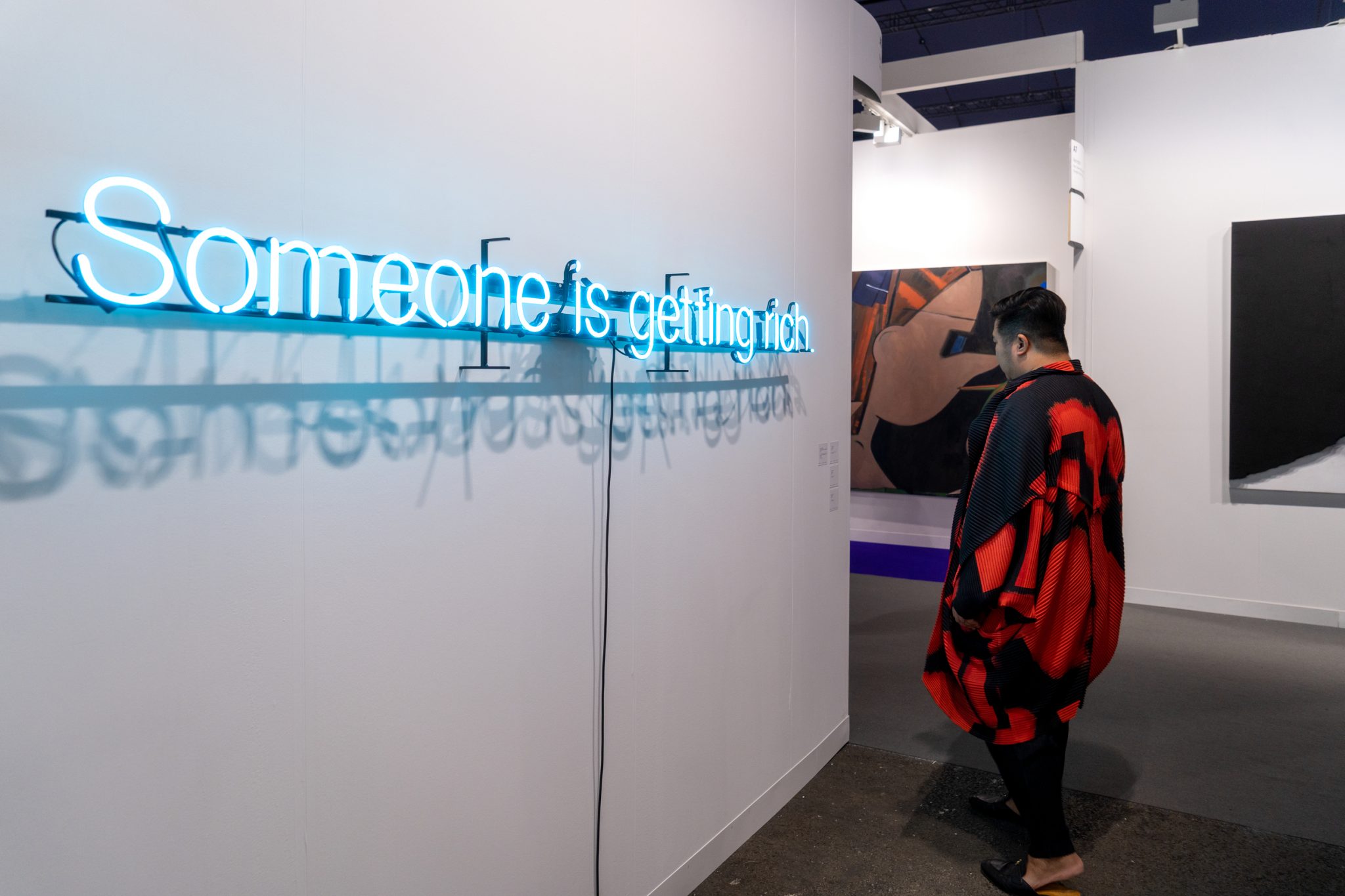
“I’m interested in craft as a kind of quiet resistance in a world that moves very fast and is increasingly mechanised”
ArtReview sent a questionnaire to artists and curators exhibiting in and curating the various national pavilions of the 2026 Venice Biennale, the responses to which will be published daily in the leadup to and during the Venice Biennale, which runs from 9 May through 22 November.
Dana Awartani is representing Saudi Arabia; the pavilion is in the Arsenale
Celebrating Visions. Versace partners with ArtReview to share stories from the 2026 Venice Biennale.
ArtReview Tell ArtReview what you plan to exhibit in Venice. What has influenced or inspired you?
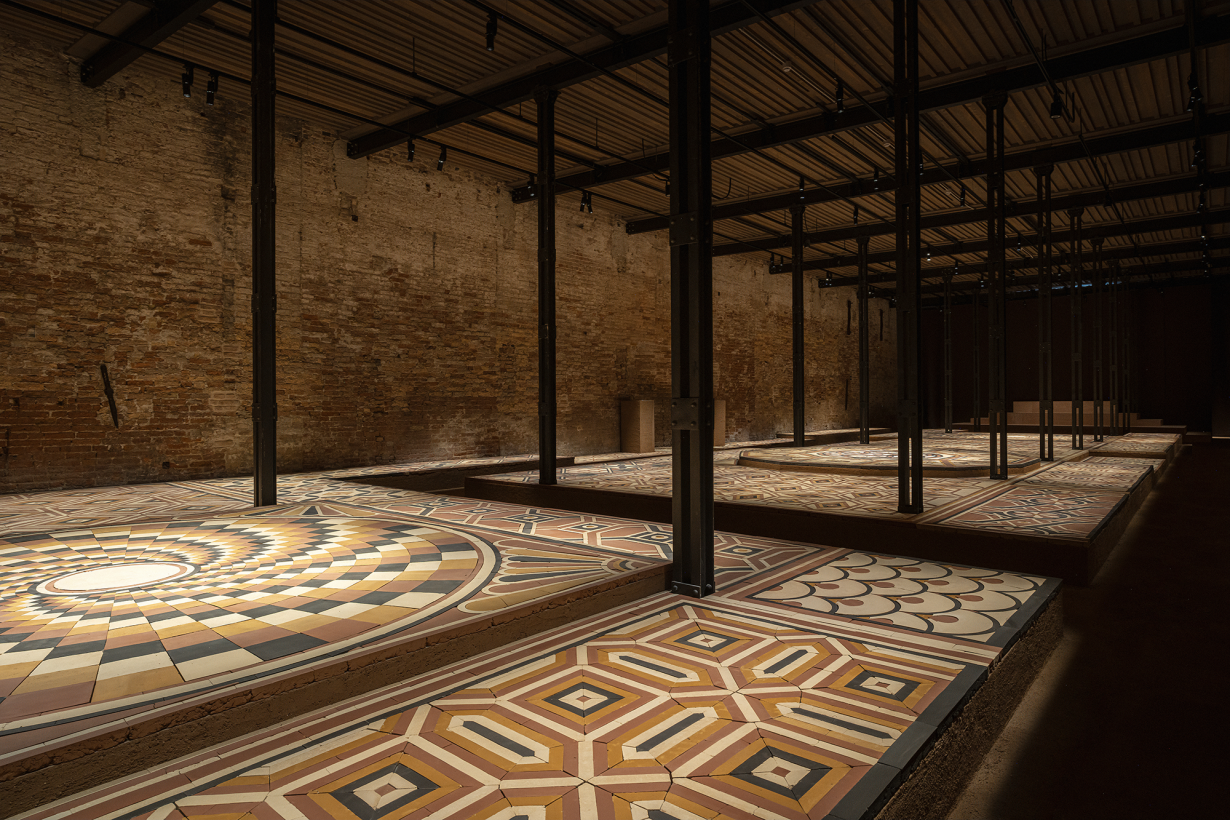
Dana Awartani The exhibition will build on my practice, enabling me to take it to the next level. My practice is rooted in foregrounding cultural histories from across the Arab world and the preservation of the region’s globally-important cultural material heritage, themes that are at the very heart of the exhibition.
AR In what ways, if at all, does your work relate to the theme of the Biennale exhibition, In Minor Keys?
DA My work looks at repair and healing. In times of conflict, the loss of culture and heritage is often overlooked, so in a way the work speaks to the quieter, ‘minor key’ consequences of conflict. Through slow, handmade processes, I’m also interested in craft as a kind of quiet resistance in a world that moves very fast and is increasingly mechanised. For me, the act of making by hand can also be meditative, creating space for reflection and human connection.
AR Why is the Venice Biennale still important, if at all?
DA It’s such an honour for any artist to be given the opportunity to participate. It’s a major international platform and a coming together of different cultures to exchange ideas.
AR What role does a national pavilion play at a time of increasing confrontational nationalisms? Is it about expressing difference or commonality?
DA I wouldn’t say national pavilions are about expressing nationalism. When you visit them, they tend to be much more about the artist’s practice than about promoting a national identity. In the case of the Saudi Pavilion this year, it’s all about showing commonality. I am based in Jeddah, which is an incredibly multicultural city, and the Pavilion reflects the diversity of voices within the artistic community rather than a single narrative.
AR Who for you is the most important artist in any discipline that your country has produced?
DA I really respect Ahmed Mater for the important role he’s played in shaping the art scene in Saudi Arabia, particularly through initiatives like Edge of Arabia. His work often engages with Saudi Arabia, but through a very distinctive lens and perspective that comes from someone who is deeply rooted in the place.
AR What is something you want people to know about your nation that they might not know already?
DA Saudi Arabia is a large country with many distinct regions, each with its own cultures, traditions, food, and ways of speaking. In fact, one of my favourite Saudi cuisines is Jawa food, which is an Indonesian-Saudi cuisine. Because of the pilgrimage route, a lot of people from Indonesia historically have settled in Jeddah, and a huge part of the cuisine has been influenced, which I love.
AR Given that you are exhibiting in a national pavilion, is there something, a quality or an issue or attitude, that distinguishes the art of that nation from that of others, that makes it particular? Are there specific contexts that it responds to, or do you think that art is a universal language that goes beyond social, political, or geographic boundaries?
DA Art today is incredibly global. You can’t always look at a work and immediately identify where the artist is from. The differences lie in the contexts artists are responding to and sometimes in their materials. In my own work, for example, the materials come from the region, but the themes I explore, like cultural destruction, are global concerns. So, the distinctions are there, but they’re much more nuanced.
AR What, other than art are you looking forward to seeing or doing while you’re in Venice?
DA The food! Specifically, spaghetti alle vongole. It’s my favourite and I eat it every day when I’m in Venice.
AR Could you give us a brief overview of your average working day while creating your presentation in Venice?
DA During the production phase of the project, I’d wake up around 8am and go straight to the production site, which is in the outskirts of Riyadh, surrounded by farms. I would work on-site until the afternoon, then drive back to the city and have a little break before focusing on the design side of the work – and answer some emails.
AR Can art really change the world?
DA I don’t think art changes the world, but I do think it can change individuals. It can quietly shift how someone thinks or understands something. My work deals with very difficult and violent histories, but it doesn’t try to shock people. Instead, I try to approach those subjects through a lens of mourning or reflection, which can sometimes open people up to seeing things differently.
The 61st Venice Biennale runs 9 May through 22 November 2026