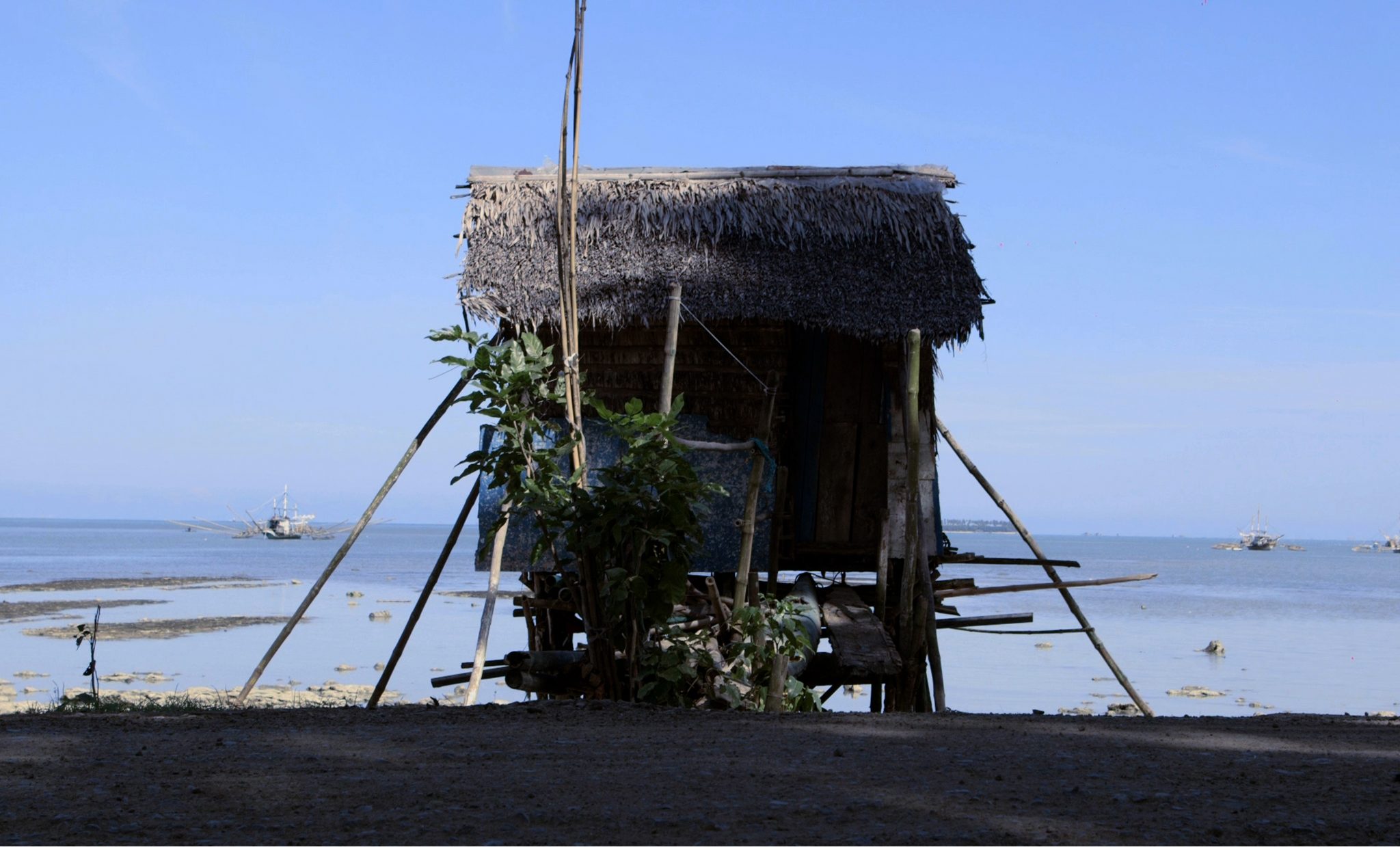
“The Philippines itself is an archipelago, shaped by the movement of water, people and histories. That condition makes it difficult to think of identity as stable or singular”
ArtReview sent a questionnaire to artists and curators exhibiting in and curating the various national pavilions of the 2026 Venice Biennale, the responses to which will be published daily in the leadup to and during the Venice Biennale, which runs from 9 May through 22 November.
Jon Cuyson is representing the Philippines; the pavilion is in the Arsenale.
Celebrating Visions. Versace partners with ArtReview to share stories from the 2026 Venice Biennale.
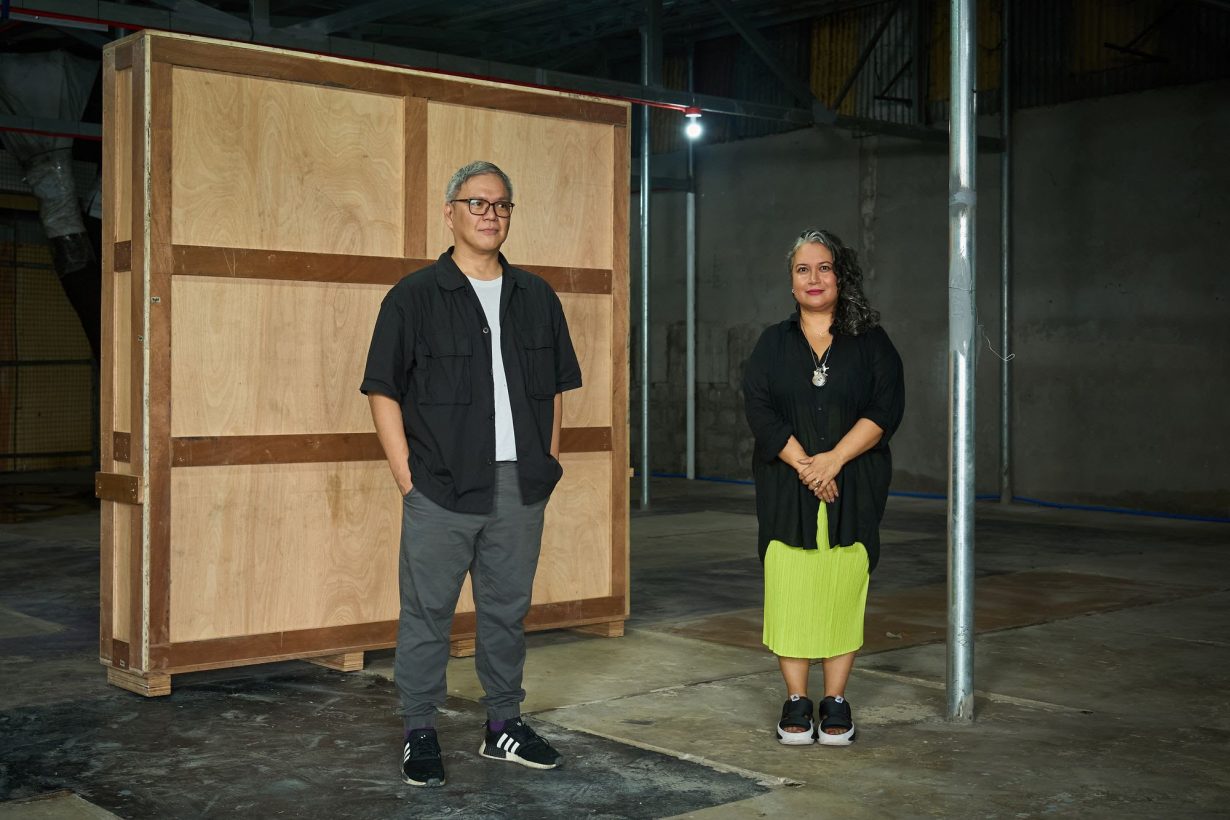
ArtReview Tell ArtReview what you plan to exhibit in Venice. What has influenced or inspired you?
Jon Cuyson I will be presenting Sea of Love / Dagat ng Pag-ibig, an installation that brings together painting, sculpture, sound and moving image into a spatial environment shaped by the logic of the sea. It unfolds as a shifting horizon that can be read as a vessel, an architecture or a site of gathering. Viewers are invited to sit, watch, listen, move and navigate through openings and intervals that accumulate over time.
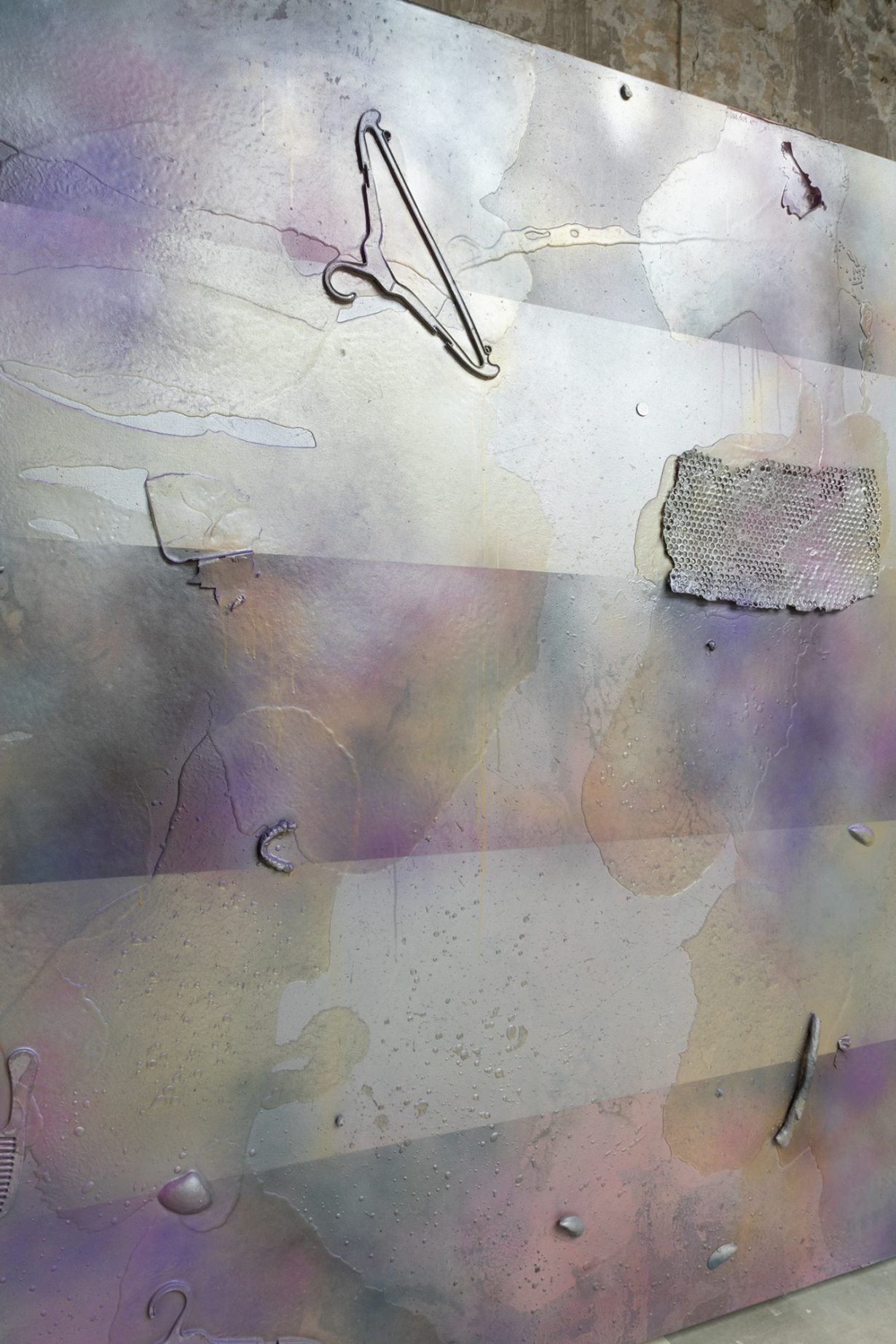
This horizon is formed by fragmented, freestanding painting panels that function as both images and spatial infrastructure. They carry gestural marks and traces of geometric abstraction, alongside metal hardware, cast resin mussels and marine debris, elements that register processes of accumulation, labour and use.
At its centre is Kerel, a queer Filipino time-traveling seafarer whose story extends through my Kerel Trilogy films. He moves alongside Mutya, his trans lover, and Nanay Cleo, his mother and a blind folk healer, forming a constellation that reimagines kinship beyond normative structures. The installation also premieres Sea of Echoes, a film narrated from the perspective of mussels living within a farm in Cavite City, along the edge of Manila Bay. These fictional voices intersect with the realities of unseen maritime labor, particularly the lives of Filipino seafarers whose work sustains global movement while often remaining invisible.
Instead of illustrating these conditions, the work moves through abstraction, using fragmentation, gesture and structure to hold movement, rupture and continuity without fixing them into a single narrative.
Conceptually, the project is grounded in what I call ‘mussel thinking’, a way of understanding the world through processes of filtration, clustering and sedimentation. These are not only ecological conditions, but ways of imagining how histories and bodies persist through relation.
AR In what ways (if at all) does your work relate to the theme of the Biennale exhibition, In Minor Keys?
JC I see Sea of Love as working in a minor register, attentive to what is quiet, dispersed and often overlooked. Rather than making a singular statement, it gathers fragments and allows meaning to emerge through relation. The work listens to submerged histories of labour, ecology and forms of care shaped by queer experience. In this sense, the minor is not about scale, but about attention, a way of sensing what moves beneath dominant narratives.
It also asks something of the viewer. To sit with the work, to move through it slowly, and to let perception adjust. The installation does not reveal itself all at once. It builds gradually through layers of encounter. For me, the minor is a way of staying with what resists clarity or resolution. It is about proximity, duration and the capacity to remain with what is partial, shifting and still forming.
AR Why is the Venice Biennale still important, if at all?
JC The Venice Biennale remains important because of its historical and political weight. It has long shaped how art is circulated, legitimized and read globally, and it remains entangled with histories of nationhood, cultural diplomacy and uneven power.
What continues to matter is its ability to focus attention. Few platforms bring together such a range of practices, positions and urgencies in one place and make them visible at this scale. At the same time, that visibility is never neutral. It is structured, selective and often uneven.
For me, the value of the Biennale lies in working within that condition, engaging it critically while using its visibility to bring forward narratives that might otherwise remain unseen, without taking its authority for granted.
AR What role does a national pavilion play at a time of increasing confrontational nationalisms?
JC The pavilion is a complicated form, especially at a time when national identities can feel increasingly fixed or confrontational. For me, it does not need to resolve that tension. I think of it as a porous space, one that can hold different histories, voices and conditions without collapsing them into a single narrative.
The Philippines itself is an archipelago, shaped by the movement of water, people and histories. That condition makes it difficult to think of identity as stable or singular. Rather than presenting a fixed image of the nation, the work tries to open it up, allowing both its specificity and its connections to broader experiences of displacement, care and survival to remain visible.
In this sense, the pavilion becomes less about representation and more about relation, about how a nation is continuously formed through movement, encounter and exchange.
AR Who, for you, is the most important artist your country has produced?
JC For me, it would be David Medalla. His practice was open, mobile and resistant to fixed form or identity. He treated art as something alive, circulating, relational and always in process.
That sensibility has stayed with me. It offers a way of thinking about art not as something contained, but as something that moves across people, places and time. It continues to shape how I approach movement, collectivity and the possibility of remaining unfinished, still in a state of flux.
AR What is something you want people to know about your nation that they might not know already?
JC That the Philippines is deeply shaped by water. It is an archipelago where history moves through migration, carried by people who cross waters and bring their lives, labour and histories across distance while sustaining connections far from home.
But this relationship to the sea runs much deeper. It reaches back to early crossings, to ships entering unfamiliar waters. Long before and beyond these moments, Filipinos were already navigating vast distances, moving between islands through knowledge, exchange, and survival. Alongside this is a culture of care, forms of kinship that stretch across distance, constantly negotiated and sustained.
AR Given that you are exhibiting in a national pavilion, is there something (a quality or an issue or an attitude) that distinguishes the art of that nation from that of others? That makes it particular? Are there specific contexts that it responds to? Or do you think that art is a universal language that goes beyond social, political or geographic boundaries?
JC I don’t know if I would define Philippine art as a fixed category. For me, it grows out of an archipelagic condition, where movement, distance and connection are part of everyday life.
Working across different contexts, I have come to understand my practice as a kind of filtering, holding onto certain fragments, letting others pass and allowing things to gather without needing to resolve them into a single identity. This is where mussel thinking comes in, processes of clustering and accumulation as a way of staying with complexity.
Art can travel, but it does not become universal by losing its specificity. If anything, it is the particular, where it comes from and how it is formed, that allows it to connect across contexts.
In Sea of Love, I try to hold that tension, something grounded in the Philippines, in its maritime histories and conditions, while remaining open enough to move and resonate elsewhere.
AR What, other than art, are you looking forward to in Venice?
JC The seafood, definitely. And just being close to the water. It’s familiar yet strange to me. I like watching Venice shift with the tide, how movement and stillness seem to sit side by side.
I’m also looking forward to the energy of the other pavilions and those unexpected encounters between works, conversations and people. But mostly, I’m curious about getting a little lost. I like walking without a plan and letting the city reveal itself slowly.
AR: What does your average working day look like while preparing the exhibition?
JC I usually start the day with a good breakfast while going over my notes, reviewing the exhibition plans and thinking through what still needs to shift. I try to answer emails early, just to clear some mental space before heading out.
At the Arsenale, the day begins by checking the installation, how the light moves through the space, how sound carries and how the materials are settling. Small adjustments start to matter.
From there, it becomes a steady process of building and adjusting. I am working with twenty freestanding panels, each about seven feet by seven feet, so much of the day is spent positioning, aligning and slowly shaping the overall structure.
There is a rhythm to it. I move between working closely with the team and stepping back to see how everything comes together, the panels, the moving images, and the sculptural elements on the floor that need careful placement. It is a constant negotiation between intention and the conditions of the space, and learning to listen to what the work is asking for.
I am starting to understand why espresso feels essential here in Venice. It carries you through the day.
AR Can art really change the world?
JC I don’t know if art changes the world in a direct or immediate way. I think it can shift how we see, how we feel and how we relate to one another. Those shifts are often subtle, but they stay with us. They accumulate quietly until something begins to move.
In that sense, art works more like the sea. It doesn’t force change all at once, but over time it reshapes how we understand things, often in ways we only understand later.
The 61st Venice Biennale runs 9 May through 22 November 2026