“I once attended a convention on universal languages. Everyone there tried to convince the other that their own language was the most universal”
ArtReview sent a questionnaire to artists and curators exhibiting in and curating the various national pavilions of the 2026 Venice Biennale, the responses to which will be published daily in the leadup to and during the Venice Biennale, which runs from 9 May through 22 November.
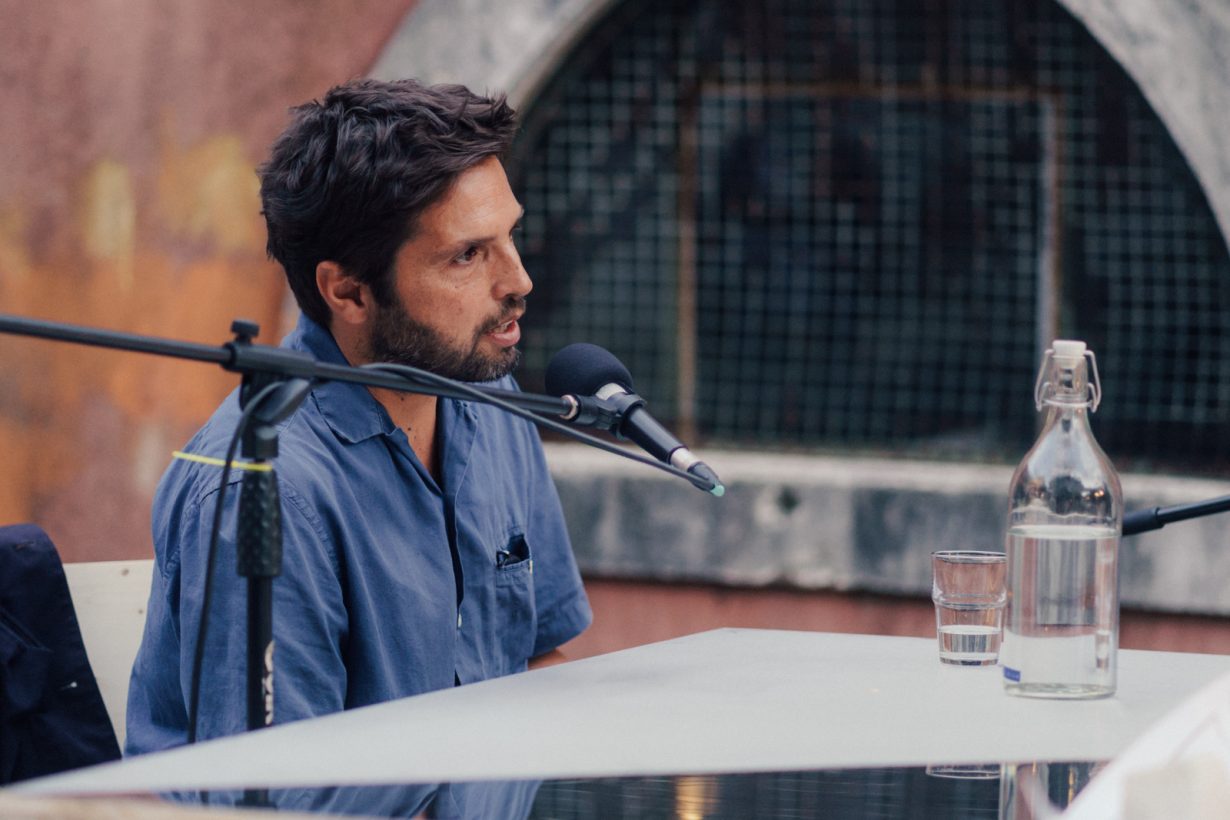
Alexandre Estrela is representing Portugal; the pavilion is at the Fondaco Marcello.
Celebrating Visions. Versace partners with ArtReview to share stories from the 2026 Venice Biennale.
ArtReview Tell ArtReview what you plan to exhibit in Venice. What has influenced or inspired you?
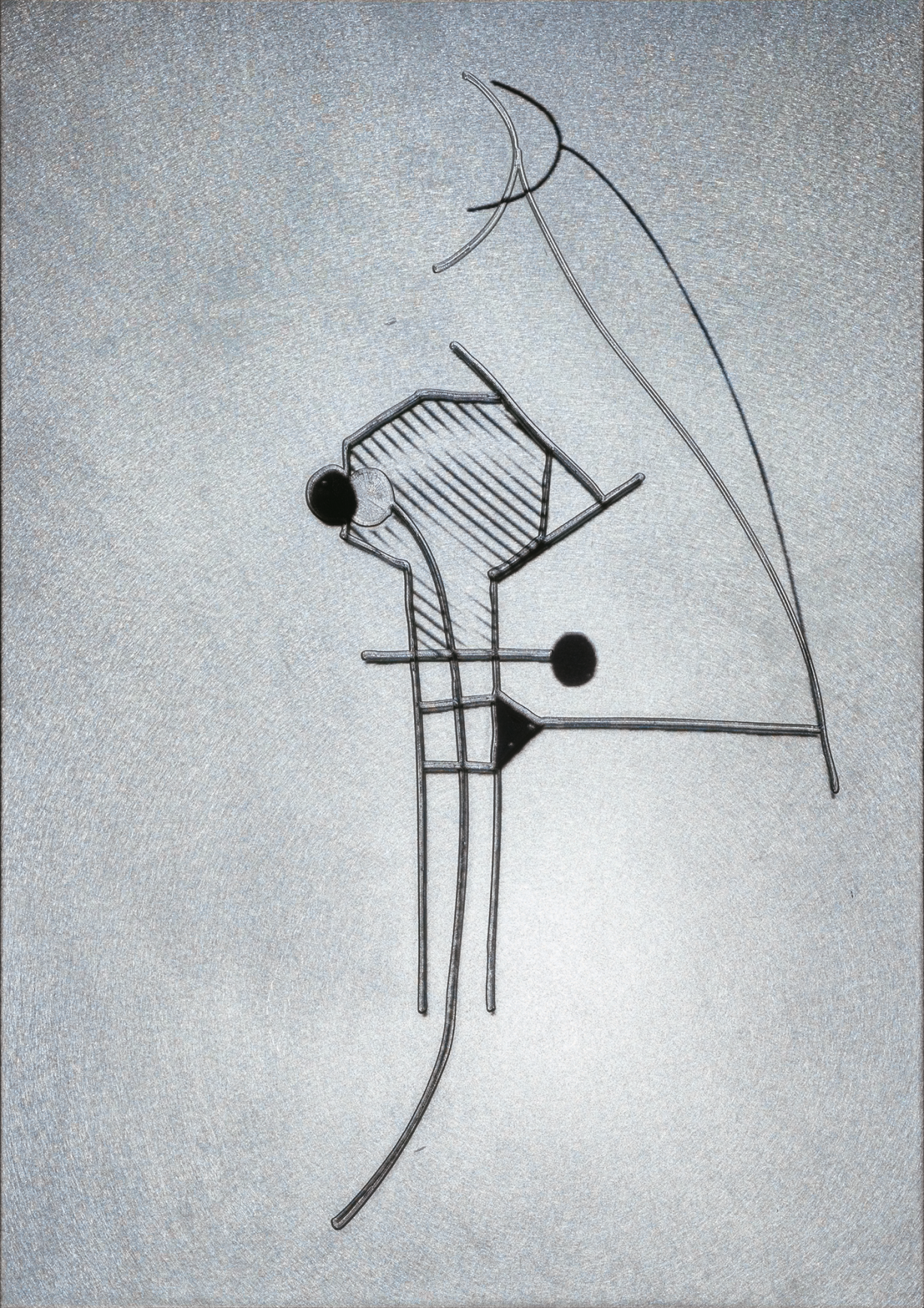
Alexandre Estrela RedSkyFalls is a multichannel installation that can be read through several histories and traditions simultaneously, including fine art, experimental film and animation, politics, ecology and behavioural neuroscience. At its centre are six small suspended metallic screens engraved with drawings onto which are projected animated figures living as holograms in an artificial ecosystem. These prescient, that move according to animal behavioural patterns, become aroused and then freeze in response to real seismic events registered anywhere on the globe: their daily life is interrupted by earthquakes. The project began when I discovered that the data I had been receiving from the US Geological Survey had been discontinued – defunded due to climate change denial. My response was to find new agencies, new routes. To build around the gap.
AR In what ways (if at all) does your work relate to the theme of the Biennale exhibition, In Minor Keys?
AE Each screen operates as a prescient animation tuned to the activity of the world, registering what passes below the threshold of human perception. These beings live in a minor key, in the geological sense, and you feel their fragility when an earthquake occurs.
AR Why is the Venice Biennale still important, if at all?
AE Venice operates on several simultaneous levels. Some are more relevant than others. The ones that matter are the ones you can’t fully plan for.
AR What role does a national pavilion play at a time of increasing confrontational nationalisms? Is it about expressing difference or commonality?
AE Representing a country is, at its best, a way of making its cultural particularities legible not as folklore, but as local forms of thought that resist absorption into globalisation. I feel part of a genealogy that shares what might be called a poetic resonance. At a time when everything is being flattened and homogenised — even flat whites and cappuccino art — resistance feels urgent.
AR Who, for you, is the most important artist (in any discipline) that your country has produced?
AE Portugal is like an enclave, a prolific region for the emergence of curious oddities. I have too strong a sense of community to name one artist without unfairly excluding many others.
AR What is something you want people to know about your nation that they might not know already?
AE If we’re talking about tourism, people already know enough.
AR Given that you are exhibiting in a national pavilion, is there something that distinguishes the art of that nation from that of others? Or do you think that art is a universal language that goes beyond social, political or geographic boundaries?
AE For me, the idea of a universal language in art is a contradiction. I once attended a convention on universal languages. Everyone there tried to convince the other that their own language was the most universal. What we call universal is often just convention, whether or not it truly rests on common ground.
AR What, other than art, are you looking forward to seeing — or doing — while you are in Venice?
AE I would like to experience its living layers of history.
AR Could you give us a brief overview of your average working day while creating your presentation in Venice?
AE Right now it’s like arranging someone else’s wedding. The details keep multiplying. The quantity of things you have to remember to bring to the island is quite insane.
AR Can art really change the world?
AE I don’t really believe that. But I think it can open a sincere dialogue with what might otherwise be considered strange, and in doing so it can make difference more familiar.
The 61st Venice Biennale runs 9 May through 22 November 2026