The cooperative agroforestry initiative is selected by the CATPC collective as part of ArtReview’s annual spotlight on individuals whose work is worthy of more attention
Representing the Kopiisme community, based in Maduarjo, East Java, Pak Sa’i and his fellow members may not be ‘Future Greats’ in the classical sense of the words. Theirs is a community of at least 150 farmers, all descendants of people who lived and worked on the former Dutch plantation, who collectively use 100 hectares of the land for farming, but also for an expression of art and culture, deeply rooted in lived experience, collective memory and a shared future. Pak Sa’i is one of the elders of Maduarjo village and a respected community leader. He helped establish the village’s cooperative agroforestry initiative, specialising in coffee cultivation while revitalising communal land through collective forest management.
Alongside agriculture, Pak Sa’i and his community focus on culture and cultural expression. Akin to our community in Lusanga, who were forced to nourish and financially contribute first to the Lady Lever Art Gallery in Liverpool, and later the Leverhulme Trust grants for academics and the Unilever Series at Tate Modern, only recently did Kopiisme learn that their ancestors’ labour helped fund the Stedelijk Museum Amsterdam – a history that had never been shared with them. In response, they are now in the process of building their own art centre on community land, shaped by local knowledge, collective memory and self-determination.
Many European museums, the Stedelijk among them, were financed with profits generated by forced plantation labour and environmental destruction. They were funded not only by profits from coffee, sugar and palm oil, but also by market speculation on future plantation profits – speculation that this extraction would continue indefinitely. This reality is not relegated to the past. It is no coincidence that these museums still exist, and that today there are more plantations than ever.
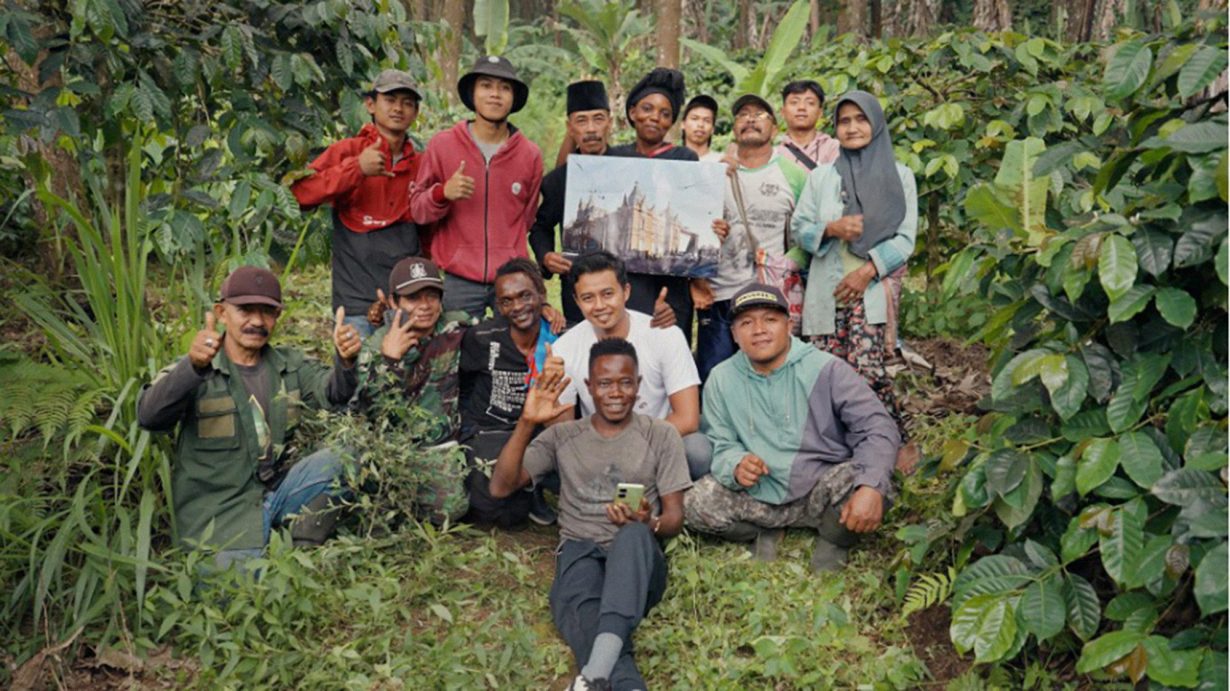
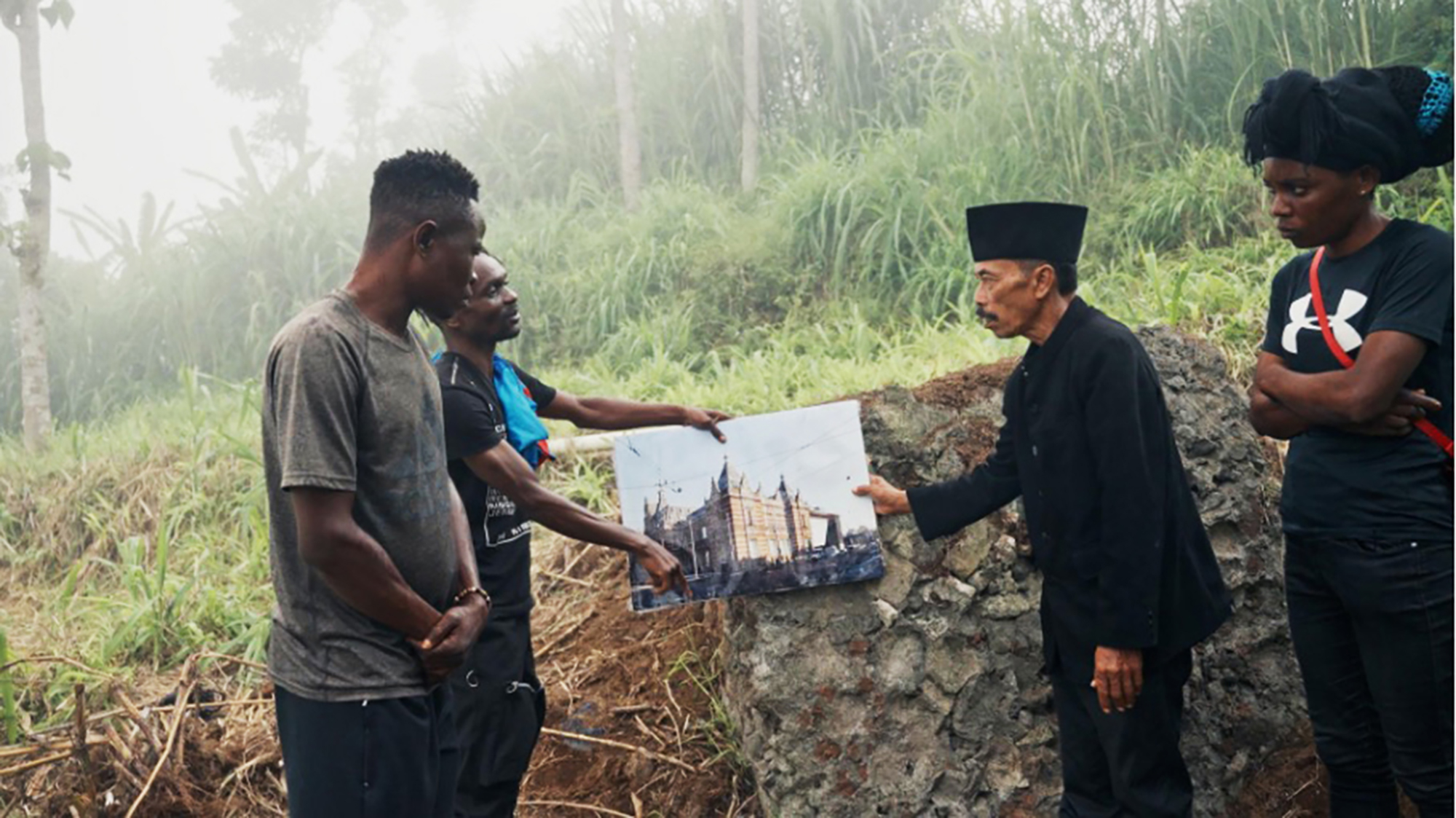
We first encountered Pak Sa’i and Kopiisme following our invitation to represent the Netherlands in the 2024 Venice Biennale. To inaugurate the pavilion, we opened by acknowledging and paying respects to all the plantation workers in Indonesia, Suriname and elsewhere to whom museums in the Netherlands are indebted. Following a subsequent invitation to exhibit at Eindhoven’s Van Abbemuseum – also financed by Indonesian plantation labour – we refused to be used as token plantation workers standing in for other communities, and decided first to meet with plantation workers and ask their permission to exhibit in the museum. CATPC members Ced’art Tamasala, Matthieu Kasiama and Mbuku Kimpala visited the plantations in Indonesia, among them the one where Pak Sa’i and his community live.
Their generosity moved us deeply. They shared everything with us: their food, their homes, their harvests, their stories, their music, their dance and their stories. We felt strong fellowship that permeates all aspects of their lives and now guides the construction of a shared future. During our visit, we identified a large rock from a former colonial building on their land. Together, we have imagined that this rock is the cornerstone of the Stedelijk. The museum’s foundation lies on a plantation.
Pak Sa’i and his community are in the process of building an art centre on that foundation – so that they and their children may embrace a connected future, and through which they can preserve and transmit their practices and culture.
Kopiisme offers a unique opportunity to reconnect cultural institutions with the communities that made them possible and to restore the dignity of those institutions. By recognising those who have long been excluded – the forgotten of plantations, who, through their sweat and blood, nevertheless sustain art. We are the people who know how the land was razed and we are the ones who know how to reforest it.
As in our case, no Stedelijk Museum director or curator has ever – ever – visited any community living and working on the plantations. No one even informed these communities of the museum’s existence, much less their role in its founding. The “dignity of the museum”, said Pak Sa’i, “is low. But by working together, the dignity shall rise, and while it rises, it can lift the dignity of our communities, too.”
Following our visit, Pak Sa’i asked CATPC to submit an offering of coffee to the Stedelijk Museum and invited them to reach out to him and his community. The offering was presented to the Stedelijk Museum director in a public event in November 2024. A year later, they have yet to reach out.
This happens a lot. Museums choose to interrogate their role in the world with handpicked curators, researchers or artists, but seem to avoid engaging with the very people on the plantations who funded and still sustain them.
Pak Sa’i and his community present a different model of what a ‘Future Great’ can be. As one of the communities who live and work on the plantations from which the profits were extracted to fund core Western institutions, they are particularly situated to make an invaluable contribution to the artworld, its conversations and considerations. If there is any community that knows how to survive the most pressing issues of this time – authoritarian rule, inequality and the collapse of ecosystems – it is us.
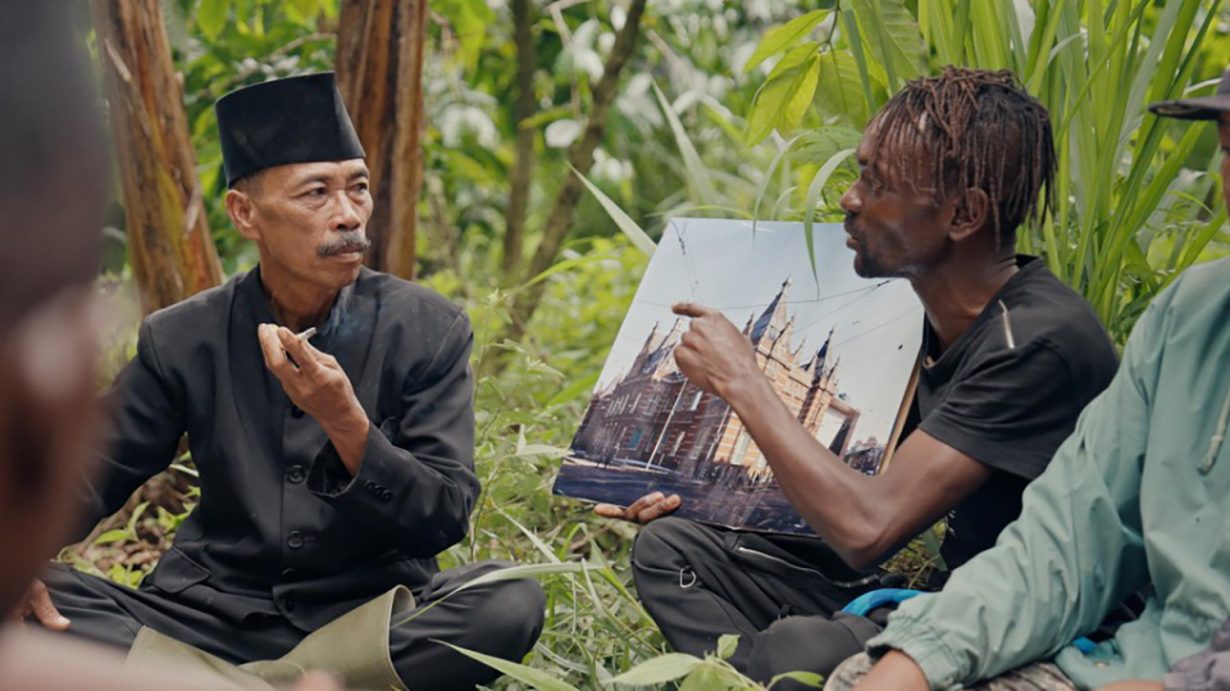
CATPC, CATPC on one of the plantations that funded the Stedelijk Museum, film, 2024 (6min32s)
The film documents CATPC’s visit to a community of plantation workers in Maduarjo, East Java – descendants of workers whose labour funded the construction of the Stedelijk Museum in Amsterdam. In conversation with CATPC, the community reflects on the unequal value of raw commodities like coffee and palm oil in relation to art, and on their continued absence from the museum’s programme and audience.
Explore the 2026 Future Greats
Kopiisme is a cooperative agroforestry initiative in Maduarjo, Indonesia, specialising in coffee cultivation and collective forest management.
Selected by Cercle d’Art des Travailleurs de Plantation Congolaise (CATPC), collective, Lusanga