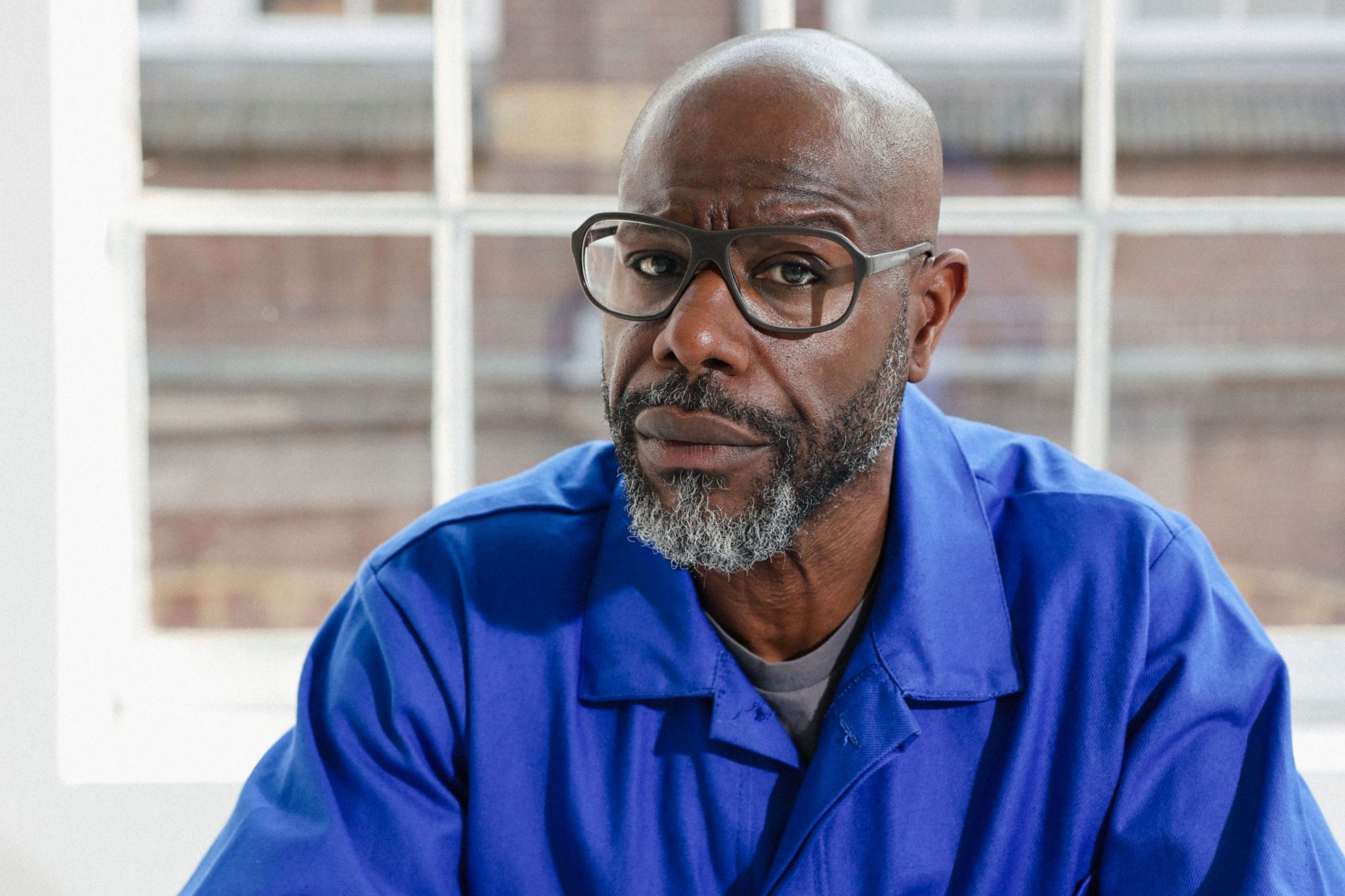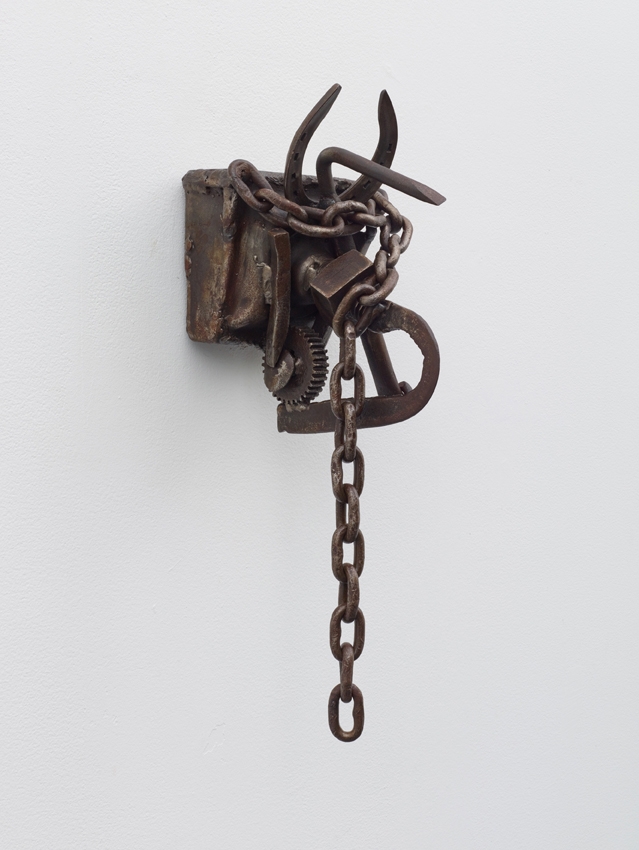
Melvin Edwards, whose sculptural steel assemblages mined Black history and was the first African-American to have a solo exhibition at the Whitney Museum in New York, has died.
Born in Texas, Edwards moved to Los Angeles in 1955 to study painting at the University of Southern California (on a football scholarship). Seeing a fellow student wielding a welding torch saw him abandon canvas, and metal became his material.
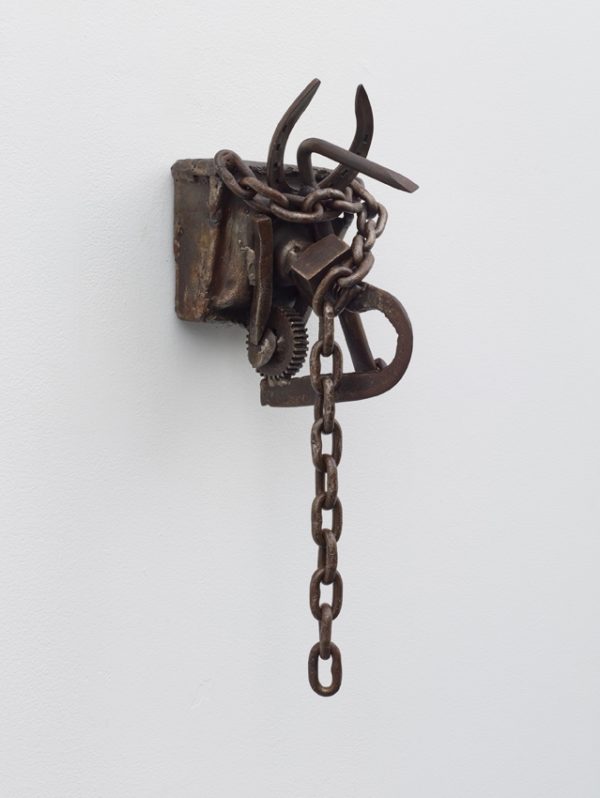
He developed Lynch Fragments in the early 1960s, an evolving series in which he combined found agricultural and industrial objects into wall sculpture, which, after debuting them at the Santa Barbara Museum of Art in 1965, he continued for the rest of his life. Originally they were made in response to the civil rights movement, featuring chains and other motifs of slavery, but Edwards later introduced references to the Vietnam War and, more recently, African cultural and religious practices, by way of noting the modernist tropes of geometry and abstraction predated the likes of Picasso and other Europeans.
He had been in New York for three years by the time of his 1970 Whitney show, working among a milieu of artists including Jack Whitten, Sam Gilliam, Frank Bowling and William T. Williams.
Last year Edwards had retrospectives at the Palais de Tokyo, Paris, and Kunsthalle Bern.
Read next Martin Herbert reviews Melvin Edwards: Some Bright Morning at Fridericianum, Kassel