American museums are in Trump’s firing line. Do legacy institutions have a future?
For legacy institutions of all kinds in the US, it is a time of upheaval. The ‘legacy’ modifier itself is something of an indicator of how far sensibilities have changed as to America’s social and political heritage. And though next to, say, ‘constitutional democracy’, or ‘an impartial justice system’, museums may not breathe the same air of necessity – do we need museums like we do our constitutional protections? – they are our legacy institutions par excellence.
Today however, on all sides of the American political horseshoe, few appear happy with our legacies – perhaps fitting, and a touch ironic, in a year that marks our country’s 250th in existence. But the past is a foreign country, which means that under the current US administration we’re going to treat it like one – that is, we’re going to demand tribute from it, and threaten it, extort it with frivolous lawsuits, tariff it, decapitate its leadership, take its resources and forcibly deport any of its citizens we find in our midst. If this results in the killing of a few of our own citizens in the process, so be it. You have to break some eggs and all that. As our greatest cultural critics once wrote, ‘America, fuck yeah.’
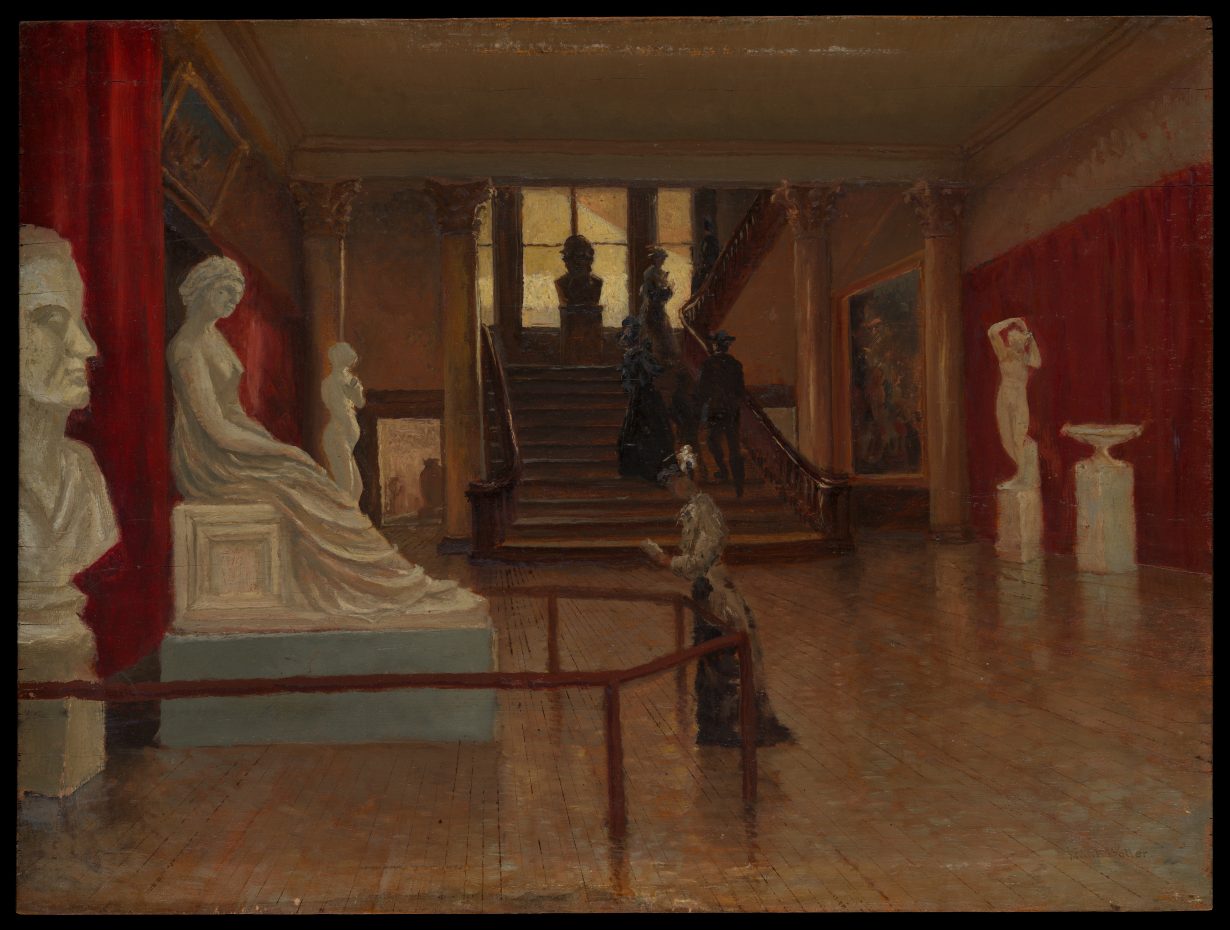
Museums are in the unfortunate position of serving as the embassies of this foreign country, one that has failed to negotiate sovereign protections. (As if those matter; like our onetime allies in NATO, if American museums want to gird themselves against the depredations of MAGA’s culture warriors, they should discuss how to get their hands on some nukes.) The result has been a humiliating and grotesque ‘war against woke’ in the American museum, the front line of which has been defined by an all-out campaign against DEI.
Now, I say ‘humiliating’ because the vibe shift of the past half-decade revealed that, under the banner of DEI, nearly every major corporate, philanthropic and governmental organisation in the US – including museums and arts groups – had long practised some form of institutionalised discrimination in their self-righteous campaign against that spectre called ‘structural racism’. I say grotesque because, though ‘woke’ died of its own rather absurdist contradictions (that illiberalism is the solution to liberalism, that discrimination is the solution to discrimination, that sex essentialism is the solution to sex essentialism, etc), the Trump administration has reanimated the worst of its conspiratorial and paranoid powers and has placed these squarely in the service of actually existing racists, ones who now run rampant through the streets of US cities as much as the halls of the White House.
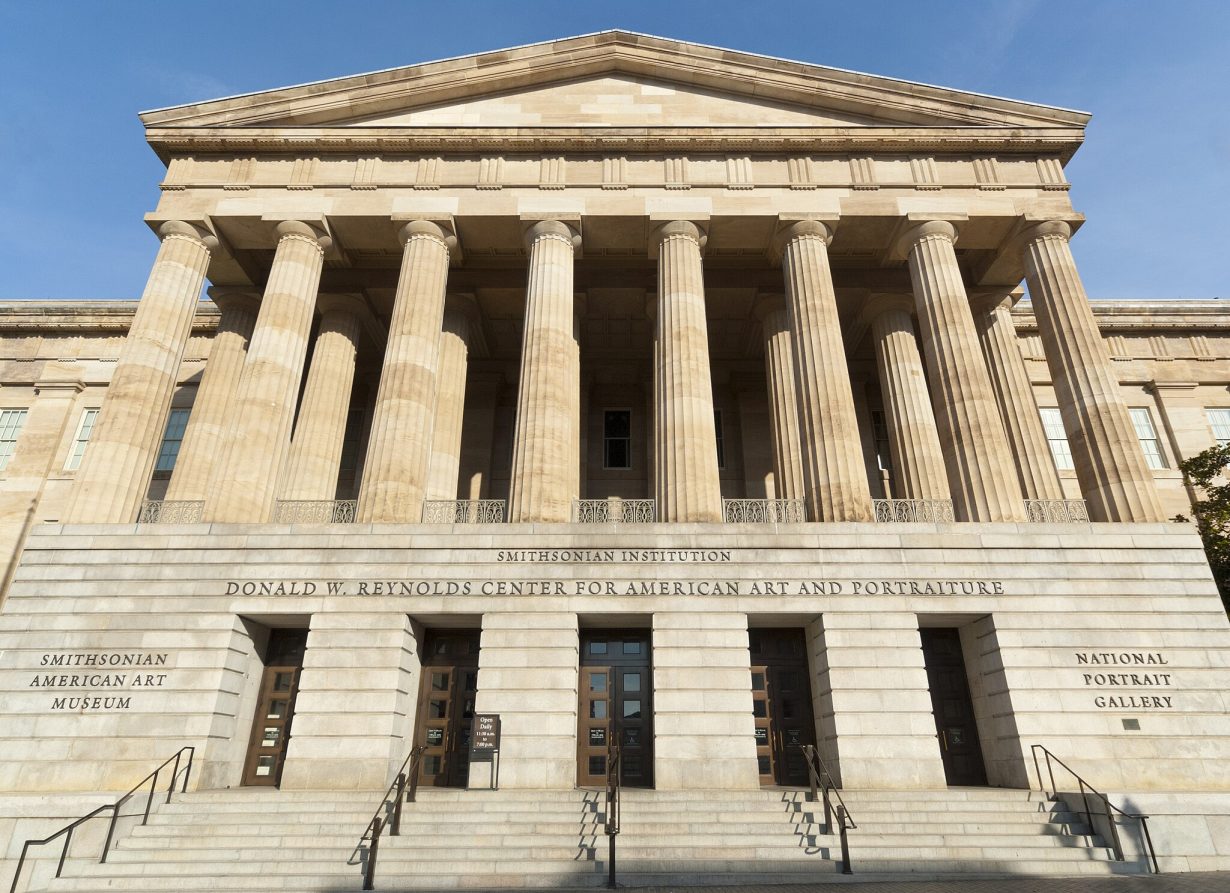
The most high profile battle in the Trump administration’s culture war has been taking place on the terrain of the Smithsonian Institution, a massive complex of museums and research centres that includes the National Portrait Gallery, at which this past summer renowned artist Amy Sherald cancelled her exhibition American Sublime, because it was suggested her painting Trans Forming Liberty (2024), a portrait of a Black trans woman posing as the Statue of Liberty, would upset President Trump (no doubt it would have) and perhaps needed the ‘contextualisation’ of an accompanying video exploring the full array of Americans’ views on trans-rights issues. To the Smithsonian’s proposed ‘solution’, I side with Sherald’s decision to pull out, but only because the response to artistic didacticism should not be more didacticism, just as an expectation of censorship should not bring one to self-censor. But such are the contradictions we all inhabit when respect for the values and principles on which our legacy institutions are built begin to waver.
What is to be done? For the existing legacy institutions I have little to offer. There are smarter and better-intentioned people charged with leading these places than I. Though if I were to have one perhaps obscene thing to suggest, it would be this: lean into the legacy, and away from the institution.
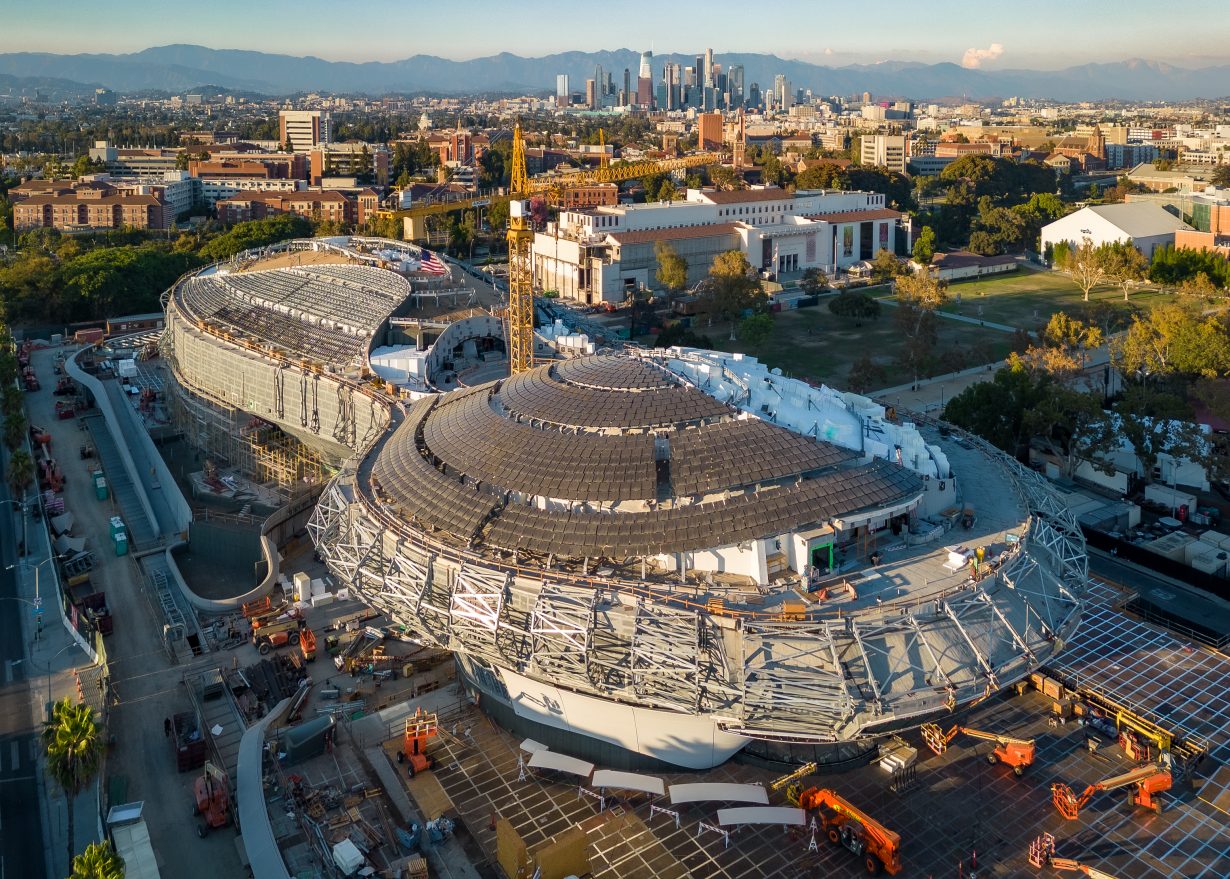
Museums really should be about preservation first and foremost. Preserving cultural artefacts and displaying them as cultural artefacts is uncontroversial, and every museum can put forward a different idea of what is of cultural value, but the point is to be focused, rather than encyclopaedic. Alice Walton’s Crystal Bridges’s broad idea of collecting and preserving ‘American Art’ is one model. The Broad is another. So is, for that matter, the Lucas Museum of Narrative Art in LA. George Lucas has a very clear idea of what his – and it is his – museum is about. The recent departures and turnovers of curatorial staff there are perhaps evidence of how one man’s vision for his collection and its value – his legacy – runs against the grain of this more generic idea that many curators and museum directors have of museums as validation machines for contemporary culture, if not as patronising teachers of contemporary mores; that is, the museum not as legacy, but as institution.
It’s a conflict, one could say, between collectors and technocrats: the former, when they are following their own sense of value and not having it whispered in their ear, build and keep collections. Enduring value comes, when it comes, from the compounding of the time, energy and resources that collectors put into preserving what they esteem. And no, this is not just about rich folks: communities of makers, localities, associations of all kinds dedicate labour and capital, over generations, to keep legacies alive in the form of ‘their’ material culture. The latter, the technocrats, emerge when those communities reach a scale that necessitates divisions of labour and capital. What ensues is not the preservation of the culture but the promulgation of a mission that claims material culture as its justification. This is how preservation becomes validation. Put it this way: if you’re making the case for why a material culture must be esteemed, you’re a technocrat, not a collector. Collectors don’t make cases.
The terribleness of Trump is that he is collector and technocrat in one: he wants to shape not the intelligence of others but their tastes. Americans have always had bad taste (let’s be honest, it’s the most endearing thing about us), but Donald Trump has the worst taste, and his cultural programme is to force it on the country and threaten our many museums with it. The technocrats for their part are not innocent. The technocrats forgot that we are a country without taste, that cultural populism is a perennial force in the seasons of the American epic. From the perspective of the present, everything from ‘institutional critique’ to ‘decolonisation’ has confused preservation with validation, the evidence of esteem with the ethics of value.
Leaning into legacy may be just what the museum needs then. With such new concentrations of wealth in the hands of an elite obsessed with living forever, immortality can be secured through a surprisingly simple operating system: only collect, then show, don’t tell.
Explore the full ArtReview symposium, The Museum in Crisis
From the March 2026 issue of ArtReview – get your copy.