Our editors on the exhibitions they’re looking forward to around the world this month, from New York to Hong Kong
Sydney
25th Biennale of Sydney: Rememory
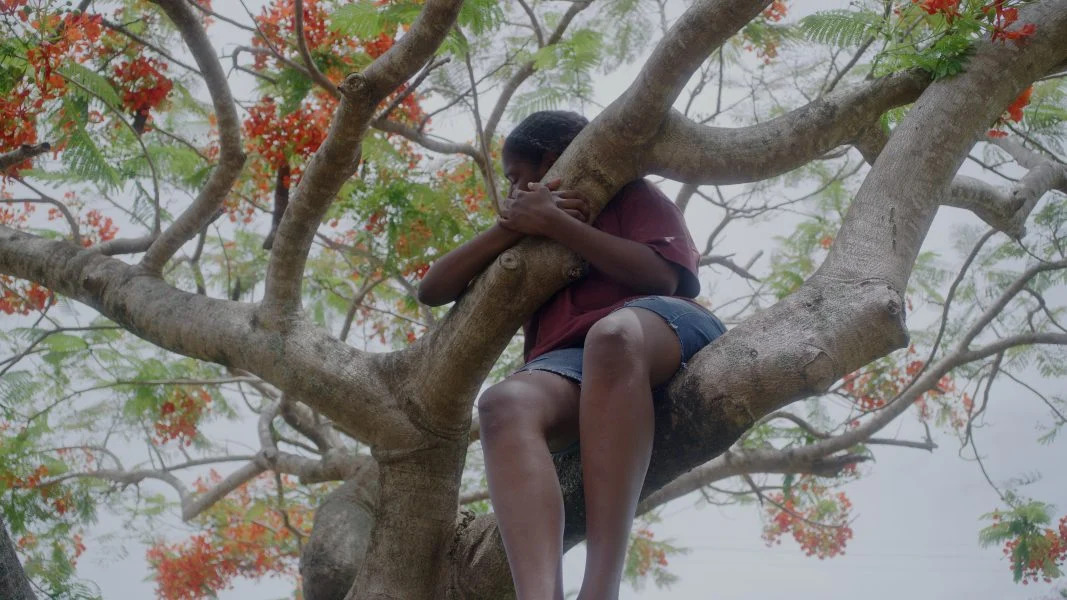
‘Some things go. Pass on. Some things just stay,’ says Sethe, the formerly enslaved protagonist of Toni Morrison’s Beloved (1987). Sethe introduces her daughter to the concept of ‘rememory’ as a means of acknowledging the way in which traumatic events can embed, physically and psychologically into a place, into a body, a landscape and language. It is this insistence on what lingers, and the ‘means of revisiting, reconstructing, and reclaiming histories that have been erased or repressed’ that shapes the 25th Biennale of Sydney, titled Rememory. Adopting Morrison’s capacious term, artistic director Hoor Al Qasimi frames this edition as an exploration of memory not as nostalgia, but as an active, unfinished force: something that presses on the present and quietly rearranges it. Across the city’s harbour-edged sites, artists grapple with inheritance, rupture and survival: Behrouz Boochani and Hoda Afshar attend to displacement and testimony; Vernon Ah Kee sharpens questions of sovereignty and historical erasure; while Emily Jacir and Joana Hadjithomas (with Khalil Joreige) trace the afterlives of conflict through image and archive. In Rememory, the exhibition becomes a kind of tide line – marking what has been submerged and what, stubbornly, remains. Fi Churchman
Various venues, 14 March – 14 June
Hong Kong
Shahzia Sikander: 3 to 12 Nautical Miles
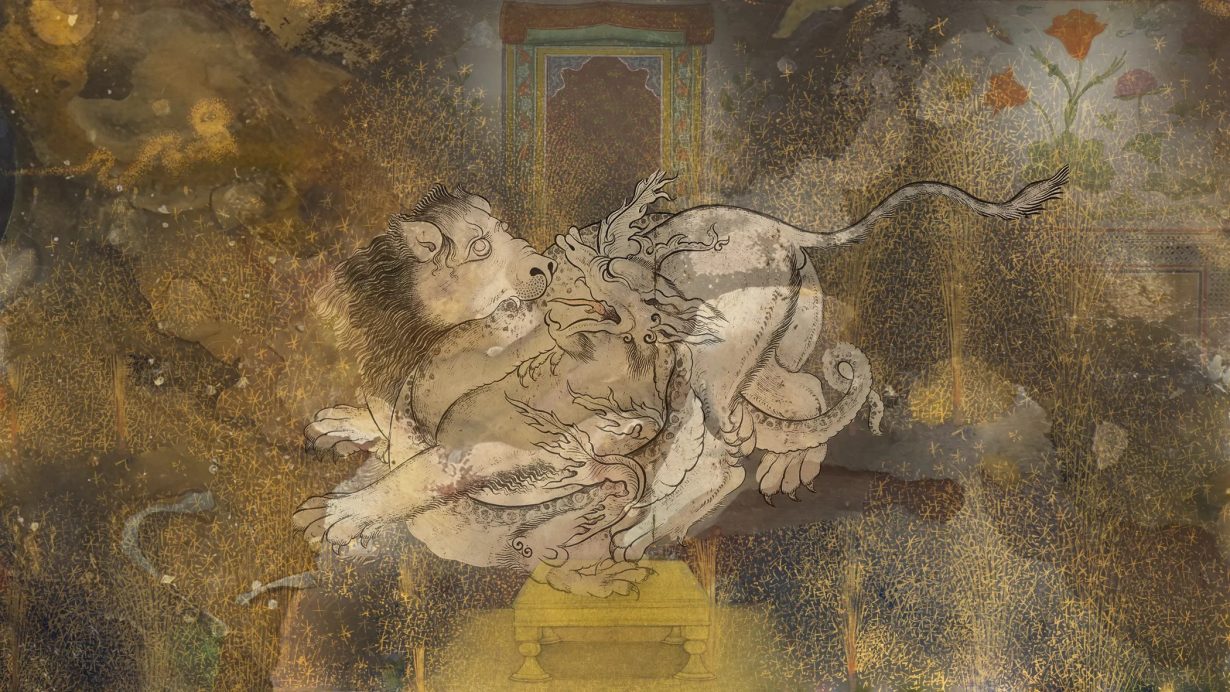
Beginning during Art Basel Hong Kong, Shahzia Sikander’s film 3 to 12 Nautical Miles (2026) will screen on the M+ museum’s facade, which doubles up as a giant digital display overlooking Victoria Harbour. There’s long been a disorderly attitude to the artist’s work, employing montage to both develop visual stories and tear old ones apart. Sikander’s new film will use animation and hand-painted imagery to explore the interlinking imperial histories of the British East India Company, Mughal India and Qing China. One such locus of these competing powers was, of course, the Victoria Harbour, seized by the British during the First Opium War. Sikander’s film will each night reflect off the harbour’s waters. And if Sikander’s recent past of public art has not been without issue, it’s a good thing the M+ facade is quite high up. Alexander Leissle
M+ Facade, 23 March – 21 June
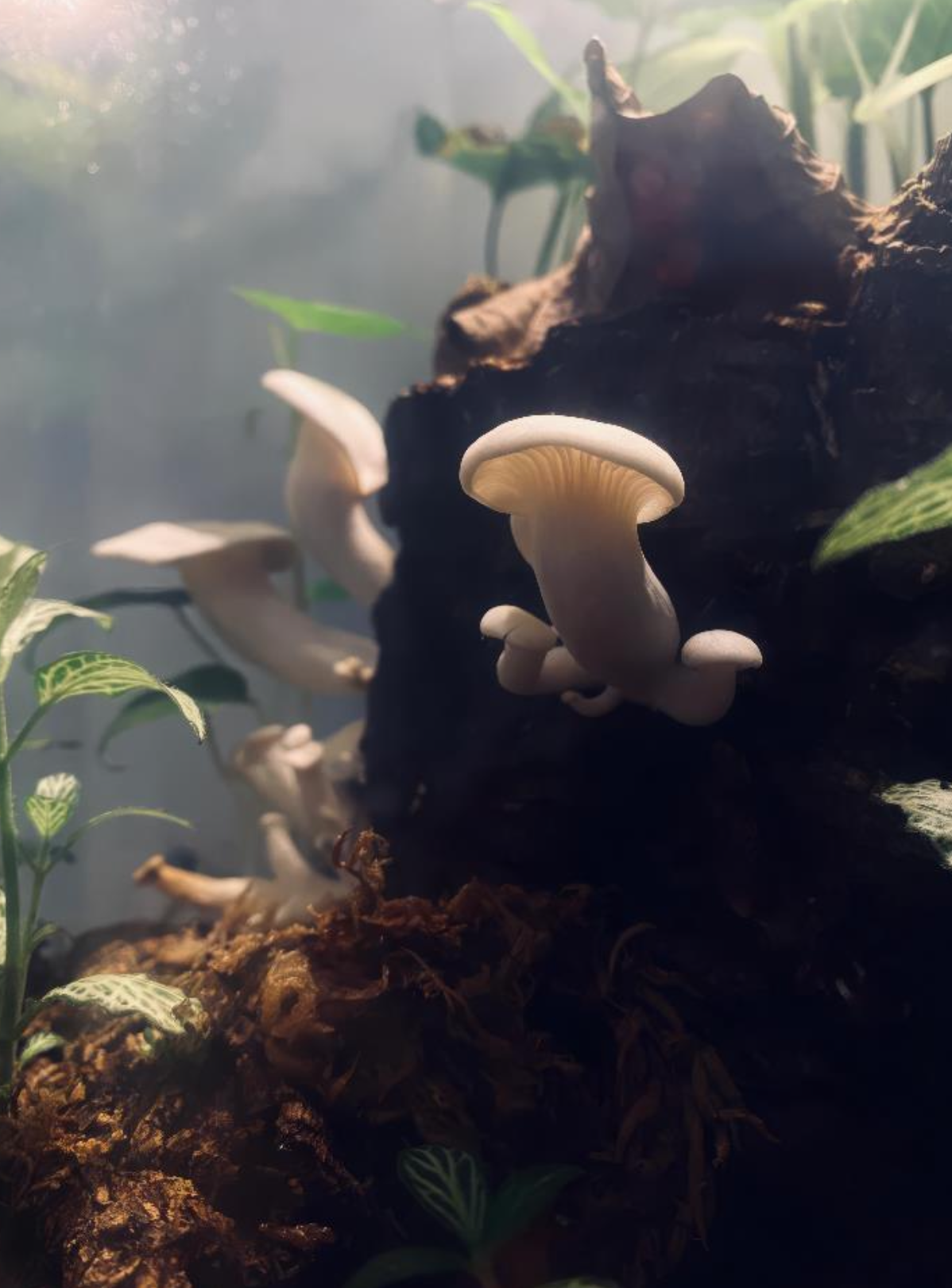
research for Mushroom Clouds, 2026. Courtesy the artists and PHD Group
At PHD Group during Art Basel Hong Kong, the artist-anthropologist duo Zheng Mahler will present the final chapter of their trilogy on the ‘more-than-human’ residents of Hong Kong’s Lantau Island. In focus this time around: the thirty-eight distinct species of mushrooms that the duo researched then expanded by feeding into a custom AI dataset to generate new speculative species. The result is an exhibition ominously titled Mushroom Cloud, exploring our muddled understanding of networked systems, both natural and technological. The space will include live terrariums mirroring the local ecosystem, complete with flora, fungi and a functioning water cycle, while the newly generated species of fungi will be projected into the occasionally forming fog. Mia Stern
PHD Group, 21 March – May
New York
We need no reminder that the 2024 Whitney Biennial left many visitors scratching their heads, its premise and title – Even Better Than the Real Thing – suggesting a wonky conflation of ‘people of marginalized race, gender, and ability’ with AI. Marcela Guerrero and Drew Sawyer, the curators of the 82nd edition, simply titled Whitney Biennial 2026, have so far played their cards close to the vest. Rather than spotlighting specific bodies and particular histories of oppression and resistance, which places the onus of articulating liberation on marginalised groups, they’ve foregrounded the ineffable ‘relationality’ that binds all humans to one another, as well as to plants, animals, built environments, politics and belief. This airier approach feels promising, given the inclusion of artists – among the 56 exhibitors – whose practices are inherently social and intriguingly dialogic. Take, for instance, Mo Costello, whose small-scale community projects include circulating Xeroxed booklets about disability and infrastructure in stores and pharmacies; Pat Oleszko, whose zany performances have been compared to variety shows and stand-up comedy; or Joshua Citarella, known for interviewing artists, professors and politicians on his podcast Doomscroll. It remains to be seen what relations materialise in the galleries. That will depend on whether the works speak to each other, and what they endeavour to say. Jenny Wu
Whitney Museum, 8 March – 23 August
New Humans: Memories of the Future
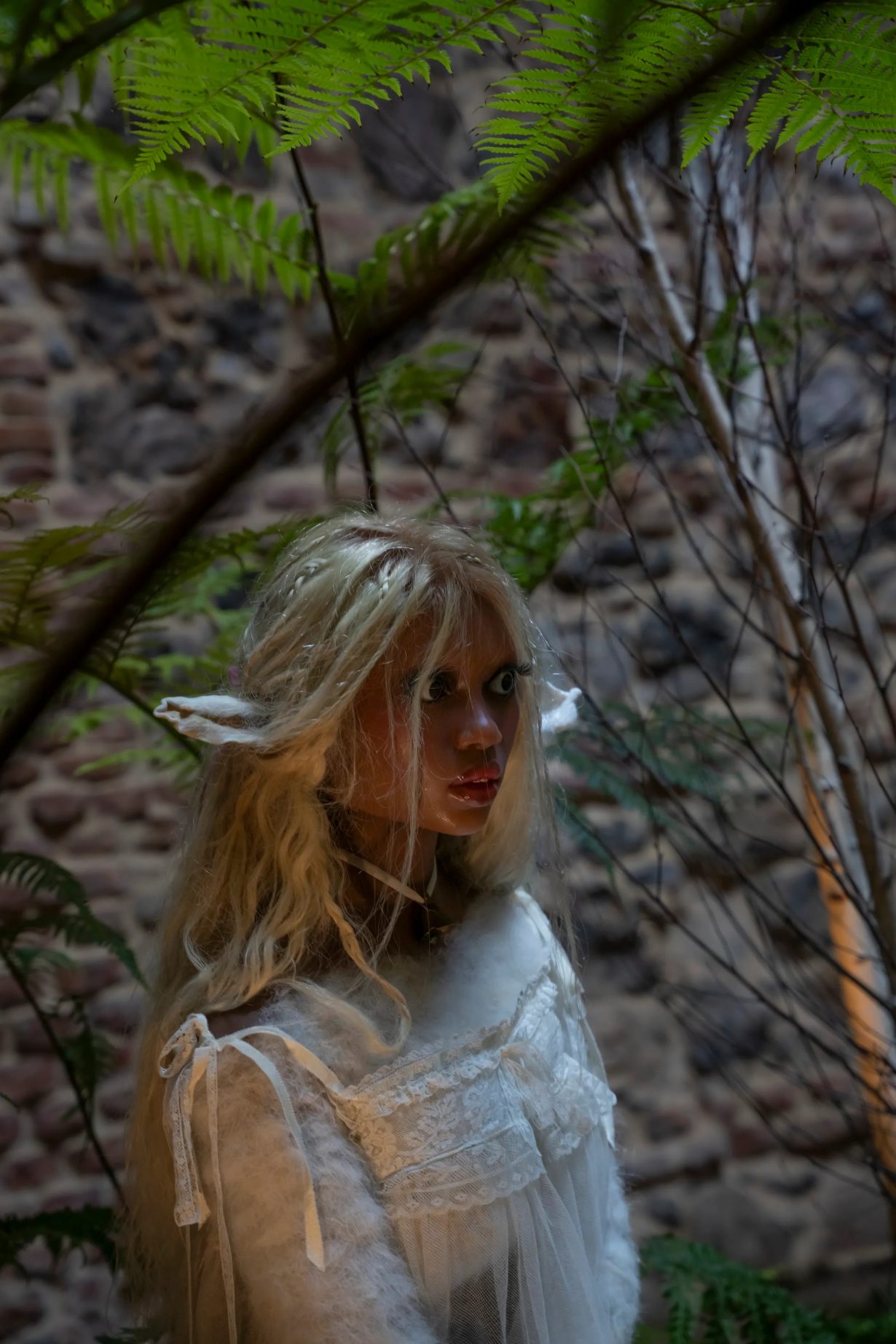
Placing artists active in the early twentieth century in dialogue with those born as recently as the 1990s, this retrofuturism-tinged group show explores how technological shifts across modern history have changed our perceptions of what it means to be human. Works by over 200 exhibitors from 50 countries will fill the expanded museum, including its newly constructed OMA-designed galleries. In this envisioned future – or past? – the human figure appears in myriad forms: a lamb-eared, lace-clad silicone doll (Precious Okoyomon’s When the Lambs Rise Up Against the Bird of Prey, 2024); a slick, tentacled digital avatar (Cao Fei’s Oz, 2022); a jaunty, puppetlike ballerina (Oskar Schlemmer’s Triadic Ballet, 1922); an eighteenth-century Jaquet-Droz automaton programmed to methodically inscribe the question, ‘What do you believe, your eyes or my words?’ (Philippe Parreno’s The Writer, 2007).Opening amid a season of blockbuster biennials, New Humans likewise takes the temperature of the present, albeit with an eye on longer art-historical and intellectual trajectories that contextualise our moment. Perhaps one way to combat the anxieties of our time is to see art that reminds us our curious species has been here many times before. Jenny Wu
New Museum, from 21 March
Sharjah
March Meeting 2026: Between Us, the World
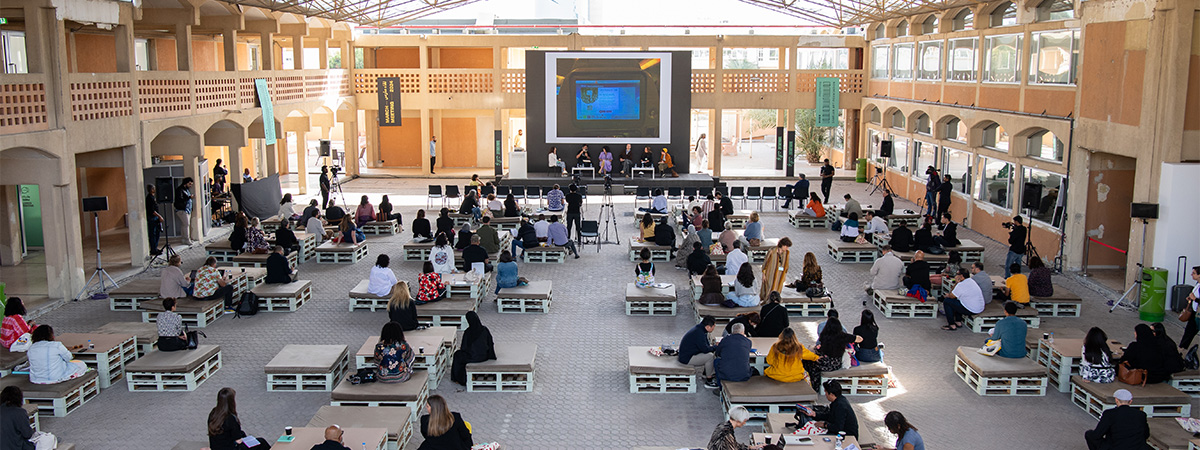
Hosted by the Sharjah Art Foundation (SAF), the March Meeting is an annual event at which what normally happens on the fringes of biennials (like the one the SAF hosts) – discussion, debate, etc – takes centre stage. This year’s theme Between Us, the World, is sufficiently cryptic to appear generous and, in keeping with that, promises to offer a platform to consider ‘how social unrest, environmental degradation, systemic erasure and alienation imperil multiple ways of life across the globe’. Occupying the stage will be a mix of as-yet-to-be-announced artists, writers, researchers and community organisers, although it might be safe to assume that SAF will follow its current trajectory of platforming voices from the Global Majority (who have tended to be more affected by these issues). If that doesn’t float your boat you could always slip out to see shows by Chilean painter Jorge Tacia (urban ruins and catastrophe – natural and manmade – form one strand of his subject matter), Saudi multimedia artist Ahaad Alamoudi (history, representation), or surveys of work from SAF’s collections. Don’t worry about slipping out: the hall is big and no one will ever know. Nirmala Devi
Qasimiyah School. March Meeting 2026, due to take place 27–29 March, is currently postponed and new dates are yet to be confirmed.
Berlin
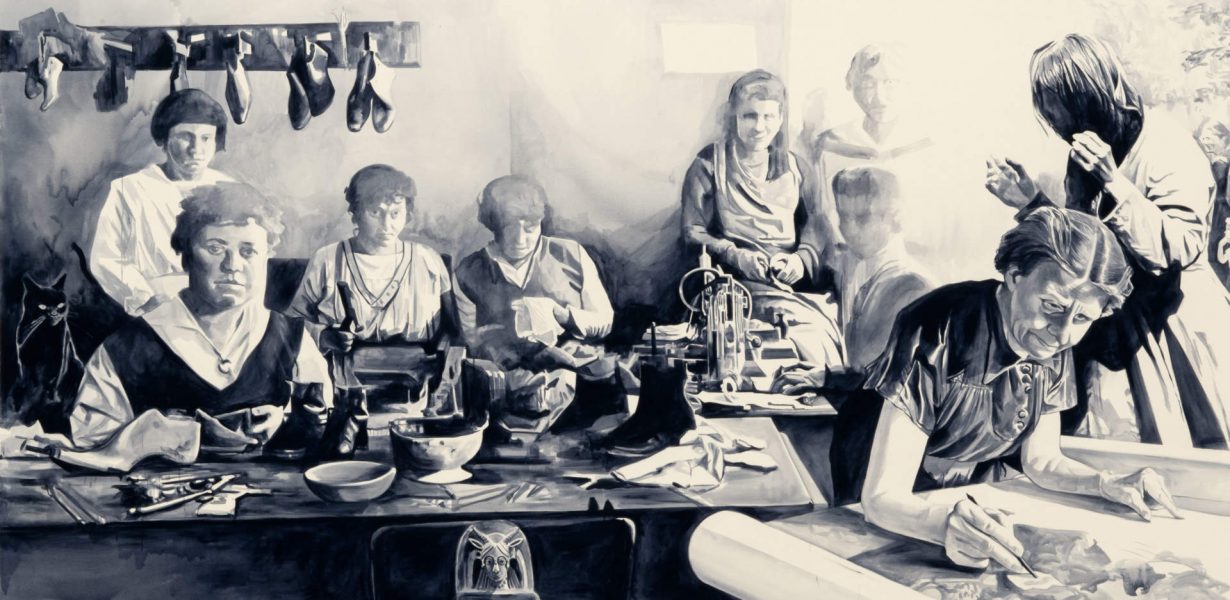
Hamburger Bahnhof is celebrating 30 years with a programme of eight exhibitions throughout the year, building up to the anniversary weekend in November hosting a conference on the future of contemporary collection museums and a bumper 30-hour continuous opening. To kick things off, Italian painter Giulia Andreani is presenting a series of her ghostly figurative paintings, monochromatic works which utilise photographs as starting points to highlight forgotten stories, question archives and probe enigmatic characters from throughout history. In particular, this exhibition will take German painter Sigmar Polke’s exhibition The Three Lies of Painting, from Hamburger Bahnhof in 1997, as a reference, promising a particular intimate dialogue between the past and present. Chiara Wilkinson
Hamburger Bahnhof, through 13 September

Tashkent
Following the launch of Uzbekistan’s inaugural Bukhara Biennial, titled Recipes for Broken Hearts and centred around building communities and sharing food, Uzbekistan now gets its first permanent centre for contemporary art, CCA Tashkent. Its opening exhibition, Hikmah, named after the Uzbek word for ‘wisdom’, will be about sharing knowledge, exploring discussions around forms of intelligence and revelation. The show will feature site-specific works responding to the 1912 industrial building that houses the CCA. On view will be artists including Ali Cherri and Kimsooja, as well as new commissions by Muhannad Shono, Nari Ward, Shokhrukh Rakhimov and Tarik Kiswanson. Yuwen Jiang
Centre for Contemporary Arts Tashkent, 21 March – 30 June
Lisbon
Anna Maria Maiolino: Poetic Earth
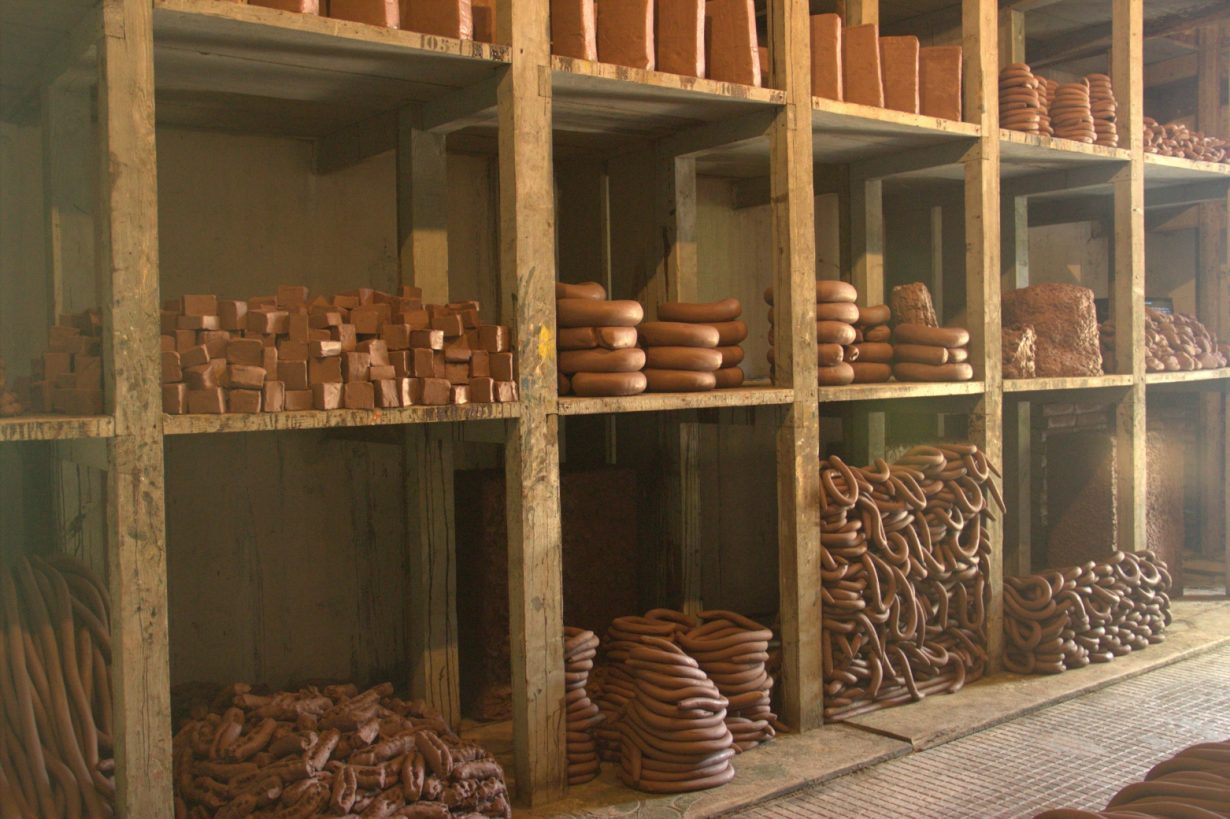
Anna Maria Maiolino’s clay sculptures can be violent, visceral things, like her series Terra Modelada, where one terracotta work resembles a tube of toothpaste squeezed out in one go. But they can also be meticulous, careful and ordered, like the selection of moulded shapes arranged in an industrial-like assembly line in ERRÂNCIA POÉTICA (POETIC WANDERINGS). For her exhibition in MAAT Lisbon’s Oval Gallery, the Brazilian artist will create a new set of her sculptures on site, ‘the largest she’d ever produced’, so expect a fresh sense of scale. The rest of the show will focus on her early works: the drawings, photos and videos that laid the boundaries for her seminal clay work when she turned to the medium in the late 1980s against the backdrop of Brazil’s military dictatorship. Chiara Wilkinson
MAAT Lisbon, 25 March – 31 August