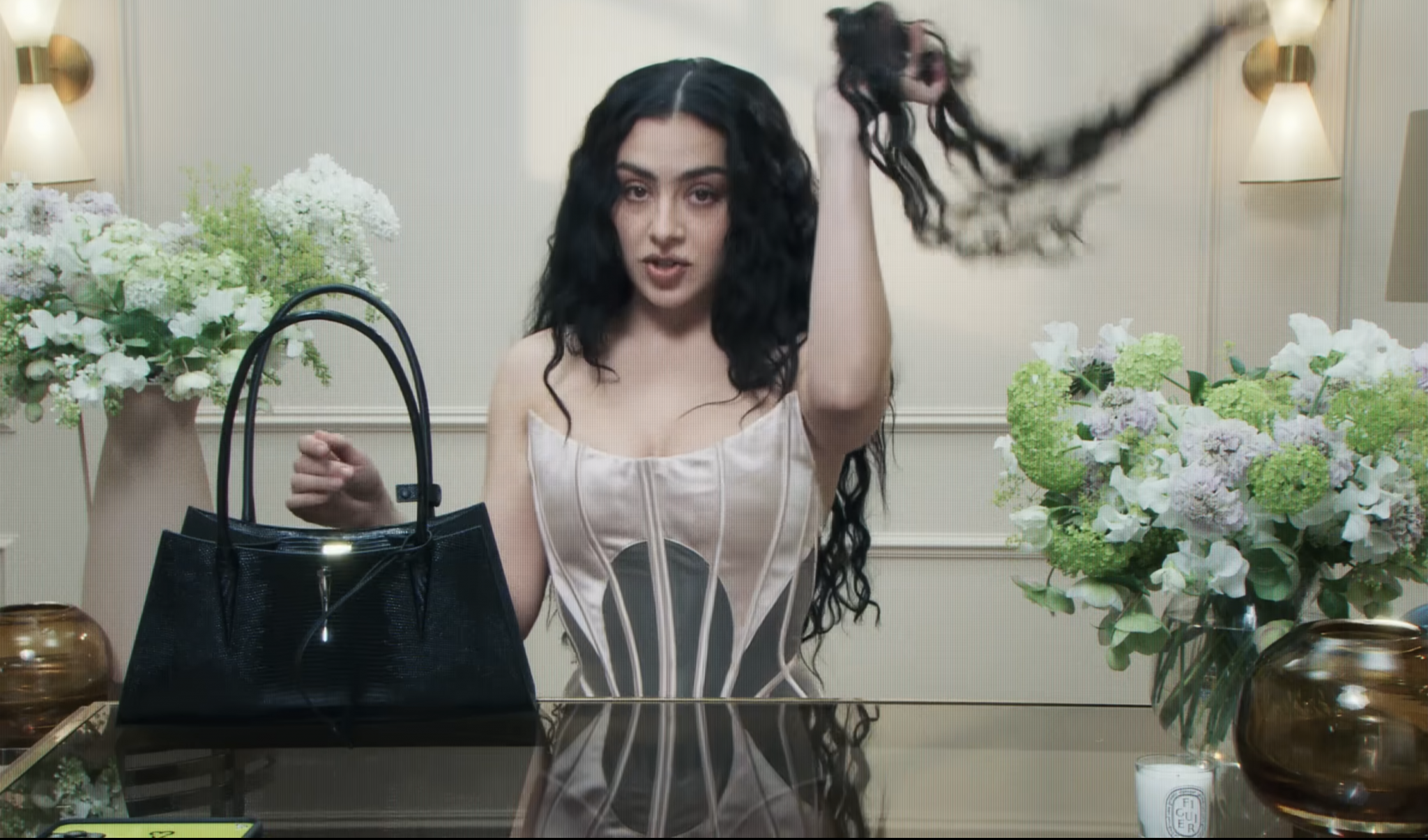
‘‘The people who intellectualise pop culture, ten years after it was made, often feel like they’re the ones ascribing its meaning’’
The Moment broke records last week by becoming production company A24’s fastest-selling title. The film, a moodily lit and chaotically shot satire, follows an alternate-reality version of the pop star Charli xcx, played by herself, as she grapples with the throes of mainstream success and staying true to her artistic vision amid the prolonged lifecycle of her real-life 2024 album, Brat. Co-written by Glasgow-born filmmaker Aidan Zamiri with Bertie Brandes, and accompanied by thumping soundtrack by long-time Charli xcx collaborator A.G. Cook, it was based on an idea by the pop star herself, and stands as much as a commentary on The Industry as it is an easter-egg packed period piece representing modern day internet culture.
Reviews have been, well, mixed: BFI describe the film as a ‘tonally confused music biz mockumentary’, while i-D reckon it ‘may be our first genuinely smart movie about the machinations of modern fame’. Such a reception is unlikely to phase the pop star, whose attempts to out-flank critics have long marked her personal brand: in a video released last summer, for example, she reflected on Brat ‘overstaying its welcome’ in culture, noting her interest in ‘the tension of staying too long’ and temporarily changing her original album artwork on streaming platforms to a rotting, scribbled out version.
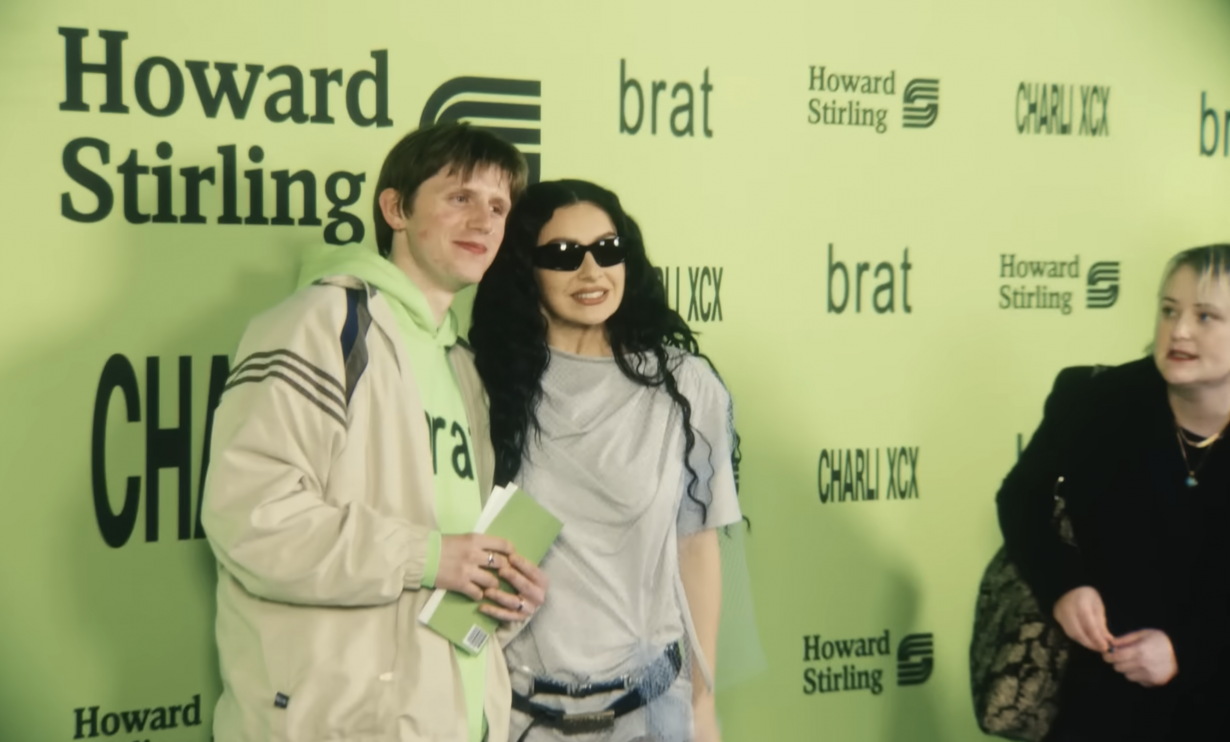
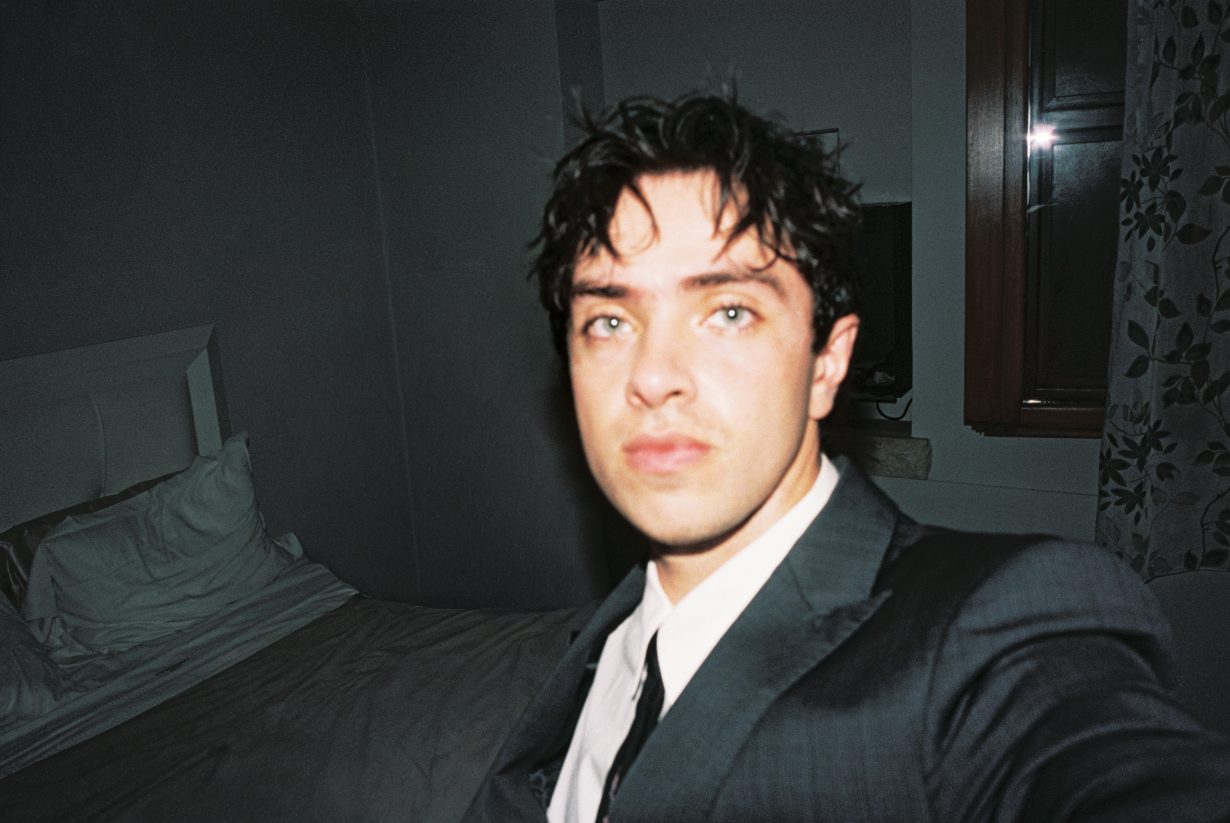
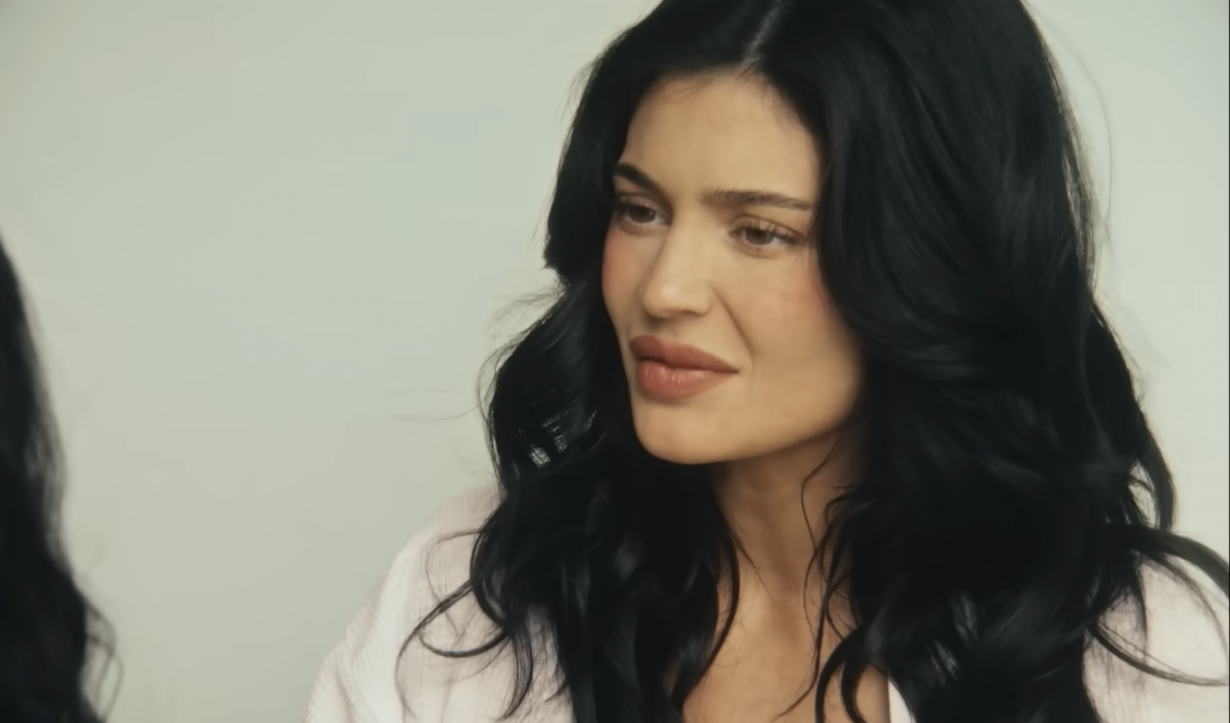
Zamiri cut his teeth in editorial photography, music videos (including the Grammy-nominated production for Charli’s ‘360’) and marketing stunts, including the recent viral campaign for Josh Safdie’s Marty Supreme. That context is key to understanding Zamiri’s practice: speaking to ArtReview, he describes The Moment as a ‘‘scrappy debut film, which just happened to have a lot of eyes on it because of the cast and collaborators’’ (Alexander Skarsgard, Jamie Demetriou, Rachel Sennott and Kylie Jenner, who plays herself, all feature).
Animated and articulate, Zamiri speaks like a mouthpiece for the zeitgeist, though not always the most convincingly. When I ask if, given The Moment’s close relationship with fandom, he thinks audiences will be able to maintain a critical distance when engaging with a film like this, he talks his way around the question with politician-like flair. The Moment, he asserts, is something you’ll either get or you won’t.
Zamiri spoke to ArtReview over a video call from Los Angeles following the film’s premiere at the 2026 Sundance Film Festival.
ArtReview Why did you choose to release the film now, rather than closer to ‘Brat summer’ and the height of the album’s popularity, or much later, such as 2036, when this period might be viewed retrospectively in the way 2016 is today? I am interested in how the film engages with nostalgia, and how nostalgia is being produced or experienced in the present.
Aidan Zamiri We were conscious of making sure that the timing actually interacted with the tension of Brat ‘overstaying its welcome’ in culture. Originally, we’d spoken about putting it out at the end of autumn 2025, but there was still this appetite for the album, so it would have felt inauthentic. And so it made sense to do it now. A lot of the themes landed harder, because the public was more aware than ever of the oversaturation and exhaustion with this sickly green album that felt like it was never going away. I found it really exciting to play with that narrative in the way that we marketed the film. For example, we made a music video for one of AG Cook’s tracks from the score, which played with some of the phrases from Charli’s comment section: ‘girl, move on’, ‘dead horse’, ‘it’s over’, while Charli walked into this Brat depot full of unsold merch, dust and dumpsters.
AR Can you tell me about how The Moment was shot?
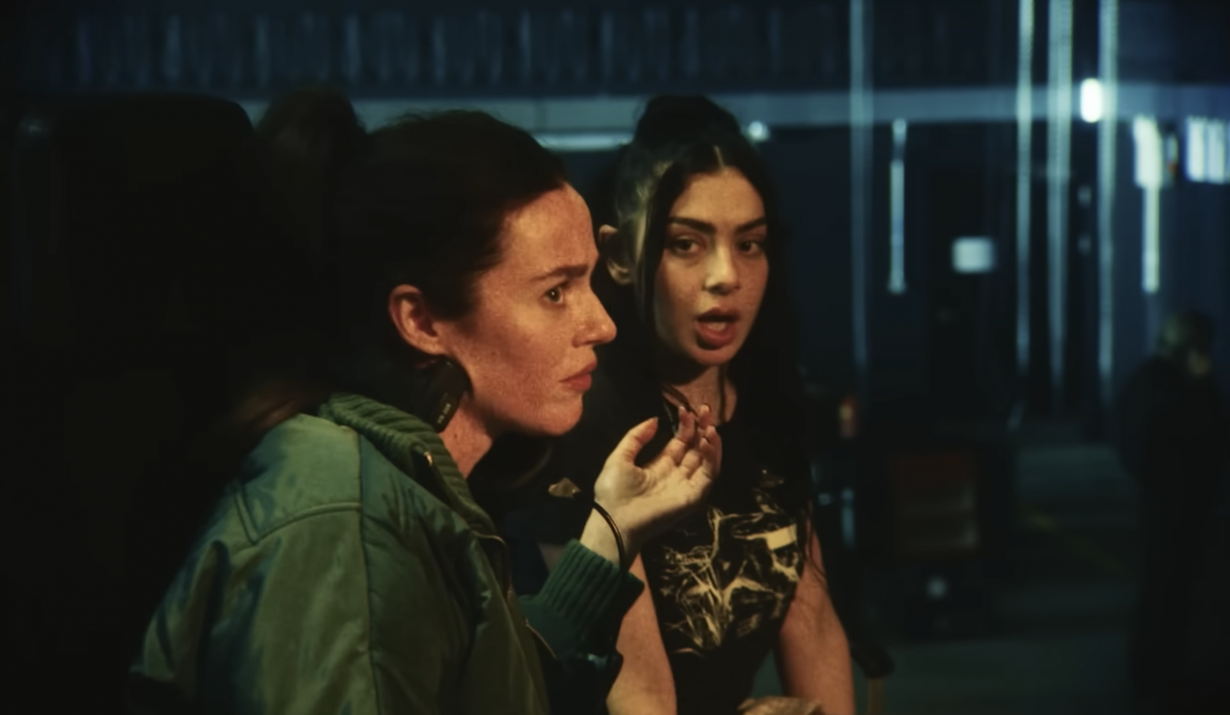
AZ We shot it over 26 days in London and our cinematographer Sean Price Williams was a huge part of the visual identity. One of our biggest challenges was taking something entirely scripted and making it feel accidental and spontaneous, so the camera is a sort of character in itself because the cast are all very aware of it. We had two cameras going at all times which meant we didn’t have to be as careful with continuity and coverage. I was really keen on Sean pushing in at the wrong time, or being distracted by something and panning over someone that was listening in. It meant that everyone was always on their toes, because it could have been any moment that the camera might have whipped around to them. We’d find a lot of magic in those accidental moments.
ArtReview What were the references you had in mind when making The Moment?
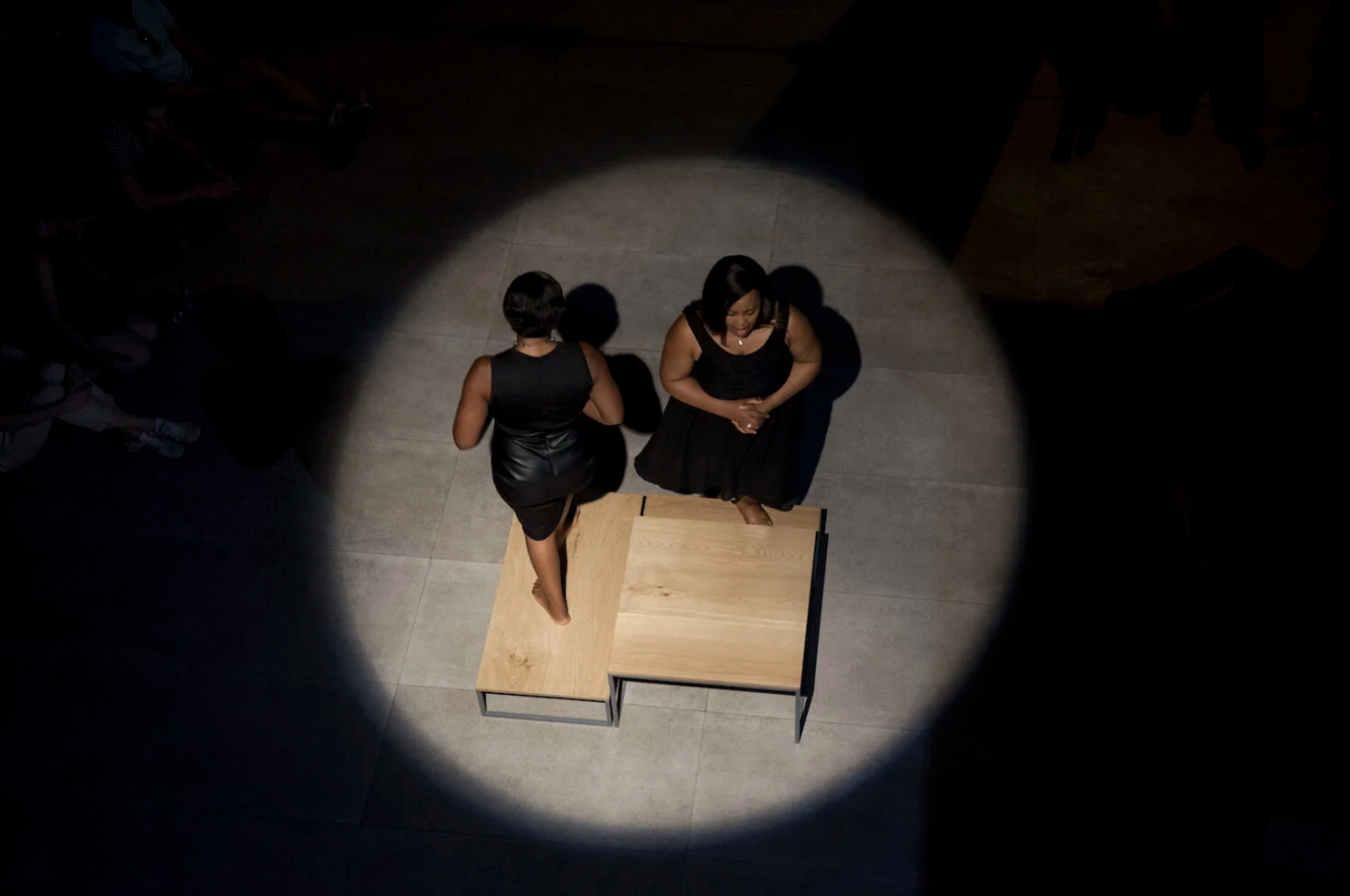
Aidan Zamiri Casey Affleck’s mockumentary I’m Still Here (2010) was an interesting reference point for us. It’s a comedy, but also a rumination on what it feels like to be a person who becomes commodified and about wrestling with a version of yourself that you feel muddled up with. Perhaps everyone can connect to that idea in some way, because we put so much of our sense of self-worth and purpose into things that live outside of us. That became a central thought anchor. Then, when I was about 17, I saw Laure Prouvost’s film installation, Wantee (2013), at the Turner Prize in Derry. You went into this room and watched a film under the guise of it being a home documentary, but actually, it was an entirely fictional story about her grandfather digging a hole from his home and became quite surreal. When you looked around, you realised that the furniture you were sitting on, and everything around you, were props from the video. It opened my mind up to being able to communicate feelings of nostalgia, even for something completely invented.
AR Celebrity documentaries can often feel very staged and inauthentic. How did satire help you to confront that perception?
AZ That was one of the first considerations we had when making The Moment. There was a lot of interest for Charli to make a tour documentary or concert film [around Brat summer], which can often be made in haste for the sole purpose of elongating something’s lifespan. That became a key theme in The Moment, which wasn’t born out of a cynicism for that format, but more of a curiosity to say something that felt more truthful. How do we get to the core of the feeling that there’s no way to avoid becoming engineered? Being able to tell this story – an alternate timeline, an alternate series of events and completely fictionalised – was a way for us to create something that felt true for Charli on a personal level, but was also as an analysis, response or reflection on the culture we live in now.
AR The film seems to make the point that ‘selling out’ has become something of a necessity – not just in pop music, but across the board, in film, in contemporary art and other creative disciplines. There’s a reliance on corporate money to fully realise projects.
AZ It is this constant push and pull of: how do you survive as an artist and make work, when the core of it is about expression, but you’re in an environment where that is not the objective for anyone else.
AR Everything is measured by numbers now, as well.
AZ Exactly. I hope that, culturally, we can come to find more meaning in upholding the desire for art to be about expression, and for that to be a measure of mainstream success, growth and artistic integrity, rather than the numbers.
AR Perhaps it is harder now, because culture is consumed through these algorithmic echochambers. But I do, at least, think it’s interesting that pop culture seems to have recently become more aware of that necessity and increasingly self-referential.
AZ Our movie is particularly self-referential. We’ve incorporated a sort of modern mythology, insofar as we feature cameos of people who are very present in current culture and represent something larger. Even if it’s only the people who have a certain level of internet brain rot who will understand the connection, I see it almost like a Vanitas painting, where objects and symbols explain what is going on in a single frame. However, although we are using this very specific vehicle to tell a story, which has had a very short nostalgia cycle, The Moment is not entirely contained within Brat. There’s still something to be taken from it, whether it be a reflection on capitalism or identity or what it feels like to age and feel disposable.
AR Some audiences, perhaps who aren’t as in tune with the internet language, will just recognise The Moment as a ‘hype film’, which I suppose it is.
AZ It would be easy to shrug off some of the things we’ve included as just being attention-grabbing cameos and that kind of thing. But there was something very interesting about blurring the lines between reality and fiction. There are a lot of real world and archive clips that we’ve taken, warped and reupholstered, which, along with the other visual references, add to a way of storytelling that, even if it’s subliminal, will help audiences to understand what we’re trying to do. It has been a large part of my practice up until now, whether through photography or music videos or bizarre marketing techniques.
AR It can be easy to underestimate the capacity of pop culture to reflect these deeper emotional and social realities; it is often dismissed as something that’s quite vapid or shallow. Do you think that is a quality of pop culture itself, or does it have more to do with how it is consumed and circulated?
AZ Pop culture is a mirror to the world. As you said, it can be disregarded, but often, 10 years later, people are able to reflect and intellectualise it. What is frustrating is that the people doing that will often feel like they’re the ones ascribing the meaning to it and that wasn’t the artist’s original intention. It can be a very misogynistic take. You’ll find it with artists like Addison [Rae], who clearly understands the references that have come before, but often audiences believe they’re the ones giving her that weight as an artist. It is this double-edged sword when making pop culture: people want to ingest it in a way that feels light and fun at the beginning, and then later, they’re able to reflect on what was meaningful about it at the time. Maybe that’s the way it should be consumed: you take it all in by accident and then realise later that it is saying something.
The Moment arrives in UK cinemas on February 20, 2026.
Read next The Year in Film: Dialogue Is Over