The director and writer on adapting A Pale View of Hills for the big screen as it arrives in cinemas this week
Kazuo Ishiguro, the British-Japanese novelist and Nobel laureate, holds a steadfast place in cinema history. The 1993 Merchant-Ivory adaptation of The Remains of the Day, starring Anthony Hopkins as the devoted butler of a British aristocrat with sympathies for Nazi Germany, received eight Academy Award nominations. Director Mark Romanek’s Never Let Me Go (2010) depicted a devastating love triangle between boarding school students – played by Carey Mulligan, Keira Knightley and Andrew Garfield – in an alternate version of late-twentieth-century Britain. Then, in 2022, came Living, Ishiguro’s screenplay adaptation of the classic 1952 Akira Kurosawa film Ikiru, about a dying bureaucrat who yearns to build a children’s playground. Taika Waititi’s take on Klara and the Sun, Ishiguro’s 2021 novel told from the perspective of a solar-powered ‘artificial friend’, is currently in development.
Ishiguro’s works are often united by their use of ordered, institutional spaces where duty and decorum stifle emotional transparency. Through restrained and elliptical prose, his characters frequently reckon with suppressed self-recognition while navigating obscured memories and personal loss, holding a devastating power that transcends the page and the screen. That said, Ishiguro’s 1982 debut, A Pale View of Hills, is perhaps a less obvious choice for cinematic treatment, in that it presents many of these identifiable facets in a more nascent form, created while the author’s style was still being shaped. It follows the story of Etsuko, a Japanese mother living in England who, from the vantage point of the 1980s, and in the aftermath of her eldest daughter’s suicide, recalls her pregnancy in post-war Nagasaki, where she’d befriended a neglectful mother named Sachiko who sought to emigrate to America. The story mirrors Ishiguro’s own life – he was born in Nagasaki in 1954 and emigrated to the UK with his family soon thereafter – but depends heavily on stilted, introspective monologuing as narrator Etsuko explores fragmented recollections of events long passed. The book’s seemingly plain, grief-stricken reflections, meanwhile, obscure deeper interpretations of the true narrative and Etsuko’s reliability as narrator, which have been widely speculated on since its publication. This ambiguity would come to define much of Ishiguro’s works thereafter.
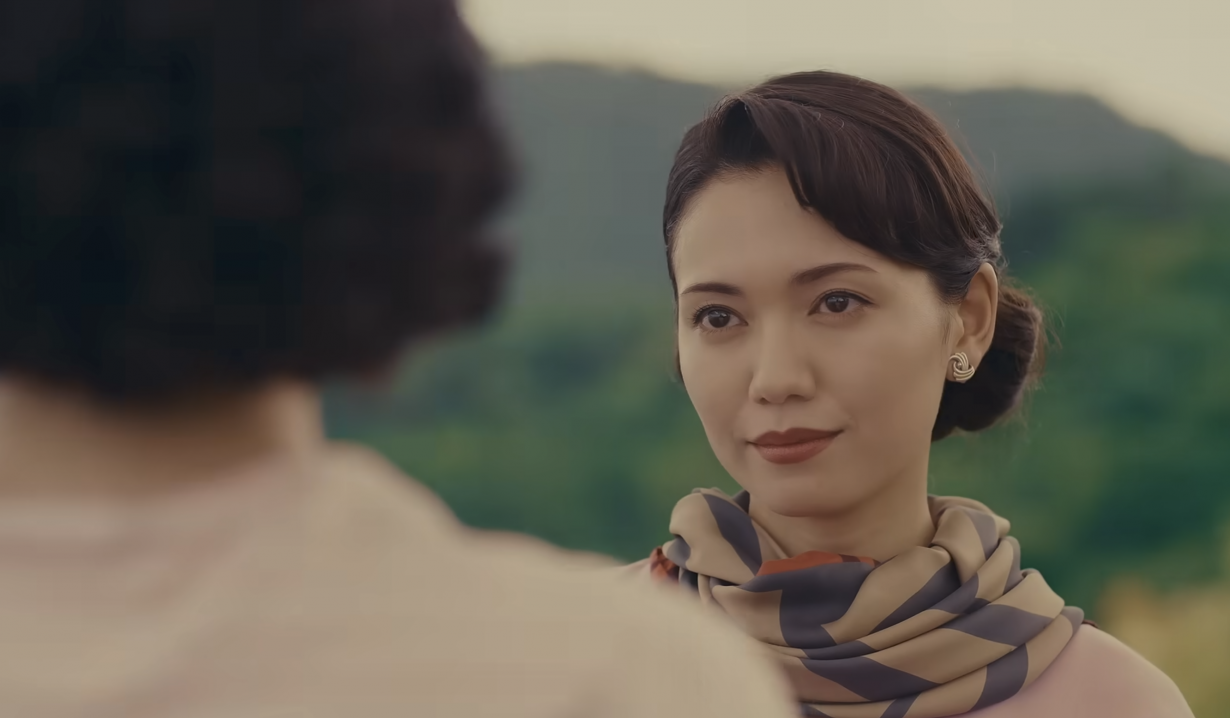
Filmmaker Kei Ishikawa wrote and directed A Pale View of Hills with Ishiguro as executive producer. Ishikawa expands the novel’s 1980s Britain-set narrative elements to deliver a dual-timeline drama and intervenes with a decisive narrative closure not present in the original writing. The result is a visually remarkable work with meticulous attention to period detail, featuring outstanding turns from some of Japan’s leading acting talents who capture the emotional nuances of the original writing through restrained portrayals of complex characters.
From the comfort of his home in Chigasaki, Japan, the director speaks to ArtReview to unravel the processes of adapting a work that might not always have seemed an obvious choice for the big screen.
Ishiguro was five years old when his family moved to Britain, and he wouldn’t return to Japan until seven years after A Pale View of Hills was published. How do you read his engagement with Japanese history in the novel?
Ishiguro was living in England and he had imagined this Japan when he wrote this book in English. So he had this kind of distance, physically and culturally [from the country], and I found that very interesting.
I had always wanted to make a film about the war, and about the atomic bomb, because it’s really connected to our Japanese identity. But at the same time, my generation never experienced it, so I always thought this topic was, somehow, for older people, that it wasn’t our story. This was a new way to deal with this topic for our generation, and I found that because of the distance in the novel, this personal Japanese family story gains a broader, more universal feeling that I felt everyone could share.
How would you describe your collaboration with Ishiguro on this production?
We wrote a synopsis and told him how much we wanted to make the film. He told me that if he were writing this novel now, he’d write it differently: ‘Maybe we can fix it together?’, he said. But he never mentioned specific things. Instead, he told me to be brave. I think he was really trying to encourage me.
In the film, Niki – a budding journalist and, in many ways, a proxy for the audience – is arguably the main character rather than Etsuko, as in the book. Tell me about this development.
The original book is told as Etsuko’s monologue. It’s like a confession. But we wanted to speak to a younger generation, and so Niki, Etsuko’s daughter, becomes the centre of the film. We wanted to tell her point of view and show what she discovers as she finds the moral of the story.
Ishiguro’s novel repeatedly hints at the idea of false memories. Etsuko even goes so far as to ruminate, ‘Memory, I realise, can be an unreliable thing’, at one point. How did you try to express this in the movie?
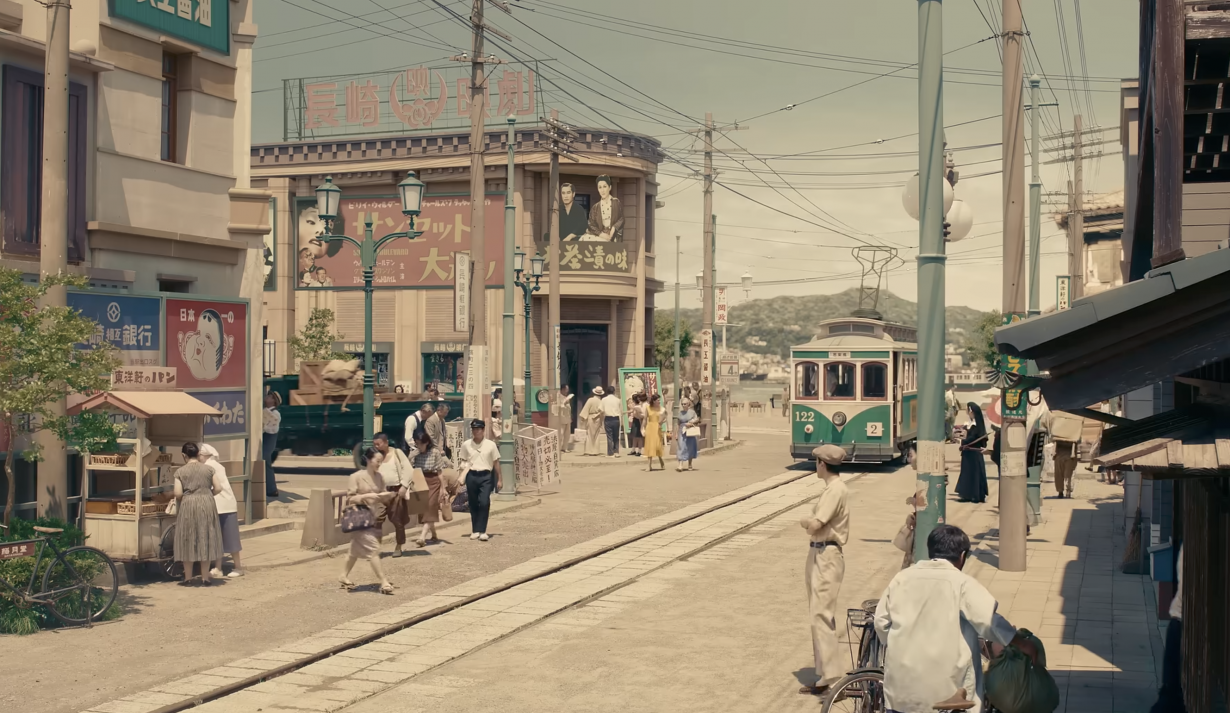
When we made this film, we had to research [the time period] and plot all the events in the timelines. We started to realise that, okay, the Korean War happened in 1952, but this cable car and the police station didn’t exist until much later. We visualise these events [together] in Nagasaki, but it’s not necessarily based on the true story – rather, it’s how Etsuko remembers it in her mind.
This happens in the set design as well. For example, in Nagasaki, we decided to use doors that have a William Morris design. And while his design was imported already [at that time], I don’t think normal people used it for their doors. These small things make the audience doubt, and feel that something is wrong. It was an interesting game as a filmmaker.
Even the title, A Pale View of Hills, is quite cryptic. Did you have any revelations yourself about the novel during your research?
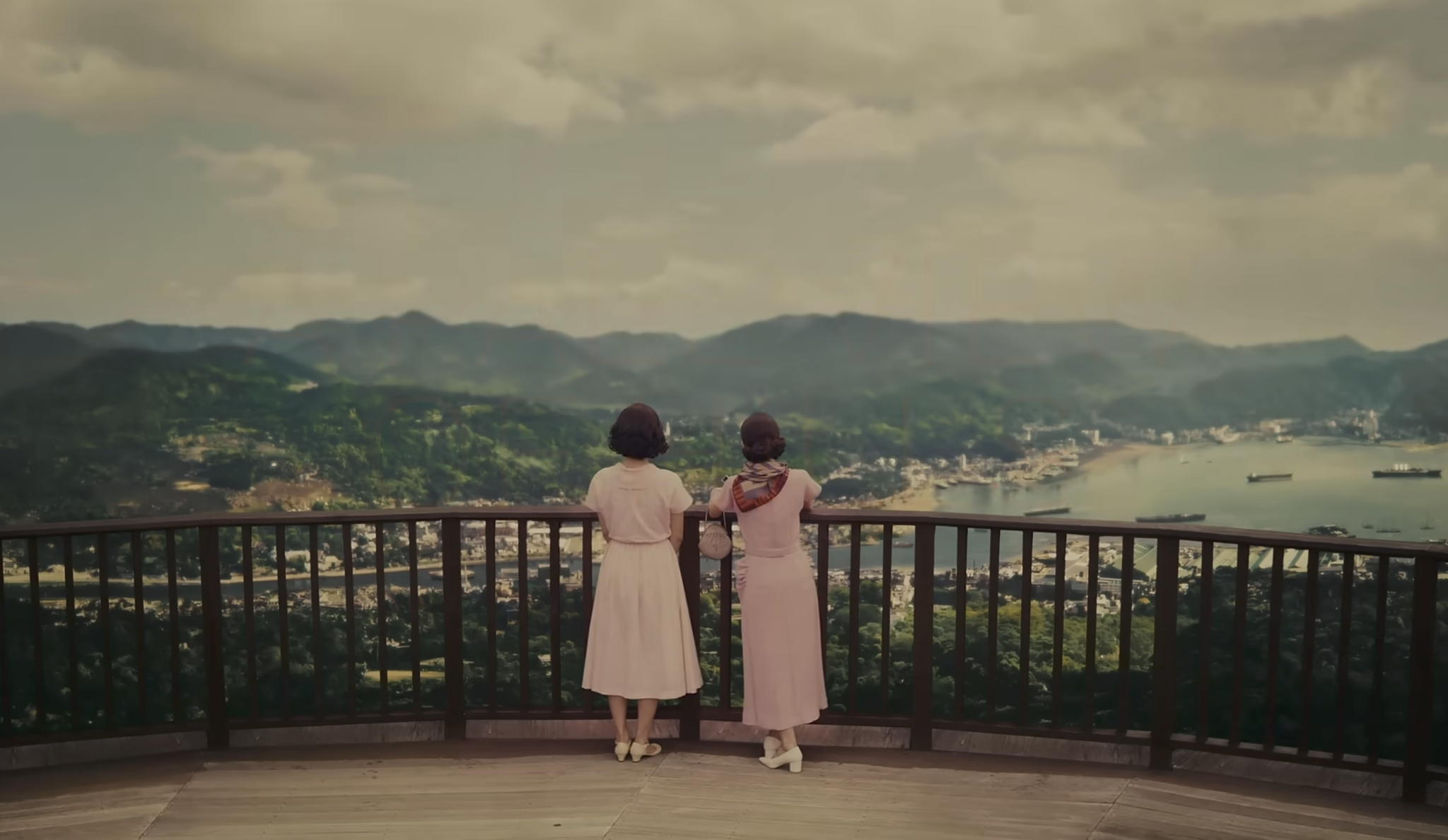
Well, the English title is A Pale View of Hills, but the Japanese translation is something like ‘Light on Distant Hills’. That comes from [a scene in] the mountains, where there’s this description of this light on the hills as the two women talk about the atomic bomb, and their hopes for the future. I found it quite interesting, because we always use light as a symbol of hope. But for us, the light also symbolises this trauma.
Suzu Hirose and Fumi Nikaido are quite brilliant in the roles of Etsuko and Sachiko. Tell me why you cast them?
This was the first time they were acting together in the same frame, and people thought they might have a sort of rivalry – but it was a good relationship because they had a competition and understanding of each other.
They act totally differently. Etsuko, who is this innocent-looking character, is performed using a more modern [acting style], but Sachiko, who draws this mature side from her, somehow recalls the [Yasujiro] Ozu performance style. Their [acting] style got closer as the film went on. This way, the audience could, somehow, smell [that something in Etsuko’s memory was amiss].
In the final few pages, a subtle change of pronouns takes place that throws the entire novel into question. In your adaptation, this manifests differently: scenes witnessed earlier in the film repeat, with certain characters switching positions or behaving differently than how we had been shown originally. We’re left to ponder the reliability of Etsuko’s recollections, which had otherwise supplied the narrative. What led you to decide to conclude the film in this way?
How to interpret the novel is a big discussion, and Ishiguro was always talking about the ending, too. Of course, it was his intention [to leave it ambiguous], but he also told me that he was young, and he was still working out how to bind this mystery with this literary essence. He was still unsure about whether he’d done it right.
In Ishiguro’s literature, there is always this beauty of ambiguity. It’s a great part of reading his books, trying to find the meaning of their structures and everything. But film is a totally different medium. When you read the book, you might not care [about getting all the answers], but when you watch a film, you’re always trying to see the meaning. In film, things are always very concrete.
I wanted to leave the audience with something to think about, but I felt I had to [give some answers] in the end. In this sense, it is almost like a suspense film. People should watch it that way.
A Pale View of Hills is in UK cinemas on 13 March 2026