The late German philosopher grappled with a modern world increasingly divided in two
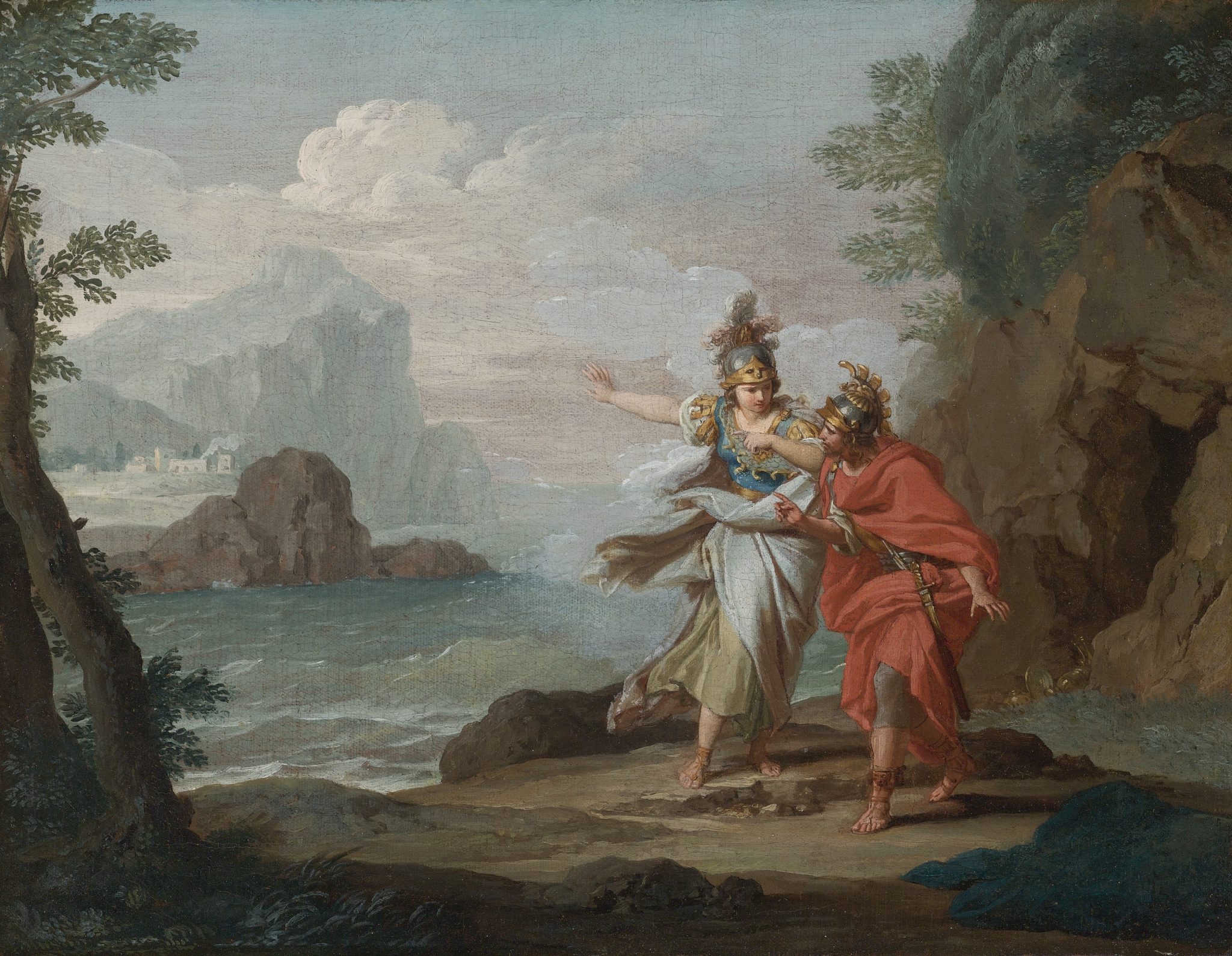
One, only slightly flippant, way of explaining the core insight of the Frankfurt School is that from the moment Odysseus disembarked from Ithaca, Western civilisation was on a steady, inexorable march to the killing fields of the Congo and the camps of Dachau. This is the story of the development of what Theodor Adorno and Max Horkheimer called our increasingly functional or instrumental relationship to the world in Dialectic of Enlightenment (1947). But if we had, as Adorno and Horkheimer argued, found ourselves in a society in which everything was quantified and measured, where interiority and self-reflection had no value, what could counter it? The philosophy of Jürgen Habermas, who died aged ninety-six on Saturday, set out to offer an answer. His work represented the culmination of a tradition of grand, totalising European philosophy that was concerned in parochial but brilliant ways with its own history; his death marks its end.
The early phase of Habermas’s career took place in the shadow of Adorno and Horkheimer, although a rift eventually emerged between the young philosopher and his mentors, who thought him too close to the leftwing student movement. Habermas’s radical credentials were far from impeccable. His father served in local government during the Nazi period and fought to secure a place for his son in the Hitler Youth before the philosopher was called up in 1944; Adorno’s preferred successor at the Institute for Social Research, or Frankfurt School, was Ralf Dahrendorf, an age-mate of Habermas’s who had been sent to the camps for anti-fascist agitating aged fifteen. By the 1960s, however, Habermas would join with Adorno in a scepticism towards the student movement and the extraparliamentary violence deployed by the left. The real task, Habermas maintained, was to strengthen the foundations of a liberal democracy made possible by American bombers and tanks, even as the legacy of fascism continued to haunt it.
Habermas’s The Structural Transformation of the Public Sphere (1962) offered a social history and philosophical analysis of the origin of the fourth estate, media, mass literacy and their deterioration under the influence of capitalism. In this period at least, he set out to provide an alternative to the dark logic of capitalist modernity, by developing a concept of what he called ‘communicative reason’ – a counterweight to the instrumental rationality that had brought devastation to Europe. This described relations of nondomination present in social movements, families, schools, voluntary associations – the Lebenswelt or ‘lifeworld’ that fought to avoid colonisation by the systematic logic of the market. Where Marxists like Leon Trotsky imagined that under socialism politics itself would be abolished and disagreement about visions of society would take the form aesthetic debates, Habermas held that mediation in some form was unavoidable.
The complexity of modern society made attempts to collapse its fundamental oppositions implausible – the moral logic that underlay friendship and community was strong, but it couldn’t run a central bank. Modernity, while alienating, offered a form of liberation. It could ‘relieve the burden on the will and intelligence of overtaxed individuals’, Habermas wrote in a 1999 essay.
The result was a world divided in two, reconciled with being unreconciled. Habermas’s 1992 book Between Facts and Norms offered a defence of this distinctly modern condition. Laws and institutions, he argued, represented ‘facts’, but they were shaped ultimately by ‘norms’. For Marxists – or, I suppose, anyone willing to entertain some sceptical thought – the idea that laws were not the product of relations of power seemed hopelessly naive. But Habermas had wanted to offer an alternative to a tradition of thinking about the origin of the law and state espoused by the Nazi jurist Carl Schmitt, who advanced a fascist critique of the neutrality of the legal system. Such an alternative was, to Habermas, a ‘false realism’, but his divided picture of the social totality precluded the notion of a real realism. The spheres of ‘money and power’ stood as self-steering systems in opposition to ‘solidarity’, and other values trickling up from the lifeworld.
Where did this leave critical theory, the research project whose mantle he had assumed from Adorno and Horkheimer? The answer was not very far from liberalism. Throughout the 1980s, Habermas engaged in a series of frankly harmless debates with John Rawls, the two men disagreeing on points of order rather than substance. Meanwhile the chasm between facts and values grew ever wider in Habermas’s thinking, and having abandoned any belief that the economy was a sphere that could be brought under the control of the popular will, his philosophy became increasingly detached from reality. As the essayist Perry Anderson surmised, ‘The result is a theory that answers to the responsibility neither of an accurate description of the real world, nor of critical proposals for a better one.’
Blind spots of the size found in Habermas’s work call for interpretation, and here perhaps the psychoanalytic lens is more perceptive than the political. The child of a Protestant manager of the Chamber of Industry and Commerce in Gummersbach in northern Rhineland, who volunteered for military service in 1938, Habermas was the product of European bourgeois society at the height of its powers. He loathed what this culture produced but held on firmly to some idealised version of it. It’s possible that some form of identification with this upbringing – however obscured – informed Habermas’s suspicion of mass politics and his later embrace of institutions.
In 1967 he accused the student radicals Rudi Dutschke and Hans-Jürgen Krahl of ‘leftwing fascism’, irreparably harming his relationship with the socialist left. Having distanced himself from the lifeworld out of which any serious challenge to capitalism could emerge, it became increasingly difficult for him to move beyond liberalism’s worldview. His guiding compass remained the historical memory of fascism, but that left little room for imagining the barbarism that liberalism, in its day-to-day function, could inflict on the world.
In November 2023 he signed, alongside fellow critical theorists Nicole Deitelhoff, Rainer Forst, Klaus Günther, an open letter warning against equating Israel’s war on Gaza with the horrors of the last century. The ‘standards of judgement slip completely when genocidal intentions are attributed to Israel’s actions’, he wrote. Here, again, we find the strange, unsustainable distinction between facts and norms. Despite the fact of mass killing of Palestinians, many of whom were children, we should hold close to ‘standards of judgement’ appropriate to a historical narrative that confirms the liberal worldview. It is not unfair to say that this separation should be seen as the culmination of Habermas’s intellectual project, which had in its last moments succeeded in separating itself from any residue of Marxist realism.
Read next Fredric Jameson, 1934-2024: In Search of an Ending