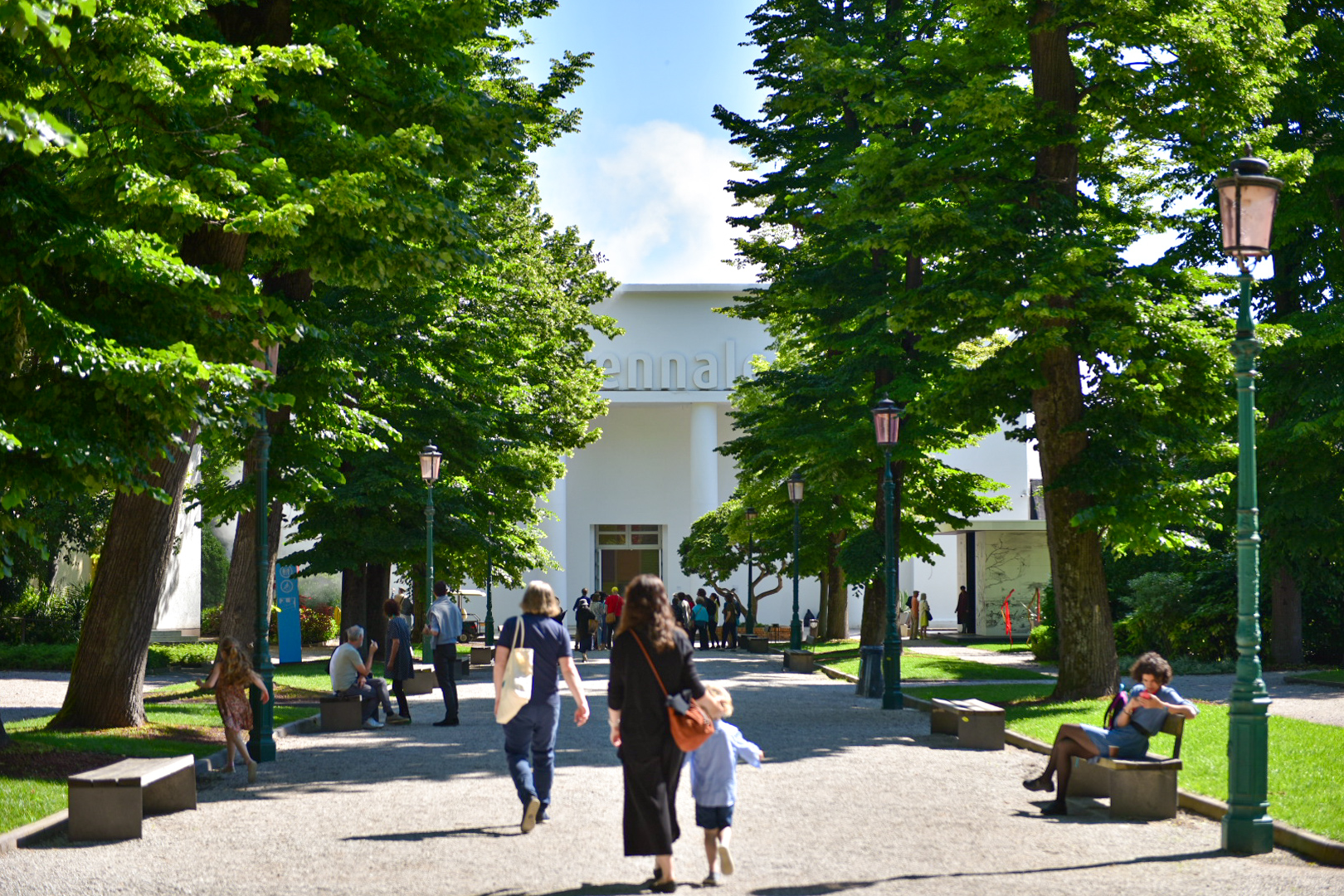
‘Politics is rarely the best province for the artist, and proselytising nor the best motive for the production of an art work.’ That, at least, was the view of Pat Gilmour writing of the 1968 Venice Biennale in The Arts Review (as ArtReview used to be known). What a difference 58 years makes!
The art being produced today often purports to be a zone of justice, of narrative correction and of challenging historicism. This year’s Biennale, however, titled In Minor Keys and curated by the late Koyo Kouoh, will be a space for “the emotional, the visual, the sensory, the effective, the subjective”, as Kouoh’s team of curators outlined today, “art’s natural habitat and role in society”. Who such a position is intended to please – say, Biennale president and Giorgia Meloni appointee Pietrangelo Buttafuoco, or the memory of our very own Gilmour – is of course speculative.
What do we know? There will be 111 participating artists in the main exhibition, including established names like Wangechi Mutu, Otobong Nkanga and Kader Attia; the work of six ‘alternative’ art schools – not the kind you sit exams for – from blaxTARLINES to Kouoh’s own RAW Material Company; ‘shrines’ and resting spaces; Deep Listening, sound baths and a poetry ‘caravan’. Yes: Marcel Duchamp is listed among the participants. No: there won’t be many paintings, collectors might note before leafing through their chosen airline’s refund policy.
This year’s edition will inevitably play out against a series of backdrops: a global rightward shift since the COVID lockdowns; the impact of international tourism and climate breakdown on a still-sinking city; and a rapidly destabilising world order. That this period of geopolitical fracture is bleeding into the ‘benign, if vacuous, internationalism’ underwriting this year’s edition ought to remind us of the world order from which the Biennale stems: one of (neo- and good-old-fashioned-) colonialism, the unchallenged West and a hegemonic US. One role for this edition, much like assessing the artworld as a whole, might be as a stage for witnessing such geopolitical fracture.
The pavilion system, a litany of surrounding exhibitions for which nations send forth a representative artist or artistic project – much like Eurovision – has evidenced the strain that accompanies that shift. The South African Pavilion commissioners, for example, resolved to leave its exhibition empty, after hiring-and-firing the artist Gabrielle Goliath; Australia took it one step further, hiring-and-firing-and-rehiring Khaled Sabsabi (who will also feature in Kouoh’s main exhibition). Both instances related to the relevant artist’s political positioning in their previous work: Goliath’s critiquing historical violence and colonial conquest; and Sabsabi’s having once featured an address by Hassan Nasrallah, the leader of the Lebanese paramilitary and political organisation Hezbollah. So the artworld’s state institutions like their art to be politically and historically critical, confronting and inquisitive, but not too much.
How one might critique the work of the late Kouoh, meanwhile, insofar as it has been delivered by her chosen curatorial team, will be a matter for ArtReview’s critics – we wish them luck.
This is an extract from the ArtReview Newsletter, first published on 25 February 2026. Sign up here.