Yang Fudong’s exhibition at the Beijing UCCA gives nostalgia a fantastical bent
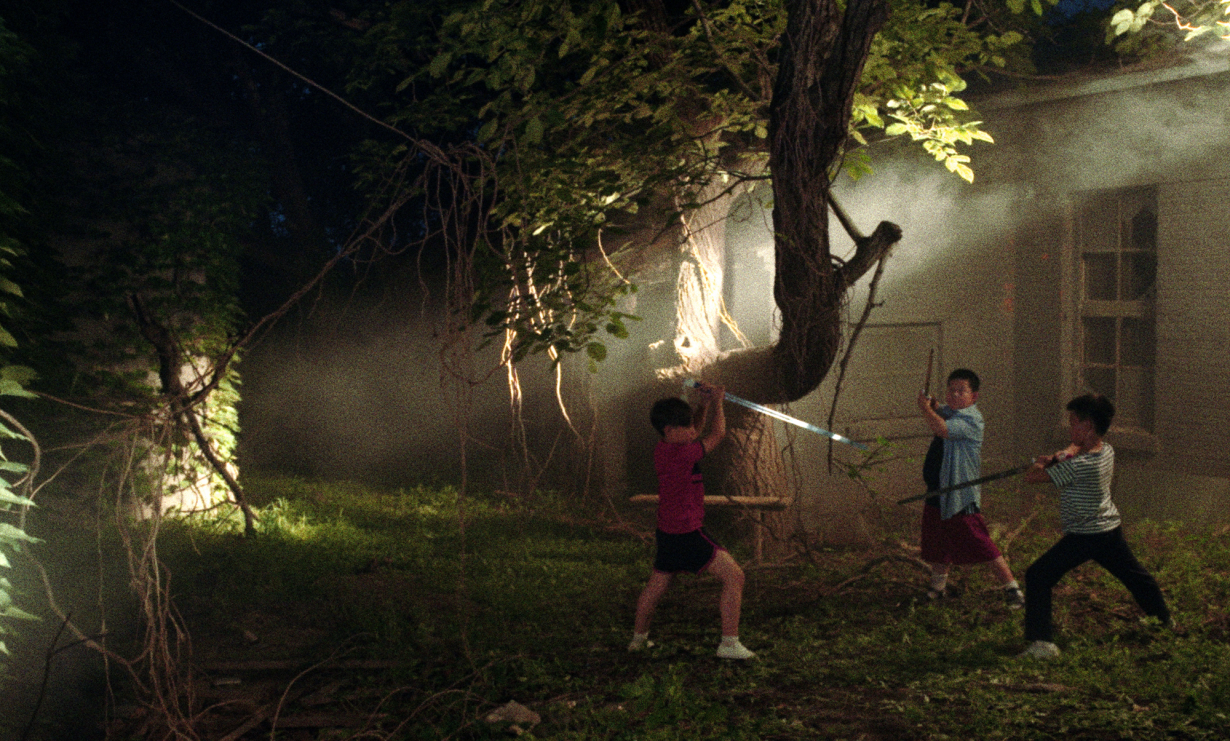
Projected onto three walls, the five-channel video-installation Young Man, Young Man (2025) follows a teenage boy around a hutong neighbourhood with decor suggestive of the 1990s. He runs into an alleyway, practises martial arts, courses through a cornfield and waits around a bus stop, sometimes with peers but mostly by himself. With curious, attentive steps and pauses, on one screen he surveys clay pots, plants and crevices in the family yard, a sense of boredom underpinning each discovery. Yang Fudong’s largest solo exhibition to date foregrounds his recent works and starts with what feels like a memory palace, in which scenes of a sweet, if lonesome childhood get replayed; their mundanity tinged with tender nostalgia.
Featuring 30 works and over eight hours of video, the show, titled Fragrant River, takes its name from Xianghe, a town located just outside Beijing in which Yang was born and to which he repeatedly returns in his work. Nostalgia is a theme throughout. Breastfeeding (2025), one of the exhibition’s focal points, features an array of vintage-looking wooden wardrobes and cabinets, interspersed with chunky CRT monitors showing episodes of Xianghe’s quotidian life. The furniture is painted with peonies, decorated with stickers of cartoon figures and Peking opera posters – treatment faithful to the style of northeastern Chinese homes during the 1980s and 90s. But to the exhibition’s Beijing audience, the items will also be reminiscent of the furniture industry for which Xianghe became known around that time, which was marked by a period of economic reform. And perhaps it is this infancy of China’s consumer market that is hinted at in the work’s title. If Young Man… captures an innocent idleness, Breastfeeding finds in nostalgia a materiality, and – given the recent speed of change in China, where highrises are built and old houses demolished, furniture discarded – a social dimension: a collective experience of loss that comes with constant renewal.
Yang’s film works often harbour a vagueness that allows them to imagine a mood rather than tell a story. Present in the exhibition, too, is a feeling of suspended time. The 40-minute long At the Summer Palace (2024–25) follows an old man strolling through the titular ex-imperial garden in Beijing in the clothes and demeanour of what feels like a midcentury gentleman. Floating through the park, he appears to be lost in thought, as if at once reminiscing about the past and anticipating an encounter. An early short, Backyard – Hey! Sun is Rising (2001) shows four men busying themselves with nothing in particular; looking at once like they’re on a mission but actually loitering around. The pace of the film, the quickening music and jump cuts, provides a syntax of narrative, of something you’ll have to fill with imagination.
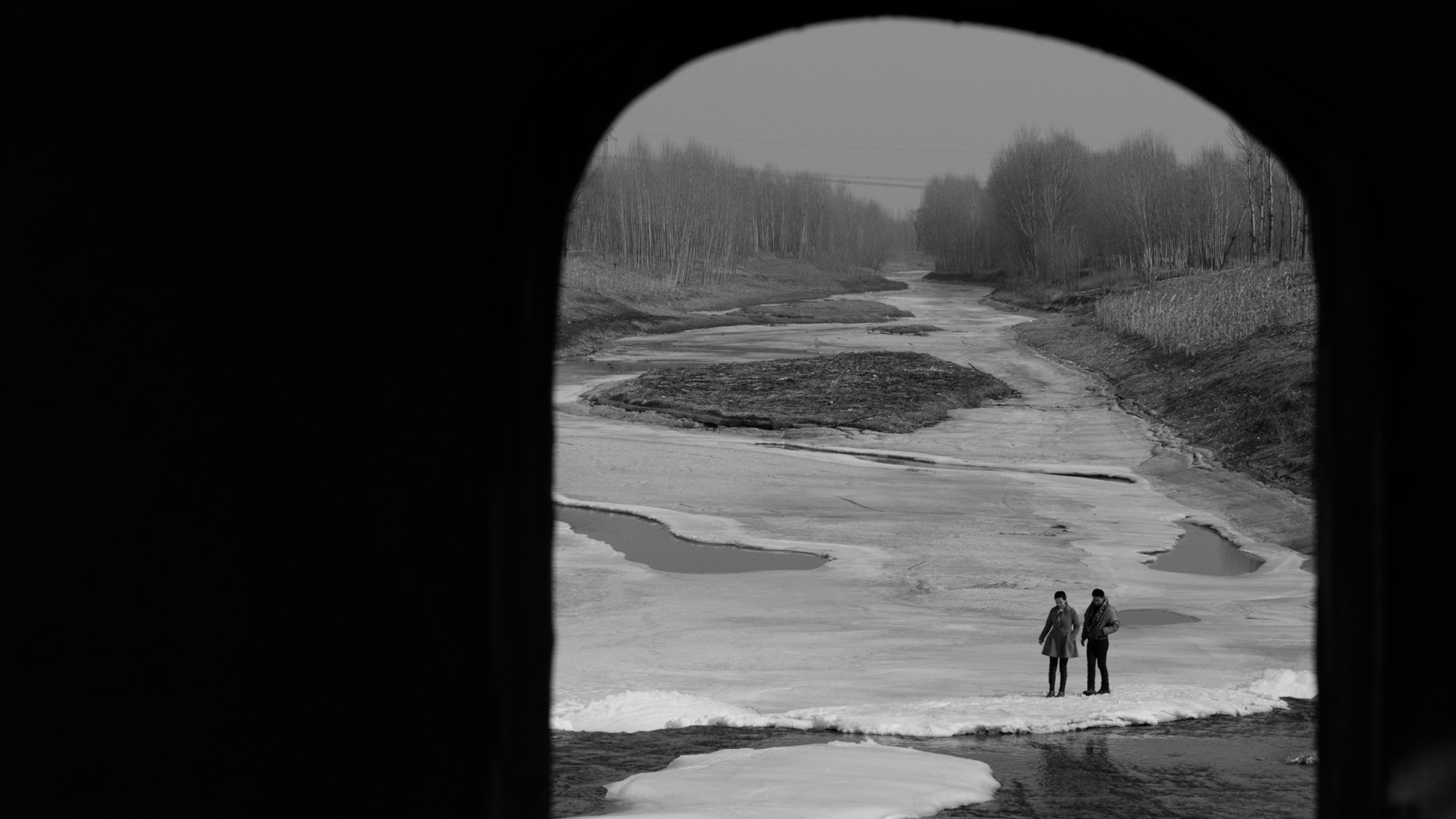
Moving through the exhibition involves stepping in and out of dim screening rooms, and gear-switching between different, equally opaque worlds. The most magical of them is the very last, Fragrant River, a 15-channel labyrinth of black-and-white films, each near 30 minutes long, in multiple darkened rooms. Screened inside this maze are scenes from the town running from the mundane to the surreal: people parade in opera costumes, slaughter pigs in public and dine on the fields; they bury the dead and get married, tickling the bride and groom, everything done without speech. Sitting somewhere between intimate personal reels and detached ethnographic records, the work creates a simultaneous sense of immersion and distance – of the type you might associate with end-of-life flashbacks. The virtual impossibility of finishing watching the five-hour endeavour only adds to the sense of disorientation. Here Yang gives nostalgia a fantastic, mystical bent, as if to suggest that to revel in memory is a creative act.
Yang Fudong: Fragrant River is on view at UCCA Center for Contemporary Art, Beijing through 31 May
From the Spring 2026 issue of ArtReview Asia – get your copy.
Read next A Eulogy to China’s Art Museums