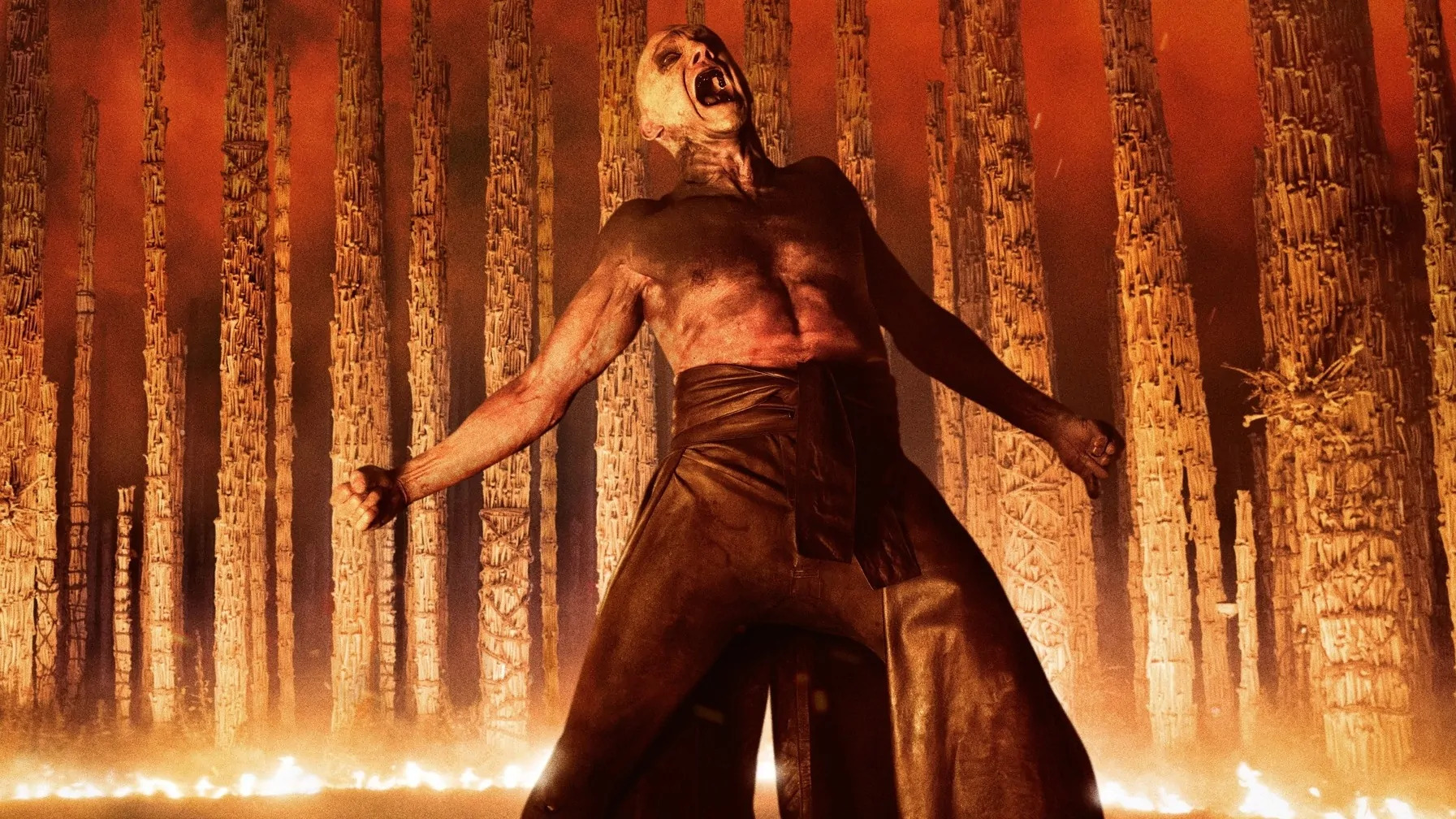
In Nia DaCosta’s recently released 28 Years Later: The Bone Temple, the undead confront a world already saturated with horror
The conceptual origins of the living dead are as murky as the pseudo-science plotlines later used to rationalise their existence. But the myth of the zombie is often traced to France-occupied Saint-Domingue (present-day Haiti) in the seventeenth and eighteenth centuries, a time when enslaved Africans were subjected to relentless misery on sugar plantations and often worked to their graves. Death was romanticised as a means through which to return to Africa in the afterlife, but if that death was the result of suicide, then a slave could be subjected to a worse fate: an eternity roaming the plantations as the indentured undead.
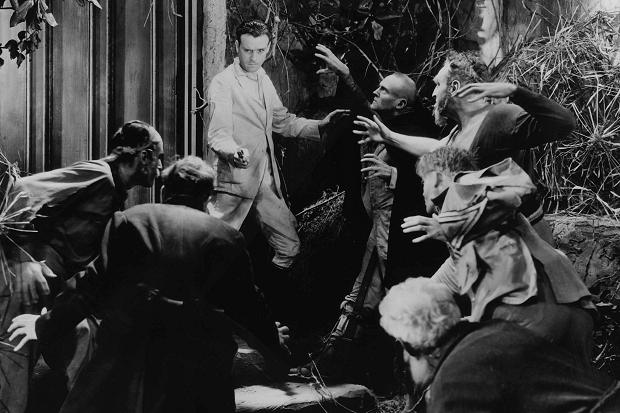
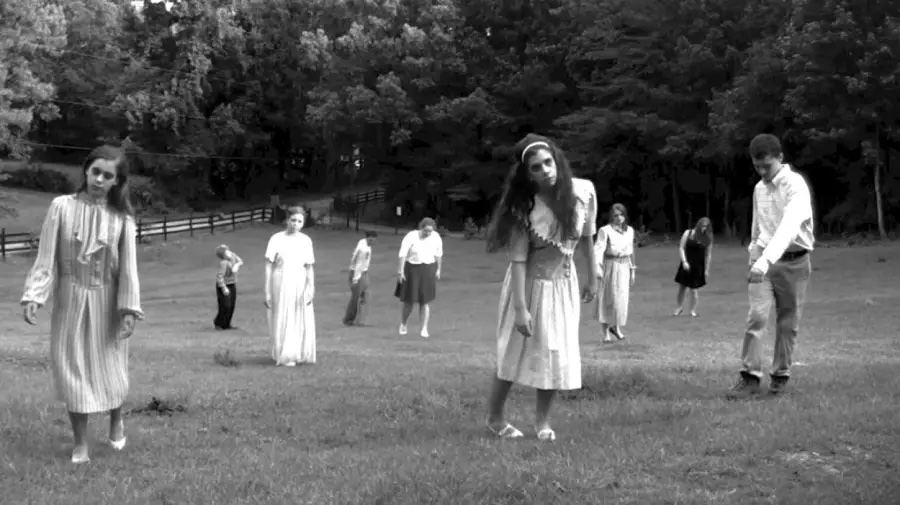
As decades passed, Haitian folklore enveloped the myth with beliefs pertaining to Vodou and sorcery. And by the mid-twentieth century, the zombie had staked a place in the cinematic lexicon of America as an allegory for oppressed social groups. The plantation-working zombies of White Zombie (1932) reflected themes of slavery and labour exploitation at a time when mass uprisings were taking place in Haiti against US occupation. In 1956, the zombie-adjacent Invasion of the Body Snatchers then manifested Cold War paranoia and the threat of communist brainwashing as a droning mass of ‘pod people’. George A. Romero’s Night of the Living Dead (1968) is often interpreted as an allegory for the Vietnam War, with the movie’s realistic black-and-white footage resembling the TV news broadcasts that brought the violence into American homes. And its sequel, 1978’s Dawn of the Dead, satirised the mindless consumerism and consumption seen to be transforming post-Ford America.
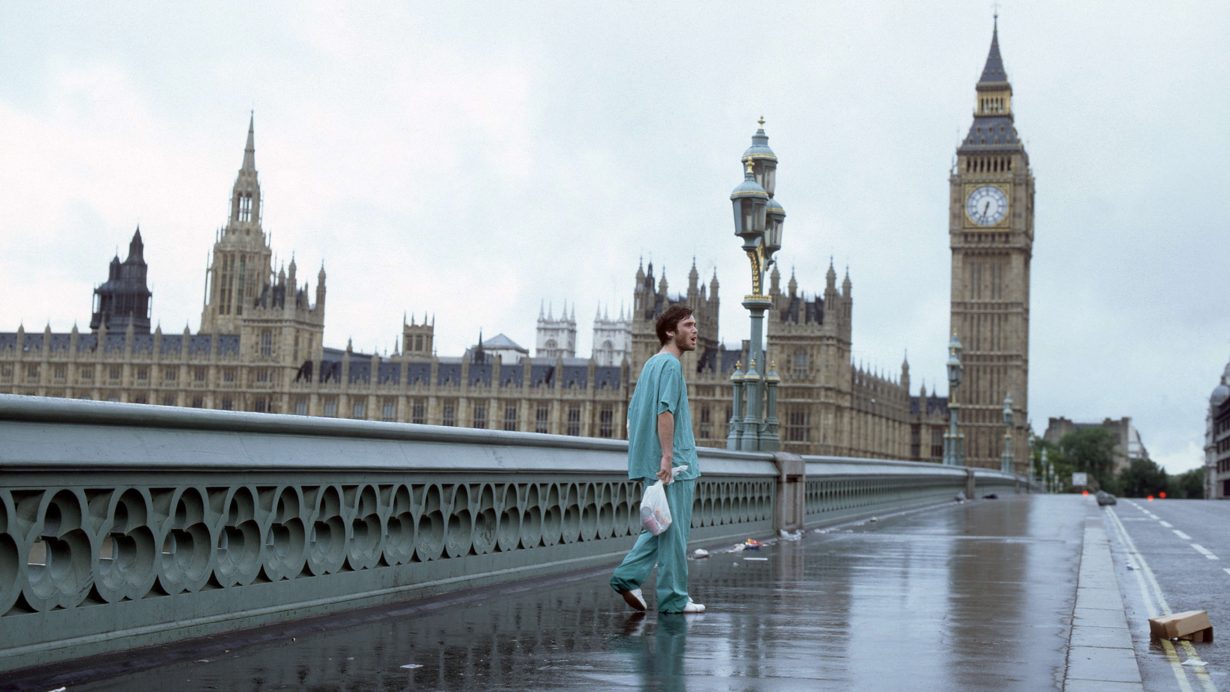
In 2002, Danny Boyle’s 28 Days Later delivered a brilliant revision of the zombie apocalypse formula for a world increasingly gripped by existential terror. It had opened in cinemas only a year after the 9/11 terrorist attacks, as biosecurity concerns were likewise intensifying: Mad Cow Disease had dominated headlines in the 1990s, while the 2001 Anthrax attacks in the US and the nascent SARS epidemic in China fuelled fresh anxieties. The film’s fictional ‘Rage Virus’ would render London a ground zero for a new undead threat, with the movie’s fast-moving ‘infected’ reducing the capital to a ghost town. After becoming a surprise box office smash in the US, 28 Days Later then took on a renewed potency almost two decades after in the aftermath of the COVID pandemic, drumming up anticipation for a timely return of the British zombie classic.
Fast forward to 2025, though, and the world was looking like a different place once again – defined by wars in Ukraine and the Middle East; intense political fragmentation; and the return-from-the-dead ascendancies of unnerving figures like Nigel Farage and Donald Trump. With audiences elsewhere enduring some 11 seasons of mindless zombie lumbering via The Walking Dead (and its six spin-off series), Danny Boyle’s franchise relaunch faced challenges both to keep the zombie genre relevant and to give it back its bite.
28 Years Later, then, offered a new mutation on the genre – positioning all-new undead varieties such as pregnant zombies and giant, muscular ‘Alphas’ upon a quarantined British Isles. The island’s mortal inhabitants unite against these threats in a manner that invokes Britain’s colonial past: Boyle refers to Brexit-era nationalism, rooted in nostalgic appeals to former glory, through stock footage of war-mobilisation and recitations of Rudyard Kipling’s 1903 poem ‘Boots’, capturing the mindset of infantrymen marching during the Second Boer War.
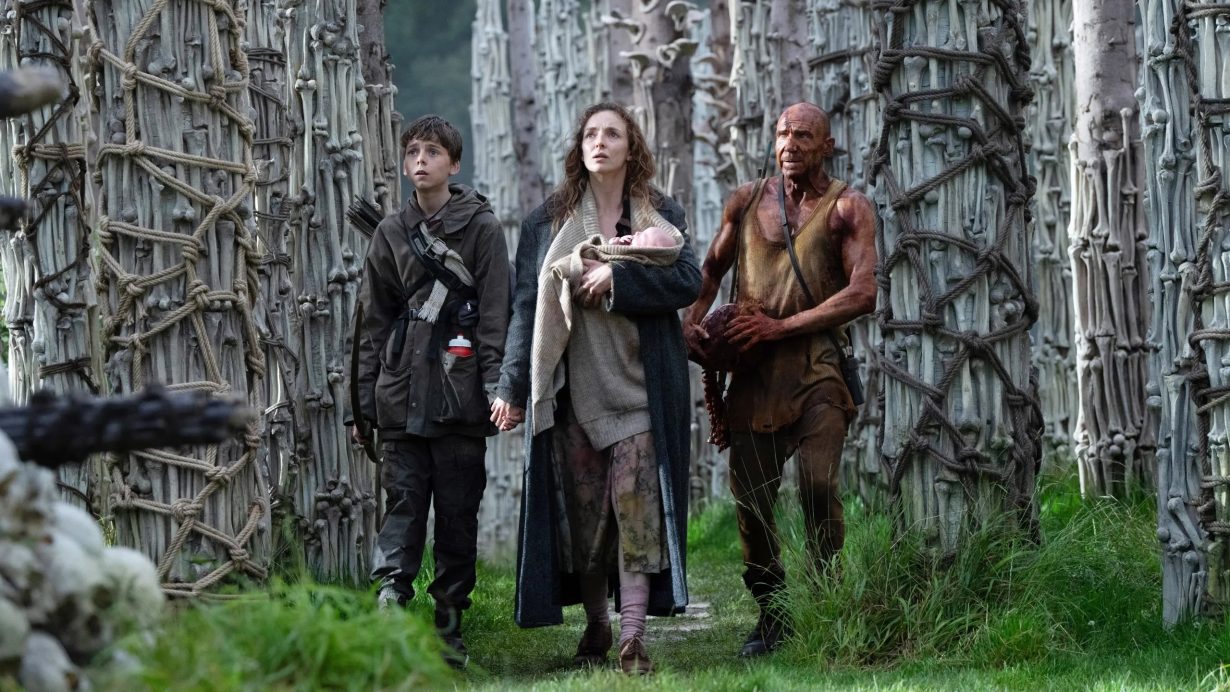
This focal community, who gather around portraits of Elizabeth II on the island of Lindisfarne, notably suffer from a deprivation of healthcare, as exemplified by Jodie Comer’s Isla, who suffers from temporal confusion as a symptom of terminal cancer. If the nods to the state of contemporary Britain – with its tribal politics, fixations on past glories and vampirised healthcare system – weren’t already obvious, then director Danny Boyle would make it explicit. “We’re a small, shitty island, not an empire,” he told El Pais in 2025. “Brexit has constrained us, locked us in, and that’s what 28 Years Later is about.”
The result was a riveting but rather strange and disjointed coming-of-age parable about one boy’s acceptance of mortality, defined as much by its formal inventiveness and heartfelt storyline as it was by its characters’ incomprehensible decision-making (like volunteering to be a zombie’s midwife) and unexpected tonal shifts. For fans salivating for the kind of gritty, lo-fi survivalism that had made the original movie so potent, this might be confusing. Because the cannon fodder zombies of 28 Years Later felt less a plot-fuelling force of terror than a kind of toothless set dressing – providing target practice for a 12-year-old protagonist without ever believably threatening him.
This head-scratching shake-up is even more evident in concurrently-shot sequel The Bone Temple – a film in which “the zombies are almost entirely irrelevant and are at a minimum,” wrote The Guardian’s Peter Bradshaw. Don’t be fooled by the recent Hollywood Reporter headline declaring that the only request director Nia DaCosta (who takes over from Danny Boyle, who now resides in the producer’s chair) had for writer Alex Garland was to add “more infected” into the script because the plot still largely disregards them. The only real undead force of note in The Bone Temple is a literal smackhead zombie giant who spends his days zonked out on morphine staring at the moon. It happens to be one of the film’s most bizarre, and engrossing, subplots.
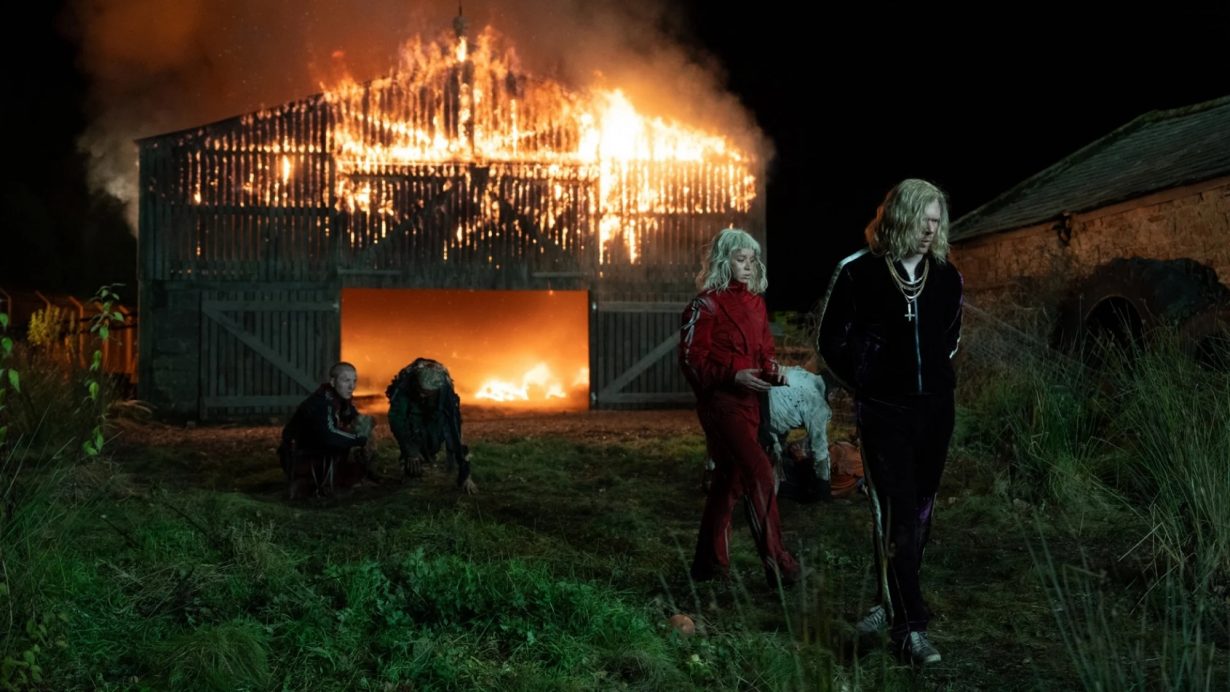
Questions over whether the franchise – and the zombie genre more broadly – can still mobilise this classic movie monster as a meaningful metaphor, though, miss the point. The Bone Temple, with its tight and focused narrative, is more concerned with the story of a young man unwillingly assimilated into a murderous gang at the behest of tracksuit-wearing Satanist ‘Sir Lord Jimmy Crystal’ (Jack O’Connell). And though the absurdly gratuitous scenes of gore at the hands of this false Messiah might suggest that the creators felt the need to keep reminding the audience that this is a violent horror movie, it’s clear that the real threat to humanity in The Bone Temple is undoubtedly human itself. It might sound like one of the oldest clichés in the book – but in fact, it’s a point delivered remarkably well via a calculated targeting of palpable contemporary horrors.
This, after all, is a film that zooms in on a world in which a gold-loving godhead cult leader resembling a disgraced TV personality is able to gather a loyal and submissive following to commit atrocities against perceived opponents. It features an orange-skinned kook who is mistaken for the devil, and ends with a tongue-in-cheek discussion amid school textbook cramming, arguing that the fascism of the Weimar Republic could never resurface because we know that ‘those who fail to learn from history are doomed to repeat it’.
‘The appetite for zombie stories isn’t waning,’ Boyle told El Pais last year. But in a world where self-righteous political deities freely spout vitriol while amassing military forces, it’s clear that today’s greatest fears, alongside unknown illnesses and mysterious ideologies, are the human beings in positions of unchecked power. With that in mind, The Bone Temple nails a chilling message. Just don’t go expecting a zombie movie.
Read next 2025 in Film: Dialogue is Over