The artist’s latest work exposes our equivalencing of art and youth as coveted forms of commodity
On the evidence of Anna Munk’s Ombres, painting faces with cosmetics is not dissimilar to painting canvases. Both are types of trickery, rooted in contouring, highlighting, shading – techniques of emphasis and disguise. At one time, oils were themselves a type of theatrical greasepaint, before they were abandoned for being toxic. Munk, who’s in her early thirties and graduated from Copenhagen’s Royal Danish Academy of Fine Arts in 2022, is evidently well versed in the curious overlaps between the makeup and fine art industries, mingling tinted lip gloss, expired lipsticks, foundation and more with her paints, pigments, rabbit-skin glue and wax.
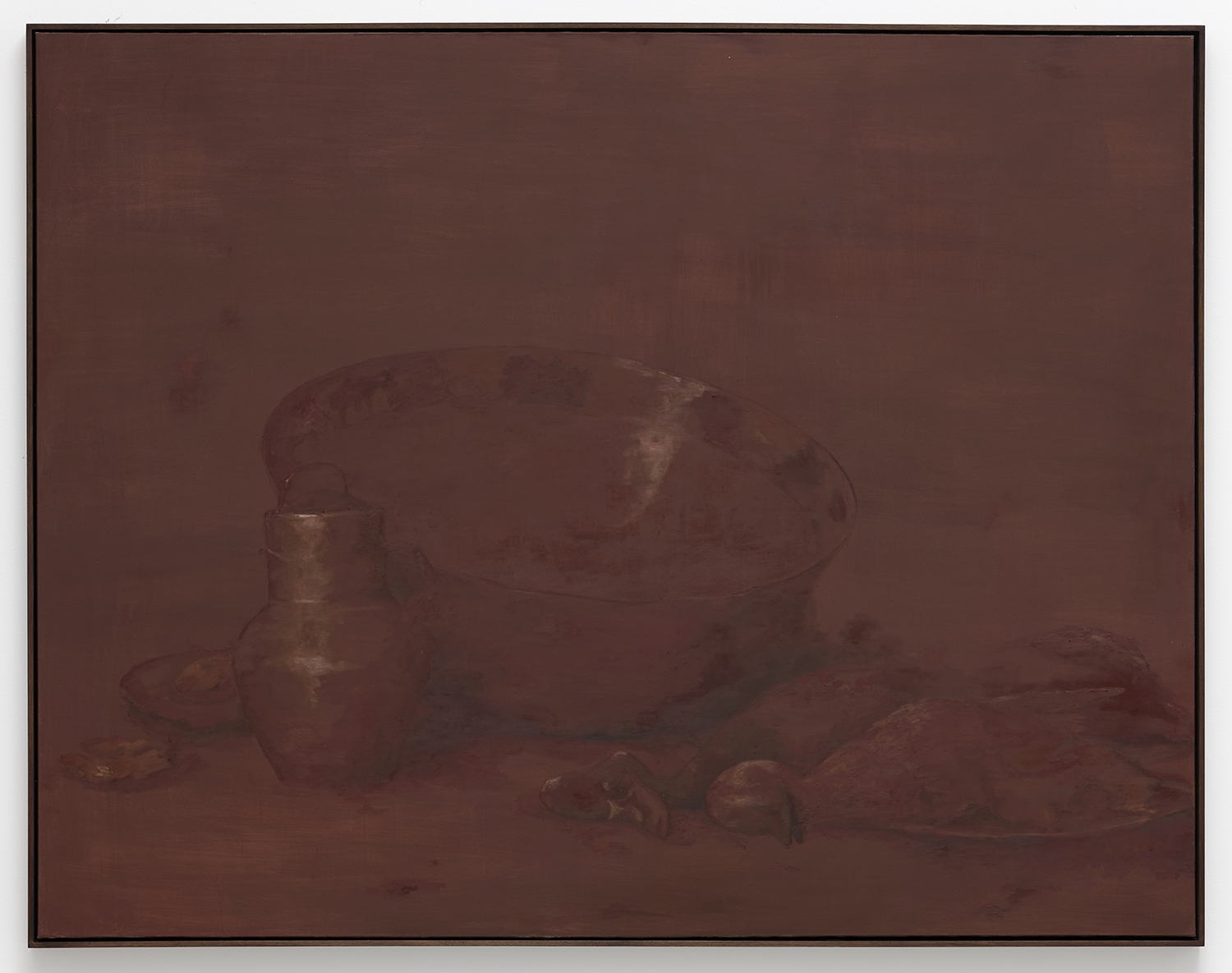
The materials and hues of cosmetics add a shimmering conceptual layer to her renditions of classical painting tropes. Here, the colour palettes of seven still lifes are taken directly from Chanel’s Ombres eyeshadows, which at times are also melded with Munk’s paints to glistening effect. The shades are classy and restrained – pale grey, green and nude, mahogany and midnight blue – and cast something of a melancholic atmosphere and tranquillising glaze over their still life subjects. Dappled spots of wax recall a cosmetic setting spray – strengthening the ground below and prolonging the life of the nuanced surface. Her motifs, meanwhile, derive from photographs of historical still life paintings in the digital archives of museums. Images of ornate dishes and glassware, food and deceased fowl are picked out, enlarged and reframed in isolation within their new painted voids; Munk treats these subjects as readymades to be manipulated. Paint and makeup might be seen as readymades too – both portable items of convenience that allow us to ‘paint’ on the go.
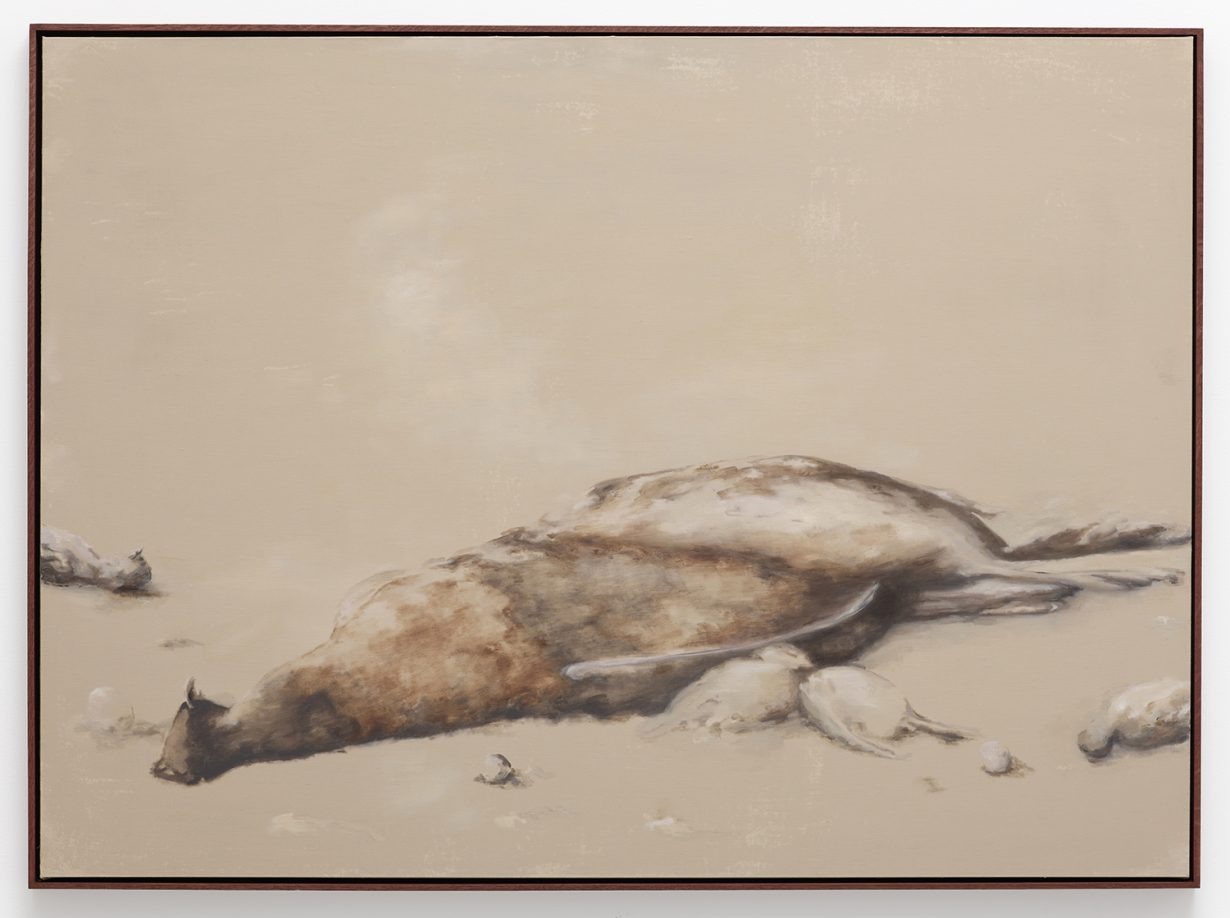
The shift back and forth between painting, digital image and (again) painting adds to the conceptual intrigue of these works as depictions of objects and objects in themselves. One might wonder why Munk didn’t just look directly at the original painting, but the result of working from a digital source is in the differing effects of light and material through the guise of a screen, which makes Munk’s renditions fittingly resistant to capture by camera – an antidote to our age of Instagram-friendly painting. In their original context, the still life motifs served as symbols of wealth and prosperity, as well as reminders of the transience of life and inevitable decay of earthly objects. There are evident overlaps with the preservation of youth through cosmetics. Wax has its own associations with mortality, being traditionally used for death masks and mummification. And yet Munk’s treatment of the still life seems less concerned with vanitas than the presentation of products – an allusion to the commodification of painting and the body as different types of luxury.
In terms of what’s being signified, then, in Munk’s hands fruit is not ostensibly rotting, but preserved (Gris Paris, all works 2026); birds, while still and silenced, have not been violently throttled (Clair-Obscur). What remains is the quiet residue of a still life, placed within an ethereal painted realm of few details, in which background and motif are treated with equal reverence. Bois Noir, in its inky black palette, drifts closest to abstraction, while Pilo Palet shifts through shades of grey, lilac, smoke and sage, and speaks to Munk’s recent interest in rendering smoke from images of historic and modern fires. What is actually pressingly on the edge of life and death here is Munk’s painting itself, which is at risk of transformation over time thanks to its mingling with cosmetics. Here she compresses layers of conceptual and tactile material into the still life genre, exposing our equivalencing of art and youth as coveted forms of commodity while gently hinting at their shared instabilities.
Anna Munk: Ombres was on view at Galleri Nicolai Wallner, Copenhagen, 21 August – 26 September
From the October 2026 issue of ArtReview – get your copy.