Azem’s debut novel goes in search for the myriad ways Palestinian culture endures
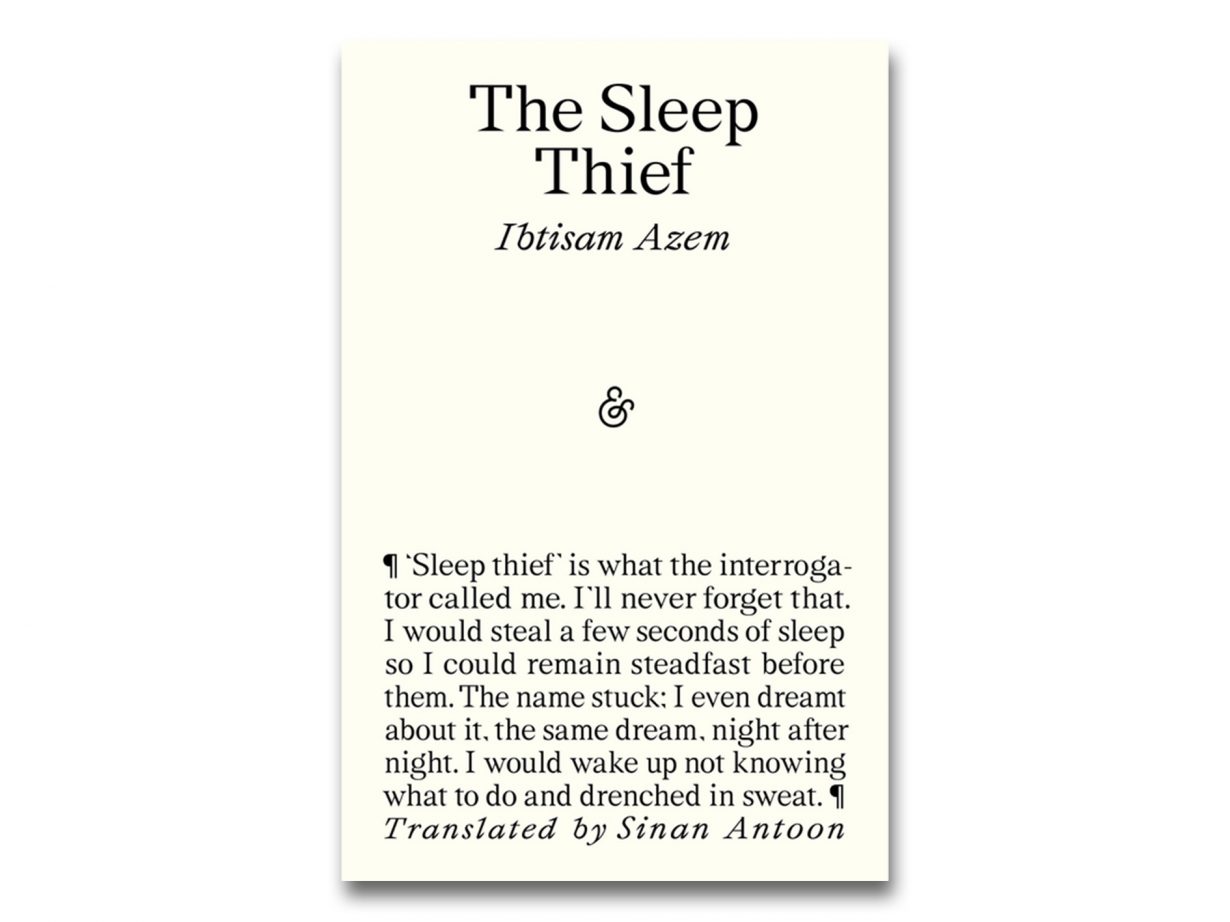
When Gharib Haifawi, the central character of Ibtisam Azem’s debut novel (her second, The Book of Disappearance, appeared in English translations in 2019 and 2024), trips and falls while exiting a party in a village southwest of Jerusalem, one of the other partygoers is asked who he is. ‘No one,’ they reply. ‘Just a Palestinian who had too much to drink.’ Gharib is an Israeli Arab; his name translates, from the Arabic, as ‘stranger’; and for much of this novel he performs to type. Gharib, we are told in the first few pages of the book, is ‘obsessed with the names of objects and the meanings of words’.
The novel details Gharib’s transition from youth to adulthood, told by the unnamed narrator of a very brief introduction, in his own words. What unravels is a fractured, dreamlike narrative (in which dreams themselves do play a part), assembled like a collage from which some details are clear and stand out while some remain blurry, more hidden. The overall impression is that Gharib’s life seems to revolve around working out where he’s from and who he is – or, more often-than-not, who he is allowed to be.
And early on in the novel he’s in jail, having thrown rocks at the army during a protest and, to Gharib’s mind, failing to apologise for it. Although he did dream of delivering a rousing speech but was too tired to do so. Just as, later on, he will dream about going on holiday to Cyprus (in which he fails to board the airplane due to the lack of strip searches and other degrading security procedures to which he is accustomed). Being accepted as an Israeli is worse than being humiliated as a Palestinian.
As far as Gharib is concerned he’s a Palestinian rather than an Israeli Arab. His surname indicates his maternal grandfather’s origins in Haifa, from which most Palestinians were expelled during the Nakba. In Israel ‘every grain of sand’, he says, ‘has gallows’. The constant push and pull of acceptance and exclusion cause most of the ruptures in Gharib’s life. When he leaves Jerusalem for Tel Aviv, it’s because he ‘couldn’t walk down any of its streets without seeing or hearing a group trying to prove its existence. I was tired and didn’t want to prove my existence: I exist,’ he exclaims.
Although he doesn’t like Tel Aviv either, he notes. To him, the city is an illusion – a monument to modernism designed to conceal the marks of a history it has erased. All the Arab street names have been replaced by Hebrew ones: it’s ‘fake and haughty’, he declares. Although that might be rather like the younger Gharib himself, who was embarrassed – in case he met someone he knew from school – at having to sell avocados door-to-door to earn extra money for the family’s greengrocery business. But it’s precisely because of the presence of such mini-hypocrisies and inconsistencies that Azem’s story becomes such a moving, believable and human one. Riffing off, as the narrator hints in her brief introduction, the ‘pessoptimism’ famously coined by another Israeli Arab, Emile Habibi, in his satire The Secret Life of Saeed (1974).
Gharib finds his own inspiration in food (it ‘is culture’ he declares), in the books of Palestinian author and militant Ghassan Kanafani (who was blown up by Mossad) and in the songs of legendary Lebanese singer Fairuz: ‘each… holds a memory and a reminder of how time passes’. Much of Gharib’s account is really about a search for the myriad ways Palestinian culture endures. At one point he dreams of a National Museum of Palestine, which then turns into a nightmare; his waking nightmare revolves around the extent to which Palestinian culture only exists as memories. ‘Sometimes this whole country seems like a stubborn ghost,’ he declares. Not that there is so much time for dreaming: his constant tiredness aside, he got the nickname ‘the sleep thief’ for the nanoseconds of sleep he ‘steals’ in the face of the routine sleep deprivation during his interrogations. A bitter reflection of the mixture of hope and anguish that this novel so cleverly conveys
The Sleep Thief by Ibtisam Azem, translated by Sinan Antoon. And Other Stories, £14.99 (softcover)
From the Autumn 2026 issue of ArtReview Asia – get your copy.


