Many of the artworks in this sprawling edition, To pass from one dream to another, succeed in making life – and art – a little more interesting
On the ground floor of macLYON – one of three main venues for this edition of the Biennale de Lyon – a posterfrom 1968 announces the bankruptcy of La Cédille qui sourit, the experimental shop founded in Nice by Fluxus artists Robert Filliou and George Brecht. In the same breath, it cheekily announces the launch of the Eternal Network, which promises ‘manifestations, meanderings, méditations, microcosms, macrocosms, mixtures, meanings’ – aka, life. Filliou, who in true Fluxus spirit believed that ‘art is what makes life more interesting than art’, acts as some sort of guiding spirit for this iteration, which takes his idea of a ‘poetic economy’ as its starting point. Extending the idea of exchange beyond material goods and monetary value, it encompasses the circulation of ideas, gestures and affects, and the ways in which these can generate meaning and new forms of collective life.
Catherine Nichols, the expo’s Australian-born, Berlin based curator, physically ties this conceptual framework to Lyon’s urban fabric through the metaphor of the traboules: a network of passageways threading through Lyon’s courtyards, staircases and buildings, once used by silk workers to move rolls of fabric under cover and later by the Resistance. They are spaces shaped by circulation, exchange and revolt – and, more recently, by gentrification, as many of these once-public shortcuts are being privatised. It’s a neat and clever curatorial anchor for such a sprawling edition, although at times it feels a bit too lightweight to hold together the work of 120 artists.
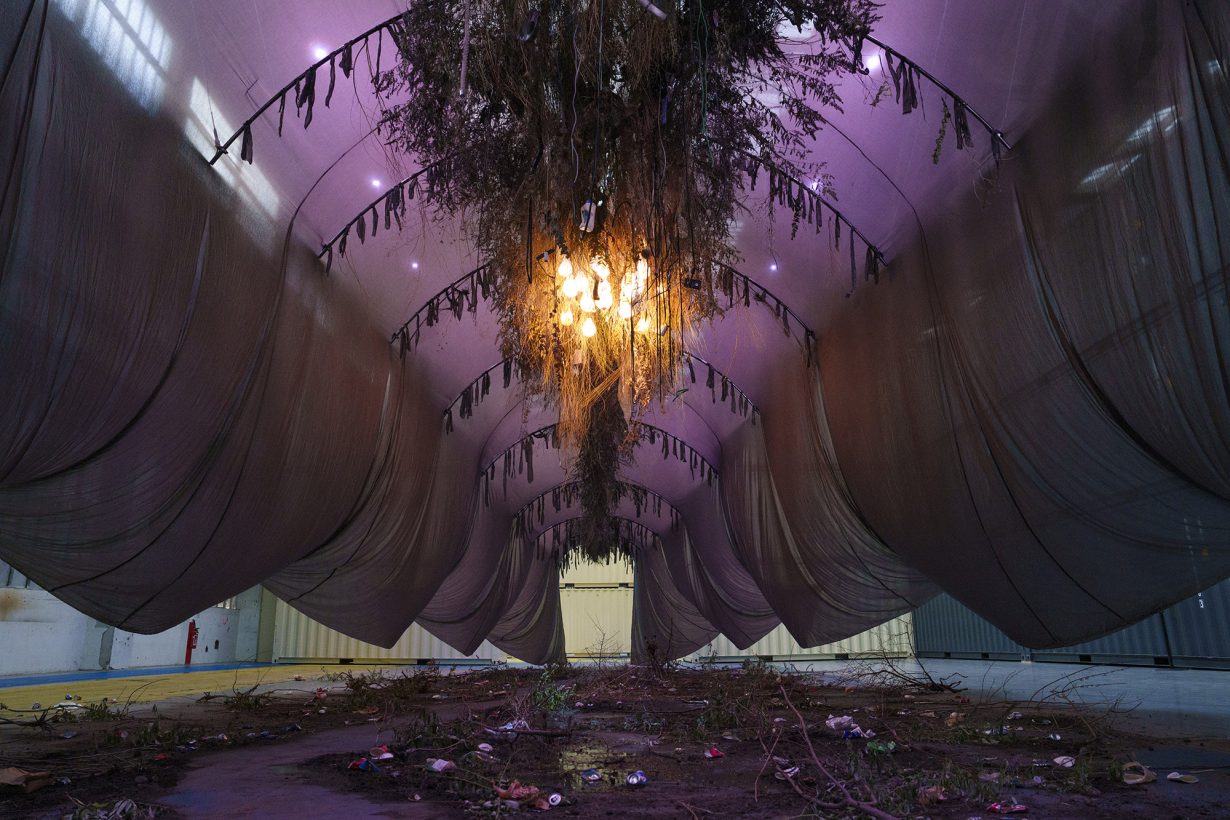
Les Grandes Locos, a former train-maintenance warehouse of maximalist proportions, is where the curatorial proposition feels tightest, here centred on industrialisation: labour, materials, energy and land channelled into the production and circulation of goods. At the entrance, a giant whalelike multimedia installation by Laure Prouvost, Hovering Caress Amère (2022), breathes in and out, its gauzy fabric exterior lifting up intermittently to reveal its insides, littered with what look like the remains of a rave in the woods. Traversing it is like being swallowed by the enormous creature, only to emerge into a landscape populated by the charismatic sculptures of Leilah Babirye, made from recycled materials and looking as though they might have been chewed up and spat out by the giant mammal.
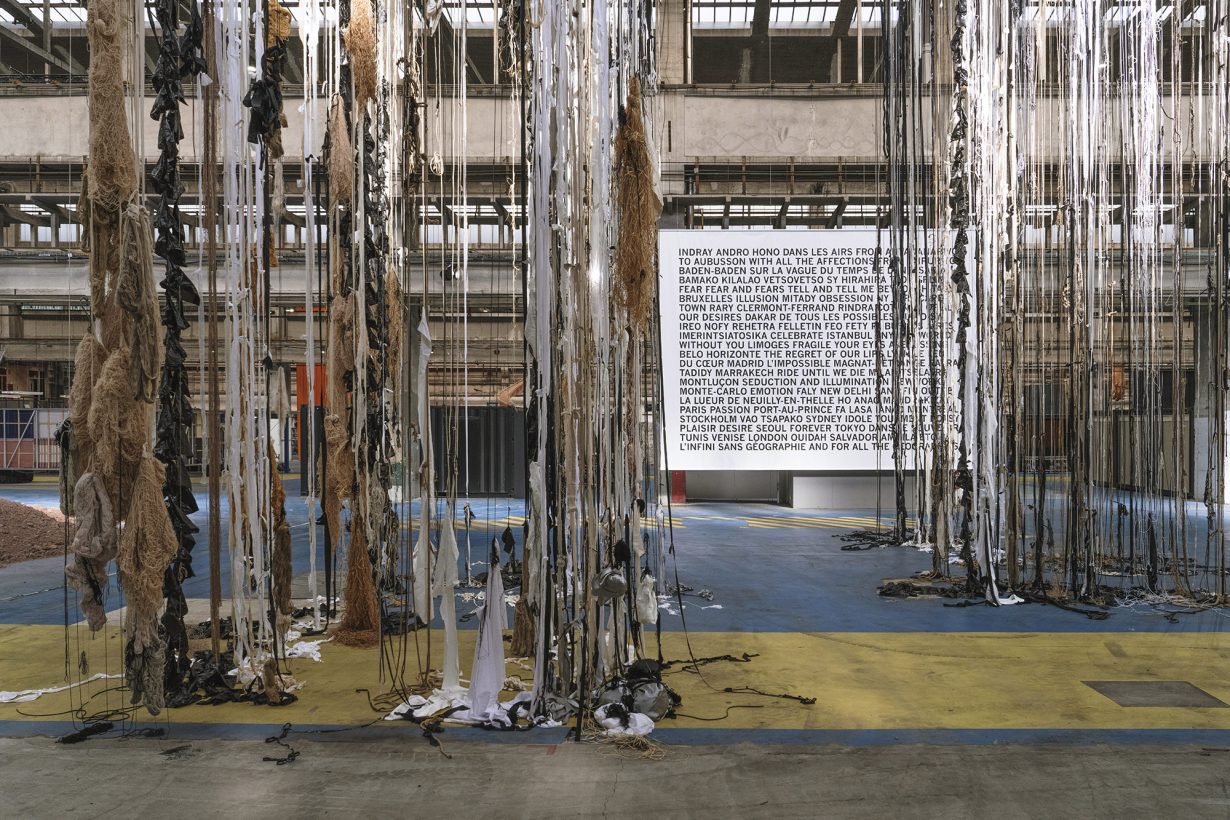
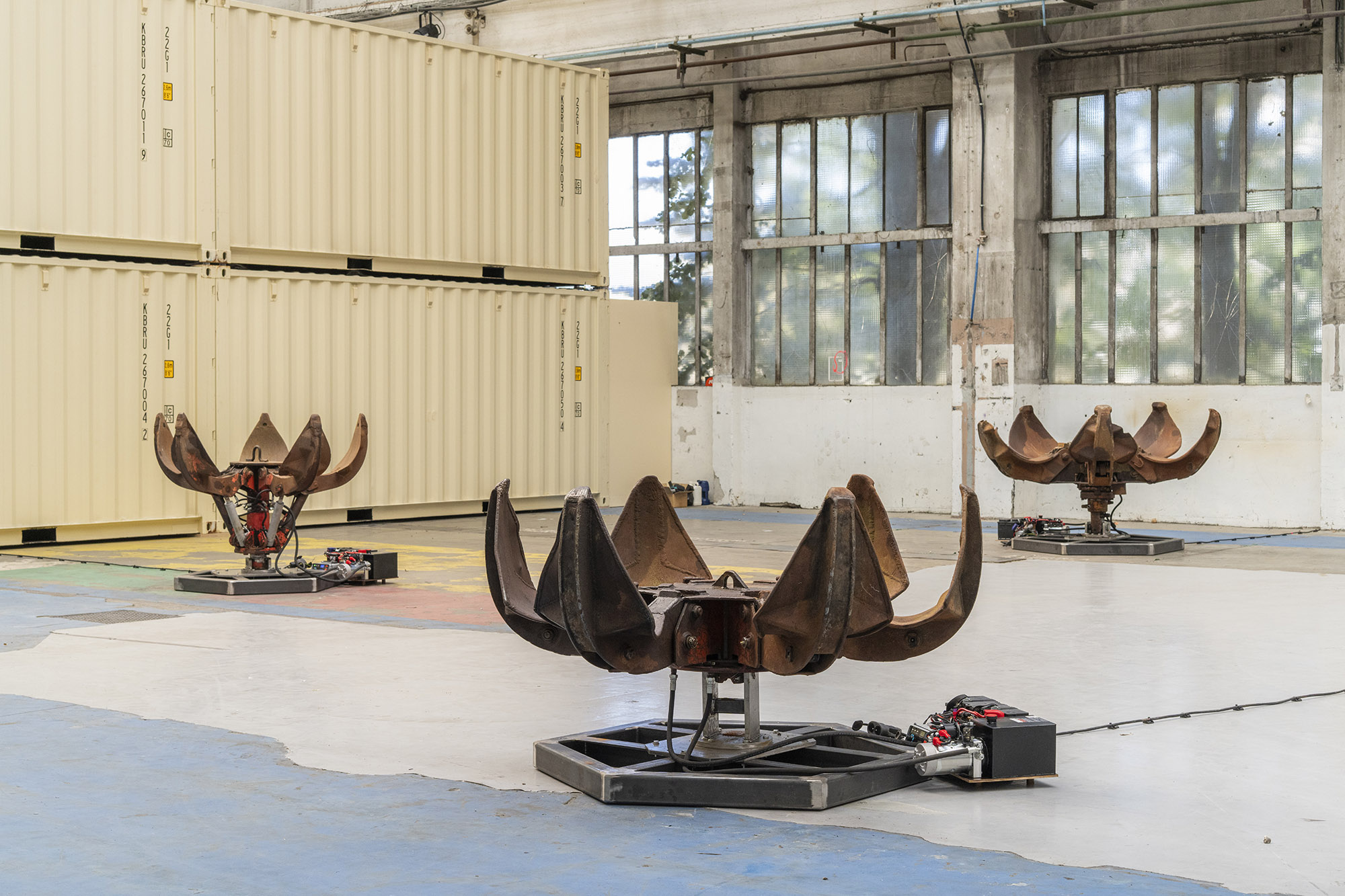
Further on, the exhibition opens onto an industrial landscape of sorts: Selma Selman’s bleak and beautiful Flowers of Life (2024–26), made from grappling irons, open and close robotically while emitting a scent of engine oil and petrol; behind them rises a monumental forest of hanging ropes and fabrics collected from friends and strangers around the world and assembled by Joël Andrianomearisoa (Tady Mitady Tadidy, 2026). Nearby, an artificial mountain of 260 cubic metres of red schist rock, which Lara Almarcegui took from a coalmining spoil heap near Lyon (La Montagne de feu, 2026), points to the murky legal status of mining waste once it has been extracted and deposited on the surface: who, exactly, is responsible for it? As one makes their way through the gigantic space, the show starts to lose its focus, drowned by the sheer quantity of works and the formal and discursive diversity. Some of the videoworks installed in the many containers dotted around the site are brilliant in their own right, though, such as Josefin Arnell’s camp horror story Buurthuis 2 (2023), in which the vampires of gentrification face the organised resistance of a community centre in Amsterdam; and Éléonore Saintagnan’s Fioretti (2026), a deadpan theatrical discussion about our relationship to animals featuring an anthropologist, a philosopher, a puppeteer and the artist herself in animal costumes.
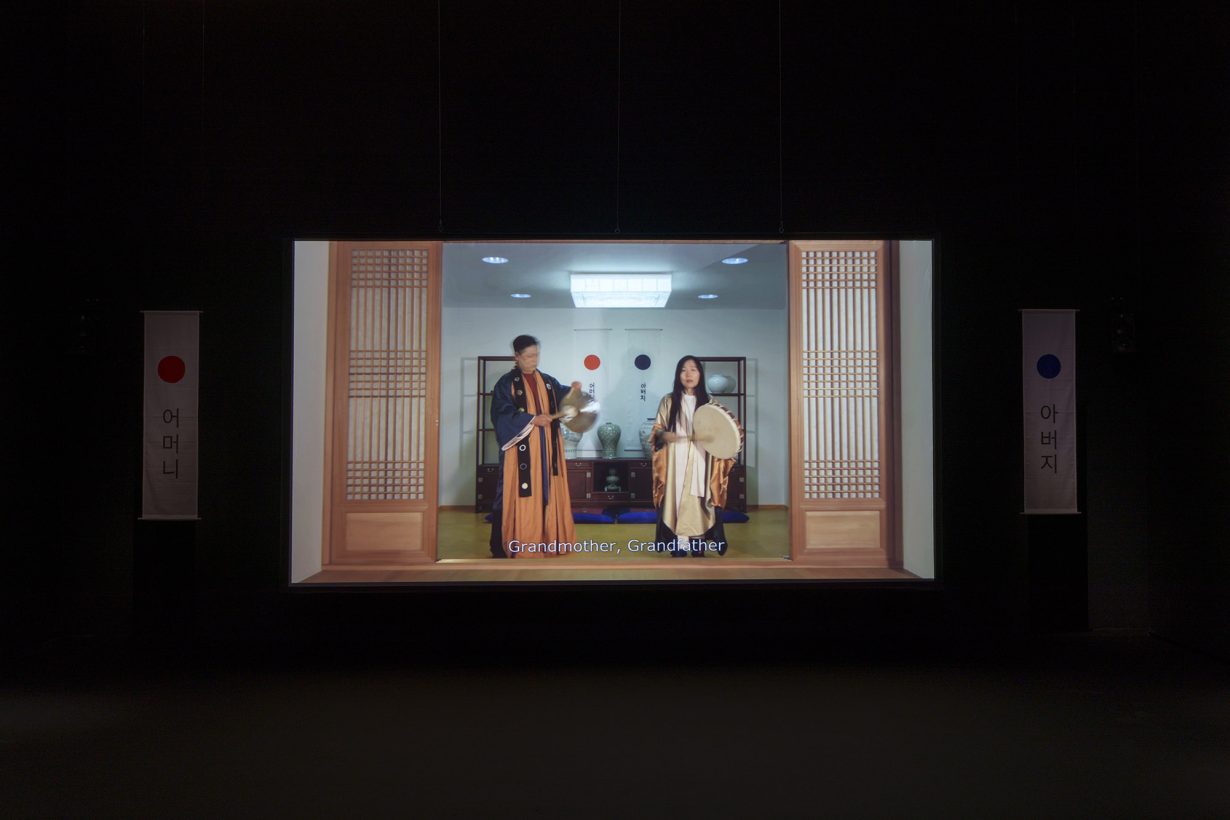
Over the three labyrinthine floors of macLYON, colonial histories and their legacies come to the fore, with artists tracing the lasting ways that colonialism continues to shape our world, with a particular focus on Asia and the Pacific. There are the eerily beautiful paintings of Thu-Van Tran, records of violent histories layered with pigments extracted from minerals and from the chemical legacy of Agent Orange’s deployment during the Vietnam War; and Sara Sejin Chang’s video installation Four Months, Four Million Light Years (2020), which grapples with the colonial narratives underpinning international adoption, in particular between the Netherlands and Korea, through a mixture of documentary images and tender watercolours.
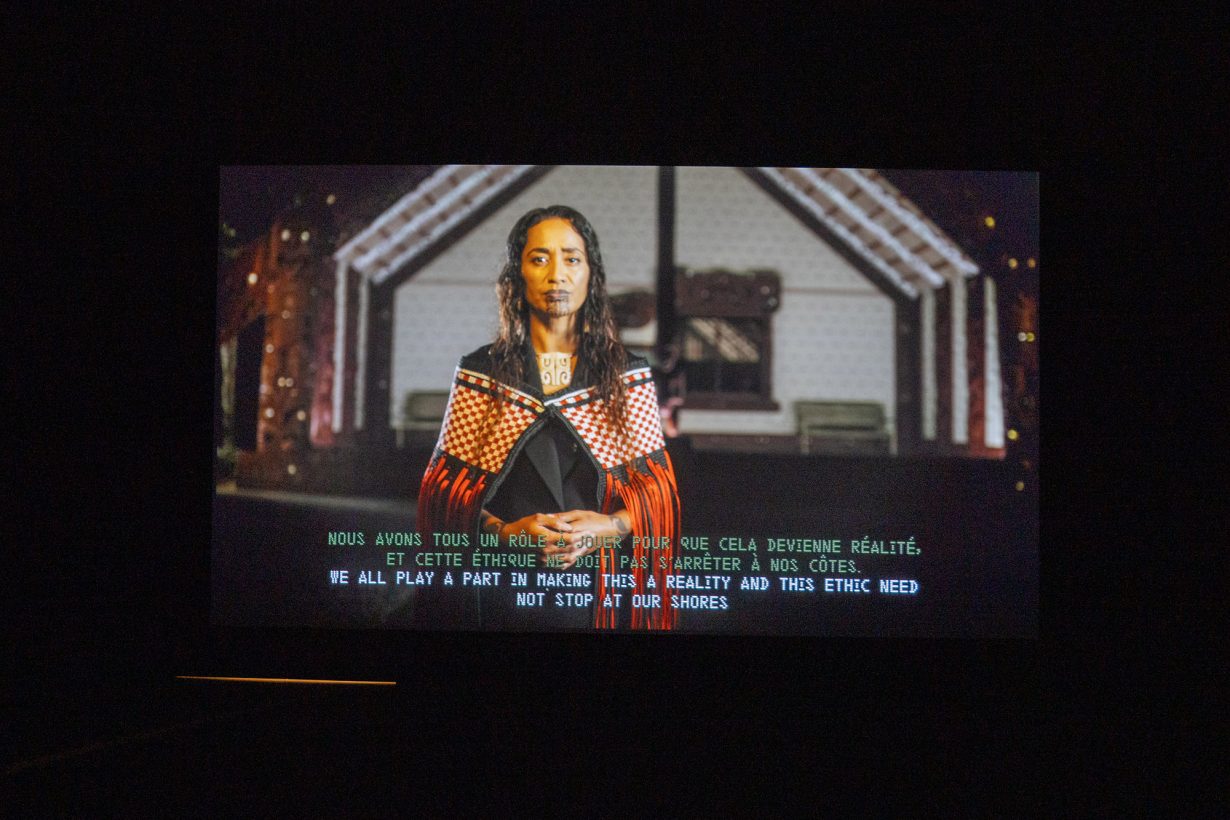
Arguably one of the most potent inclusions, Luke Willis Thompson’s film trilogy Te Moana-nui-a-Kiwa (2024–26), addresses the history and future of Oceania through a mixture of testimony and fictional broadcasts grounded in different regions. In one chapter, Thompson imagines Aotearoa New Zealand in 2040 having become a Māori plurinational state; another revisits the country’s apology for the 1970s anti-immigrant Dawn Raids through a speculative future of expanded reparations and Pacific mobility. The trilogy’s speculative turns are not simply exercises in imagining what might be: they tap into the power of fiction to make other political realities thinkable. In its most recent chapter, Frédérique Muliava – of the Kanak and Socialist National Liberation Front (FLNKS) – gives a moving account of the traumatic experience of her arrest and transfer to mainland France in 2024 following the uprising in Kanaky-New Caledonia, and demands independence from France.
The two eighteenth-century hôtels particuliers that make up the Musée des Tissus (reopened for the occasion after several years of closure) offer a more domestic counterpoint, with works exploring kinship, care and community. The suspended cradles of Lucia Kagramanyan whisper Armenian lullabies to visitors, reflecting on their role in preserving cultural memory and passing stories between generations (Oror. Women’s song for the future. (A cradle, a sanctuary), 2026); Ida Lawrence’s ‘story painting’ recounts an encounter with a relative on an Indonesian tikar mat, capturing the details of the everyday and the textures of hospitality (Languages of Love, 2026); Angelica Mesiti’s epic video of a sound performance by young adults collectively conjures a storm through clapping, clicking and other hand-produced sounds (Future Perfect Continuous, 2022) – among too many others.
By the end of their visit, viewers may be forgiven for having forgotten all about Filliou and his ‘poetic economy’ (or even the traboules, for that matter, given how little of the show actually takes place there). His playful vision of art as inseparable from life, rooted in collective creation and everyday exchange, tends to get lost here in the sheer quantity and diversity of works, which, bar a few moments when the curatorial vision clicks into place, tend to dilute rather than reinforce one another. But if the curatorial vision doesn’t always make good on its ambitions, many of the artworks succeed in making life – and art – a little more interesting.
Biennale de Lyon: To pass from one dream to another, Various venues, Lyon, 19 September – 13 December