The landmark 1970 exhibition was a vital and remarkably expansive act of dissidence. A new meta-curatorial retrospective leaves much to be desired
The People’s Flag Show, a landmark open-participation exhibition presented in November 1970 at Judson Memorial Church, was a community response to the Flag Protection Act of 1968 – a federal law that criminalised the desecration of flags, including burning them at demonstrations against the Vietnam War – and the 1967 arrest of gallerist Stephen Radich, who presented antiwar flag sculptures by the artist Marc Morrell. The 1970 show included reflections on the numbers of deaths in Vietnam; bloodied, expletive- and penis strewn flags; cake flags; flags reimagined as landscapes and blankets; and flags on hardhats, dolls and guns. Incendiaries: The People’s Flag Show 1970 consists primarily of Jan van Raay’s black-and-white installation photographs and her photographs of speeches and protests alongside patchy recordings from the holdings of New York University’s libraries documenting an opening night symposium; a flag burning staged by Jon Hendricks and Jean Toche; and Trio A with Flags (1970), Yvonne Rainer’s composition performed with five other dancers, all of them wearing nothing but flags tied around their necks.
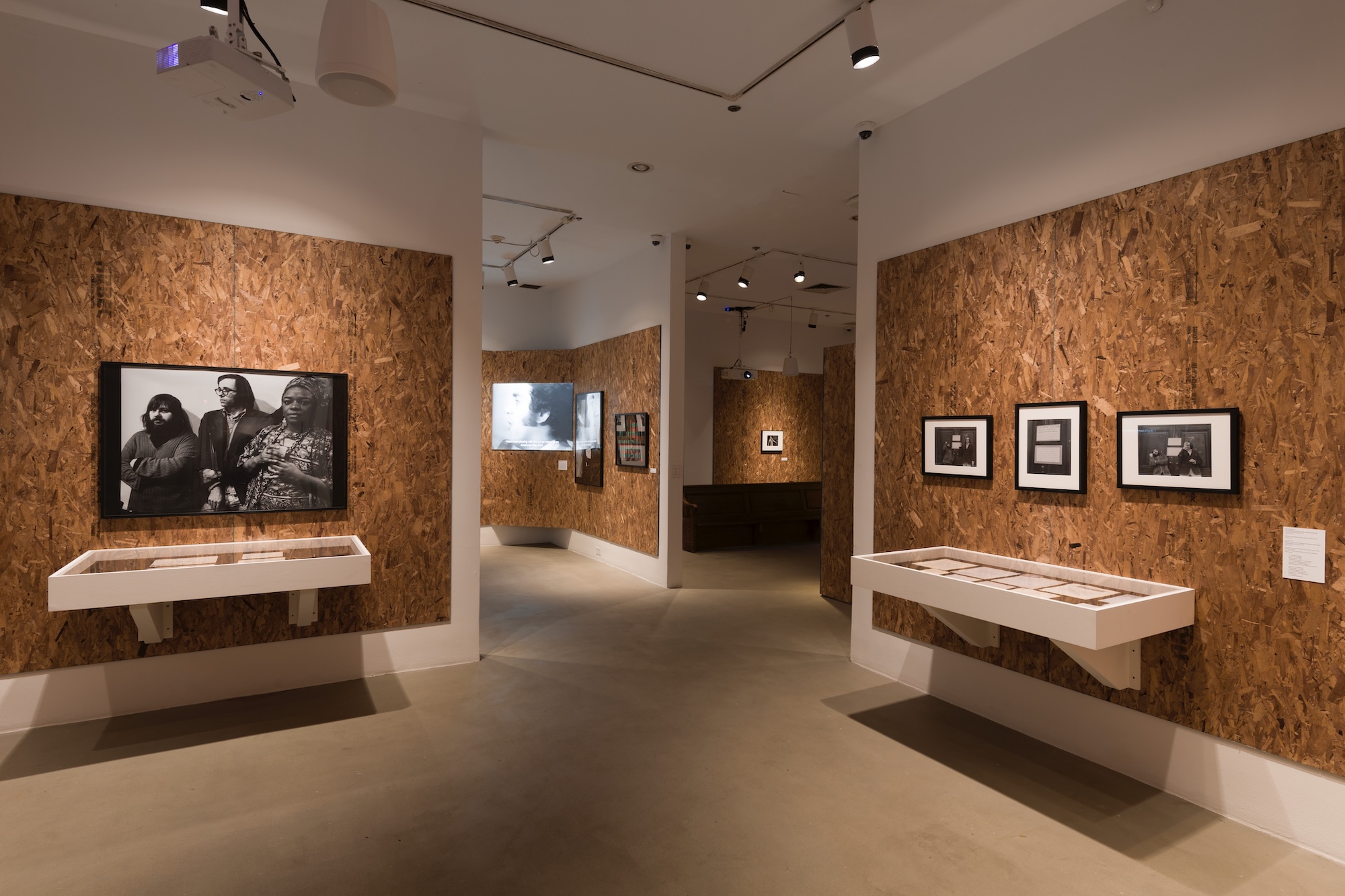
The new meta-curatorial endeavour offers a strangely narrow and undercooked reconstruction of the remarkably expansive event. It begins with a large, pristine American flag – as if anyone forgot what that looks like – and, nearby, a copy of a sermon by Judson’s Reverend Howard Moody, laid out on a Communion table. Sent to the press in advance of The People’s Flag Show, the sermon declared the flag ‘a political fetish’ and ‘an ideological weapon’. Later, there’s hate mail Moody received from members of other congregations and a wall collage of press clippings about the event – some, like ‘Flagged Down: The Judson Three and Friends’, a 1972 Art in America essay by Lucy Lippard, are only excerpted. The gallery walls throughout are neatly clad in oriented strand board, gesturing towards military camouflage and Judson’s low-budget, antiestablishment undertakings. Invented during the 1960s but not widely used this way at the time, these panels, with their aggressively visible wood flakes, feel anachronistic, evoking a recently converted cabin in the pages of Dwell magazine, not downtown Manhattan circa 1970.
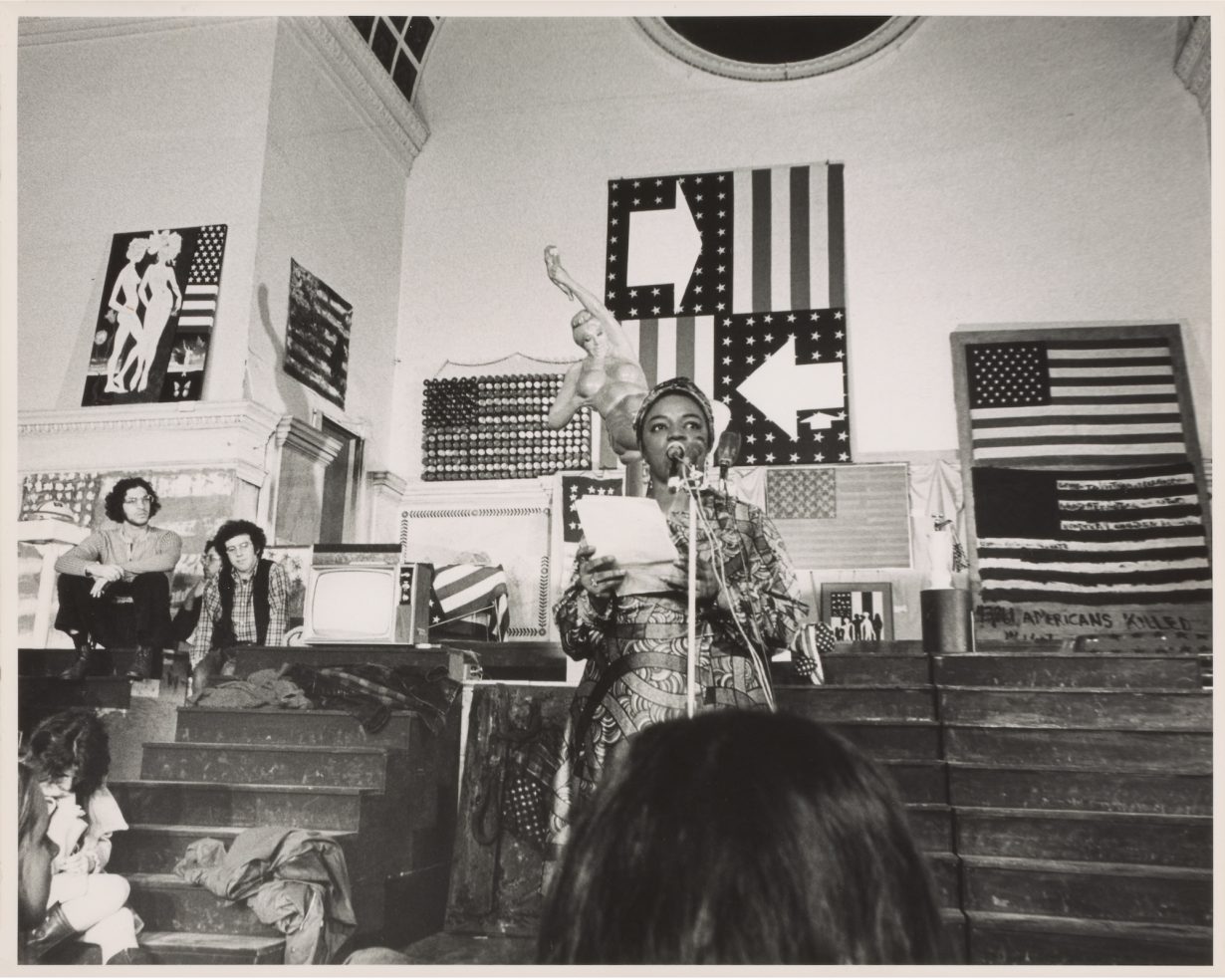
Most unsatisfyingly, though, the new exhibition makes little attempt to identify most of the more than 150 artists in the original show. On display is Faith Ringgold’s flaglike show poster advocating that ‘a flag which does not belong to the people to do with as they see fit should be burned’ and, recorded in pictures by van Raay, a flag in a toilet by writer and artist Kate Millett and a muddy flag and noose by artist and psychologist Mel Roman. In other documentation, amid crowd shots and a blurry mélange of the salon-style and tabletop Pop, assemblage and social realist contributions, works by Luis Jiménez and Paul von Ringelheim are evident but not credited. And what about the rest?
Hendricks, Toche and Ringgold – the Judson Three – were arrested for their involvement in organising The People’s Flag Show, so the exhibition also dedicates significant space to footage of an interview filmed after their arrest and related photographs and court documents. (Their charges, like those against Radich, were overturned.) Yet although the 1970 show still seems vital looking back, in the new edition, the controversy and some key players are spotlit while many participants and their artworks remain shadowy or anonymous. Even loans of a dozen artworks by some of the participating artists from 1970, or short interviews with them, would have made a difference. In the full text of Lippard’s Art in America essay, she suggests that the artists may have hoped to unify their group by simultaneously taking up the flag as material. Possibly they imagined being arrested and taken to jail shoulder-to-shoulder a hundred strong. Here, there isn’t enough to constitute such a united action in the interest of free speech. The first exhibition’s breadth – many people wrestling with the same charged symbol in different ways – gets lost, as Incendiaries leaves the larger collective out of focus.
Incendiaries: The People’s Flag Show 1970 at 80WSE, New York, 9 September – 16 January
From the October 2026 issue of ArtReview – get your copy.


