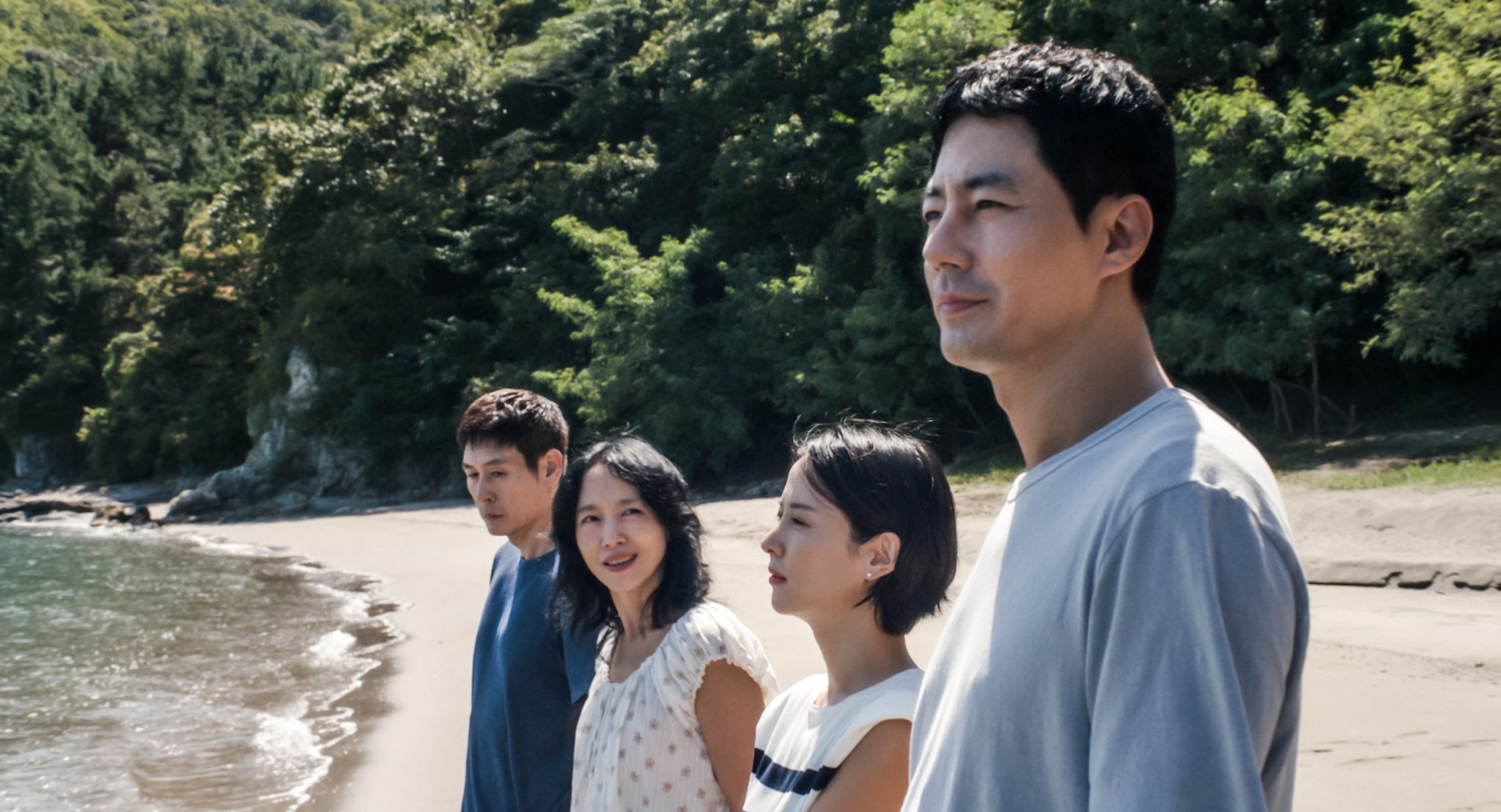
Lee Chang-dong’s latest film pits the proletariat against the artist-bourgeoisie, and asks who owes what to eachother
Lee Chang-dong’s long-anticipated film Possible Love has a surprising amount in common with the American film du jour,Nathan Fielder and Lance Oppenheim’s documentary You Can See Everything. Both plumb the ambivalent relationship between subject and filmmaker; explore the truths ping-ponging between performance and projection; ask what forms complicity takes and can it look anything like love? But instead of the disgraced pharma She-EO Elizabeth Holmes (in You Can See Everything), it’s twiggy working-class Mi-Ok (Jeon Do-Yeon) who lets the camera into her home. And if Holmes’s motivations for such exposure are – at least to this writer – plainly obvious, an attempt to humanise herself before a public court, Mi-Ok’s are more slippery, more naive.
Possible Love is ostensibly a relationship drama, one that carves out an uncomfortable class consciousness through the meeting of two couples: Mi-ok and her husband, Ho-seok (Sul Kyung-gu), and documentarian Ye-ji (Cho Yeo-jeong) and hers, Sang-woo (Zo In-sung). Mi-ok and Ho-seok are still piecing themselves together after the failure of a factory workers strike at SP Heavy Industries in which they were involved, which ended in 40 percent of the company’s workforce, including Ho-seok, being laid off and a violent extinguishment of the workers’ organising efforts. The film opens two years after these events, as Mi-ok and Ho-seok depart on a dusky drive to a former colleague’s funeral, their young son, Cheol (Choi Min), burrowed in his thoughts in the backseat. There’s an awkwardness to the couple, the kind forged by clenched, unspoken hurt, that Mi-ok attempts to dissipate with idle chatter, marvelling at how strange it feels to be wearing formal clothes. When Ho-seok – his face melted with grief – questions his wife’s remarks, Mi-ok gets mildly defensive: “Clothes matter to me. The things I wear. What I’ll cook to eat tonight. Those things matter to me.”
That they don’t to Ho-seok reveals the extent of his evident depression, where choice and the delights of personal preference seem to shrivel in a vacuum of meaninglessness. Not just stripped of community, but his faith in it betrayed, Ho-seok has become a stranger even to his family: distant, phantomlike. Mi-ok feels alone, her creaky, mischievous smile and dangling cigarettes barely concealing her distress. And so it makes sense that she’d jump at the opportunity for connection when Ye-ji – whom we first see behind the camera, trying but clearly failing to be a fly-on-the-wall at the funeral reception – shows an interest in her story. Ye-ji, we understand from a funding pitch she delivers to a panel of investors, is making a film about the former employees of SP Heavy Industries, and gleans from the couple’s spat at the funeral that the two could make for juicy subjects.
By and large, the ensuing rapport between Mi-ok and Ye-ji is strangely comfortable, with Ye-ji playing the role of loyal girlfriend lending an ear – a not unreasonable strategy for a project that relies on raw testimony and profound trust between subject and filmmaker. Friendly professionalism with strict boundaries probably wouldn’t yield throbbing confessions. And because details matter to Mi-ok, she is both bewildered and gratified by her newfound proximity to luxury – Ye-ji’s golden labrador, SUV and designer handbags. But more than this, perhaps, Ye-ji’s wealth confers an inexorable pleasantness, the kind of pep and insouciance that financial security fosters, and with it the pleasures of leisure – restaurant dinners, bar hangs, country-home retreats. Mi-ok isn’t delusional about the differences between her and her new ‘friend’, whose prim poplin shirts stand in contrast to Mi-ok’s wrinkled linens and weathered baseball tees. Optimism guides Mi-ok, a belief that an authentically intimate balance can be struck over their exchange of lives. Mi-ok grants Ye-ji access to her inner circle and shepherds her through the backroads of working-class existence, even generating material for her documentary – as in one scene at Mi-ok’s workplace, in which she forms a four-person union merely to spice up Ye-ji’s footage.
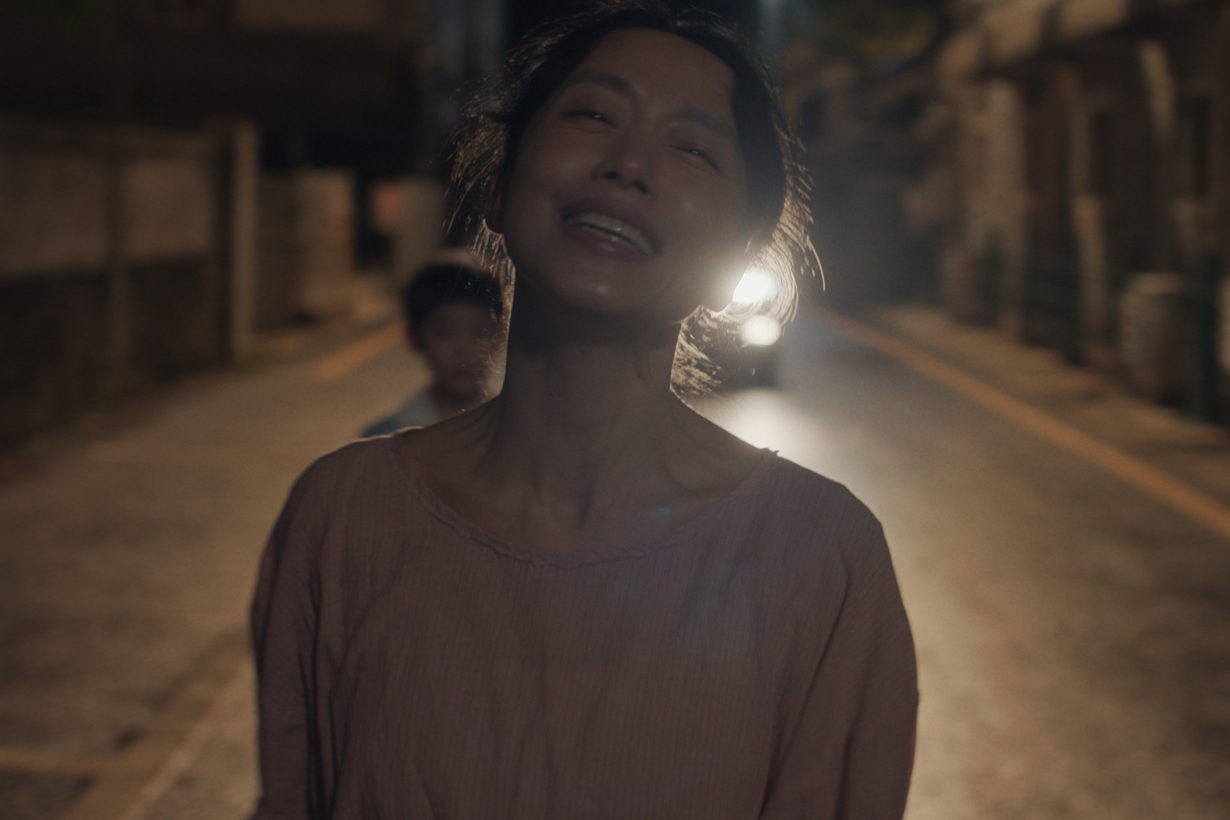
Unsurprisingly, for a filmmaker known for works of novelistic density, Possible Love drifts between the two families with naturalistic elegance and structural sophistication, plunging deeper into Mi-ok and Ho-seok’s shared past – from the beginning of their romance as provincial adolescents to the promise and demise of the workers’ movement – via flashbacks that accompany Mi-ok’s on-camera interviews. These jumps back in time may be direct visualisations of those events, Mi-ok’s hazy memories or cinematic recreations authored by Ye-ji; the presence of her camera, foregrounded using reverse shots during the filming of testimonies, and the ethical conceit of the film in general, keeps these possibilities in suspension.
At the same time, and in spite of its ambitions – as, in a first for Lee, a work of self-reflexive worldbuilding – Possible Love may also be one of his weakest films. Class tensions in South Korean society have always served as the fracturing lines along which Lee maps out his psychological portraits, but there’s a sense of mystery and the sublime to films like Burning (2018) and Poetry (2010) that mostly eludes the fastidiously staked out class relations of Possible Love. Symbols of Mi-ok and Ho-seok’s spiritual devastation are neatly staged, from a scene in which Cheol is a frowning, flimsy-armed lame-duck in a youth karate demonstration; to the metaphorical heft of the concrete picnic table Ho-seok built to host drinks with his work friends prior to the strike. It was never used and its emptiness is a reminder both of his group’s disintegration, their pulverised faith and his enduring alienation. That Ye-ji immediately zeroes in on these images as good fodder for her documentary disrupts our own sympathies and calls attention to the curation that artists perform to sculpt our responses towards the suffering of others. If Lee is to some degree interrogating himself – tellingly, at its inception over a decade ago, Possible Love began as a documentary project about laid-off factory workers – a combination of cynicism and remorse clouds his storytelling into a simpler dynamic about exploitation involving, at least on one side, players whose motivations are crudely transparent. If rendering the stories of real people into fiction allows politically conscious filmmakers to sidestep the potentially extractive nature of documentary portraiture, it can also metabolise these stories to create neat thematic frameworks.
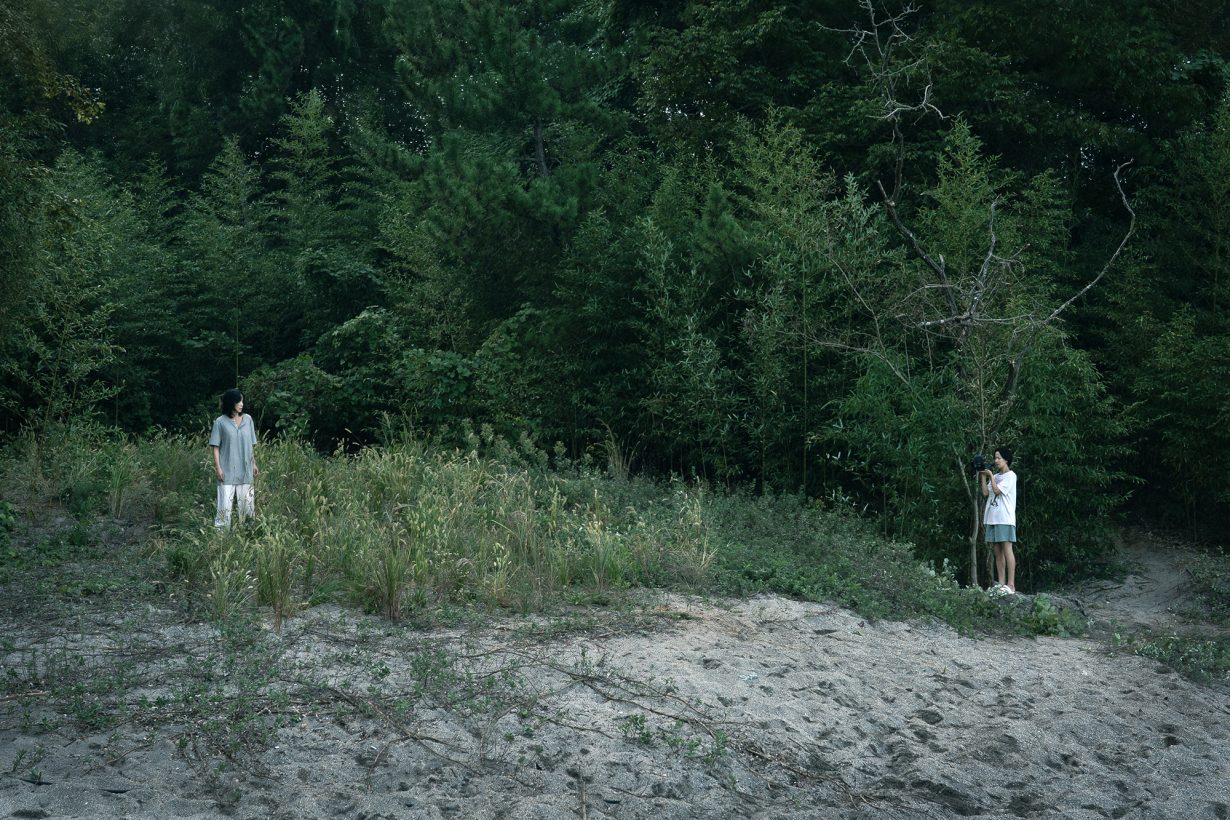
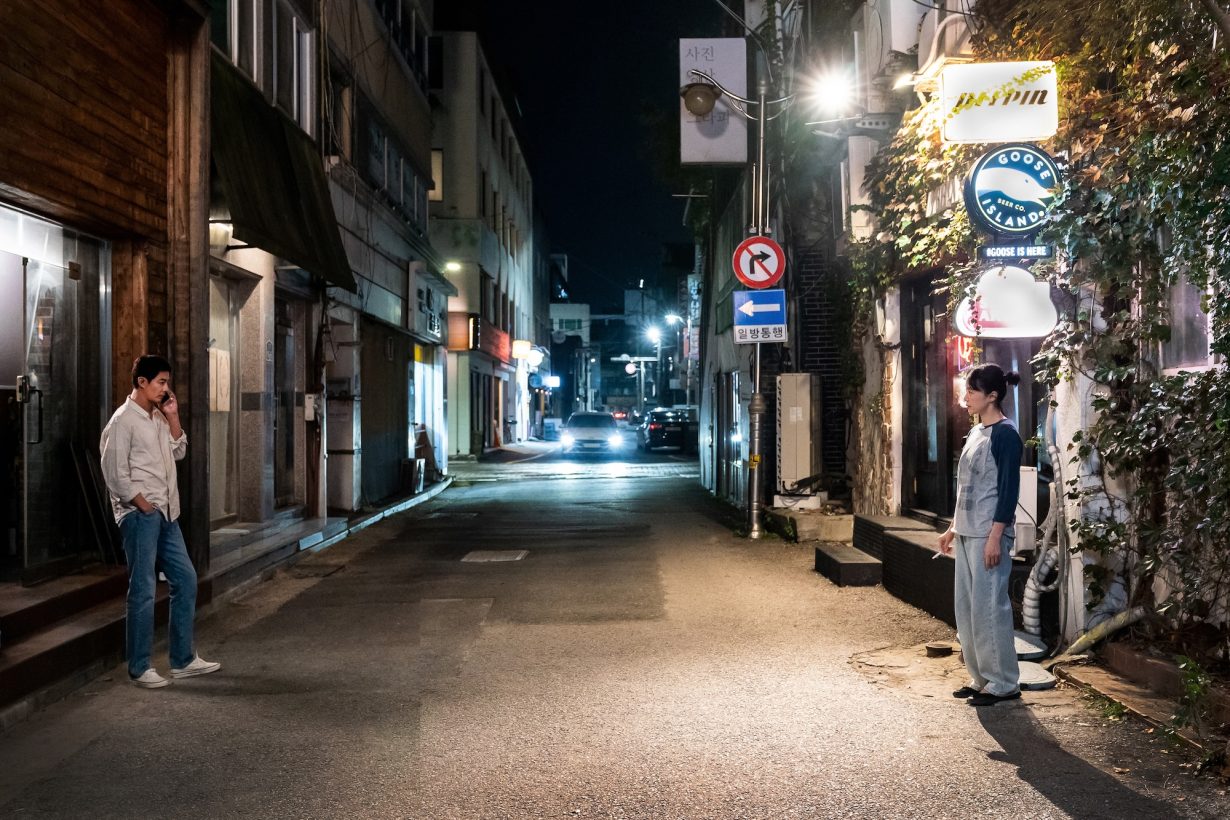
Ye-ji and her devastatingly handsome and extraordinarily wealthy husband are designed from the top as villains within a context where wickedness takes the softer hue of goal-oriented generosity. They glide between performative affection and anthropological distance. Though Sang-woo, a kind of penthouse-floor automaton who sometimes feels as remote and theoretical to us as his hilarious high school nickname (‘dreamlover’), only makes an effort when his wife’s around.
Of all the pitiable aspects of Mi-ok’s life, it’s Ho-seok that most fascinates Ye-ji, who decides he’s the perfectly tragic figure to anchor her film. To Sang-woo, Ho-seok is just a ‘cliché’, a standard working-class sad-sack. Is it Ye-ji’s auteur-eye that allows her to see something special in him? Or the fact that she hasn’t spent much time around wretched men like him? When Mi-ok confesses that Ho-seok hasn’t talked much about his feelings, and avoided therapy all this time, explaining that there’s “something inside him he’s scared to pull out”, Ye-ji’s eyes widen with the spark of a challenge accepted. The rest of the film then contrives to give her what she wants through the further entanglement of the two couples, culminating in a final-hour set piece at Sang-woo’s seaside chateau, where the four (plus Cheol) enjoy an awkward, boozy vacation that piles on their disparities, and primes us for Ho-seok’s emotional collapse – the money shot for Ye-ji, whose benevolence finally pays off when Ho-seok agrees to an on-camera interview; and the moment of revelation for Mi-ok.
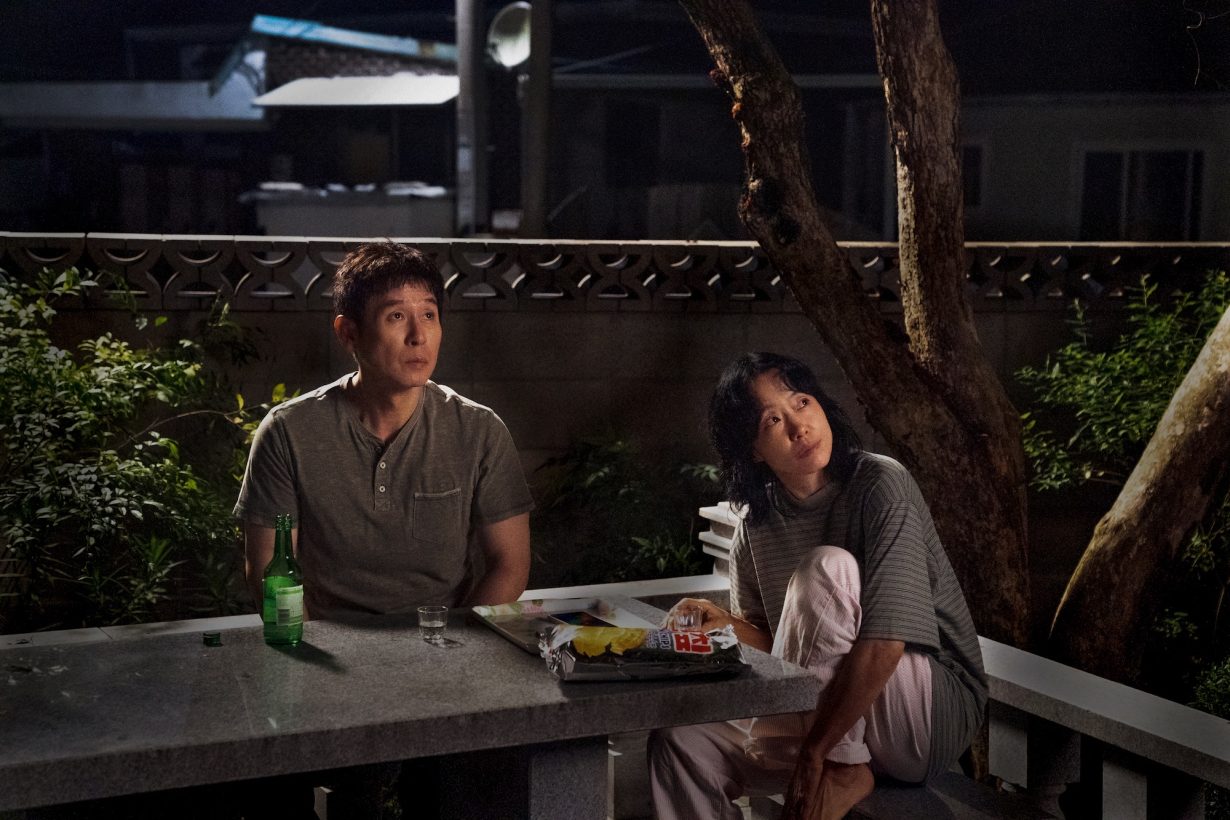
But if Mi-ok and Ho-seok are, by design, the more robust characters, then Mi-ok at least stakes claim to her humanity by navigating her own desires (for friendship, for a particular kind of family fantasy, for the pleasure of visibility and attention) against the realities of her small world and the people in it. While Ye-ji and her man work together on her long con to trap and repurpose Ho-seok’s pain for the cinema, a marriage-as-collusion that brings to mind the toxic couple in You Can See Everything; Mi-ok comes to realise that love can grow from camaraderie; from time and endurance; from the mutual recognition that breeds solidarity.
Read next Does ‘Hope’ Mean Anything at All?


