It’s sometimes hard to know where Na Hong-jin’s monster movie, reportedly the most expensive Korean movie ever made, is going – other than on and on
If you’ve heard anything about Hope, Korean filmmaker Na Hong-jin’s monster movie, it’s likely that the creatures are extremely goofy. Rendered in the crudest CGI as a green, galloping Gollum, the film’s first bogey finally appears onscreen about halfway through the film. You can’t help but snicker at its fuzzy construction, its stringy black locks, especially after a tremendous buildup that’s effective partly because of what it conceals. Following this revelation, pieces are then put in place for an inevitable sequel, and other monsters spill out: corny extraterrestrials played by digitally transformed Hollywood stars like Michael Fassbender, Alicia Vikander and Taylor Russell.
Perhaps this move towards a beefy, Avatar-style franchise is to be expected of Na’s long-gestating blockbuster. It’s been a decade since his last genre experiment, the folk-horror policier The Wailing (2016), opened to unexpected success in the Korean box office and cinched an international cult following in the aftermath of its release. At around $45 million, Hope is reportedly the most expensive Korean movie ever made. Recent years have seen a continuous effort in global cinema to push back against American cultural dominance of the theatrical arena; and while the fight is much less dire in South Korea, the conceit of aliens with suspiciously Western facial features invading a tiny Korean hamlet strikes me as an especially neat metaphor for waging a battle against cultural encroachment – among others.
At least Na has a good sense of humour about it. The first, triumphantly choreographed, hour of the film stays on the heels of Bum-seok (Hwang Jung-min), a dopey police chief who appears on the scene after receiving a call from a group of local hunters startled by a mangled cow carcass left smack in the middle of a country road. With bracing efficiency and gliding wide-screen camerawork, Na weaves through fabulously wrecked farmhouses and village streets littered with mutilated corpses and detritus whose mounting absurdity leaves one wondering, what the hell could have done this? It’s not a tiger from North Korea, as one hunter hypothesises, and the growing scale of the calamity left in the monster’s immediate wake runs inversely to the belief that our bumbling Bum-seok could be anywhere near capable of saving the day. Still, he nervously follows the tracks of this still-unseen behemoth, while Na leaves behind amusingly baffling hints as to the nature of its form: its bodily ooze sticks to its victims, and an elder villager equipped with a comically ineffectual bow-and-arrow describes it as looking like “a mush of peas and beans”.
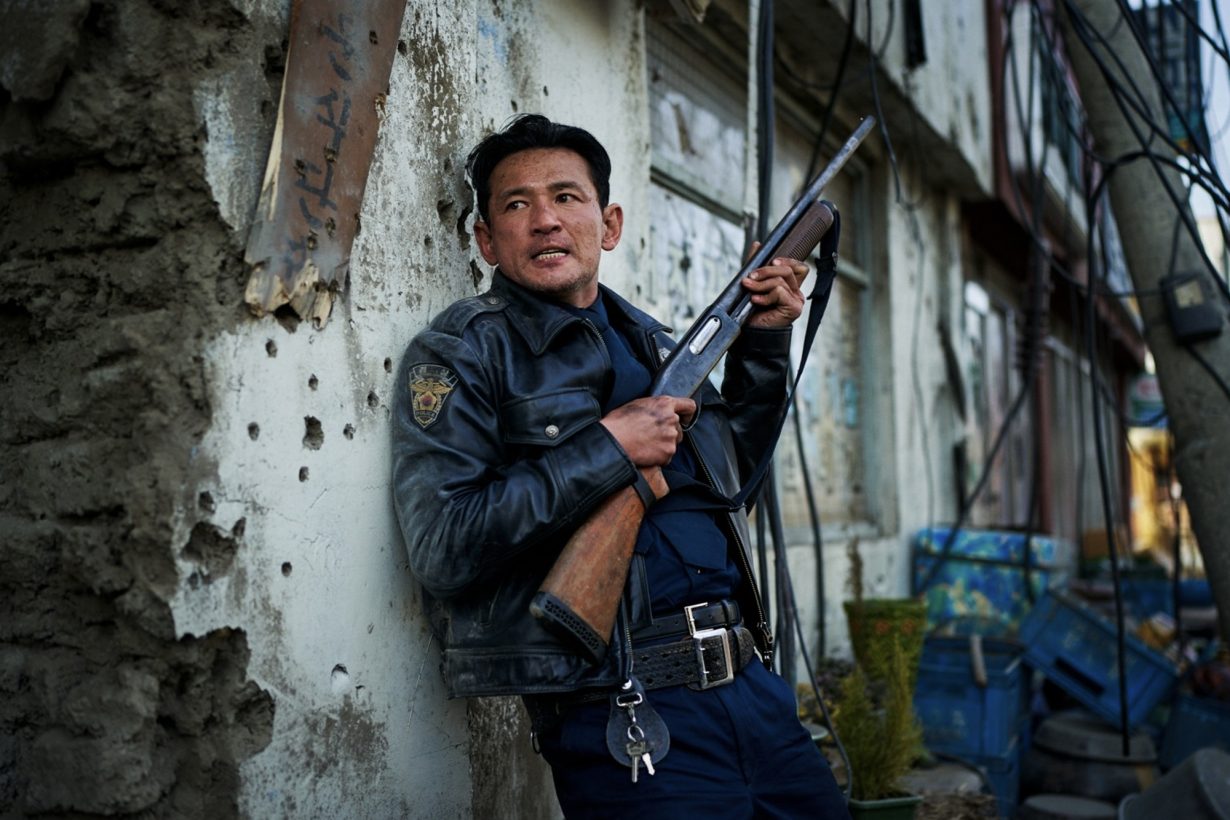
Set in Hope, a fictional harbour village during the 1980s (thus the lack of modern technologies), and shot mostly in the real coastal town of Namchang-ri, the film makes vibrant use of its provincial setting, unleashing its ‘chase’ amid exploded butcher shops and open markets with banners spouting propagandistic slogans. ‘Protect the nation from infiltration’, reads one, referring to Hope’s close proximity to the North Korean border and the minefield situated between it and its hostile neighbours. At one point, Bum-seok runs into a band of guerrilla fighters bravely throwing themselves at the monster. Seemingly representing an older generation of anti-Communist militants, these elders call public servants “leeches” and brush off Bum-seok’s questions about their stockpile of weapons. This, and the team-up of Bum-seok and the ageing archer, Gi-cheon (Kim Ki-cheon), gives a local flavour to the film’s David and Goliath story, pitting recognisable Korean types – or village personalities – against what, at this point, feels like an amorphous (albeit harrowingly powerful) threat.
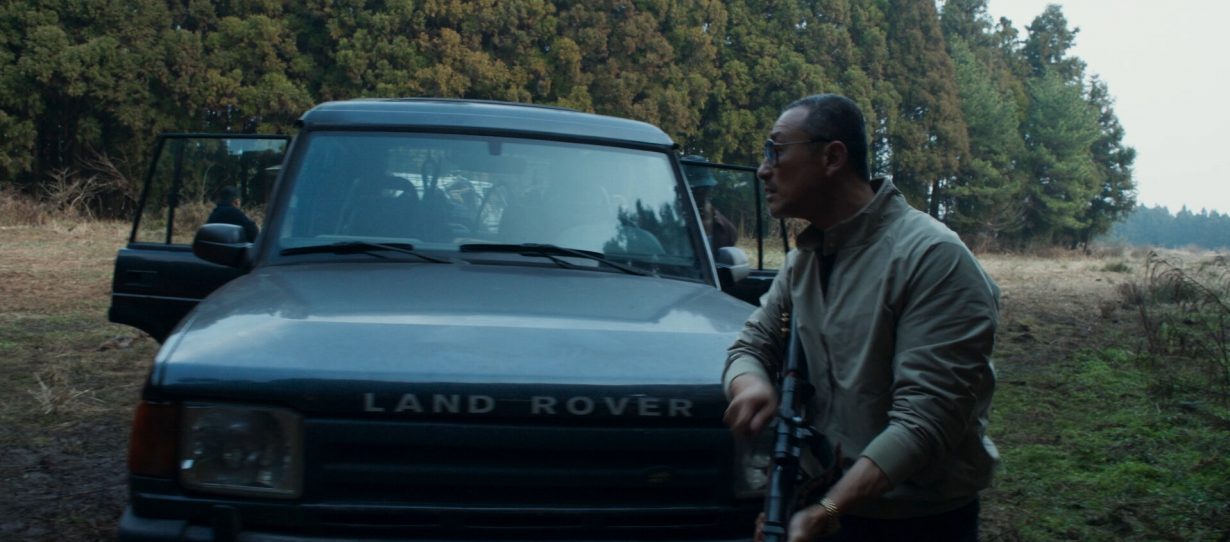
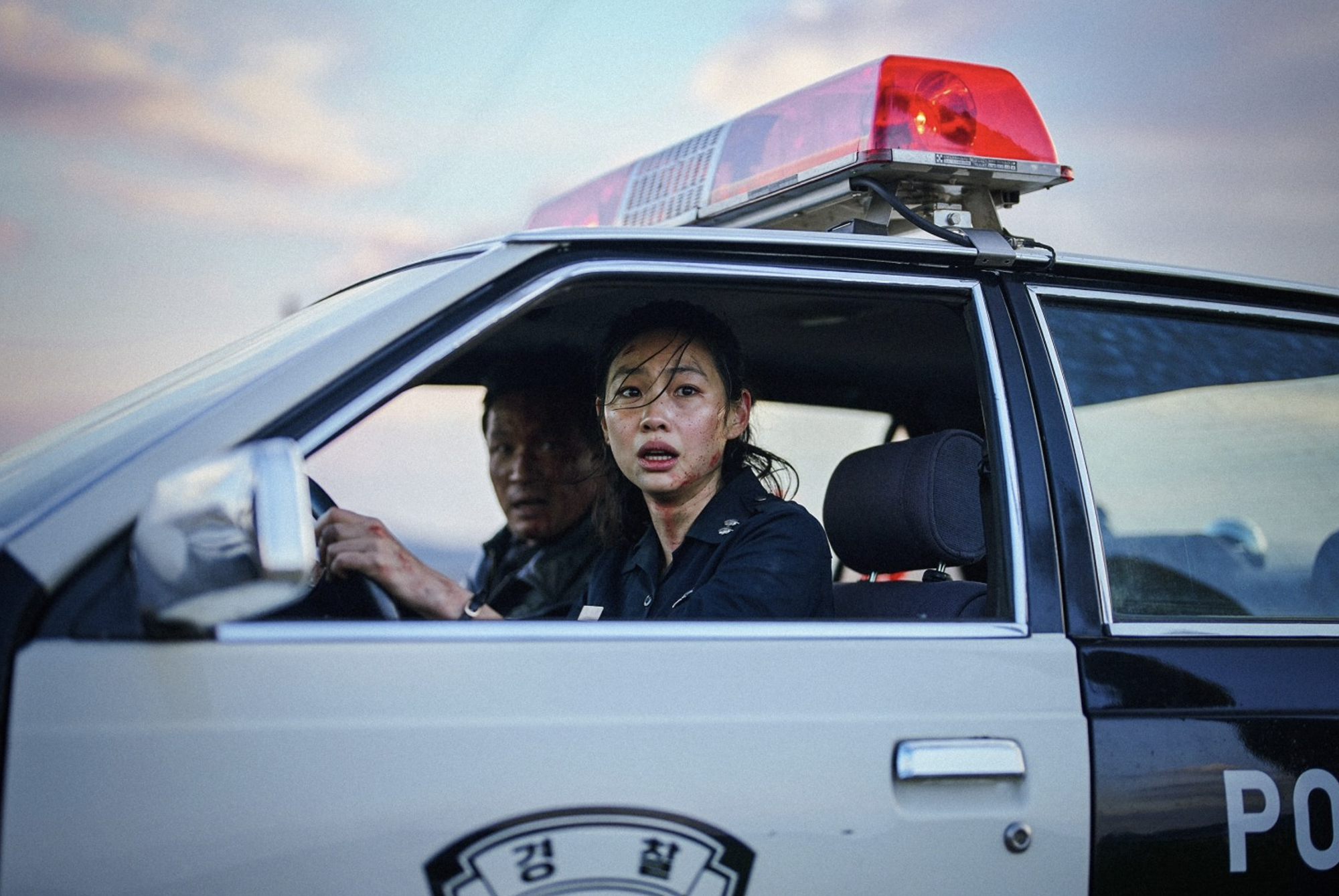
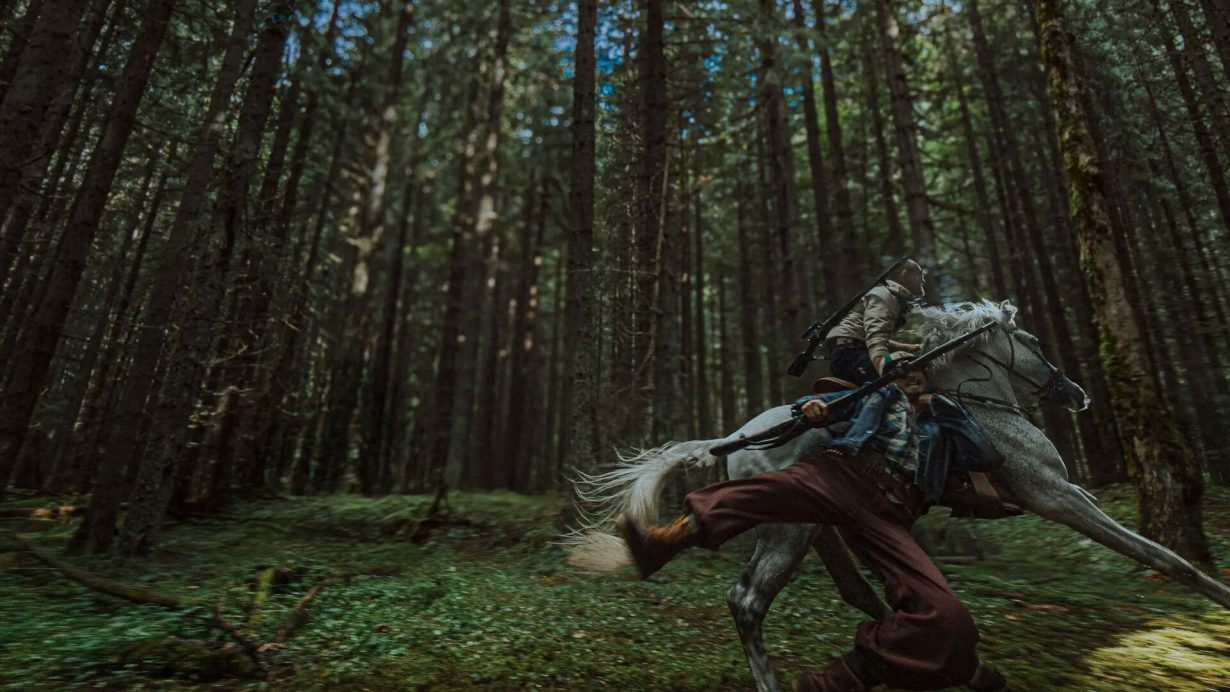
Yet this rollicking, seemingly suicidal mission loses some of its momentum when the beast finally emerges from within a cavernous garage. The wonky effects are certainly to blame, but the preposterousness that made the first half so thrilling and, well, funny, carries over into practical details that derail the film’s suspension of disbelief. These are simple but crucial glitches. With an enemy so demonstrably fast and formidable, how can a chase scene feel so lugubrious and drawn out? Surely the monster, with its metre-long limbs and scaling powers, could catch up with a pesky human, especially since it keeps at a similar distance whether its victim is on horseback or in a car? In any case, I couldn’t help but laugh at the moment when lady cop extraordinaire Sung-ae (Jung Ho-yeon, of Squid Game fame) swoops in to save Bum-seok, bazooka in hand – as if the gargantuan creature were running a mile uphill towards her as opposed to a few blocks. If that’s being too finicky about this odd mistiming and spatial imprecision, well, it happens again in a two-part forest chase involving hunky hunter Sung-ki (Zo In-sung, from Lee Chang-dong’s upcoming Possible Love).
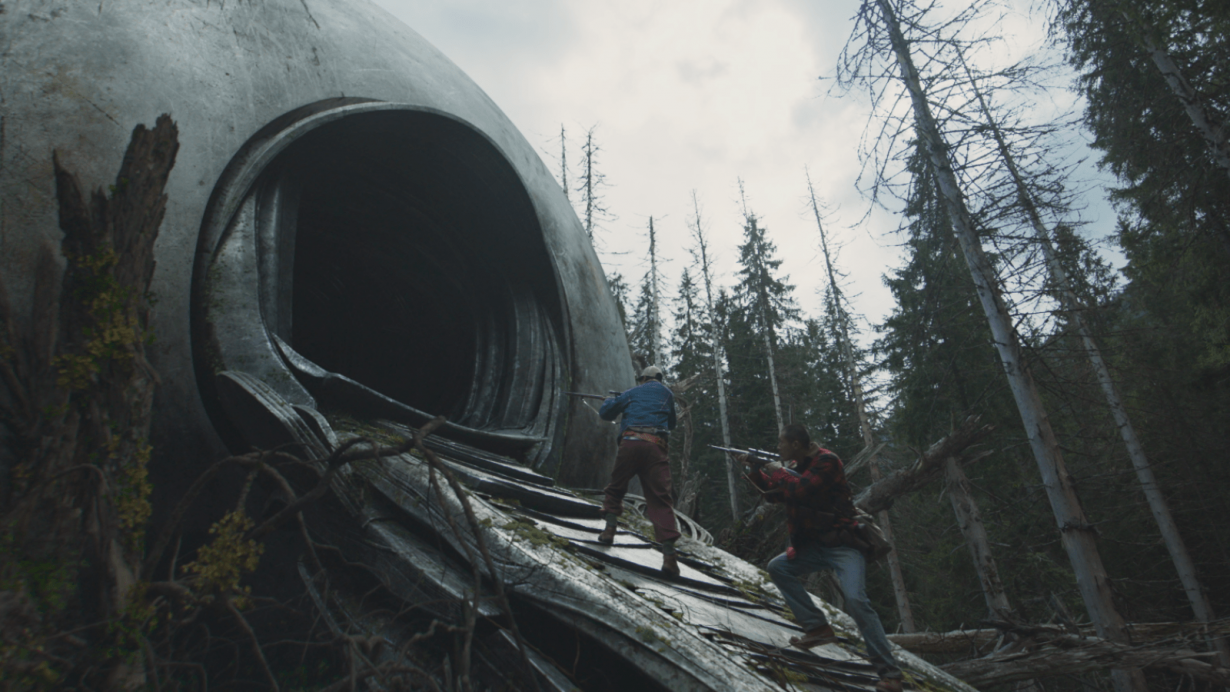
It’s almost appalling that after the first monster is slain there’s still about an hour and a half of the film to go; and this grizzle is where Na builds the scaffolding for his intended follow-up. Its most compelling parts exploit the underdog humour established by the folly of the initial hunt, again using its carousel of eccentric locals to give charm, texture and a kind of devilish resilience to the community’s recovery efforts. There’s an intrepid doctor who is gleefully unperturbed as she gives the dead monster a full-body examination, ignoring its stench of “rotten fish and feces” with two cotton balls stuffed up her nose; she uses a knife, then a saw, then a chainsaw to open its thick exoskeleton for a complete autopsy. At a hospital crowded with injured villagers, Sung-ae hears an uproarious testimony from Gi-cheon about seeing three additional monsters well before the recent attack, and how he was nearly spotted by them because of an episode of explosive diarrhea. The sociopathic taxidermist encountered by Bum-seok makes for a nice addition to this medley of odd, earthy townspeople, though what he reveals – that he in fact killed the first monster’s baby, wrapped it in plastic and stowed it in his freezer, thus precipitating the town’s destruction by enraged mother – makes for a trite rationale that clicks perfunctorily with the ensuing discovery of an abandoned spaceship and more angry aliens.
Na isn’t exactly known for his economical storytelling: both The Wailing and his seedy revenge thriller The Chaser (2008) run over two hours. Still, the thrill of those films comes from their unpredictability, especially their fluid tap dance across genres, working off Korean spiritual traditions (in the case of The Wailing) and the labyrinthine streetscapes of Seoul’s working-class residential neighbourhoods (as in The Chaser) to reinvigorate their templates. Amid Hope’s marriage of rural cop comedy and creature-feature, a scattering of provincial politics certainly gives the film some personality. But details like the town’s border with North Korea and the nationalistic undertow of the villager’s fight for self-preservation seem mere accessories for a thoroughly generic us-vs-them faceoff. As the Variety critic Jessica Kiang wrote, the film is ‘almost heroic in its lack of thematic weight or political/philosophical subtext’. While I don’t necessarily agree that the film is about nothing,its flimsiness lends itself to a one-size-fits-all reading where the monster could be anything vaguely threatening to Korean (small-town) culture. The opposite could be surmised as well; the revelation that the monsters have feelings and (in Sung-ki’s fight with an oddly placid behemoth) some level of compassion and restraint perhaps indicative that the enemy is in fact Korean isolationism. These kinds of interpretive wormholes are often staples of fan-oriented worldbuilding, where meaning is tantamount to a giddy (but usually fruitless) kind of engagement. Hope therefore feels destined to birth – like an alien burst through a human stomach – the kind of insipid blockbuster you might find on streamers anywhere else in the world. At least that’s what seems to be promised by a final act featuring airbrushed extraterrestrials discussing cosmic war matters in a hokey made-up language. If something close to satire is what Na has in mind for his future iterations of Hope, then I’ll stand corrected.