From art galleries and event spaces to newspaper inches, ‘experience’ has become an aesthetic, a political bargaining tool and an eminently monetisable commodity. How did we get here?
In London today you can hardly move without being proffered some experience or other. At the Mundo Pixar Experience at Wembley Park you can tour lifesize sets of your favourite animated Disney films. The Official Paddington Bear Experience – a name that implies the existence of other, less official experiences – promises ‘excitement’ and ‘endless fun’. The Paradox Museum is billed as a ‘must-do London experience’. No hit film or TV franchise can be allowed to pass without being adapted into a live theatre experience. Virtual projection technology and wraparound LCD screens transform the masterpieces of Monet and Van Gogh into 360 degree digital experiences. Everything is immersive. Meanwhile, on social media and in newspaper columns alike, a nebulous idea of lived experience has become the very currency of truth. In both cases, an ‘experience’ is figured as something singular that I alone might possess – and an eminently monetisable commodity.
That capacity to be both held on to and disposed of, to be both possessed and exchanged, lies, according to Lawrence Kramer, close to the heart of a peculiarly modern sense of experience, while also betraying it somehow. His new book offers less a straight history of the concept than a series of literary and philosophical excursions delivered with a sort of avuncular erudition and no shortage of sharp turns of phrase. Experience, he tells us, ‘should not be able to be commodified… Nonetheless, experience entered the marketplace as soon it became distinct unto itself.’ Kramer’s interest is not in what he calls ‘experience in general’ nor ‘experience in kind’ – that is, one’s ‘engagements with a specific skill, practice, or condition’. But with the ‘singular experience’ – the sort of experience after which one might say, I had an experience.
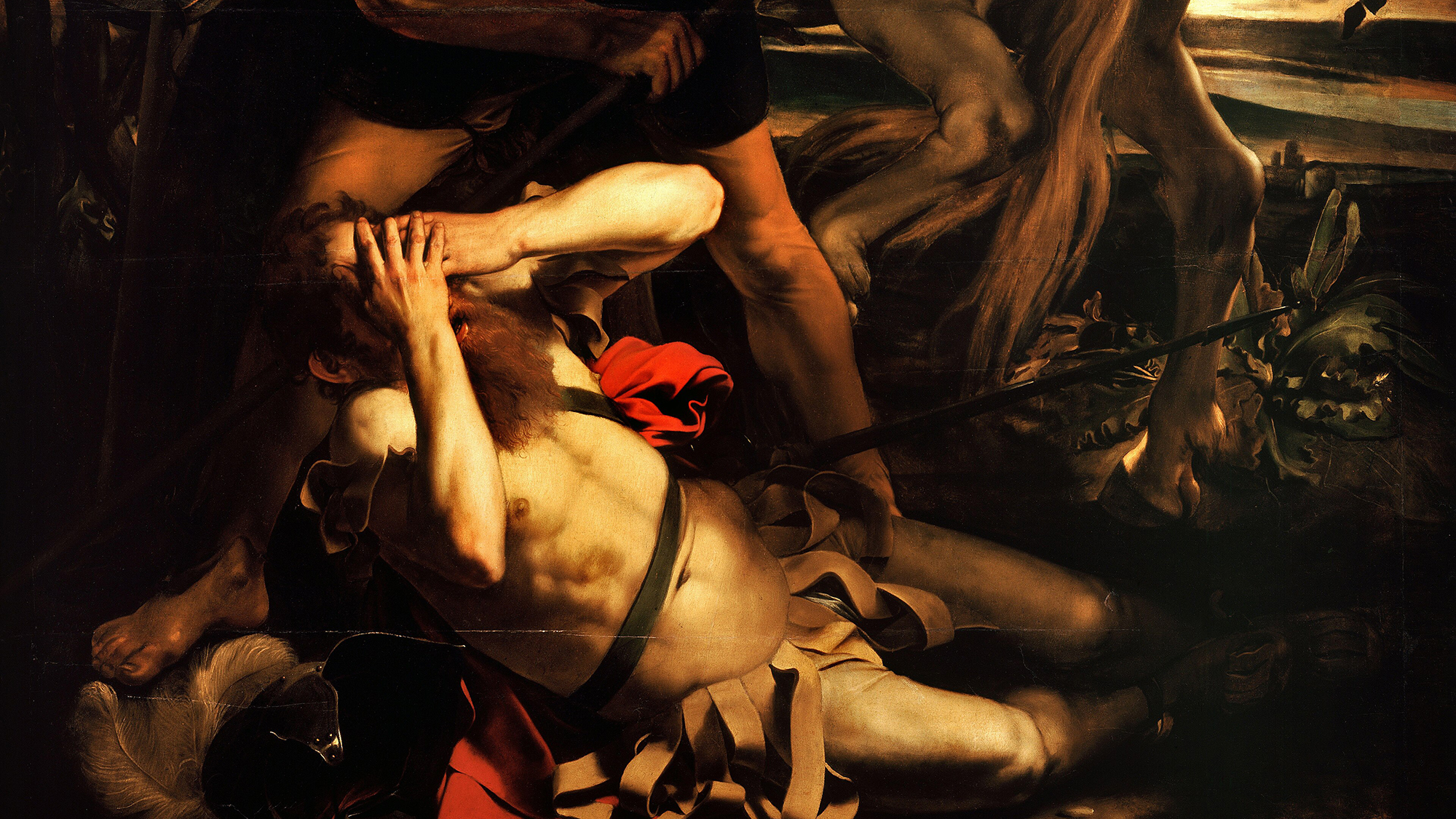
It is a phenomenon whose distant roots he finds in the religious epiphany, from Paul’s conversion on the road to Damascus to the transports of early modern mystics. But its secular instantiation, from Montaigne’s late ruminations on the painful passing of kidney stones and Petrarch’s account of his own ascent of Mont Ventoux in 1336, is what most occupies Kramer, along with its Enlightenment-era bifurcation into the categories of the empirical and the aesthetic. It makes for a short but sensitively written and sometimes dreamlike book that circumnavigates its topic like a hiker ascending a peak (one of its favoured metaphors). Along the way we take in Charles Dickens finding ‘peace’ in the ‘might and majesty’ of Niagara Falls, Czech composer Bedřich Smetana capturing the moment of his sudden deafness in a sudden rest pierced by shrill high notes in the string quartet From My Life (1876) and Virginia Woolf isolating brief ‘moments of being’ amid the ‘nondescript cotton wool’ of daily life.
Kramer’s background is in musicology. His earliest books concerned the classical tradition, and Strauss, Wagner and Schubert in particular. Some of the most vivid analyses in the present volume are of works by Haydn, Chopin and Mahler. But in recent years his work has become more philosophical. Here his favoured interlocutors are Nietzsche, Agamben and especially the James brothers, Henry and William – the latter for his theorisation of the ‘stream of consciousness’, the former for his ‘devotion’ to ‘impressions’, the way his fiction made ‘having an experience central to the experience of narrative in both art and life’. But the divide between theory and art in Kramer’s analysis is not so clearcut. He is as adept at thinking through Mozart’s Magic Flute (1791) as he is at appreciating the poetics of Wittgenstein’s gnomic propositions.
Kramer’s focus here is not quite the modern experience economy, nor its spectacular extension in YouTube shorts and Instagram reels. He freely admits to having ‘nothing to say’ about the internet. But between the lines, the book does carry a warning for the bucket-list set (and anyone drawn in by the promise of London’s various branded experiences): ‘you can’t simply will your preconceptions away’, nor can you expect them to simply slough off with the price of admission. An experience cannot really be planned for – it ‘must in some way, even just a little, be unanticipated’. Nor will the urge to capture experience in a snapshot or selfie secure it for us. ‘Such demotic photography threatens to diminish experience in the act of documenting it,’ he writes. ‘The record of the experience makes direct experience superfluous.’
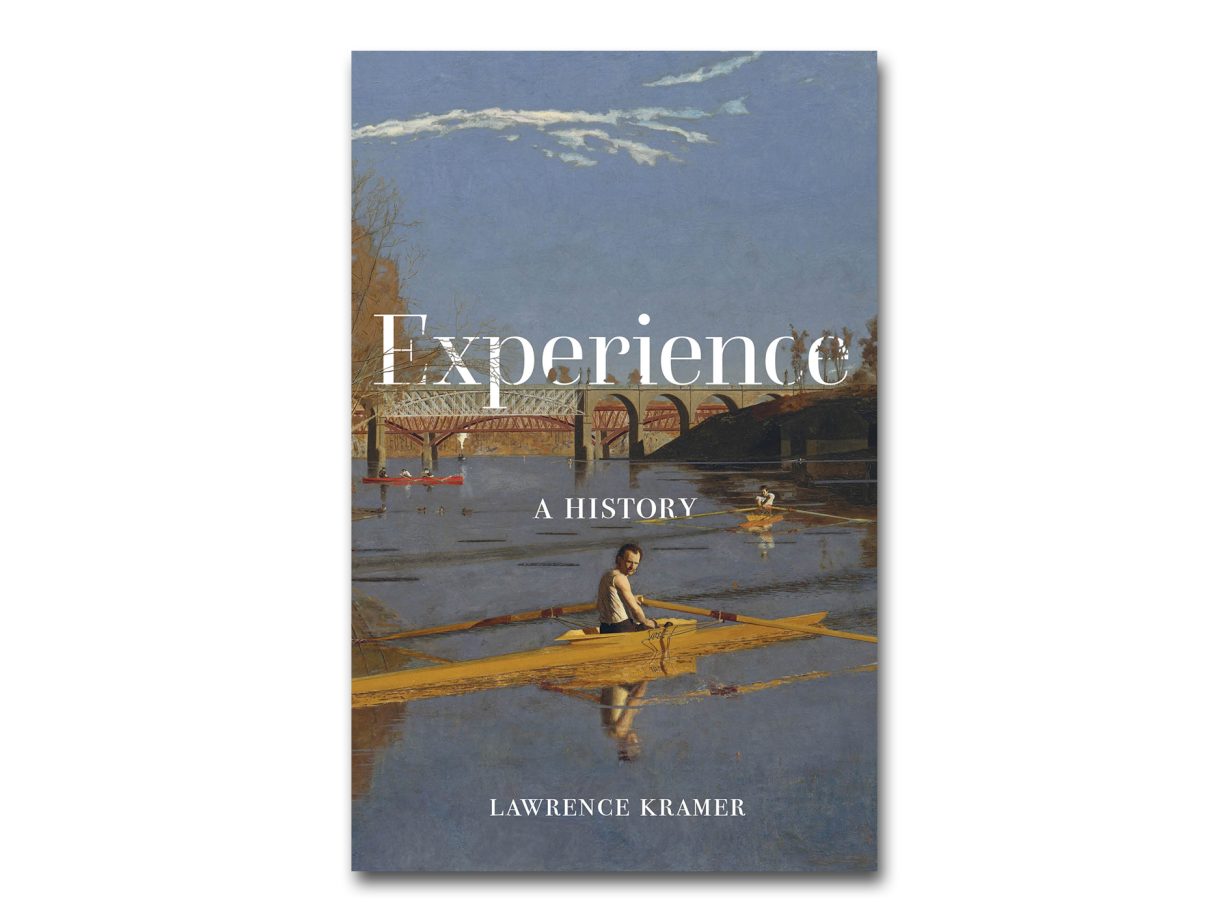
Experience: A History by Lawrence Kramer. University of California Press, $29.95/£25 (hardcover)
From the October 2026 issue of ArtReview – get your copy.
Read next How Contemporary Art Became a Vibe


