The award winning postcolonial coming-of-age novel explores the legacy of war in everyday life
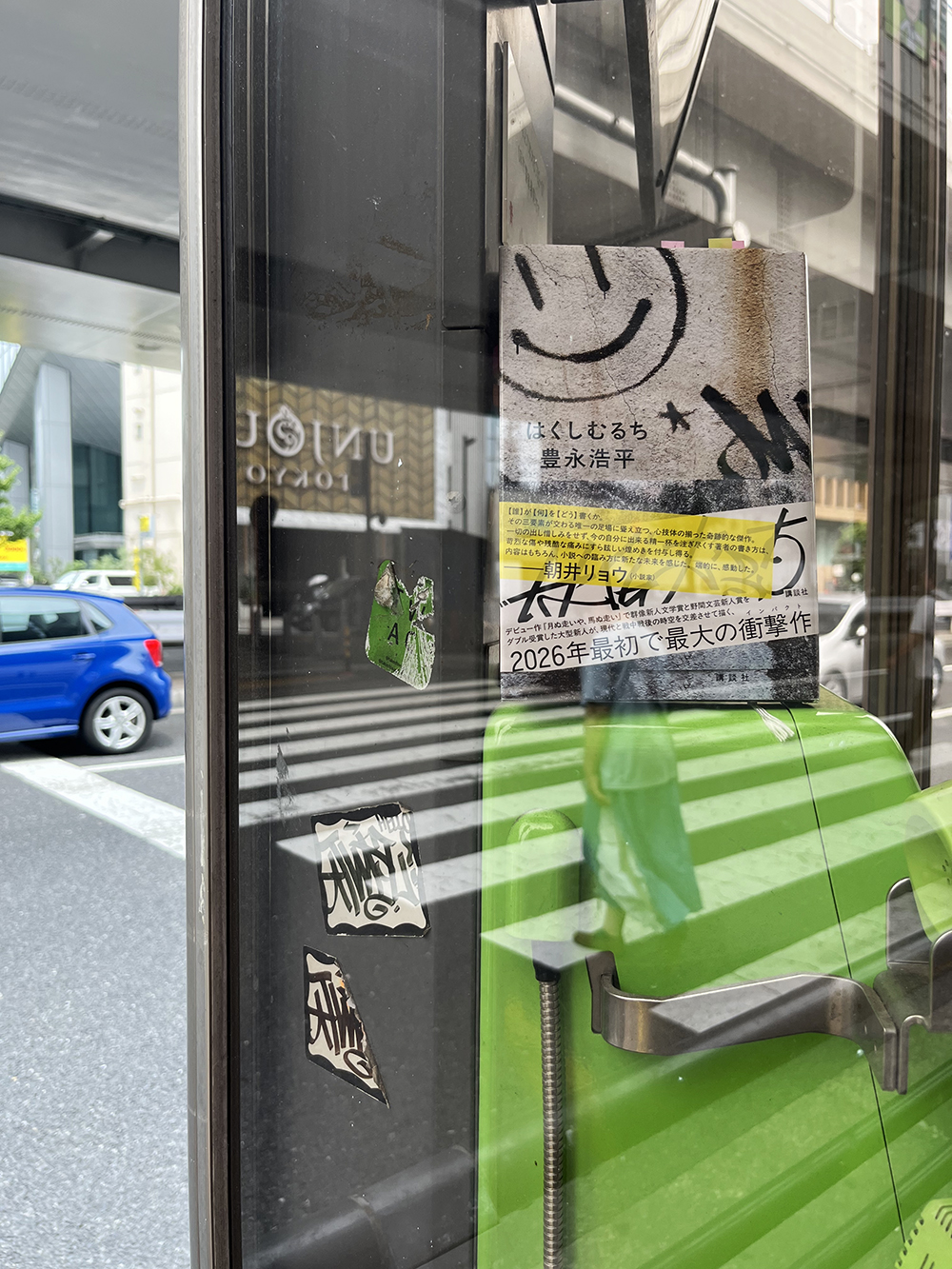
Hakushimuruchi, a divisive, postcolonial, pop coming-of-age novel set in Okinawa, is set within two timelines – the present and the eve of the Battle of Okinawa in 1945. It primarily addresses, via second-person pronouns, teens Yukio in the present and his great uncle Shūji in the past. The novel wears its cultural influences on its sleeve, opening with Yukio working on a graffiti piece comprising renderings of Nu Gundam, Ultraman Zero and Ultraman Belial with a text reading ‘WHO WILL WATCH THE WATCH MEN’. As Yukio is an otaku (superfan) who developed his obsession with the minutiae of pop culture through his great uncle’s collection of analogue media, the motifs make diegetic sense. Extra-diegetically, it’s crucial that Ultraman was originally conceived and scripted by the Okinawan writer Tetsuo Kinjo. For readers familiar with graffiti, however, the plethora of characters (most graffiti deploys a minimal amount of characters) and words in the piece will ring false. Leaving you to wonder whether author Kohei Toyonaga is unfamiliar with the culture or if Yukio is working on a legal wall. The latter is improbable given the romanticisation of graffiti in the novel, the climax of which entails Yukio and his friends ‘bombing’ the walls of US military bases. As they do, the narrator suggests, ‘There are no more nations and no more national borders. You draw lines there, no you become the lines’ [translations my own]. By graffitiing, in other words, they are able not only to undo colonial demarcation but also reterritorialise the land. ‘Okinawa,’ the narration continues, shifting into the first person, ‘is in my hands.’
Outside this euphoric moment, Yukio and his girlfriends Madoka and Miyu are bullied by their peers using the most contemporary and vicious techniques of shaming. The bullies have nicknamed Yukio ‘Pinocchio’ after forcing him to watch revenge porn that circulated from ‘some middle school’ and causing him to have an erection in front of their classmates. Later, they pin him, pull down his pants and proceed to shave his pubic hair with the phone camera running for future online broadcast. When interrupted by Mizuto, Yukio’s friend and saviour, who eventually falls into a cycle of criminal violence, Kisaki, the shaver, flinches and accidentally cuts Yukio’s stomach underneath his belly button, symbolically feminising him with a would-be caesarean scar. The same group of bullies maintain an online database called ‘the complete works’ that rates and doxxes women with uploaded videos of them getting fucked. Miyu is added to the list after she dates one of the bullies, and she and Madoka narrowly escape being raped in a car, to feed more content to the database.
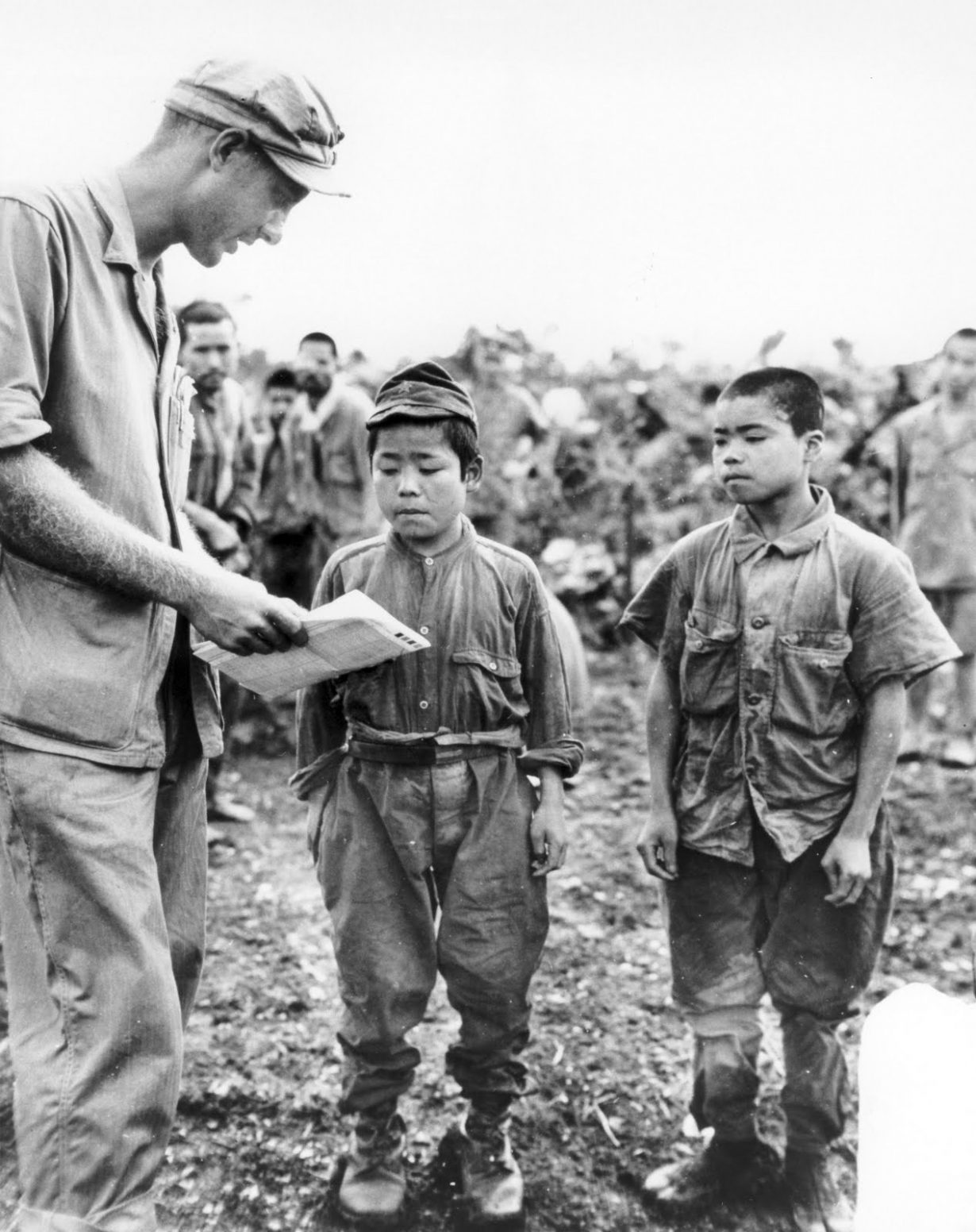
The lengthy and detailed descriptions of these moments of violence feel pornographic rather than innovative or risky. Their counterparts in Shūji’s life are historical, colonial and played for similar shock effect. In one scene, he and his young Okinawan comrades are forced by their Japanese superiors to leave their trench and fetch water under naval gunfire. When Shūji returns, he finds one of his troopmates, Tokashiki, with his belly blown half off and his guts ‘rolling out’. At the field hospital, they find a cot ‘[c]overed with wrinkles, under each undulation of which were bloodstains, and marks from the hands and feet of the person laid up in the cot before; in each fold was a swarm of maggots waiting to suck on the next rotting flesh.’ As Shūji tries to clean the sheet, Tokashiki begs Shūji to kill him. The obvious point is that violence is passed down as historical trauma. And in both contexts, the novel suggests that the teens are ‘hakushi muruchi’ the titular phrase that combines the Yamatoguchi (Japanese) word for ‘white paper’ and Uchinaaguchi (Okinawan) word for ‘imitation’ – ie, carte blanche. These metaphors and motifs aren’t groundbreaking; they’re easy and trite. Nevertheless, the novel won this year’s Mishima Yukio Prize (awarded annually to groundbreaking literary works), and in Japanese reviews critics commend the novel for showing that the Second World War is not a thing of the past. While I agree with that fact – how could I not, with the continued concentration of US military bases in Okinawa – it’s not enough to make this well-intended novel good or to allow you to ignore the fact that many of its devices are unconvincing. Is the specifically colonialist violence Okinawa endured from Japan and the US, for example, equivalent to the social media-powered biopolitical violence waged by the bullies in the contemporary setting? And are young adults really like blank pieces of paper waiting to be dyed or inscribed? The part of me that believes in the unconscious says no.
Towards the end of the story, the narration calls attention to and identifies itself as the voice of the dead. ‘We’, it says, ‘haunt you and you haunt us. This is why we inhabit you and spin open personal pronouns like a revolving door.’ It’s a genuinely disorienting moment that points to the frightening notion that no matter how haunted, we must live as and through prescribed, clichéd positions – I, we, you, but also violated woman, bully avenger and hero-turned-monster.
Hakushimuruchi by Kohei Toyonaga. Kodansha, ¥1980 (Japanese-language hardcover)
From the Autumn 2026 issue of ArtReview Asia – get your copy.