The late author’s work reads today like a time capsule for a fading European worldview
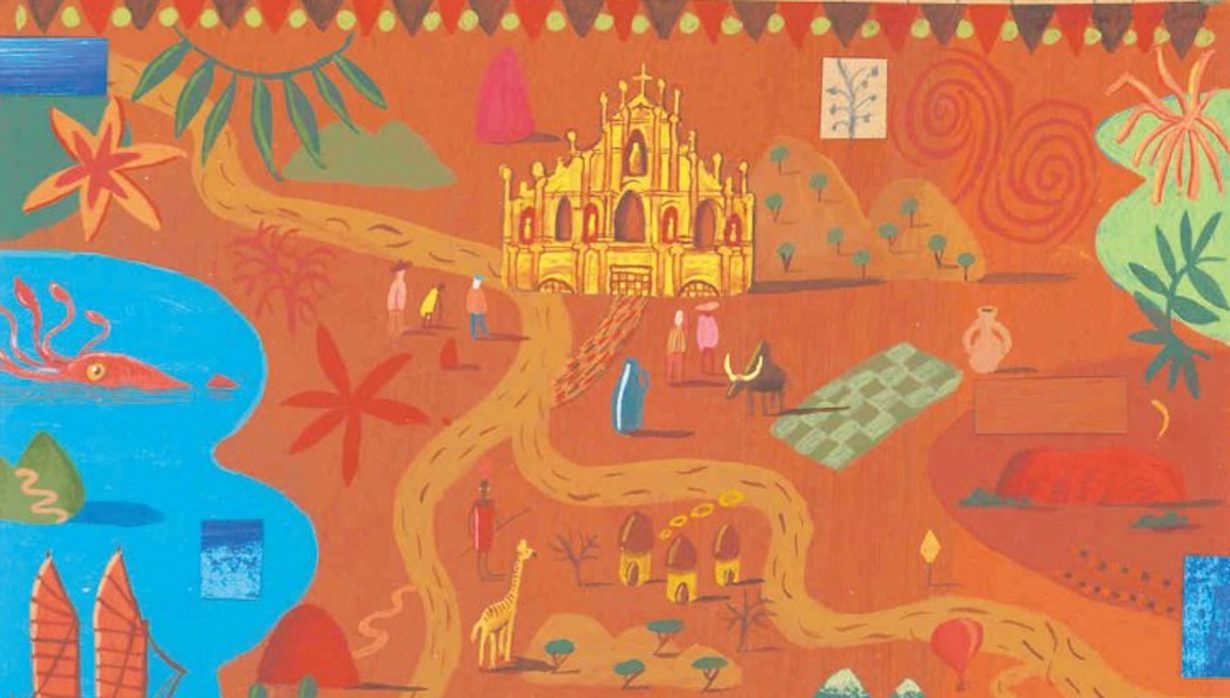
In 1955 a remarkable novel came out, Philip and the Others, by Cees Nooteboom. Now a classic in its country of origin, the Netherlands, Philip and the Others impressed its first readers with its idiosyncratic spontaneity of narrative; behind this, the author’s preoccupation with existential problems was palpable. Philip tells how he left his home with his eccentric uncle Antonin Alexander for a hitchhiking expedition through Europe. Encounters with individuals, both baffling and appealing, climax in his seeing in Calais ‘a beautiful Chinese girl’. She climbs onto a sand dune, looks down at him for just a moment, then runs off, not letting him catch her up. ‘I was alone again with the sand and the sea. Slowly I too began to walk back, following her footsteps until I came to a road. That was the first road on which I followed her. But after that?’
Philip’s quest now seems a template for the dominant situations in subsequent novels by Nooteboom, who died aged ninety-two on 11 February. All exhibit, as Philip’s story does, a marked relationship to the fairytale, where the protagonist must make a demanding journey through unfamiliar, usually endangering territory. A successful later novel, In the Dutch Mountains (1984), draws openly on Hans Christian Andersen’s The Snow Queen (1844); a boy called Kai (as in Andersen) is abducted northwards to a land of snows both geographical and psychic. And Philip’s archetypal peregrinations are manifest again in Nooteboom’s novel of post-reunification Berlin, All Souls’ Day (1998). Here we follow cameraman Arthur Daane’s pursuit of a young Dutch-Berber woman (her very name, Elik Oranje, an intriguing ethnic synthesis) through the great transformed city. He, and with him the book’s readers, hope that sustaining insights – into culture and selfhood – will emerge. Yet the novel’s last words (occupying a single page) are: ‘And we? Ah, we…’
Nooteboom, born in The Hague on 31 July 1933, has said that he has no memories of his childhood before the Second World War; his father was killed in the 1945 Bezuidenhout bombing raid on the city. Cees proved to be as adventurous, as ardent and as unpredictable a seeker as any of his fictive heroes, his education at Catholic schools (Franciscan, then Augustinian) endowing experiences with metaphysical and moral connotations. Only two years after that precocious first novel, he got himself hired as a sailor onboard a freighter to Suriname. And after his second novel, The Knight Has Died (1963) – which pieces together the life of a Dutch writer who has self-exiled to a Mediterranean island to write about exactly that predicament – there came 17 years without published fiction. Nooteboom produced travel books and many poems, verbally and ideationally inventive. But when, at the end of this long time-gap, Rituals appeared, in 1980, his outstanding literary stature was immediately and widely acknowledged; it won the Pegasus Prize and accordingly was his first book to be translated into English (in 1983, by Adrienne Dixon, who went on to translate both earlier and later novels). No less admired was The Following Story (1991), which won the Aristeion European Literary Prize. These two masterpieces surely constitute Nooteboom’s unique gift to twentieth-century literature. Their protagonists attempt to reconcile current, often conflicting worldviews through an ever-increasing awareness of their own personalities and most intimate experiences. They are sympathetically representative figures rather than exemplary ones, never discarding doubt or ambivalence. Categorisations like ‘metafiction’, meanwhile, or comparisons to Italo Calvino or Borges, are unnecessary, even reductive.
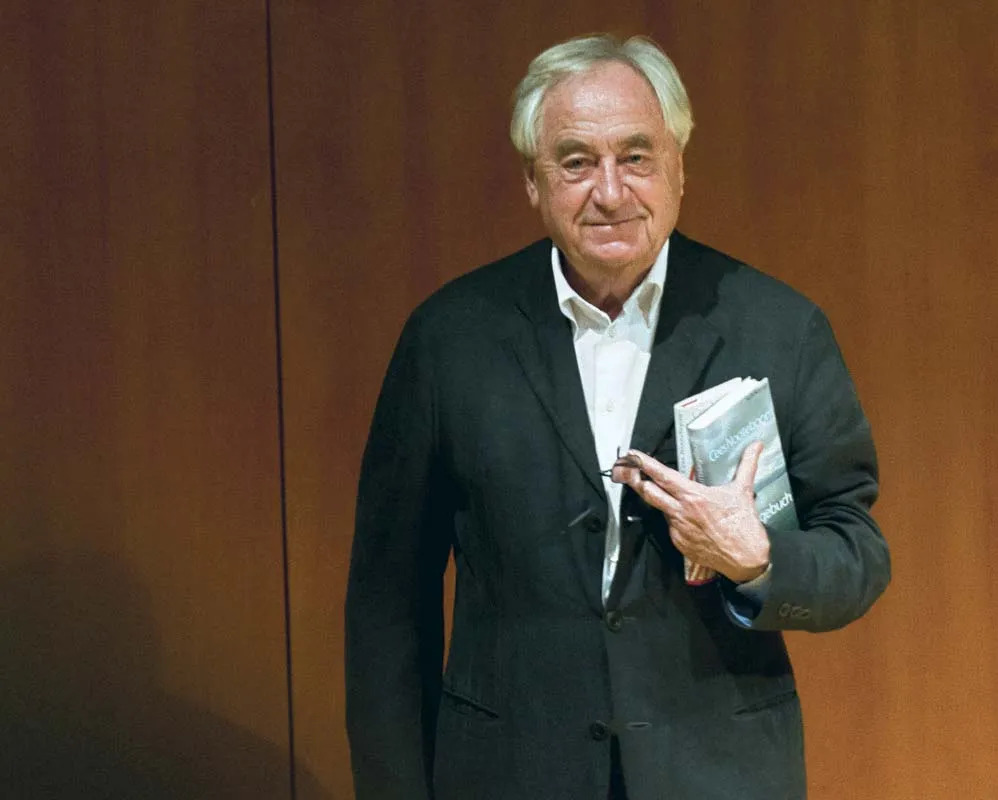
Travel involves not just space but time; we return from each journey changed and closer to death. Rituals presents three different ways of coping with time. Its first sentence has become famous: ‘On the day that Inni Winthrop committed suicide, Philips shares stood at 149.60.’ Inni survives his suicide attempt and, a dilletante, will live principally on (though never for) his investments. But he feels impelled to understand how others deal with the omnipresent fourth dimension. His older mentor, Arnold Taads, inflexibly arranges every portion of the day for differing activities. These include tending his dog, Athos. However, when mercy leads to burying the dead Athos, Arnold ends his own life. His son Philip centres existence on the Japanese tea ceremony, following ‘Rikyu, the greatest tea master of all times’; its prescriptions eventually demand conclusion: self-extinction. Rituals precisely dates the three epiphanies that form its three sections 1963, 1953, 1973. Yet behind these years we feel the Dutch experiences of the Second World War and also the presence of a time-resisting Catholic Church. Nooteboom’s earlier involvement with both serves the inclusive universalism he seeks for his whole oeuvre.
The Following Story opens with Herman, classics teacher turned travel writer, waking up not as he expected in Amsterdam but in bed in a Lisbon laden with his own and others’ pasts. The boat trip he finds himself undertaking to Brazil and the Amazon is not only an analogue for dying, but a viewing of the termination of our world. Time and space dissolved.
Nooteboom made his home for many years in Amsterdam, Berlin and Menorca, with his artist partner Simone Sassen. In advanced age he wrote a poem sequence on the COVID-19 pandemic. True to himself, he looked at this as an internationalist valuing human lives as an entirety.
Read next Remembering José Francisco Borges’s Literatura de Cordel