The Punjabi artist is selected by Emily Jacir as part of ArtReview’s annual spotlight on individuals whose work is worthy of more attention
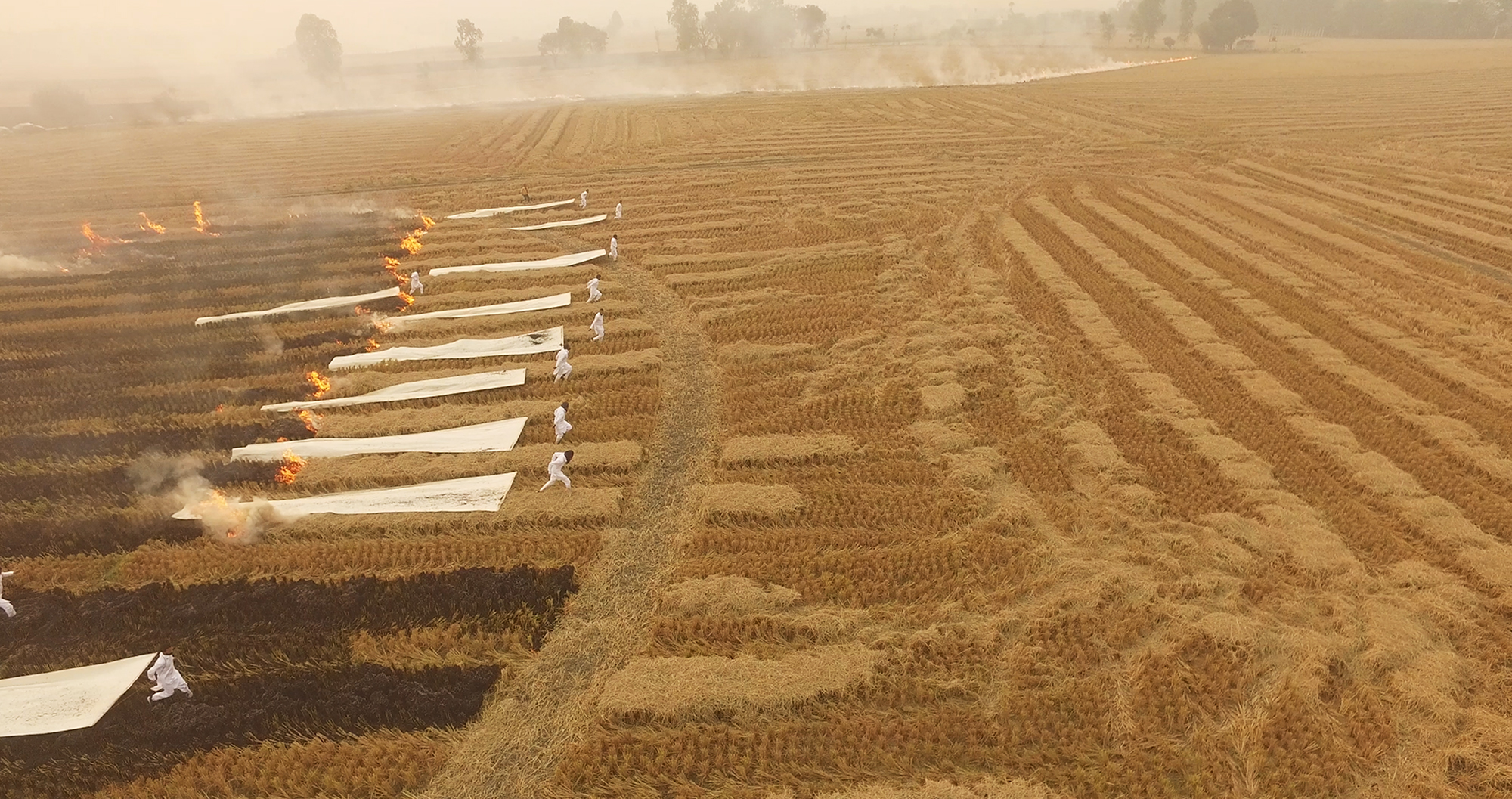
Kulpreet Singh is based in Punjab. His multifaceted practice (paintings, sculptures, performative collaborations and films) is testimony to a quotidian language of resistance – focusing on the resilience of farmers and farmlands in the aftermath of India’s Green Revolution as they oppose anti-farm laws and face harsh weather conditions and escalating state atrocities. In his film Indelible Black Marks (2022–24), Kulpreet and his collaborators, who include farmers and colleagues, run across torched fields with long canvases trailing behind them, thereby turning the choreographed performance into a form of mark-making. The farm landscapes are microcosms that communicate the magnitude of the human impact that our lands continue to bear ever more urgently. In a time of so much political upheaval and brutalisation across the globe, the sonic atmosphere of the film is deeply familiar with the sounds of its depletion and apocalyptic endings of life and natural cycles as we know them. We started this interview with Kulpreet’s words to me, “Thank you for hearing my film and for seeing the sound.”
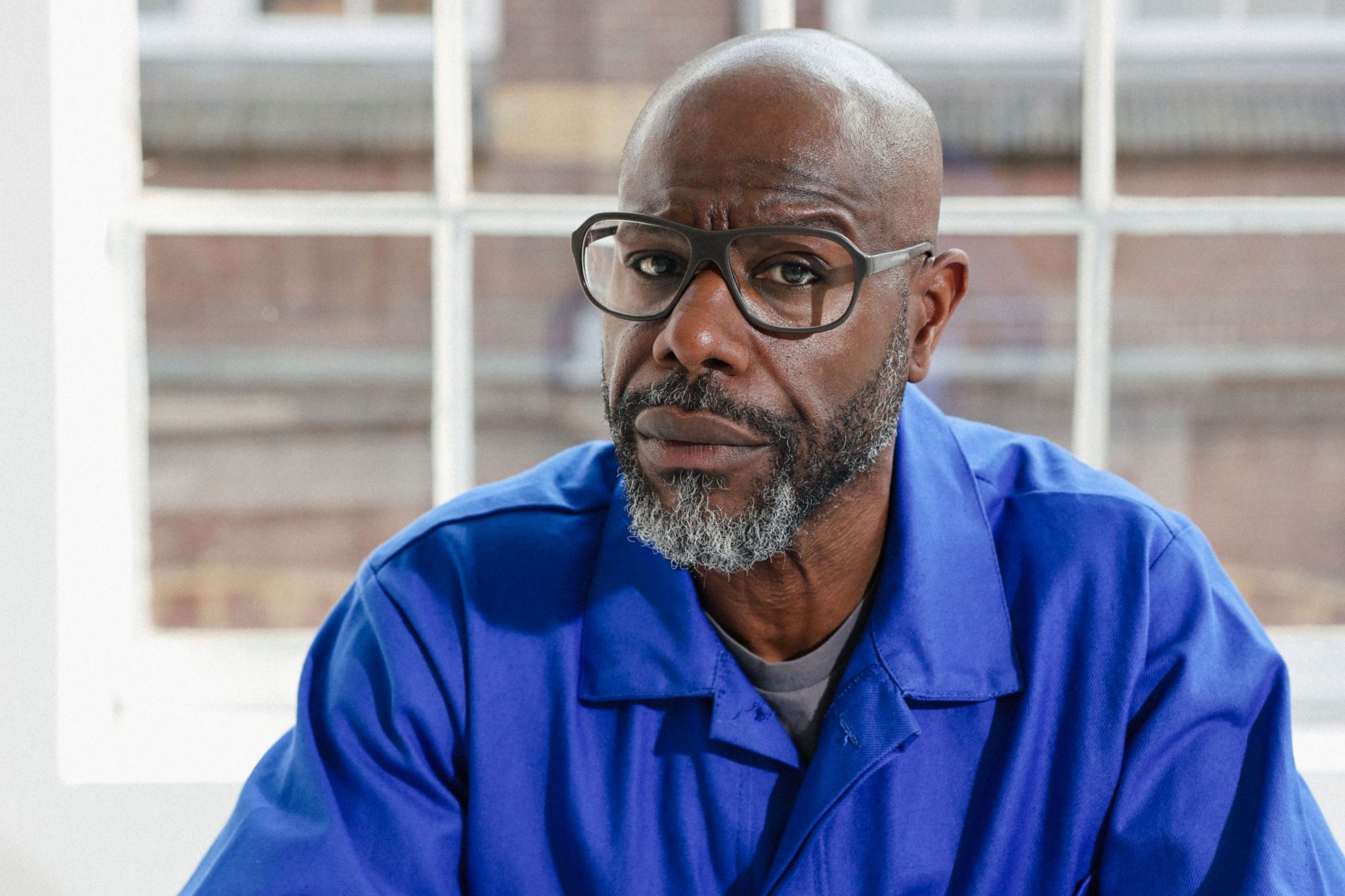
Emily Jacir Tell me about your practice as a climate activist, a contemporary artist and a committed farmer, and how these are intertwined.
Kulpreet Singh As a farmer, I am dependent on the environment, and art helps to speak about the realities of our agrarian futures. The philosophy of Sikhism has always emphasised the wellbeing of all humanity and nature, and the importance of seva – serving the world. In following this approach to life, sometimes you are doing social work in grassroots communities, and at another time you are actively part of a protest.
EJ At the Kochi-Muziris Biennale, I saw your installation of paintings and the film of your ongoing large project called Indelible Black Marks, which is chronicling the practice of removing weed and crop residue in Punjab during the winter months to prepare for the next planting cycle.
KS Farmers use the same process of burning the remaining stubble in different parts of India and the world. For the past five years, when the pollution levels increased in Delhi, farmers were accused of being polluters, but it’s not the reality.
With the burning of the field in the film piece, the whole scenario was tuned to the annual ritual of burning the fields. I tried to give a shape and choreograph the process to bring the condition to light. I tried to capture the marks of the Green Revolution [during the 1960s], when they began to grow rice on a large scale and pushed farmers to mono crops. With mono crops, they need to clear the space for the next crop, and that is why they burn. In the work, you can see the stubble burning, you can see the smoke, and everything, while there is the sound of traffic, there is the sound of war, the sound of machinery.
EJ I am curious about the sonic structure you created for the film – an atmosphere resembling a state of emergency, a sonic atmosphere of suppression, of despair. A sonic resonance that is so close to what we are experiencing in Palestine right now – ambulance sirens, sounds of war, crackling fires, the sense of destruction and dehumanisation. Can you speak about how you created this sound for the film?
KS I think sound creates a different sensation in the body. In this film, there are sounds of marching, of war, different kinds of echoes, and noises fused. If you look closely, they are also accelerated in speed to refer to the urgency of what is happening to the lands that feed us.
EJ Your practice reinstates the agrarian voice and farmers as defiant narrators, and your methodology explores the situated perspectives of the land and its cultivators. Can you speak about this further?
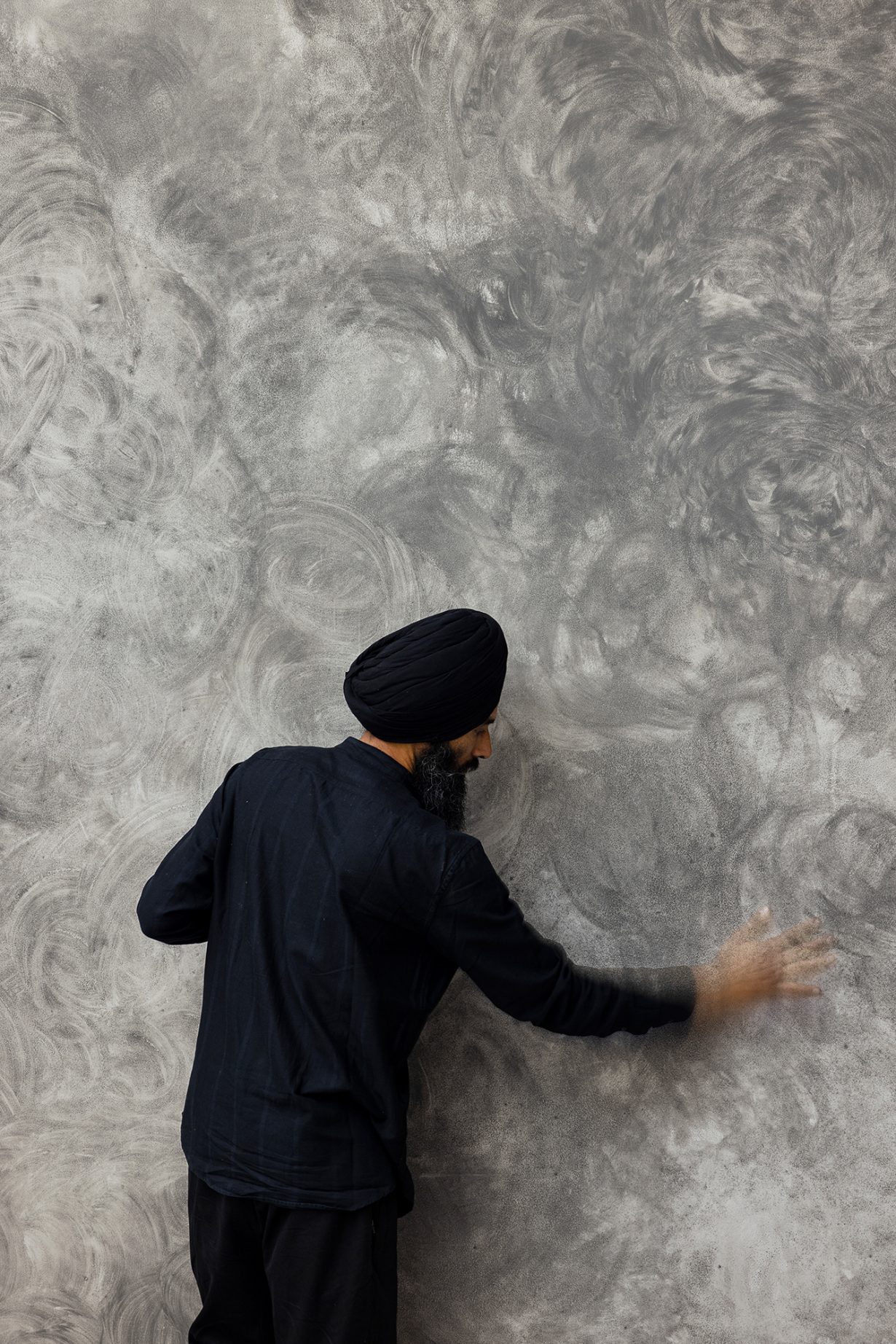
KS Like farming, my work is based on process. When you put the seed in the soil, then you need to take care of that seed. It’ll grow and take its own shape. Whatever the result is, you need to leave it. In the process of creating a canvas, sometimes it gets completely burnt. Sometimes things go wrong, but it’s the same process as growing something, with unpredictable results. I try to take the traces of the situation.
EJ Your practice is rooted in the land of Punjab, and your work is focusing on agricultural policies and technological developments that are impacting the lives of the farming communities there. I’m curious, who or what are your main influences as an artist, as a farmer?
KS I am heavily inspired by artists such as Anselm Kiefer and Ai Weiwei. They have been instrumental in fusing a material depth to express the political realities of the world today. They also taught me the importance of scale in creating an impact for the issue at hand. As a farmer, I would say it is my own state of Punjab that inspires me with its commitment and resilience. My ancestors have been farmers, and so is the larger part of the community around me.
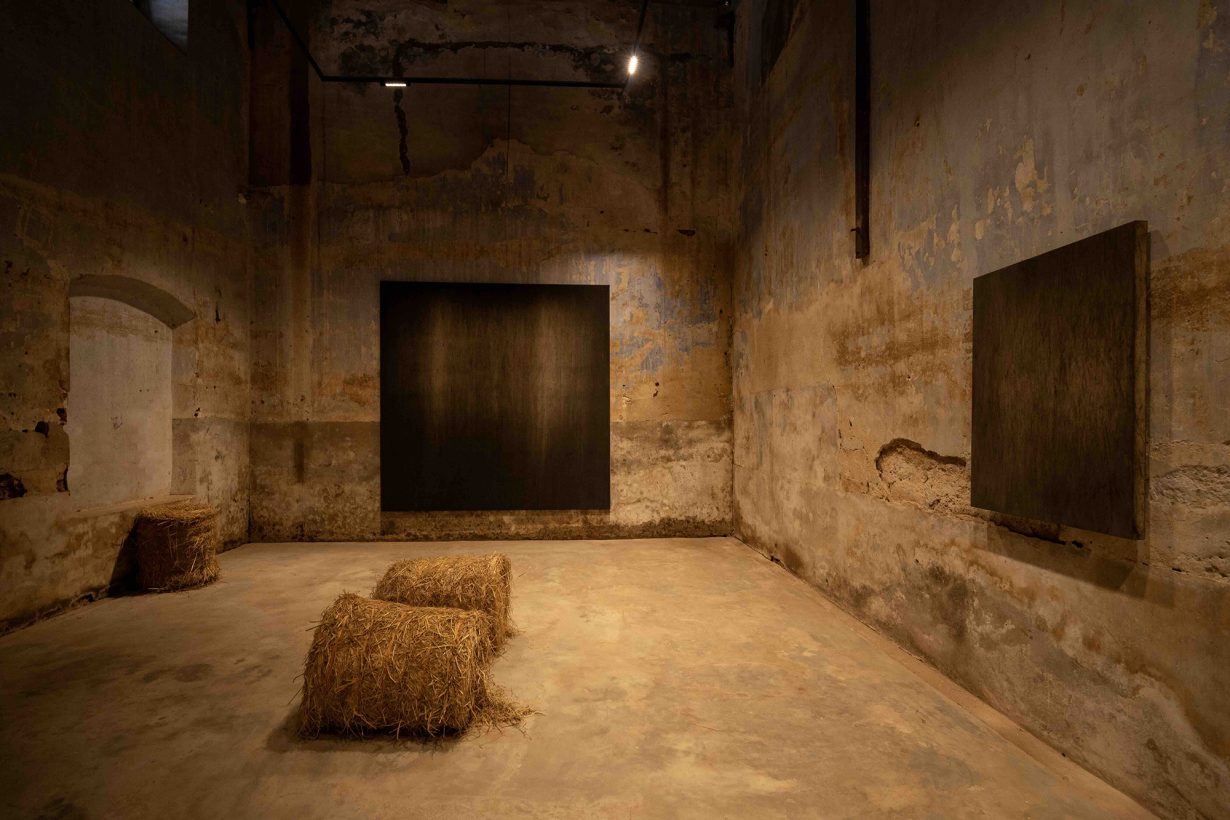
EJ Your work begins outside the studio – in and on the land: fields after harvest, places shaped by labour, rural life, ecology and social life today. The materials of your work – ash, soot, soil and burnt stubble – mark what the land has carried and holds its memory.
KS It is also about context and knowing your audience, where you want to exhibit this work. When I did Indelible Black Marks, a version first went on social media and YouTube alongside the farmers’ protest. Through the exhibition, so many other people were able to understand farmers’ situations. This is the beauty of artwork. My work blurs the medium boundaries. You can never say this is printmaking. You never say this is a performance. You never say this is a film. This is the artwork.
EJ It’s also about articulating your relationship to the land and its urgent concerns across all media, which acutely intersects with current global histories of land and the current crisis.
KS The service of a farmer is similar to a selfless service. It’s for nature, it’s for other species – birds, reptiles, insects – and the environment. The farmer grows the crops not for himself, but for the people. There’s a selflessness in that process. Being a farmer, being an artist, is the same process, the same thought. I understand the situation of the farmer, the violence; the whole world is suffering from it now.
EJ What does resistance mean to you, and where does it lie in your practice?
KS Truth, that doesn’t need any outer support. That is, in itself, strong enough to translate.
Explore the 2026 Future Greats
Kulpreet Singh is a Punjabi artist based in Patiala, India. His work is grounded in the local environmental history of Punjab. He is the recipient of the Asia Arts Future Award: India, 2026. His work is on view at the Kochi-Muziris Biennale 2025, Kochi, through 31 March.
Selected by Emily Jacir, artist and filmmaker, Bethlehem