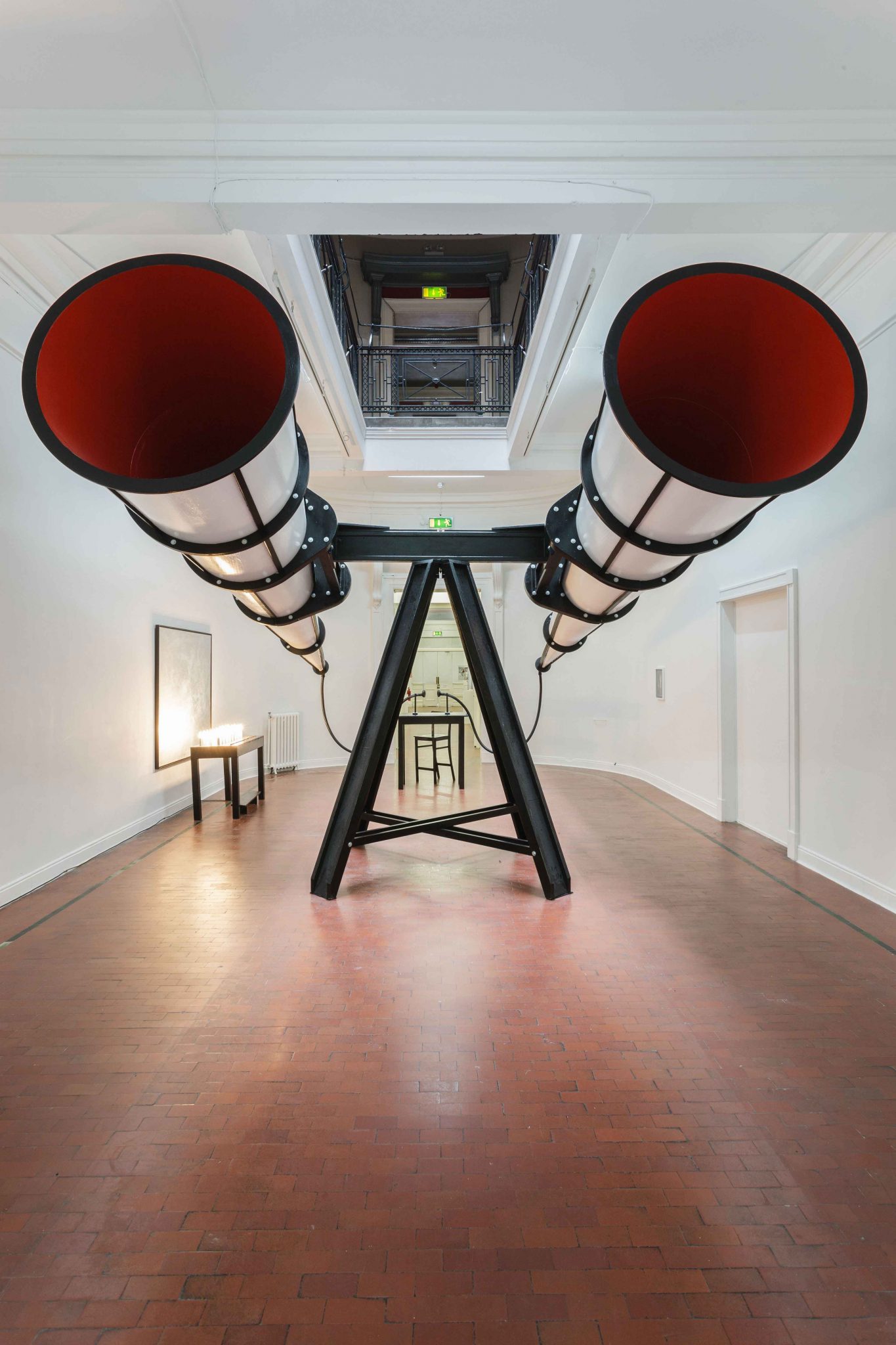
From Jen Liu’s pounds of flesh to Josh Kline’s viral essay, it’s hard to escape the feeling that something is irreversibly decomposing
There are four paintings on paper in Pound of Flesh, Jen Liu’s solo exhibition at Silverlens. Each depicts the back of a woman’s head, which seems composed not of bone, blood, brain and sensory organs but of the kinds of meat found in butcher shop windows. In one, Survey Says: Sometimes I Get Headaches (2026), a cube of fluorescent pink flesh, striated like Wagyu beef, dangles out of a void in the subject’s head, skewered on a metal prong as if up for grabs. In two other paintings, this same cut is extracted by a grey, cadaverous yet distinctly managerial hand. In Survey Says: Getting US Currency is Excellent (2026), meanwhile, a length of sausage appears to have been cut from the subject’s hair. Together, these works suggest that intelligence, subjectivity, consciousness – whatever the human mind represents to you – has been supplanted by or conflated with lumps of undifferentiated meat, in these women’s world as in ours.
The other part of Liu’s spare, five-work show is an animated video based on her research into contemporary microworkers – ‘unseen humans training AI’ by labelling images, completing surveys, ‘cleaning’ data and so on. A monitor displays another uncanny block of red meat hovering in a black void (Cube of Meat, 2026). Occasionally, part of it bulges inexplicably; occasionally, it sweats. At times it even rots, but it always recovers, absorbing the grey-green mould back into itself. Lines of text – ‘I make about $10-50 per week / I’m in my home office right now’ – emerge from the mass, then liquefy. These statements come from anonymous responses to a survey Liu posted on the microtask platform Clickworker. ‘I need the money because my other jobs don’t pay enough,’ another response reads, followed by, ‘I don’t have any issues with micro-work.’


These answers resemble those collected by the International Labour Organization (ILO) in a 2018 comparative study of working conditions across five global microtask platforms. Workers are asked, for example, to ‘Record 40 videos of drawing letters and digits in the air using your laptop camera’. As seen in screenshots printed in the report, the instructions are long and condescendingly detailed; they include a video demonstrating how to draw a capital ‘A’ with one’s hand. The study also found that platforms such as Amazon Mechanical Turk (MTurk), Clickworker and Figure Eight (formerly CrowdFlower) suffer from persistent structural problems: the absence of direct communication channels between workers and clients, for instance, enables abuses such as discriminatory hiring and unjustified nonpayment. Remote workers, isolated from one another, are discouraged from organising, though they have nevertheless created oversight tools like Turkopticon, FairCrowdWork.org and the Ombuds Office.
Microworkers who train AI have become a metonym for alienated labour in an increasingly crowdwork-dependent and precarious late-capitalist economy – and thus find themselves the subjects of several contemporary artworks. Syrian refugees in northern Iraq performing data-labelling tasks for global digital companies appear in Hito Steyerl’s video installation Mechanical Kurds (2025). Nicolas Gourault’s short film Their Eyes (2025) is narrated by crowdworkers who likewise label objects for driverless cars. A videowork presented in Liu’s 2024 exhibition in Hong Kong, I Am Cloud, features an MTurk worker trapped in a lilliputian white room. On the cusp of the so-called Agentic Age, in which AI agents manage and optimise us, these unsung individuals who brought the machines up to speed figure as both protagonists and symbolic forms, much as maritime workers were for Allan Sekula or factory workers for Harun Farocki.
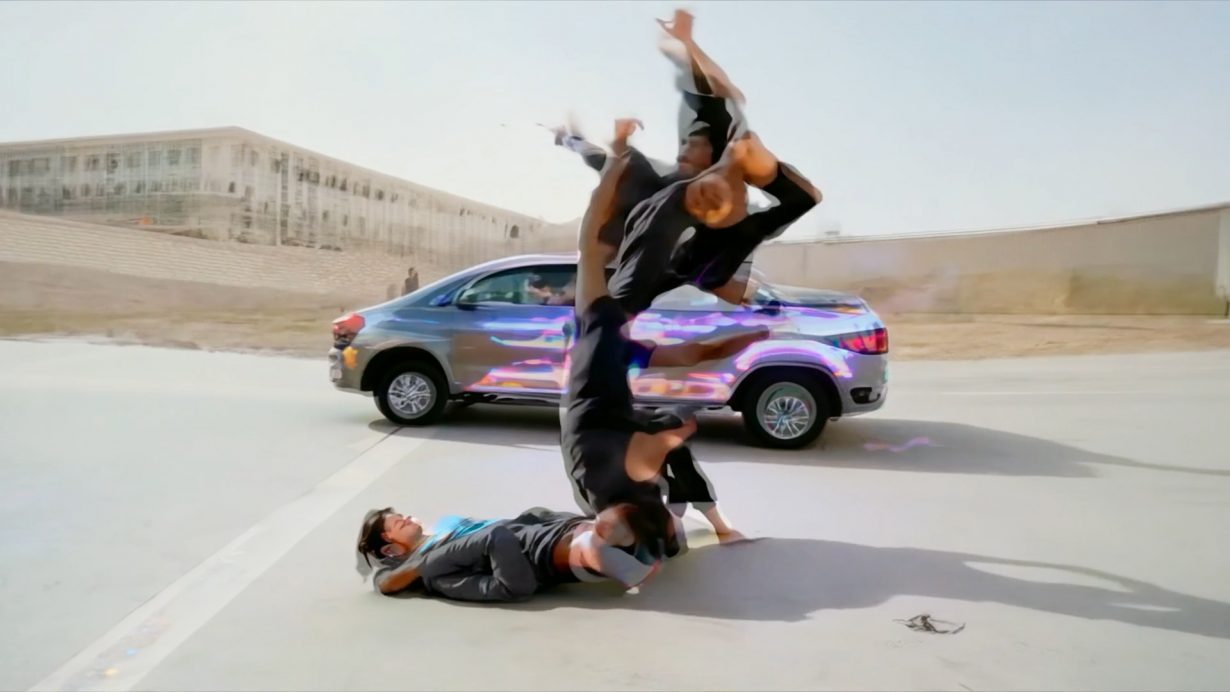
The artworld itself exhibits many of the same structural deficits and absurdities as any labour industry. In her 2015 lecture and essay titled ‘The Terror of Total Dasein: Economies of Presence in the Art Field’, Steyerl describes the artist’s obligatory presence at artworld events as a form of alienated labour par excellence. She notes, with irony, that ‘the physical presence of people is, on average, cheaper than the presence of works that need to be shipped, insured and/or installed’; like any commodity, ‘presence can be easily quantified and monetized’. An artist attending her own opening or speaking on a panel in a sense performs a gesture without inherent meaning, not unlike a microworker drawing the letter ‘A’ in the air. ‘Presence’, Steyerl continues, ‘also means permanent availability without any promise of compensation… It means more often than not to be locked down in standby mode, as a reserve element for potential engagement, part of a crowd of extras to provide stochastic weight.’ Respondents in the ILO study reported similar issues: ‘The most frustrating part is waiting for work’; ‘I feel in control of the work but have no control over when the work will be available’. In a short text accompanying a clip of Cube of Meat uploaded to Vimeo, Liu is tellingly described as ‘just another worker in the cloud’, aligning her materially and sympathetically with her subjects.
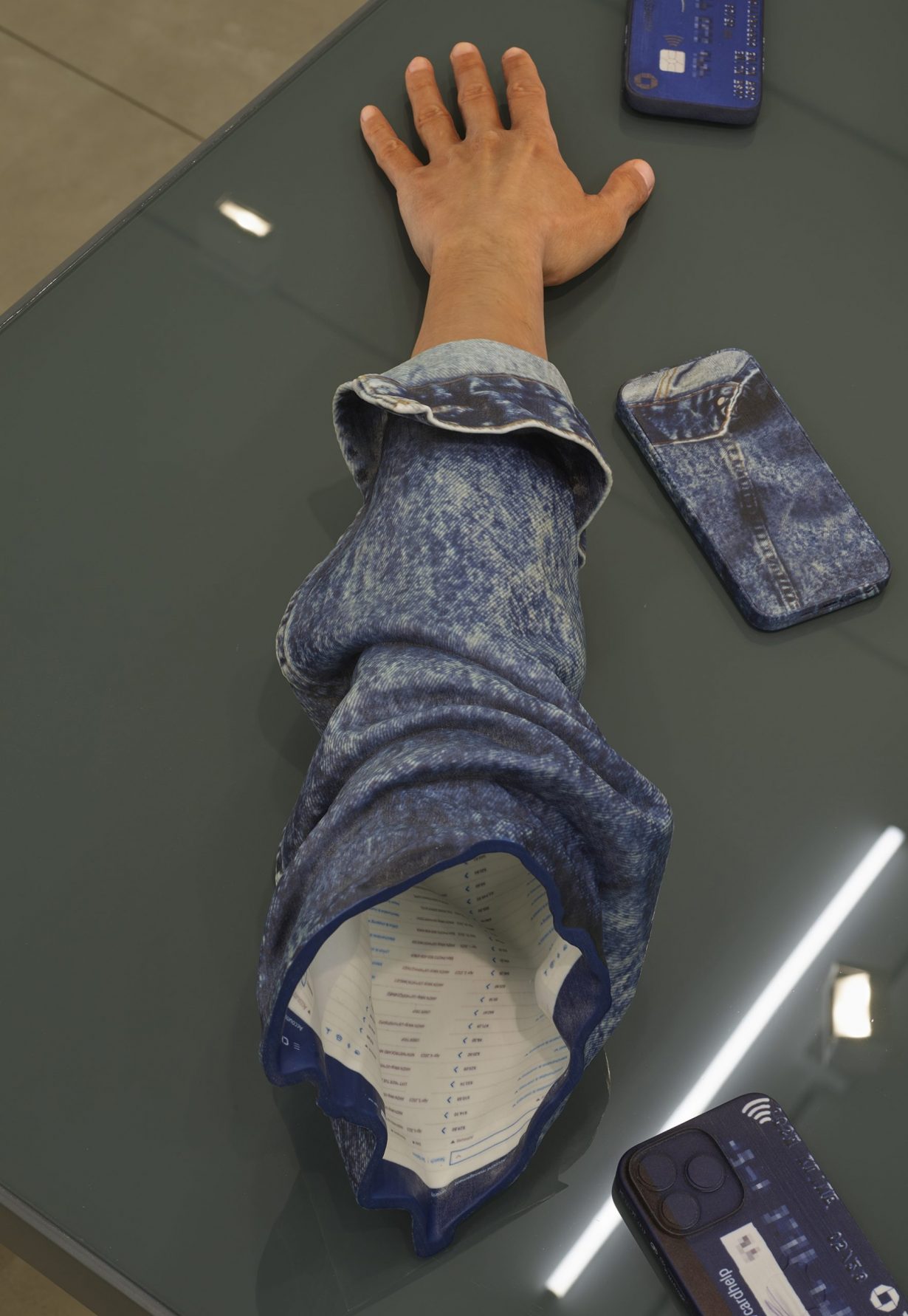
In March, Josh Kline, who likewise invokes the worker-as-meat metaphor in 3D-printed sculptures juxtaposing human body parts with American chain-restaurant burgers and steaks – see 20% Gratuity (Applebee’s Waitress’s Arm with Checkbook) (2018) or Keep The Change (Texas Roadhouse Waiter’s Feet with Shoes) (2018) – published a polemic on the kinds of precarious conditions facing New York-based artists today. He argues that for a city to have an art scene, it must be conducive to artist-run spaces, which in turn requires affordable rents that allow artists to devote time outside of their studio practices, day jobs and activism to cultivating these communities. New York today, he concludes, with its runaway rents and exorbitant ‘lifestyle co-pay’, is no longer that city, particularly for those from working-class backgrounds.
Kline describes the contemporary art that’s produced under these untenable conditions as ‘sick’ and in ‘dysbiosis’, recalling Liu’s rotting cube of meat. Reading his essay, one might picture the New York artworld as a set of cannibalistic hands extracting energy, dreams and visions from artists like small blocks of flesh and leaving the meat out to rot. He advises artists to ‘flee New York’s sinking ship for Philadelphia or another more affordable city’.
There are certain assumptions in Kline’s proposal: that artists come to New York in bald pursuit of ‘stardom and financial success’; that these artists could simply scatter across the US and ‘connect with one another… through the Internet’; that ‘America’s young artists could return to the very real communities from which they come and build new, sustainable art worlds’, as if those communities are waiting with open arms for these artists to return. Implicit here is the false belief that by leaving New York – ‘divesting from its grind’ – an artist might altogether escape the sinking ship of late capitalism. Most importantly, the rosy alternative Kline evokes involves ‘cheap’, ‘laid-back’ cities that aren’t New York, where an artist can hang out without networking and meanwhile have their needs, dreams and desires ‘centered’ – fanciful places where they can aspire to be a vessel of ‘formal and conceptual breakthroughs in art’ like their canonised forebears in late-twentieth-century downtown Manhattan, who could, by waiting tables or bartending ‘two or three days a week’, afford a practice in which they sold nothing. In this imagined future – or past – the artist’s ambitions fall in line with what’s perceived as a relentless, forward-marching art history wagered on ‘canonical breakthroughs’, and the artist risks aligning themselves with 1960s and 70s Conceptualists and Minimalists at the cost of meaningfully identifying as ‘just another worker’ among so many others in the world today.