The year in reading: In 2025, small presses in the UK stood up against a dominant culture of dumbing down and selling out
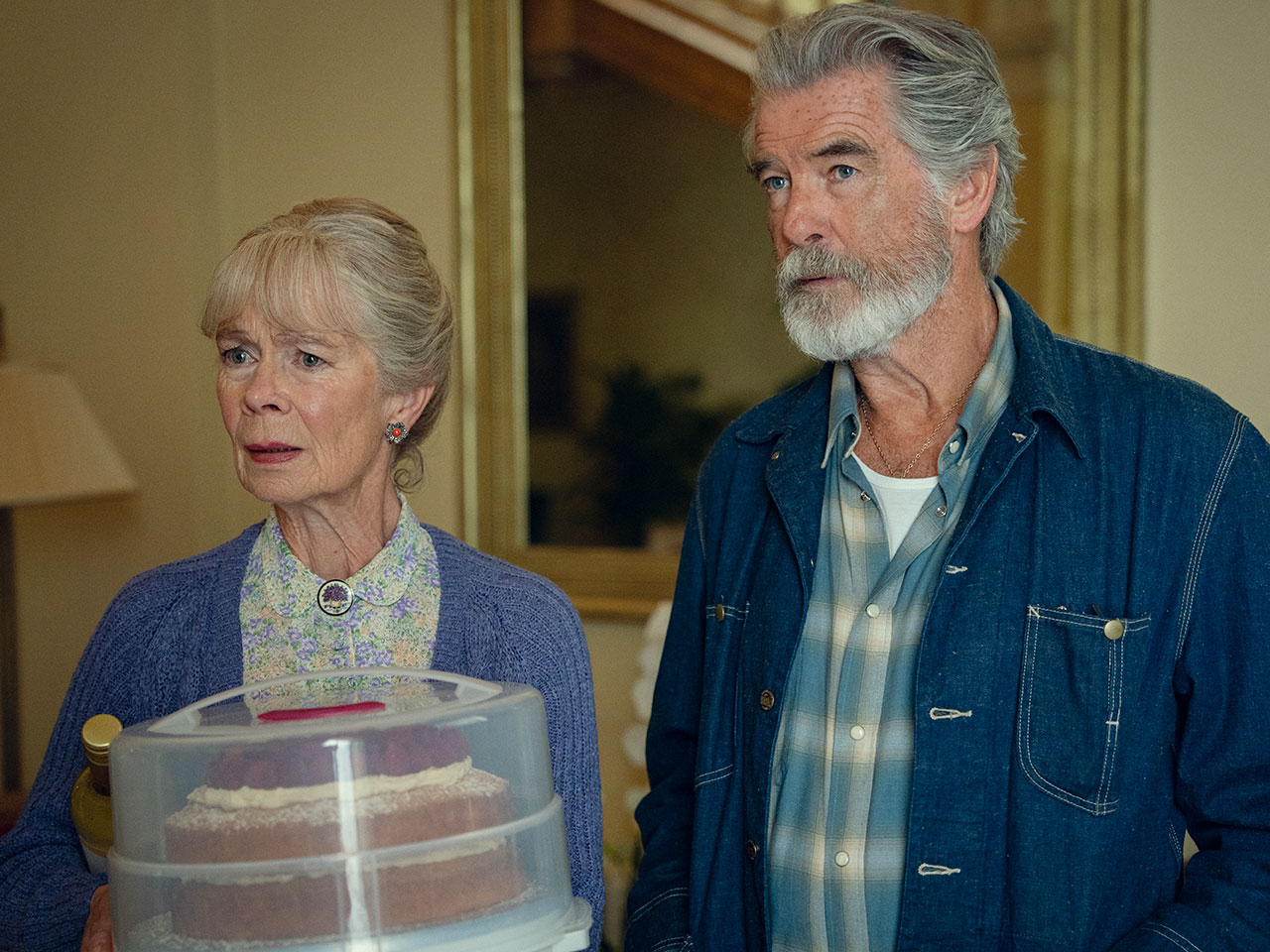
This year it was a rainy autumn in the UK; sheltering from a downpour at my mum’s house, I had the misfortune to watch the new film adaptation of Richard Osman’s The Thursday Murder Club. As this celebrated drivel unfolded – white vigilante elders investigate their local community for crimes while forking down gigantic Victoria sponge cakes, then eventually prosecute a migrant – something inside me broke a bit. How has this become our mainstream literary culture? Osman has made £10 million in a deal for four additional books in this series, which so far have shown no literary merit, no ideas and a reading age of about twelve – which means no interesting language, as if everyone on this island is unable to cope with unusual or unknown words (this also does a disservice to twelve-year-olds).
For decades now, the corporatised culture industries have ostensibly operated under the idea that audiences are almost fabulously stupid. This includes books. While conglomerate publishing continues to pour millions into crime fiction, romantasy or books ‘written’ by celebrities, the average author income in the UK has fallen by 60 percent since 2006, and book workers in the UK generally are underpaid and overworked – as evidenced, for example, in the recent British Library strike. Public funding for the arts has been decimated. A quick scroll through the void of the UK’s ‘Modern Industrial Strategy 2025’ reveals money shovelled into ‘screen, music and video games’, and of course AI, our very own tulip mania. No art, no vision and certainly no literature. Small-press publishers, the alternative to corporate book publishers, recently detailed in an open letter the existential crisis they face due to institutional pressures combined with the rising cost of book production.
Unbeholden to shareholders, AI or the class war in publishing that acts under the guise of readerly ‘accessibility’, small presses challenge our grim status quo. This year they have continued to speak out against the ongoing genocide and occupation of Palestine, supported BDS/PACBI, fundraised and held events. Conglomerate publishers have, despite the efforts of their own workers, largely remained silent, even when nationally-significant poet Alice Oswald was dragged away for protesting the proscription of Palestine Action, or acclaimed novelist Naoise Dolan courageously sailed on a flotilla bound for Gaza and was abducted by the IDF. Thanks to my excellent Palfest Bookshelf subscription, I, like many, have been reading small-press publications to learn what is being withheld: the collective anthology edited by Skye Arundhati Thomas, Palestine Is Everywhere, Mahmoud Al-Shaer’s devastating witness report A Year on the Abyss of Genocide, Mohammed El-Kurd’s absolutely essential Perfect Victims: And the Politics of Appeal, Batool Abu Akleen’s poetry collection 48Kg, and Ghassan Khanafani’s The Revolution of 1936–1939 in Palestine (originally published in 2023), which I have returned to again and again.
One extraordinary literary event this year was when small presses and writers helped to successfully pressure the government to waive biometric checks that were blocking students trapped in Gaza from taking up their scholarships at UK universities. Among them, Haia Mohammed, whose pamphlet The Age of Olive Trees not only concerns the struggles of staying alive in Gaza, but has quite possibly saved her life – thanks to the tireless work of her publisher Out-Spoken Press. Alongside action groups of literary workers such as WAWOG and Fossil Free Books, much has been published on collective organising – such as Sarah Schulman’s The Fantasy and Necessity of Solidarity, an informed guide for this moment that also reflects on the malign contributions of corporations to culture.

More widely it has been a bumper year for creative nonfiction among small presses. Questions of interpretation and how reading – whether of the body, trauma or words themselves – shape perception and therefore experience were variously touched on this year: Will Rees’s deeply researched meditations on Hypochrondria (my phone full of notes from this phenomenal study), Emily LaBarge’s dizzyingly erudite and fractured Dog Days, So Mayer’s remarkable excavations in Bad Language and Sharon Kivland’s beautiful letters in These Are Addressed to You. I enjoyed the subversion of art and book fairs in Jen Calleja’s experiential journey Fair: The Life-Art of Translation, and elsewhere this integrative thinking drew me into collective histories: Jacqueline Feldman’s reportage on a Parisian squat in Precarious Lease and Ariel Saramandi’s singular Portrait of an Island on Fire that traces the ongoing impacts of colonialism in Mauritius. It even drew me into slugs, which I have always been squeamish about, through Abi Palmer’s magisterial moist-celebrating Slugs: A Manifesto (2024). I also loved Spiral House’s ongoing pocketsize essay series with titles such as Anne Carson’s The Gender of Sound and Ella Finer’s The Cosmic Oval (forthcoming) – a perfect replacement for doomscrolling. Small presses are also good at collectively examining and documenting their own histories, as in Steve Clay and M.C. Kinniburgh (eds), After Words: Visual and Experimental Poetry in Little Magazines and Small Presses, 1960–2025, and in several subversive collective archival pamphlets: Fugitive Material’s Publishing on Brazil’s Margins: Cordel Literature, 1970s–’80s, Public Collectors’ compilation of poetic provocations Who Shares The Restroom Code With ICE Agents?, and Jordan Stein and Jason Fulford (eds), Where To Score, classified ads from 1960s countercultural newspaper San Francisco Oracle.
Increasingly central in recent UK poetry is a conservative tendency that I think of as ‘anecdotal realism’; a kind of unimaginative documentation of the everyday and solipsistic aversion to ‘difficult’ ideas. In contrast to this turn, the standout poetry collection of the year was Oluwaseun Olayiwola’s Strange Beach, a dazzlingly accomplished debut. I was transported by its lyric sharpness, connectivity between the confessional and metaphysical, tonal shifts and turns – all of which reminded me at points of Louise Glück, though it is more expansive than her sometimes too-delineated worlds. Further excellent collections push against this: Kim Hyesoon’s frankly weird Phantom Pain Wings (first published in 2019), Remi Graves’s fugitive and looping coal from Monitor Books (one of our most exciting small press publishers), Maya Caspari’s surreal liquidity in Almost, with Tenderness, Ghayath Almadhoun’s nightmarish tragicomedy I have brought you a severed hand, Matthew Rice’s poetic formations inside and against factory time, plastic (forthcoming), Blue Pieta & Bhanu Kapil’s hybrid space-opening Autobiography of a Performance and Diane Seuss’s absolutely lifegiving Modern Poetry.
And finally, fiction. C.D. Rose’s debut, We Live Here Now, centred around the disappearance of a famous conceptual artist’s installation project, won this year’s Goldsmiths Prize. I enjoyed Youssef Rakha’s The Dissenters – a stylish, kaleidoscopic novel that tells the history of modern Egypt through the transformations of one of its enigmatic witnesses, and two novels that subvert detection: Ana Schnabl’s Flood Tide and Nell Osborne’s Ghost Driver. Best of all, perhaps, was Hélène Bessette’s molten and electric poetic novel, Lili Is Crying, set in wartime France and featuring a cast of complicated characters. Through her wonderful translation, Kate Briggs has resurrected Bessette and her astonishing writing from obscurity (with more to come next year): I can’t recommend it enough.
We do not have to consume the shitty cake or crime plots baked for us by corporate entertainment, or live off tragically meagre cultural crumbs. Small presses show us there is so much more out there, styles of survival, ways of knowing and acting – even when it’s raining, raining, raining.