Despite its layered manifesto and overembedded conceits, Whispers on the Horizon triumphs on the strength of the works themselves
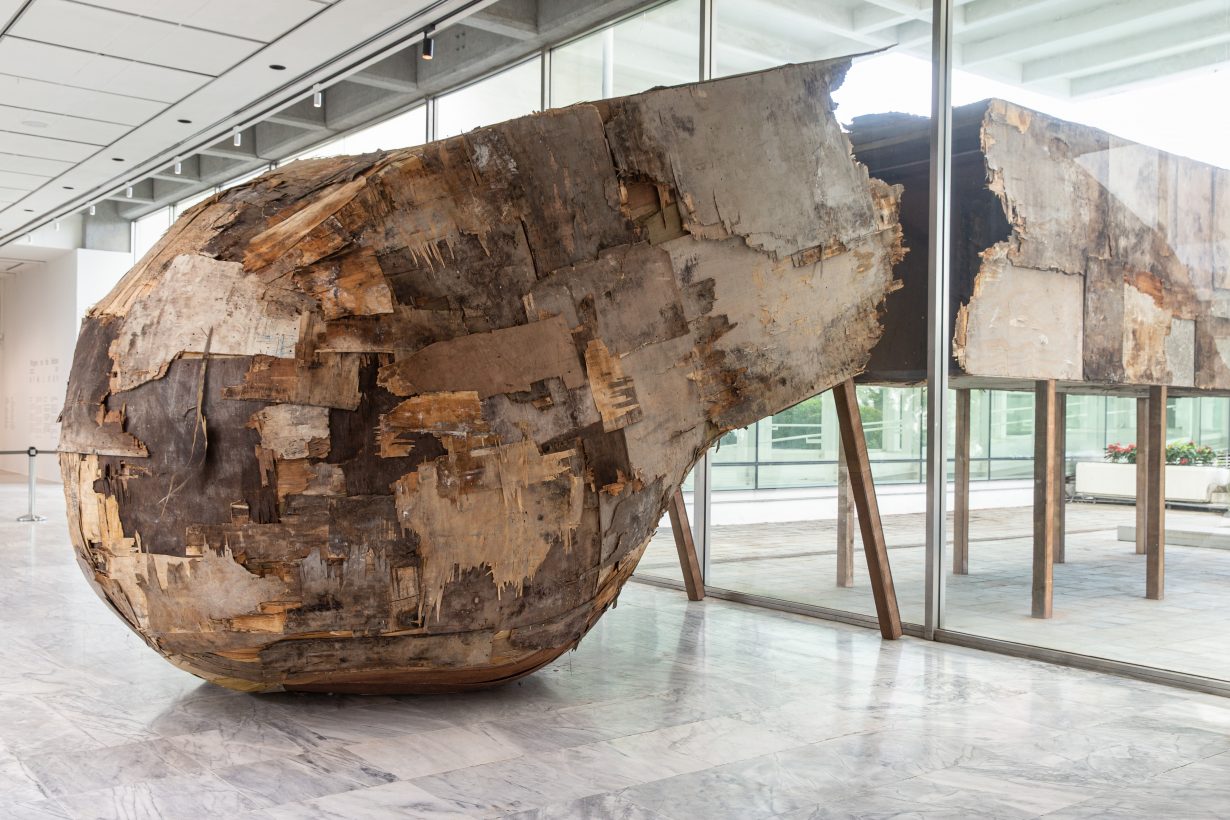
Wander into the 2025 Taipei Biennial and you’re confronted with what looks like a giant root ball made out of scrap plywood. As if the floorboards had ripped themselves up and shaped themselves – Transformers-style – into something approximating their original form. A return to their roots. Seemingly an invasive species, the root ball appears to be nesting and expanding rhizomatically through the entrance gallery of the biennial’s home, the Taipei Fine Arts Museum. Except for the bit of it that looks like it was crudely hacked off by a floor-to-ceiling glass window and totters, like a shipwreck on stilts, outside the museum, facing its fractured other half on the inside.
It’s hard to know what to make of Henrique Oliveira’s Cizania (2025) at first. It can’t be here for its formal qualities alone. We all know (because we’ve been conditioned by museums and biennials to think this) that no one curates an exhibition (let alone a biennial) on the basis that it contains works that are simply pleasing to the eye. So you grope around for additional meanings. Making things up. In that vein, it’s tempting to think about this work as a commentary on growth, renewal and death. You might, at a stretch, go with the idea of something broken awaiting repair, and then, stretching things a bit further, assume that it has something to do with Taiwan’s relationship to China in the aftermath of the latter’s Civil War. Or you might decide that this is what a ‘whisper on the horizon’ looks like: hard to define. Although the latter, perhaps, is simply a commonsense definition of what makes something ‘art’. The point is that you begin to feel that you’re having to do the work to contextualise this object. Perhaps that means it’s ‘relational’. Perhaps that means that you’re so used to labels telling you what to think about art that you can’t think about art without them. Still, this isn’t the root of the 2025 Taipei Biennial (which is titled Whispers on the Horizon), even though it might look like it is.
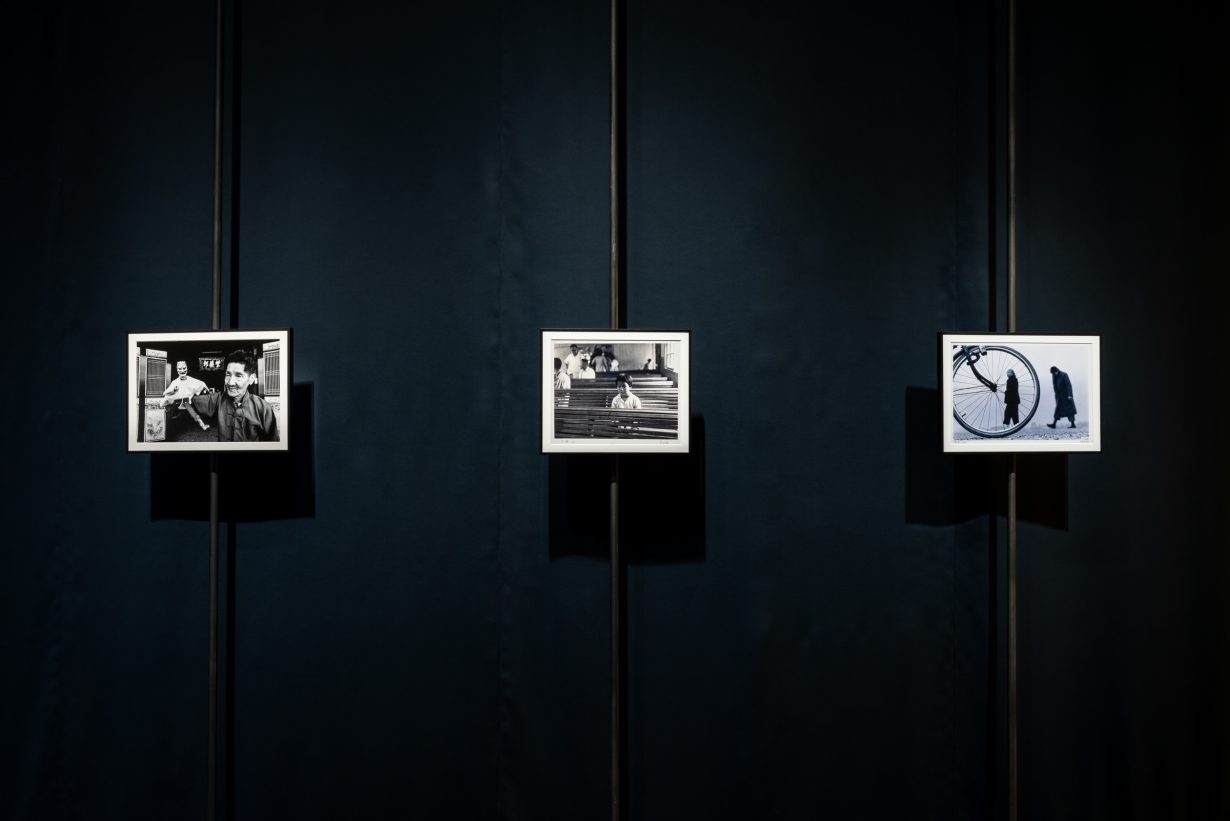
Instead, the show draws its curatorial conceit from three ‘objects’ sourced from the worlds of memoir and fiction. A puppet from Hou Hsiao-Hsien’s film The Puppetmaster (1993, based on the memoirs of puppeteer Li Tian-lu, which recount his career in the light of Taiwan’s turbulent postwar history); a diary (of a young man who committed suicide) from Chen Yingzhen’s short story about Taiwan’s socioeconomic exploitation, ‘My Kid Brother Kangxiang’ (1960); and a bicycle from Wu Ming-Yi’s novel The Stolen Bicycle (2015), a portrait of a Taiwanese family told through a son’s quest for his missing father’s missing bicycle. Loaded, for those who paid attention to the wall text announcing the conceit at the entrance to the exhibition, with an aura of memory, loss and abandonment, these three items repeat, like a chorus, throughout the show in different trios of twentieth-century photographs, each of which features one of the objects (or something related to it). Lest we forget the exhibition’s themes and start err… making things up.
In one such constellation there’s Chang Chao-Tang’s 1978 portrait of Li with his puppet; Li Dyao-Lwun’s 1950 portrait of a young student staring into space at breaktime – his ‘distant gaze’, we are told in the accompanying wall label, ‘recalls [presumably to those who have read the story] the figure of the younger brother in Chen Yingzhen’s “My Kid Brother Kangxiang”’; and Syu Ching-Pwo’s 1958 portrait (all of them from the museum’s collection) of two anonymous figures shot through the spokes of a bicycle wheel. Presumably all this seeks to root the more contemporary and international artworks in the specific history of Taiwan; but by the end of the show the incessant trinities begin to feel stuffy and constricting. An irritating form of marketing.
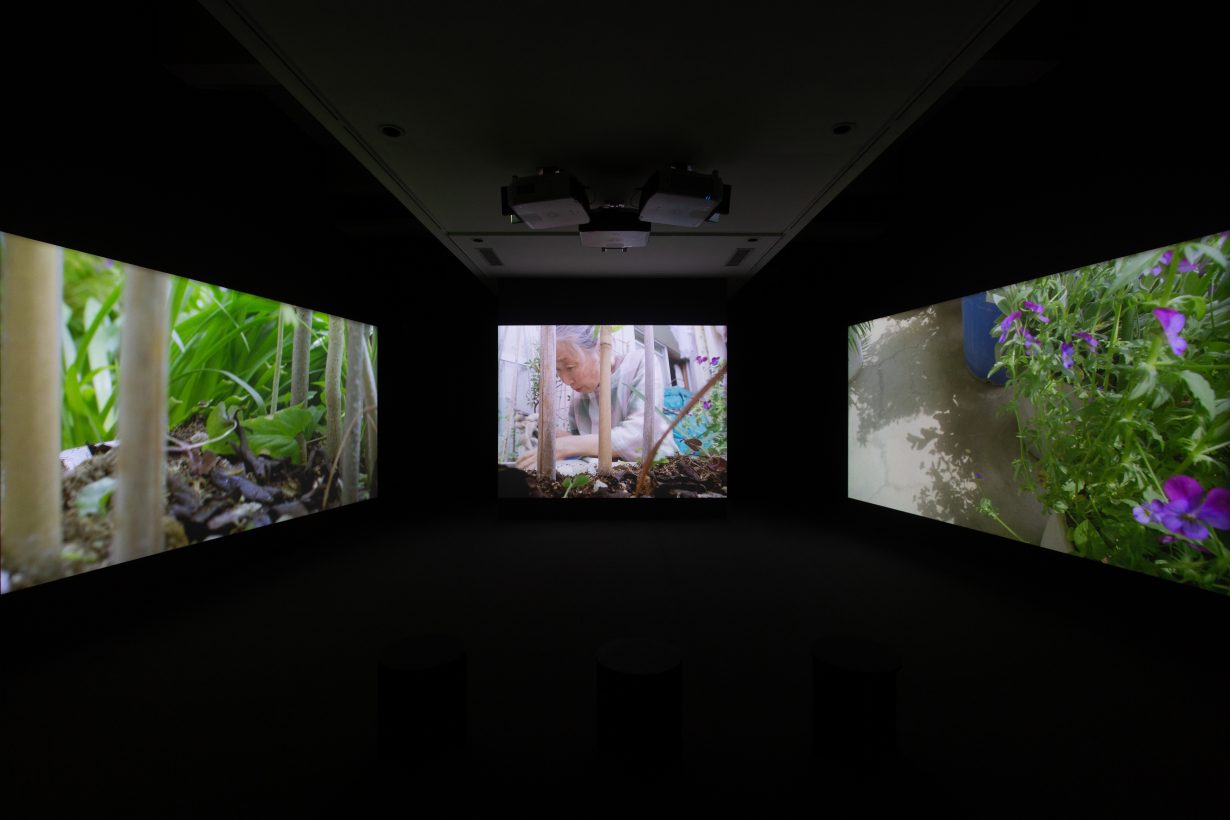
In total, the exhibition features the work of 72 artists from around the world, grounded by a broad selection of historic works (other than those in the photographic ‘chorus’) drawn from the museum’s holdings. Of the former, London-based Japanese photographer Shizuka Yokomizo’s video installation Recipients (2025) picks up on the botanical theme introduced by Oliveira. It features her elderly mother and the improbably large collection of plants she cultivates on her modest Tokyo balcony, together with a slideshow, presented by the mother to her daughter, recalling past blooms with her commentary on them. The work is beautiful, profound, gentle, and a subtle meditation on mutual care and interspecies relationships (not just between the gardener and her plants, but also with insects and invertebrates that assist or thwart her garden). It comes off as an urban take on Chen Chin’s 1934 gouache-on-silk painting Out in the Fields, on show in another part of the exhibition, in which an elegantly dressed, youngish woman carrying an infant on her back is presented with some freshly picked flowers by an older child. It’s executed in the Japanese nihonga style – which developed at the end of the nineteenth century as a means of resistance against the increasing Western influence on artmaking, following Japan’s opening up to the world; here, ironically, it serves as a reminder of Taiwan’s colonisation by Japan. Overall, the scene has the look of propaganda painting. But seen in conjunction with Yokomizo’s work it becomes a record of change: the fields have become a balcony garden; painting on silk has become video recording; and ‘honest’ documentary has replaced ‘artificial’ stylised aesthetics.
Similar games are played in a largescale video-installation displayed prominently on the museum’s ground floor, like a kind of roundabout through which all traffic must proceed. It comprises four films by Berlin-based Korean Young-jun Tak, each of which explores a different type of choreography. In Wish You a Lovely Sunday (2021) we see dancers adapting a dance to fit the space of a church and of a queer club; in Love at First Sight on Monday (2024) teenage female dancers describe the love stories of their parents, which is then interpreted by gay male dancers; in Love Your Clean Feet on Thursday (2023) we see dancers processing through Berlin’s Grunewald Forest, intercut with a traditional religious procession of a wooden Christ on his cross in Spain, from which the first group’s movements are sourced; and in Love Was Taught Last Friday (2025), we switch between footage of father and son woodcarvers at work in Italy and similarly intergenerational dancers rehearsing a performance. While one might see the quartet as examining tradition and its evolution, or its queering, and how knowledge and experience spread and transform, the works, while formal in structure (the choreography on show seems as stylised as Chen Chin’s painting), place the human body at the centre of all these conversations. And that’s a theme that really does dominate the biennial as a whole.
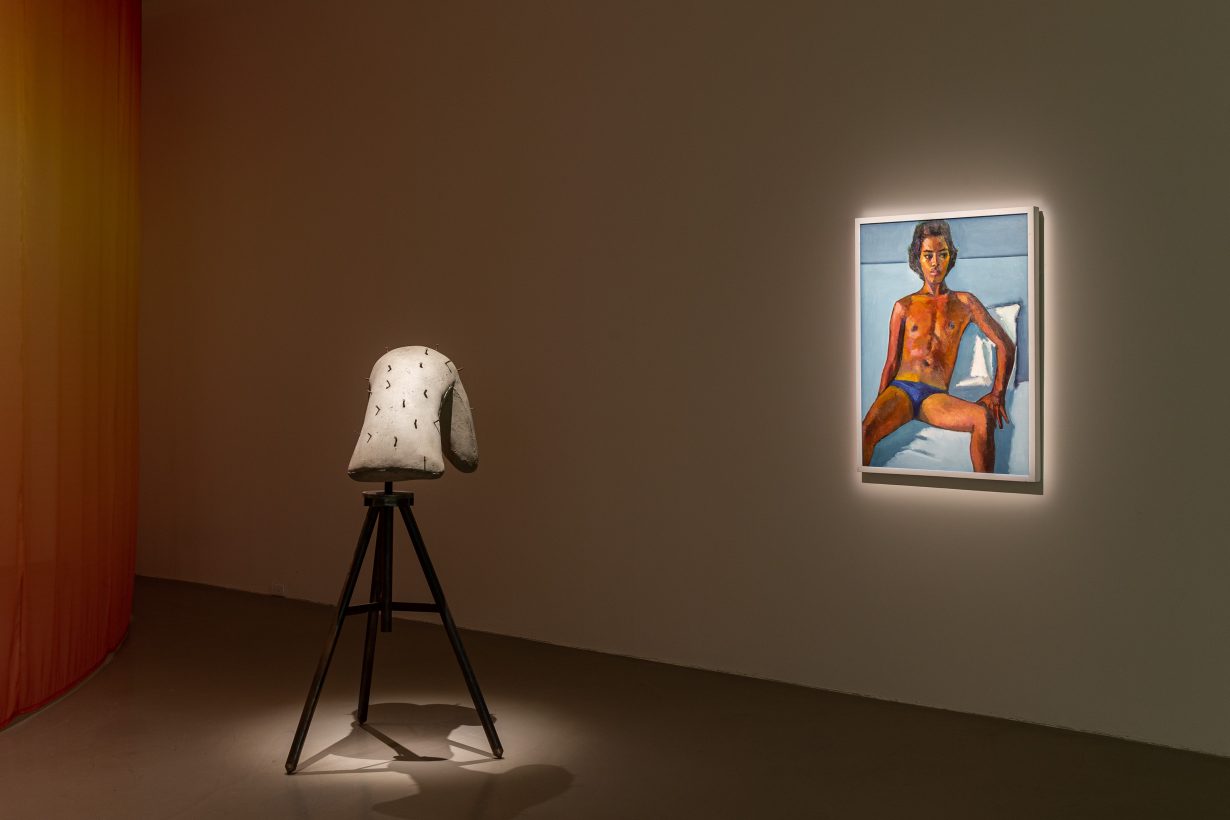
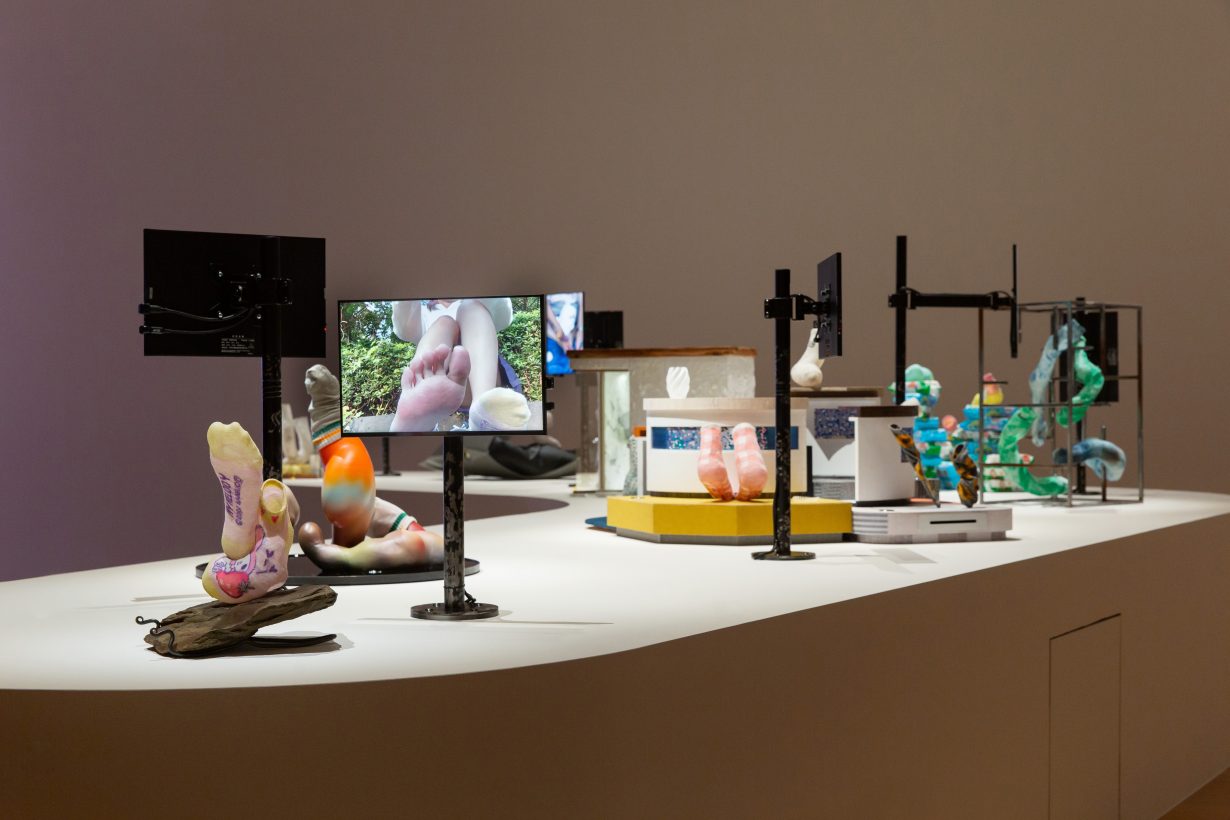
It appears in works like Shiy De-Jinn’s painted, sexualised portrait of a full-lipped youth, legs akimbo, wearing blue Speedos, Young Man with Long Hair (1975), which in turn sets a precedent for the more direct meditations on queer identity in the Giorgio de Chirico-esque paintings of Skyler Chen (executed half a century later). Or in Sylvie Selig’s embroideries and mannequins that fuse plant and animal forms and materials into humanoid shapes. Or Ni Hao’s extraordinary mixed-media tribute to foot fetishism (made up of a number of individual works), including socks, stockings and videos sold by private online retailers, and the chats that led to their purchase. Or Fuyuhiko Takata’s video installation The Princess and the Magic Birds (2021/25), in which puppet birds whisper an erotic fairytale into the ear of a sleeping male. Or in the red glass structures, vaguely reminiscent of cells or nonspecific organs, placed in the metal cages of Mona Hatoum’s Cellules (2012–13), which also extends the debates between structure and freedom that first entered the biennial via Oliveira’s wooden radicles.
Back by Oliveira’s work, I picked up a leaflet containing the biennial’s floorplan. As well as outlines of the galleries and lists of the artists whose work was occupying them (let’s call that useful information), it contained a text (let’s call that something else), or manifesto: ‘Yearning… it’s more than desire’, it begins, ‘it’s a need that burns deep, a reaching out for something you know you’ll never truly touch’, it continued, turning up the heat, like the bird puppets in Takata’s installation. ‘And yet, it is this very impossibility that drives us. The 2025 Taipei Biennial steps into this space, where yearning propels us into a world of endless pursuit, where what we long for may remain forever unattainable,’ it promised. Was the ‘knowing I’d never touch’ bit a sly dig at museum etiquette, I wondered as I began to walk through the show. What was the ‘space’ of impossibility? Was that really deep space? Or were the curators (Sam Bardaouil and Till Fellrath, directors of Berlin’s Hamburger Bahnhof) talking about an equally unimaginable ‘space’ of endless pursuit? Or was it longing that had a ‘space’? And was all yearning the same? How do you spot a whisper on the horizon? Or are you supposed to hear it, from a distance? By the time you get to the end of this show, you realise that it doesn’t really need all the packaging, these layers of metaphor and overembedded conceits. Which is praise as much as it is critique. For the works on show have been selected with sufficient care that they are already chattering among themselves without the need for additional provocation. The viewer, on the other hand, might very well leave this curiously erotic show very much provoked. And wanting to contact a young lady about some lightly used socks.
Taipei Biennial 2025: Whispers on the Horizon, Taipei Fine Arts Museum, through 29 March