Arts education in US universities is interleaved with unhappy departures and uneasy participation. Could a model of self-paced, self-motivated study be the solution?
In 1972 the German artist Joseph Beuys was dismissed from his teaching position at the Kunstakademie Düsseldorf after repeatedly occupying university offices to advocate for applicants he believed should have been accepted. A photograph shows Beuys, all smiles, being marched out of the building by police. With his ties to traditional academia severed, he began presenting a series of lecture-performances around the world on topics like democracy, alchemy, myth and astrology, using chalkboards to capture cat’s cradles of thought. These performances are referenced in the label accompanying Chloë Bass’s chalk drawing Notes from ungiven talks (2026), which the Brooklyn-based artist began installing at the National Academy of Design in February. The work fills one of four panels in the academy’s galleries as part of the exhibition Future Schools, which features artists and collectives responding to the current educational crisis in the US through alternative methods such as collaborative play, improvisation and experimentation. So far, Bass has drawn a pair of hands hovering hesitantly over piano keys and written a paragraph in white chalk reflecting on what it means to practise an instrument outside of formal lessons. She will fill the remaining panels over the course of the exhibition.
Like Beuys, Bass knows what it means to part ways with the academy. Until 2025 she was an associate professor in the studio art department at Queens College CUNY, a large and notoriously underfunded public urban university. She began full time in 2016, earned tenure in 2023 and was the youngest full-time faculty member in the department by nearly 20 years. Early on, Bass noticed that several senior faculty members were set to retire around the same time. She told me she had been trying to warn the school that once they did, the department would be left with only three full-time professors. The school’s plan for dealing with this problem was not to replace the retirees but to have the remaining professors simply absorb the teaching and administrative load. When Bass raised concerns, she was told perhaps one of the lost positions could be restored if enrolment increased. “Mentally, I was like, cool, I quit,” she said. “I didn’t see a future for myself under those conditions.”
The story of art departments in US universities is interleaved with unhappy departures and uneasy participation. Although such frustrations are not unique to the US, they have been inflamed locally in recent years by disruptions in federal funding and the Trump administration’s high-profile anti-DEI attacks, not to mention institutional self-censorship (recently, the University of North Texas closed an MFA student’s thesis exhibition due to leaked meeting notes that showed the dean’s fears of backlash over artwork critical of ICE) and buyouts of entire campuses (California College of the Arts was just sold to Vanderbilt University, throwing CCA faculty back out on the job market and leaving students scrambling to transfer).
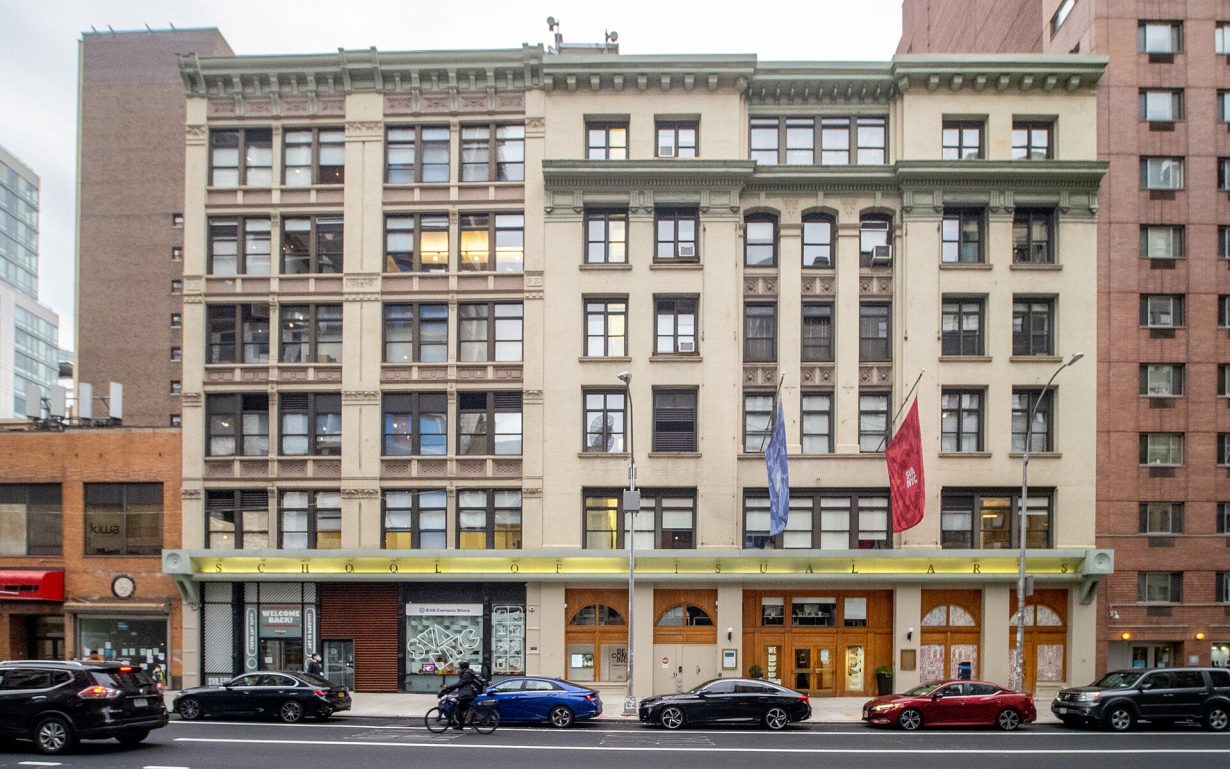
There are all sorts of motivations to opt out, especially now that entering the academy offers no guarantee of stability. In the past, Bass reminded me, artists could “embed in institutions” and “make a life” there. “For so many intersecting reasons,” she said, “that is no longer the case.” A 2025 report by the American Association of University Professors shows that the makeup of the US academic workforce has shifted from majority full-time faculty to mostly part-time and contingent faculty since fall 2002 (older studies show this trend beginning in the 1970s), and that wages of part-time faculty have dropped on average nearly 4 percent since the pandemic. Union negotiations for cost-of-living adjustments and employee benefits are essential but slow, and not all faculty are unionised. When I spoke to Andrew Paul Woolbright, a painter and writer who adjuncts at School of Visual Arts (SVA), Pratt Institute and the Fashion Institute of Technology, he said he was teaching six classes per semester to try to “pull everything together financially”. “I would kill for what used to be a normal standard of teaching” – something like three classes per semester – he said.
There are also reasons to stay. The students, for one. “I feel fortunate with the students I work with,” Woolbright said. “There’s a trust to speak about things that need to be spoken about.” Such as, for instance, the resignation of David A. Ross, the chair of SVA’s MFA Art Practice programme, following revelations about his ties to Jeffrey Epstein, which has been, in Woolbright’s words, “a very difficult thing to process”. Another artist, Kameelah Janan Rasheed, emphasised the importance of accepting and interrogating one’s own entanglement within institutions rather than fantasising about occupying a righteous position outside of them. Having started out as a high school teacher, Rasheed now teaches in the sculpture department at Yale University and as the inaugural Charles Gaines Faculty Chair at California Institute of the Arts, commuting from her home in New York to New Haven twice a week and to Los Angeles twice a month. “I feel a commitment to understanding your complicity in systems is really necessary,” she told me. “Over time you start to see the complexity of how the world engages you.” For Rasheed, this means not only delivering content and teaching skills within institutions but also keeping abreast of legal and political developments that may affect her students and making time in class for students to speak about their social and emotional health. The speed at which educational policies tend to shift under the Trump administration makes maintaining this dual mandate all the more time- and energy-consuming. “Right now, I can still do my teaching, but that could change tomorrow,” Rasheed said.
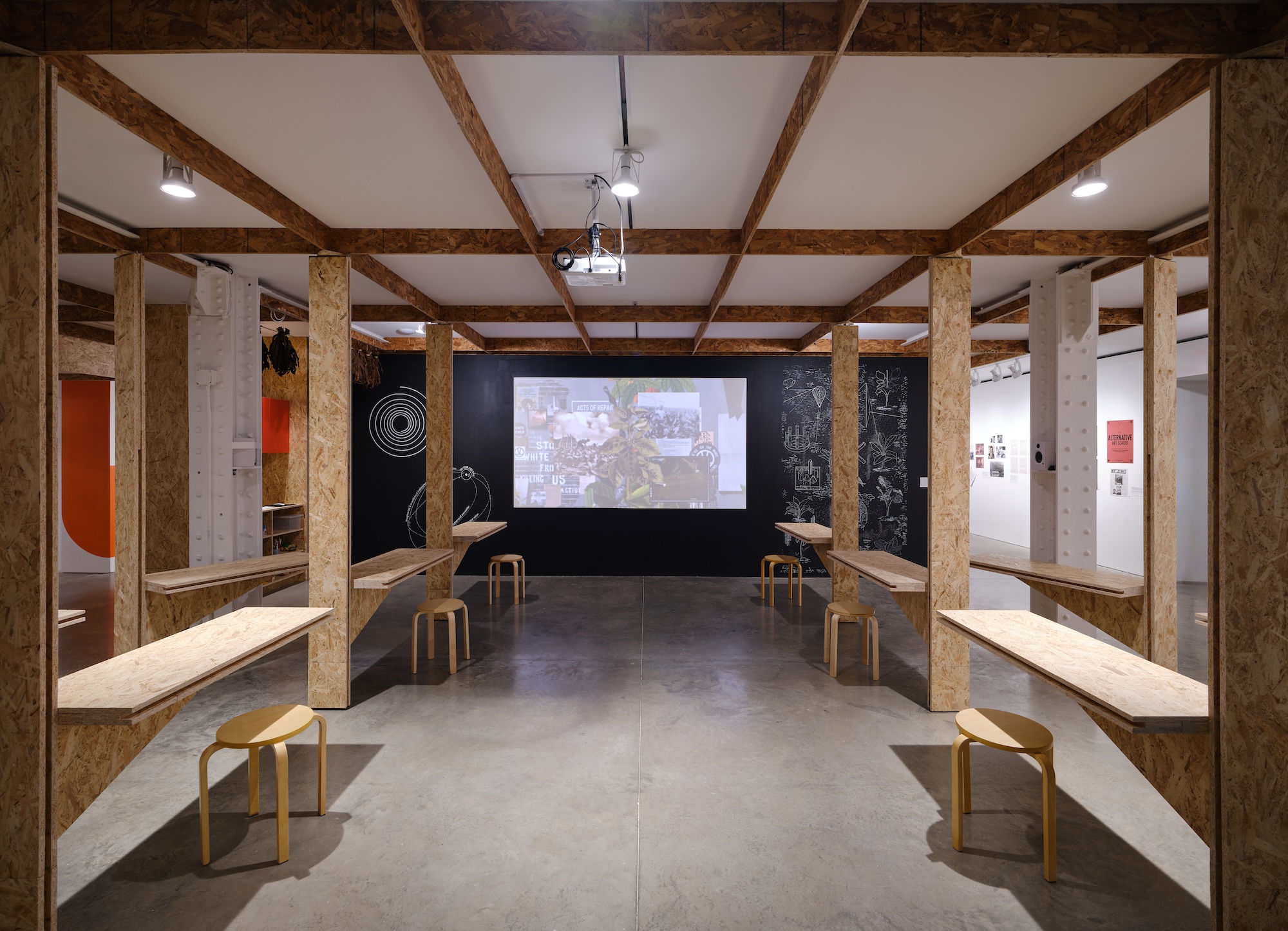
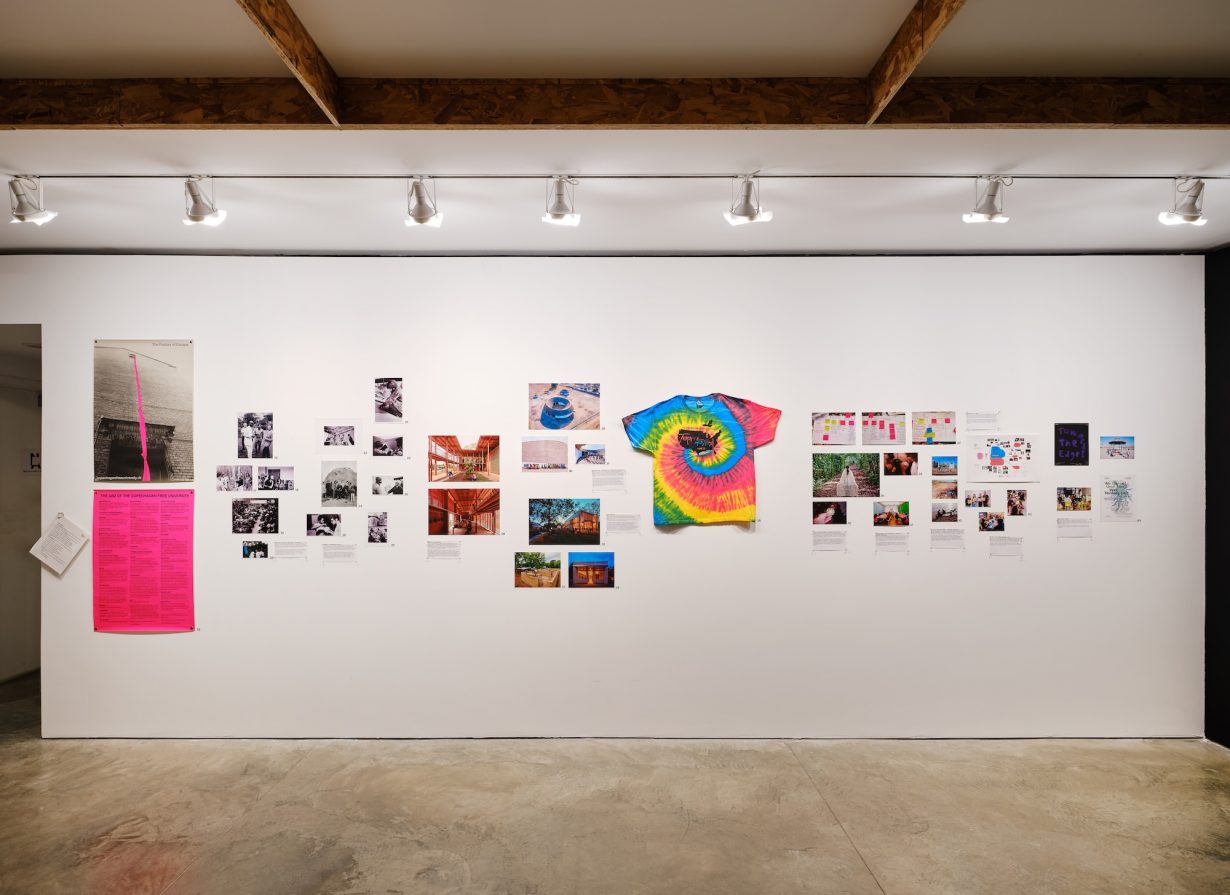
At the Thursday night opening of the exhibition Future Schools, visitors mingled like students before class, waiting for the teacher to arrive. They read Bass’s chalked words – ‘I’ve found that certain things I never mastered (playing four against three, for example), I still don’t know, while other abilities – a willingness to struggle through or just figure it out, even approximately – emerge now that I’m outside the bounds of guided improvement’ – and browsed books lining a waist-high shelf in front of the blackboards, which included Augusto Boal’s Theatre of the Oppressed (1974), a 2021 English translation of Luisa Capetillo’s A Nation of Women (1911) and Matthew Berland and Antero Garcia’s The Left Hand of Data (2024). They perused texts, graphics and photographs on the walls introducing organisations involved in alternative pedagogy around the world, from CHARAS in the Lower East Side to TEOR/éTica in San José to Open School East in London; watched films by Christian Nyampeta featuring interviews with artists and philosophers playing on horizontal monitors; and clicked through the digital archives of Anton Vidokle, Boris Groys and Walid Raad’s unitednationsplaza (2006–09), an itinerant school for art and critical theory that operated in New York, Mexico City and Berlin. In doing so, they began enacting a kind of self-paced, self-motivated independent study, which, if approached in the spirit of social sculpture – Beuys’s idea that artistic activity can restructure society – may be the surest way out of the crisis we face.
Like Bass’s drawing, most of Future Schools will remain in-progress until the show closes in August. In the exhibition space, Strother School of Radical Attention, a Brooklyn-based nonprofit specialising in reclaiming human attention from digital technologies, will lead seminars in March and April; LA ESCUELA___, an artist-run platform for open-access education, will host events conceived by Latinx artists and architects in May; the School for Poetic Computation, a New York-based experimental school for art, code, hardware and critical theory, will run an internet café for ambient learning in the summer. There is a feeling in the space, thanks to the papier-mâché fruit, vegetables and tobacco leaves in a gallery designed by WAI Think Tank, and the empty shelves of oriented strand board that seem ready to hold instructor materials, of humble abundance and potential – a sense that new and radical forms of learning will soon commence. But one should be prepared for any number of contingencies. Maybe the teacher won’t, in fact, arrive. Maybe the teacher is spent, or has been dismissed, or quit, or is forever delayed on the train rushing to the next gig. Maybe class has already begun.
Read next What Would an Exhibition of Trump’s America Look Like?