Art-historian Bénédicte Savoy argues that all artefacts of heritage, regardless of the winding paths they have taken through history, must necessarily go back to where they started
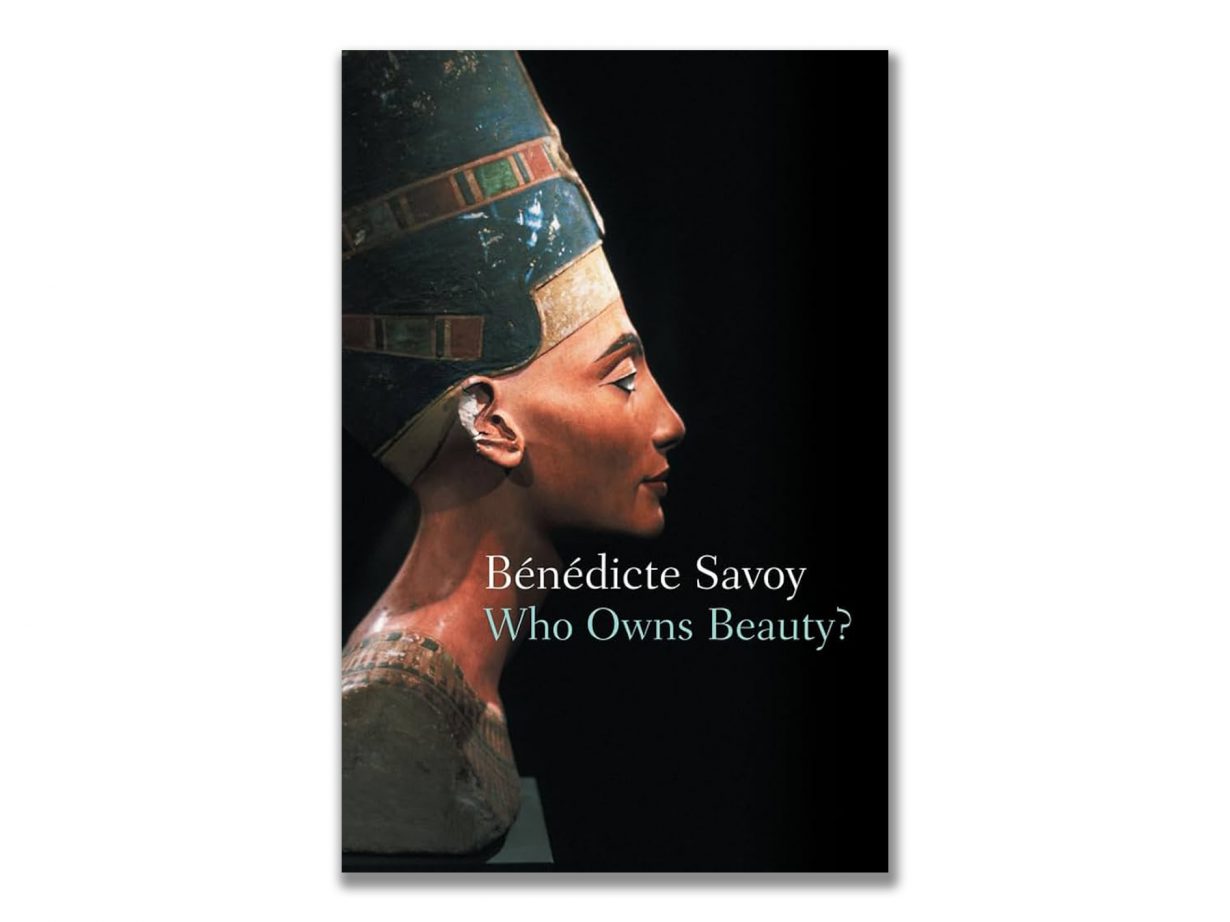
For art-historian Bénédicte Savoy, a prominent figure in the restitution debates of recent years, two broad answers to the question of who owns the objects in museums present themselves: that ‘the works belong to a territory and have a link with those who live in the dispossessed regions’; that ‘beauty belongs to humanity and that museums provide access to it precisely through translocations’.
Who Owns Beauty?, largely based on lectures Savoy gave in 2017, expands the question of ownership of cultural artefacts from the contested postcolonial debates over African art (which she explored in depth in her 2022 book Africa’s Struggle for Its Art), to examine a range of cases in which ownership is more ambiguous. Savoy’s careful research illuminates nine historical objects of ‘translocation’. Some, such as the bust of Nefertiti and the Pergamon Altar (now in Berlin’s Neues Museum and Pergamon Museum respectively) are still far from where they were first made; others, such as the Van Eyck brothers’ Mystic Lamb altarpiece (in Ghent), the ‘Zodiac heads’ once plundered from the Summer Palace in Beijing, the sculptures taken from the Kingdom of Benin and a Gustav Klimt portrait seized from its Jewish owner by the Nazis, have all been returned to what Savoy sees as their legitimate owners.
Savoy’s approach is interesting for insisting on a case-by-case assessment of the legitimate possessor of these singular works, and its honesty in acknowledging that sometimes there’s no clear answer. But Savoy’s default inclination to ‘return-to-origin’ throws up various difficulties, as Savoy shuttles between historian and position-taking commentator. She tends to overlook or downplay the agency of historical individuals when they don’t suit her point: after its restitution to Ghent following Napoleon’s pillage, for example, why did the cathedral sell parts the Mystic Lamb to a Brussels dealer if it was held in such great esteem? Why, too, accept uncritically that such artworks are claimed to represent the ‘character of a nation’, since, in the case of the Ghent altarpiece, the Belgian nation didn’t exist when it was created?
Savoy seems wary of the nationalistic claims to artefacts, yet happily accepts them when they are successful, notably in her discussion of the campaign by the Chinese government to derail the auction, by Christie’s, of the Summer Palace ‘Zodiac heads’ in 2009. There, it was the diplomatic and economic firepower of the Chinese state that forced the issue. There are other tensions and ironies in Savoy’s approach, which snag on the conflict between personal claims and those of nation states. When she asks the reader to whom Klimt’s 1907 Portrait of Adele Bloch-Bauer belongs to – Klimt’s famed portrait of the Jewish Austrian socialite claimed by her niece Marie Altmann in 2000 and returned to her by Austria in 2006 – she plainly sides with the claim of inheritance, which survives the Nazis’ seizure of Jewish assets. But in her discussion of the return by France of 26 objects seized from Abomey (in present-day Benin) by French troops in 1892, Savoy circles around issue, noting that at the return ceremony, the president of Benin explains ‘to the descendants of King Gbehanzin that the returned objects had indeed been taken from the palace of this king in Abomey, but that it all now belonged to the (multi-ethnic) republic of Benin’.
These awkward accommodations, between the continuities and breaks of individual and collective claims, their heritability, and to the political ambiguity of criticising past nationalisms while deferring to present ones, Savoy resolves by proposing that ownership lies in the combined claims of territory and ‘feeling’, those of present-day communities who see themselves as dispossessed. For all its erudite research and ethical equanimity, Who Owns Beauty? feels eventually like evidence made to fit Savoy’s enduring, but essentially moral intuition – that all artefacts of heritage, regardless of the winding paths they have taken through history, must necessarily go back to where they started.
Who Owns Beauty? by Bénédicte Savoy. Polity, £25 (hardcover)
From the September 2025 issue of ArtReview – get your copy.