In darkening times, the New York institution’s flagship exhibition turns to the cute, the zany and the interesting. Is this move evasive, or even appropriate?
Back in 2012, cultural theorist Sianne Ngai announced that the beautiful and the sublime had given way to the cute, the zany and the interesting – new aesthetic categories that reflect how we, as late-capitalist subjects, experience and evaluate visual culture. The works in this year’s untitled and deliberately themeless Whitney Biennial fit the new labels better than they do the eighteenth-century ones, and better than they do other categories like the social and the political. ‘Cute’ commonly describes tiny, domestic or endangered things that trigger responses as contradictory as protectiveness, hostility and revulsion. Much of the biennial is cute in this sense.
Visitors first encounter Emilie Louise Gossiaux’s Kong Play (2025) – a hundred or so small, brightly coloured snowman-shaped ceramics arranged on a low two-tiered pedestal. These sculptures are modelled after Kong chew toys, a tribute to the artist’s guide dog (Gossiaux lost their vision in a bicycle accident in 2012). Accompanying Kong Play are variously titled ballpoint pen and crayon drawings by Gossiaux that depict the artist playing with a jaunty, sometimes bipedal, white canine. The exhibition thus opens tenderly – without fanfare, without friction.
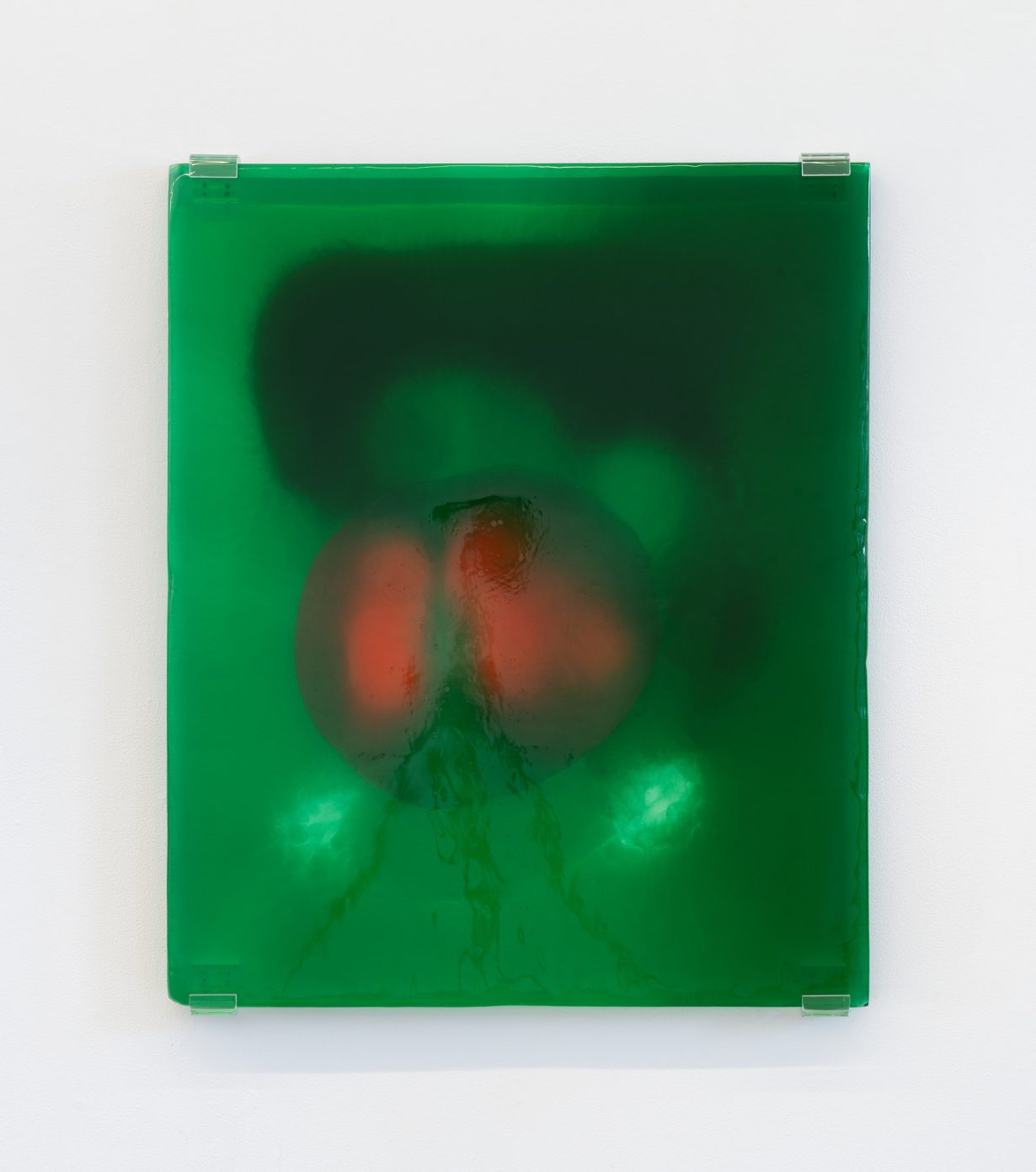
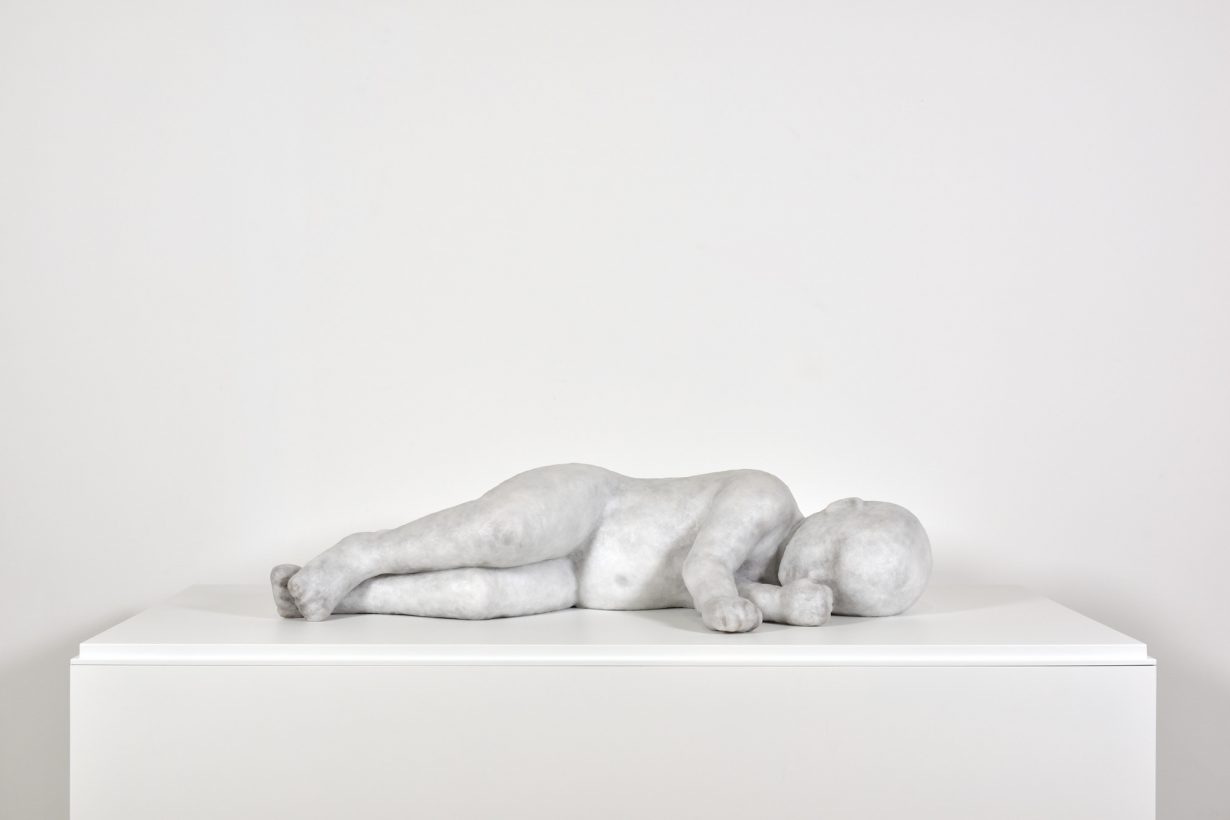
The cute continues with Erin Jane Nelson’s grid of quaintly mismatched ceramic frames that display antimonumental photographs of the northern New Mexico desert – the view beneath a tree (Orchard, 2025), or from within a patch of grass gazing up at wildflowers (Garden, 2025). CFGNY’s construction-site-like installation Continuous Fractures Generating New Yields (2025) contains a plushie caterpillar winding through a maze of wooden boards, translucent plastic, mirrors and porcelain, peeking shyly out of a low opening in the makeshift structure. Taína H. Cruz’s tempera mural, A Wall That Plays Along (2026), shows a scowling girl-troll drawn in the style of a Shel Silverstein cartoon. One gallery looks like a nursery: Andrea Fraser’s lifesized wax toddlers, Untitled (Object I–V) (2024), are watched over by the artist’s mother Carmen de Monteflores’s shaped canvases of entwined figures – Four Women (1969), Man and Woman Sitting (1968) – and Nour Mobarak’s fruity-hued resin panels (the Recto Verso series, 2024–25), which begin to resemble hard candy as one imbibes the saccharine scent of a nearby olfactory installation by Oswaldo Maciá (Requiem for the Insects, 2026). In the context of what the curatorial statement calls, rather unhelpfully, a ‘moment of profound transition’ in American life (the rise of authoritarianism), these notes of sweetness recall the COVID-era trend of ‘dopamine dressing’ – wearing aggressively whimsical clothing as a form of self-soothing. In this respect, the biennial seems acutely attuned to the private moods and maladies of those with something at stake in US culture and politics.
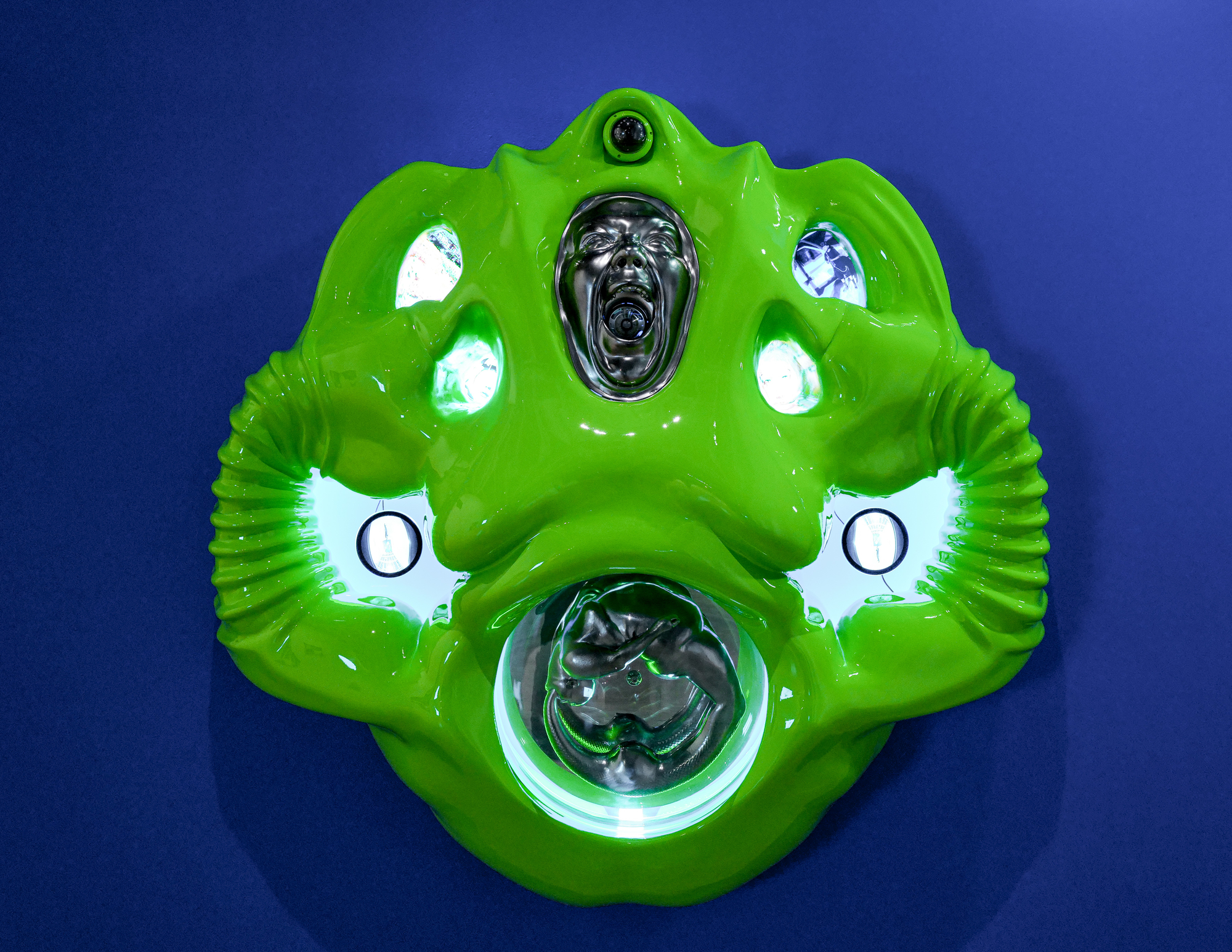
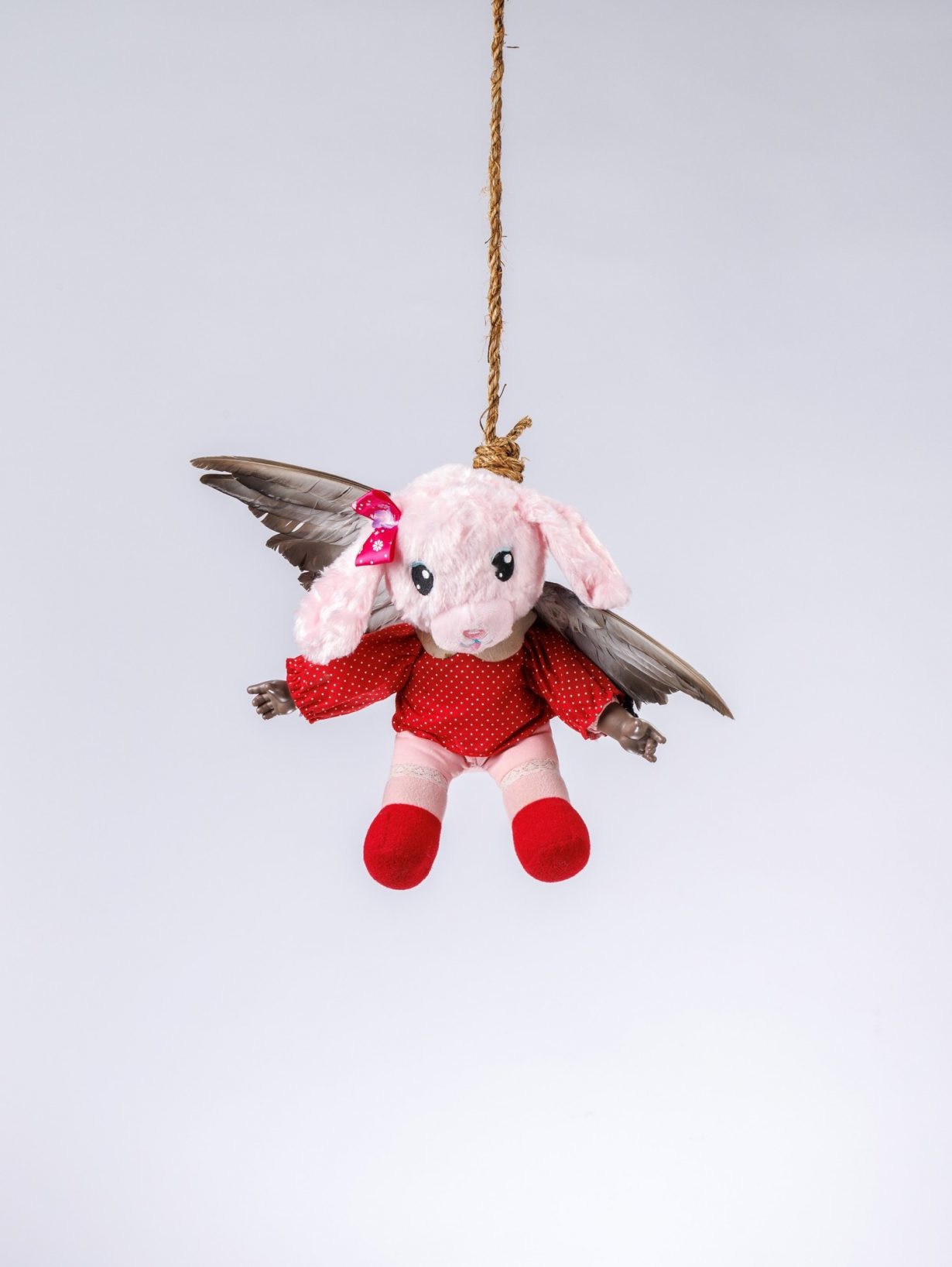
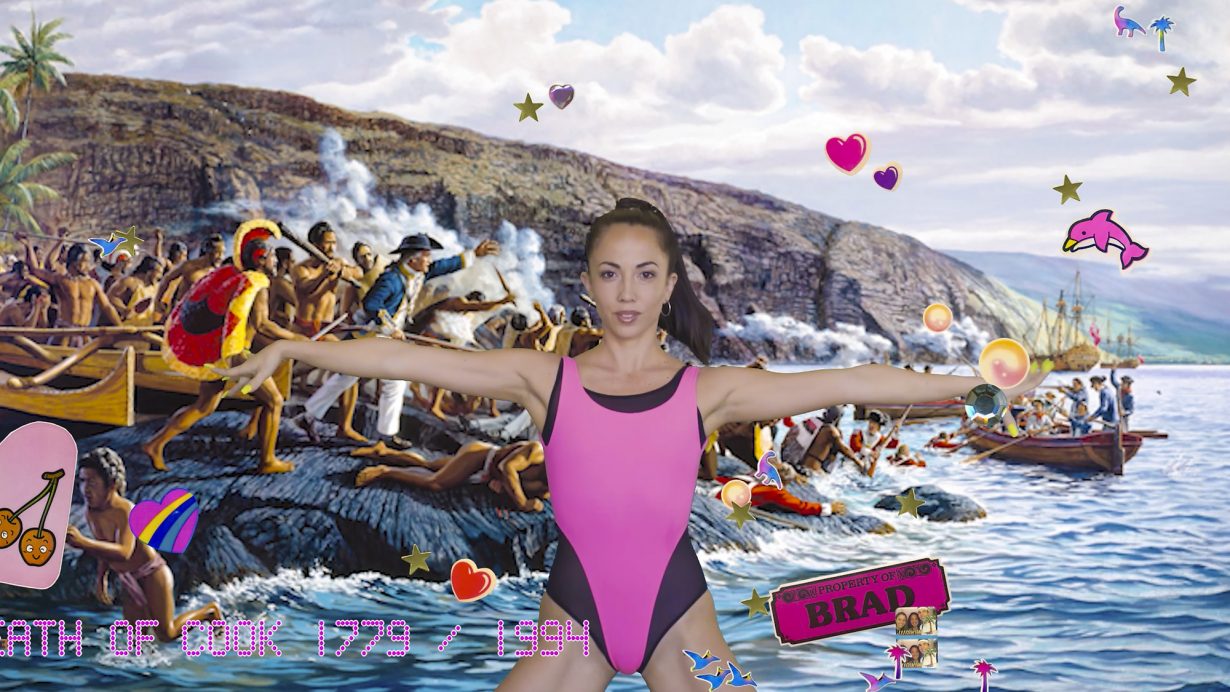
Gabriela Ruiz’s Homo Machina (2026), a flashy, lime-green fiberglass relief resembling a baby toy with an eerie silver face, mouth frozen in a scream, with a vaguely foetal form spinning beneath it, is less cute than zany. This work exemplifies what Ngai describes as the madcap psychic register of late capitalism, which ‘immediately activates the spectator’s desire for distance’. Equally zany in this sense are Cooper Jacoby’s Mutual Life clocks (2026), stainless-steel, convex mirrors with long, curved, plastic animal teeth on their surfaces that rotate like hour and minute hands; kekahi wahi’s frenetic sticker-bombed workout tutorial projected on a large, prominent screen (20-minute workout [WIP], 2023); Pat Oleszko’s air-filled nylon jester head Blowhard (1995); and, next to the inflatable, Isabelle Frances McGuire’s resin and clay figures inspired, according to the wall text, by the seventeenth-century Salem witch trials (one figure’s chest appears gouged open, but gore is all theatre). Then there’s Precious Okoyomon’s wall-mounted stuffed toy that combines the plastic head of a blue-eyed blackface doll from the 1930s or 40s with the body of a vintage, pink bunny plushie with brown paws. This confounding hybrid radiates mixed signals like a shanzhai knockoff. Its unstable identity and function generate unease, placing it firmly in the realm of the zany.
That which is ‘interesting’, by contrast, elicits a kind of calm, rational and regulated curiosity. In this biennial, the ‘interesting’ works foreground the visual language of urban infrastructure – cold surfaces, austere fonts – and bureaucratic order. Sung Tieu System’s Void (2026), installed in the Whitney’s central stairwell, combines a soundscape derived from warning signals at US fracking wells with projections of numerical codes used to classify chemicals. Emilio Martínez Poppe’s installation Civic Views (2025) consists of a metal scaffold supporting large photographs of featureless views from what the exhibition materials tell us are the office windows of civil servants in four Philadelphia, Pennsylvania, departments. In the same gallery, David L. Johnson presents Rule (2024–ongoing), a row of metal code-of-conduct signs removed from privately owned public parks created by developers in New York. These astute conceptual works balance out both the ostentatiousness of their cute and zany counterparts and the addictive presentism of our newsfeeds.
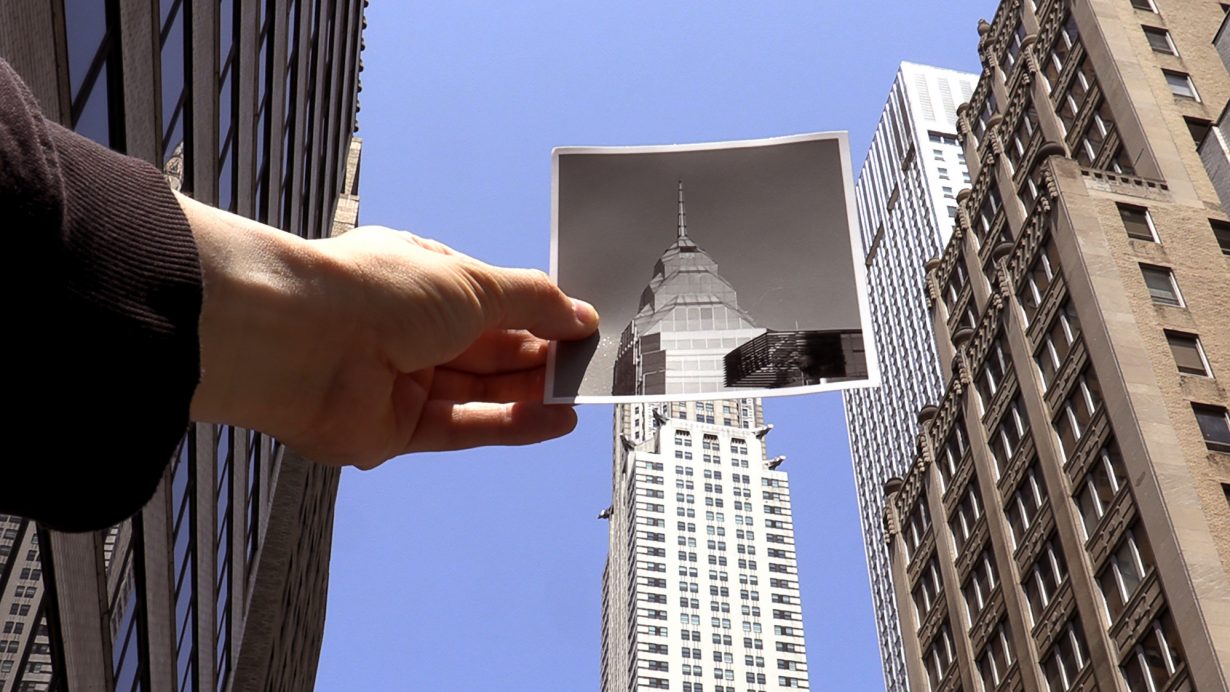
Two standouts from the show are Akira Ikezoe’s droll and dispiriting paintings of frogs, moles and robots trapped in the circular routines of labour at a nuclear power plant, cow pasture and solar farm, respectively – like pages from a Boschian children’s book, these scenes are simultaneously cute, zany and interesting – and Ignacio Gatica’s film installation Sanhattan (2025), which synthetizes these three tendencies to return us to the concept of the knockoff. Its central documentary-esque video projection examines Santiago’s financial district, nicknamed ‘Sanhattan’ because many of its buildings take after Manhattan landmarks such as the Chrysler Building and the Seagram Building. In voiceover, Manhattan is likened to Dr Jekyll, Sanhattan to Mr. Hyde; Sanhattan is said to be an “imitation” of Manhattan “at a smaller” – cuter – “scale,” but the hierarchy remains unsettled: “Who is ahead,” the video asks, “and who is behind?” In one sequence, a shaky hand holds black-and-white snapshots of Santiago skyscrapers up to their counterparts in New York, a gesture so cryptic and lowkey it exceeds attempts to read it strictly as an act of protest or revisionism.
Compared to the 2024 Whitney Biennial, for example, which was explicit in its attempts to redress contemporary and historical injustices, this edition’s political claims feel curiously intimate in scope – like a cute, zany and interesting world just a few degrees askew from the real one. Those looking to art for explicit guidance on matters of survival and dignity – the stuff of life – will likely remember it as a passive and politically attenuated affair. But perhaps that is the point, and art is to life as Sanhattan is to Manhattan: a knockoff. If so, that knockoff quality is precisely what gives art its shabby charm.
Whitney Biennial 2026, Whitney Museum of American Art, New York, 8 March – 23 August
Read next Whitney Biennial 2024 Review