The final edition of Ghost, curated by Amal Khalaf, excelled at conjuring up spectral meeting places
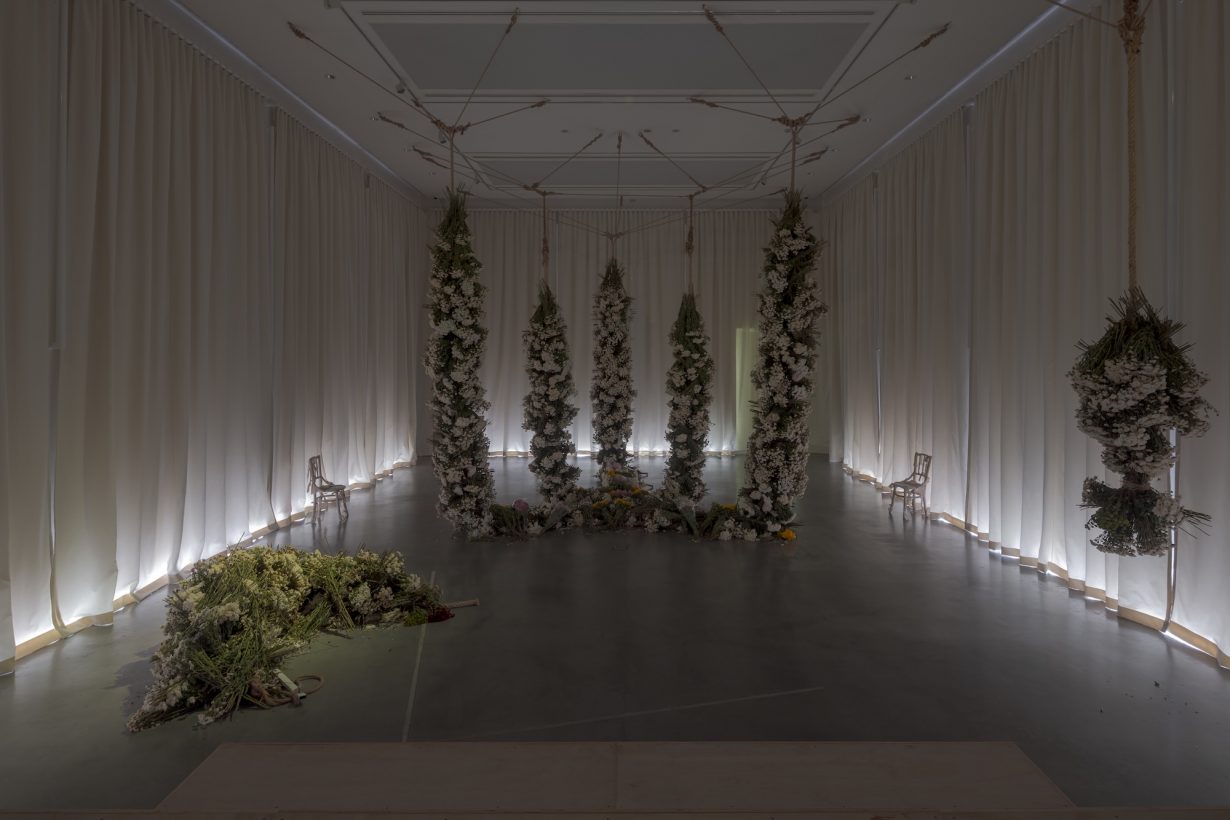
Since its 2018 inception, this monthlong video and performance art triennale series has deployed the metaphor of the ghost to explore suppressed or overlooked histories, alongside other strands reflecting on its host city, Bangkok. But suffusing each Ghost has also been a more internalised ghostliness: a current of alienation or estrangement that finds expression in each edition’s eerily askew taglines – 2022’s Live without Dead Time and this final edition’s Wish We Were Here – and performances that lean towards the dystopic or chthonic. Case in point: on opening night, the silhouettes of Senyawa, an experimental Javanese music duo who pair incantatory singing with the droning of self-made instruments, were barely visible through the billowing dry ice. Yet the symbolism of the visceral droning chants and shadowy, subterranean setting was hard to miss. ‘In a time of displacement, rupture and loss,’ writes curator Amal Khalaf, ‘Ghost 2568: Wish We Were Here is a song for human and non-human survival within the ever shrinking spaces of freedom in our cities.’ To stand listening to Senyawa amid towers of decaying chrysanthemums sourced from Bangkok’s flower market – an installation by Dan Lie titled Patience (2025) – was to be plunged into a corporeal, yet shared, sense of escape and catharsis.
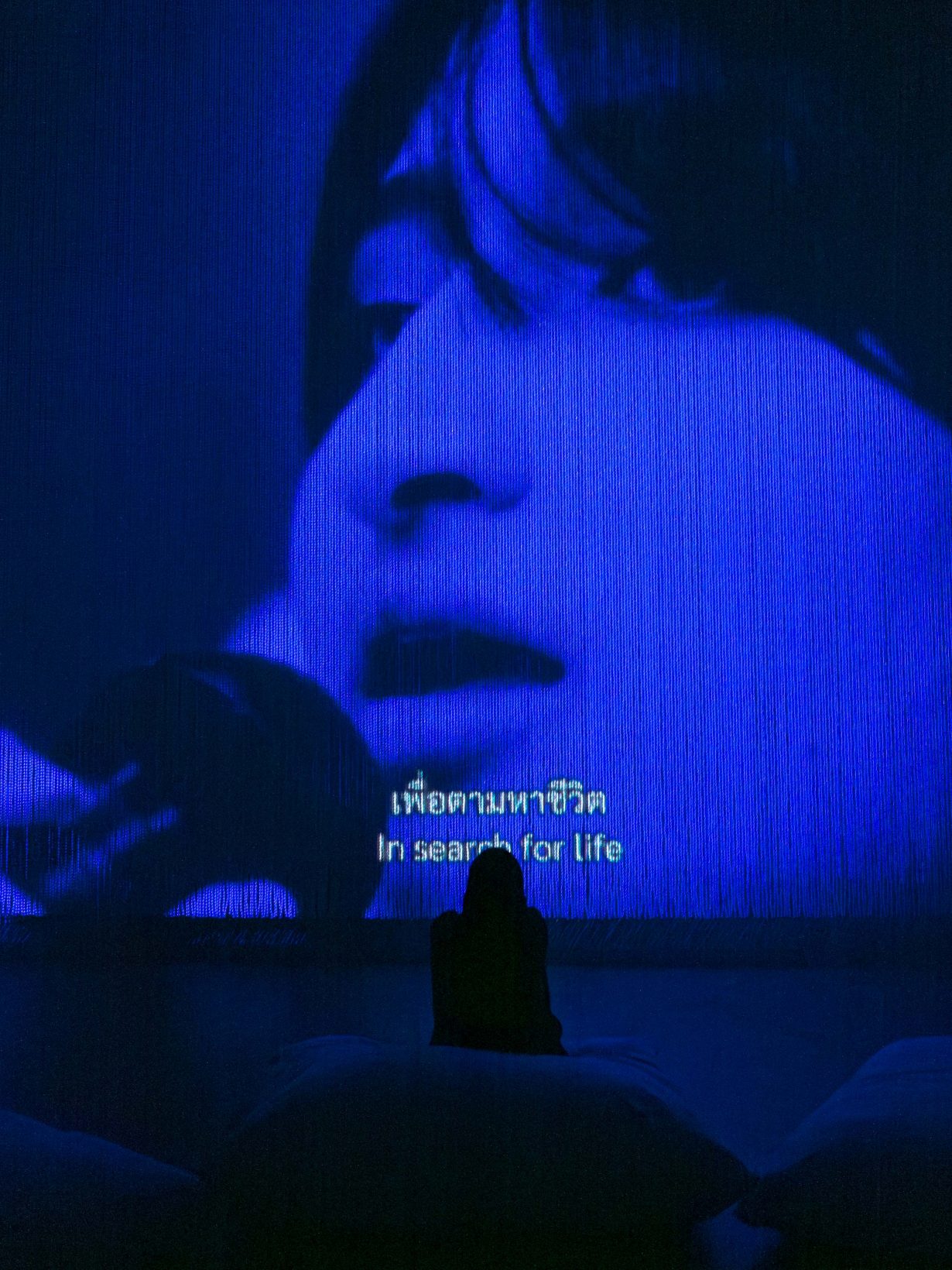
In its final edition, as throughout its history, Ghost excelled at conjuring up spectral meeting places. Less consistent were the constellations of video art that comprised the other half of its nebulous body, and which offered up an unwieldy grab bag of ‘Ghost thinking’. The strain coursing through Stephanie Comilang’s Search for Life II (2025), for instance, appeared to concern self-actualisation, the spectre of the self: flicking against a screen made up of strings of faux pearls, it explores the Filipino diaspora and legacy of pearl diving in the UAE. But the two other beautifully installed works at DIB26 (one of eight venues) summoned, in diverging ways, the spectre of generative AI: in Ho Tzu Nyen’s four-channel Phantoms of Endless Day (2025), an AI pipeline expands on footage from his unfinished feature film about the last days of the Second World War in Singapore; and in Shahryar Nashat’s Boyfriend / Lover / Hustler (A Trilogy for Ghost), three LED screens playing vignettes about intimacy, heartbreak and desire imbue a white cube with a frisky spirit. An interest in technological mediation loosely bound this cluster together. But if Ghost’s opening night set in motion a process of close listening for frequencies that echo beneath the level of everyday perception, here those frequencies formed a discordant hum.
At Jim Thompson Art Center, Ghost shape-shifted into a more coherent survey of colonial and ecological violence, within which elements of the spectral manifested in crafts, rituals and other forms of embodied practice. Mekh Limbu’s Chotlung: traversing spirits, redemptive songs (2025) displays woven Yakthung-tribe textiles – each piece heavy with spiritual significance and ancestral memory – alongside a video of pro- testers burning effigies in East Nepal. Both actions have played a role in a resistance movement against a proposed cable car project. Next door, the long shadow of the rubber plantation system in Southern Thailand was traced through Komtouch Napattaloong, Kaisa Saarinen and Bart Seng Wen Long’s three-channel film These Laticifers Keep Bleeding… (2025), which blurs local myth and dark labour history with a leavening strain of humour and absurdity – including interviews with gimp-mask wearing latex fetishists from across Southeast Asia.
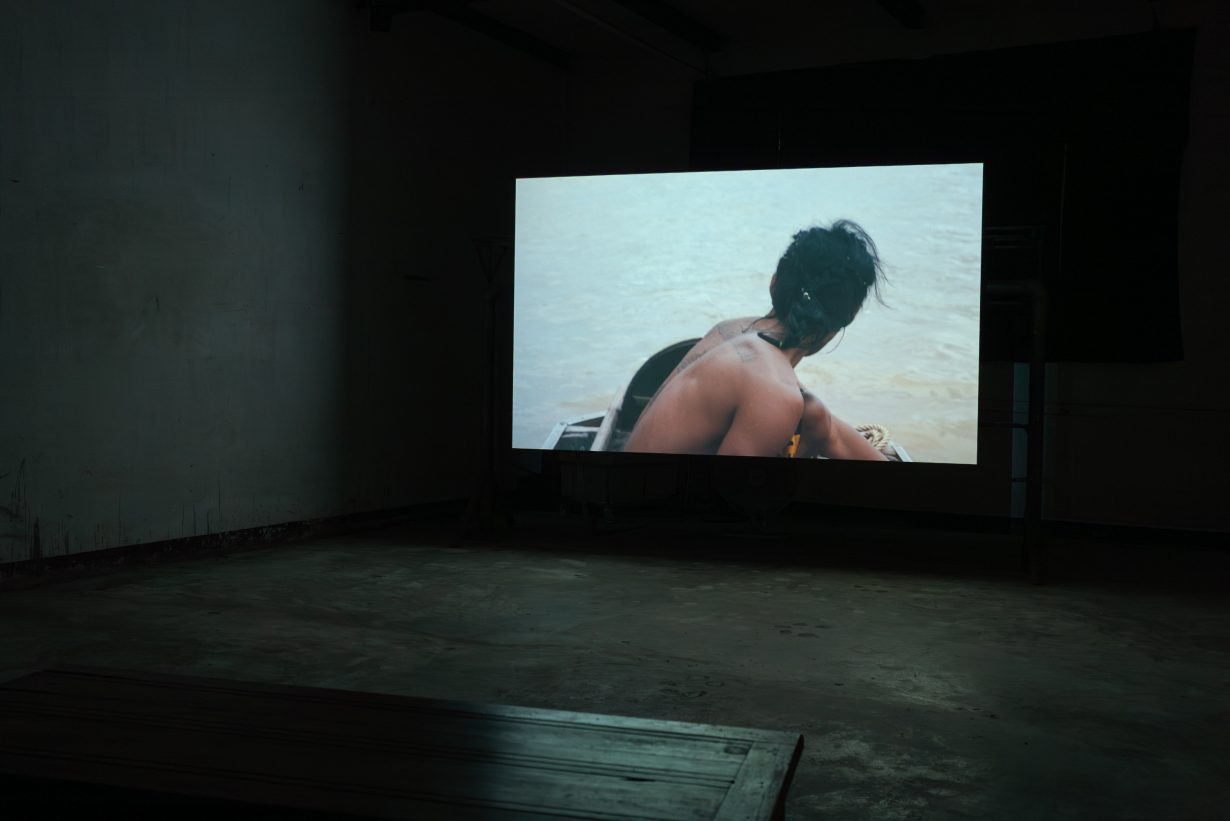
More striking still were those moments where the grain and grit of the city seeped into the scenography, and the invocation of ghosts seemed less like an overwrought metaphor than it did a condition or fact of life.
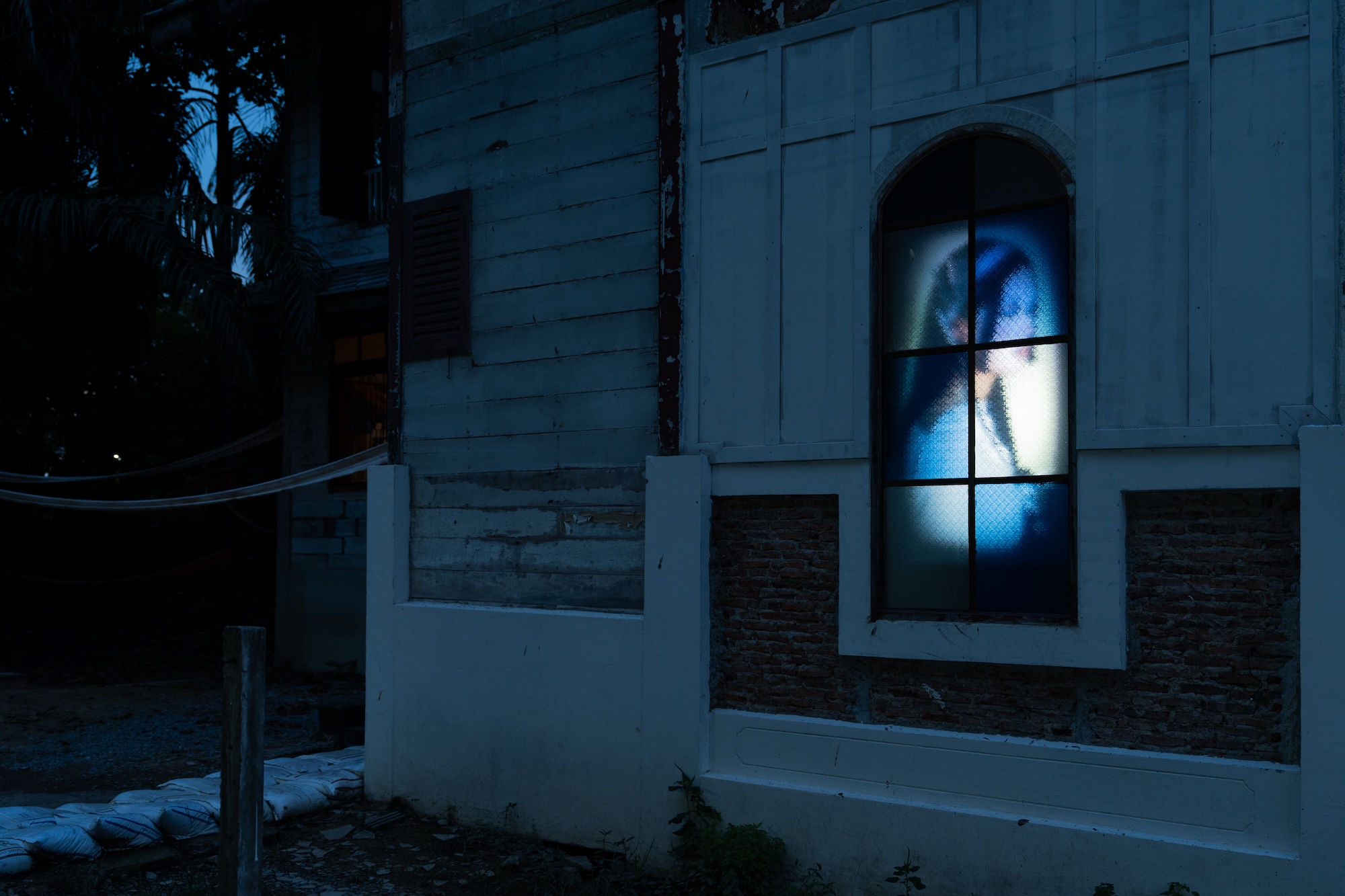
Which is perhaps unsurprising given that this festival has always drawn its animus and vitality from its locality. These moments included: watching Jeanne Penjan Lassus’s film a jewel in the mud (2025) about divers who earn a living by scouring the city’s Chao Phraya River, then admiring their finds – bottles, coins, broken china, jewellery – on the floor of a peeling shophouse, as work-men outside drill a new subway line. And sitting down in an old villa overlooking the river to enjoy Montika Kham-on’s Afterlives (2025), a phantasmagoric family migration tale, then being struck by the mundane yet spiritually charged majesty of its backdrop: the banana leaves catching the breeze outside. In such instances, the process of sensorially attuning us to the presence of the invisible or absent – Ghost’s Mark Fisher-inspired modus operandi – felt less slick and preordained, yet somehow more involving and complete.
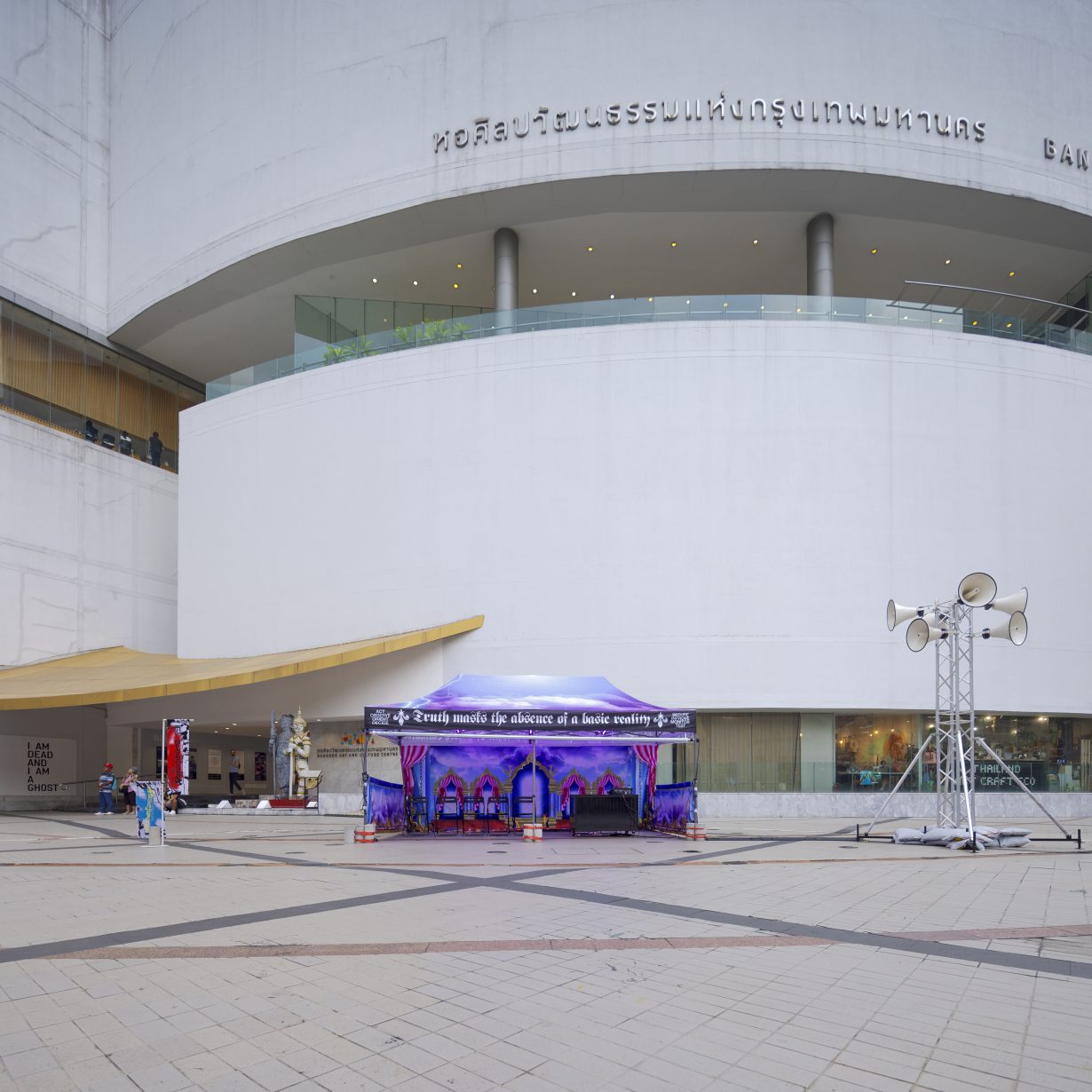
During the second week, a circuitous lecture performance by Shuddhabrata Sengupta of Raqs Media Collective, Ghostly Intermittence (2025), included calls to think about Bangkok through the prism of different personae (“from persons and spirits to places, deities, insects, plants and modes of transport”). Two days later (shortly before the death of Thailand’s Queen Mother led to the postponement of some events), a group of about a dozen people assembled in front of the Bangkok Art & Culture Centre to hear molam songs and radio broadcasts connected with failed political uprisings compete with the din of traffic. Under a marquee emblazoned with slogans (‘We Won’t Participate in Turning the Wheel of History Backwards’), we stood in the blazing heat listening to Tanat Teeradakorn’s CAPITAL COMPLEX (2025), a sonic counter-history, struggle to make itself heard. Meanwhile, Raqs’s 18 Personae (2025) – 18 encounters across the city led by docents, or ‘hosts’, from an afternoon of karaoke at a cemetery to a morning jog along a palace perimeter – urged us to experience firsthand the fringe activities and spaces shaped by the city’s inhabitants (and so forming a sort of tacit pushback against the homogenising, late-capitalist direction of travel).
All this adds up to a Ghost that, in many qualitative respects, shadows past editions. But knowingly: a well-trailed feature is the ‘haunting’ of the last in the trilogy by past curators. While Khalaf oversees the main programme, much of it overlapping with her curating of the Sharjah Biennial earlier in the year, cofounder Korakrit Arunanondchai contributes the music segment, and Christina Li’s Ghost: Bodies Dispossessed segment features new works by three returning artists (including Raqs).
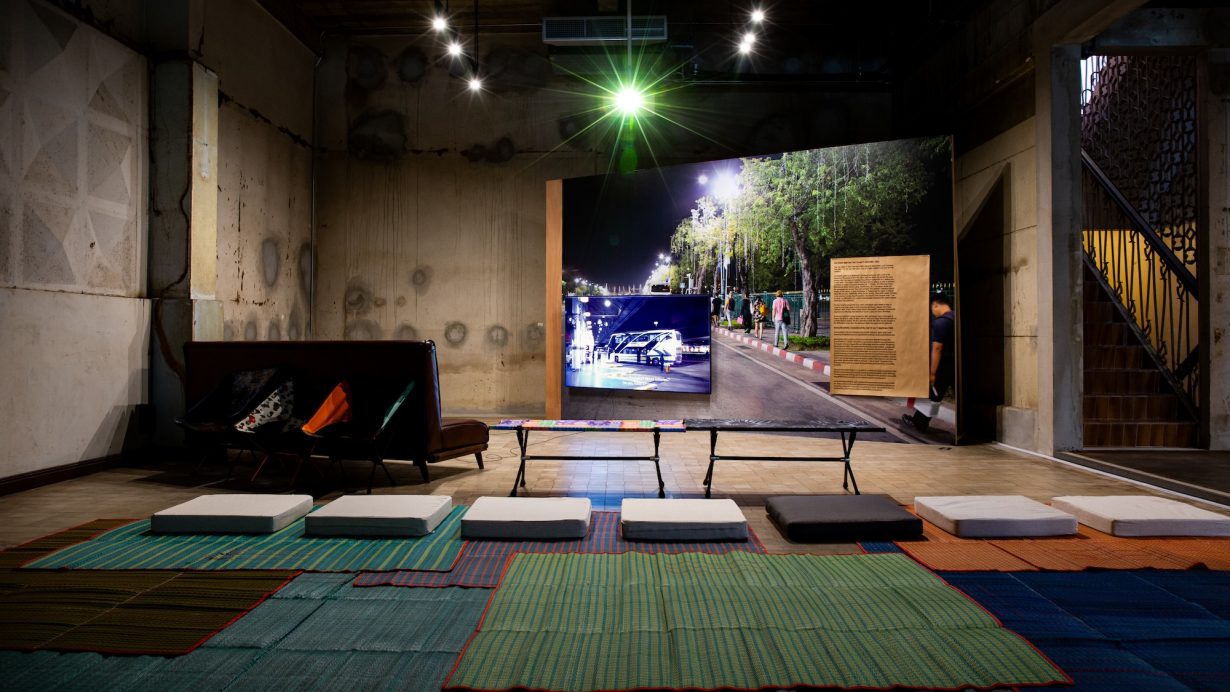
Amid all the ornate ghost speak and implied critique of neoliberalism, though, one contribution feels like a sly meta-commentary, and a satisfying denouement. Koki Tanaka’s Activating Archive: Eating an Apple While Lucid Dreaming 2568 (2025) is an archive of testimony relating to an all-night tour he staged for 2022’s Ghost:2565, during which attendees sought out nocturnal landscapes relating to the city’s sociopolitical history: they sat in the lobby of the Royal Hotel (a focal point during the Black May protests of 1992), touched the grass of Sanam Luang (the open field in front of the Grand Palace) and snoozed on the coach. In a series of films and texts, their highly subjective and brutally honest recollections of that sleep-deprived night form a sobering, and sometimes bathetic, counterpoint to Ghost’s grand exhortations about spiritual nourishment and shared political yearnings. “I know the artist tried to communicate some meaning, maybe a Japanese artist or something – but honestly, I can’t recall the point of the work itself,” says one participant. The wider implication was that, as Tanaka explained during a talk, “the ghost itself is the way you remember something”, not some invisible system, past or future that weighs heavily on us. Yet Tanaka’s gesture also begs a very pointed and germane question about another act of collective memory-making that is now destined for the archives: what will Ghost’s afterlife look like?
Ghost 2568: Wish We Were Here was at various venues, Bangkok, 15 October – 16 November 2025
From the Winter 2025 issue of ArtReview Asia – get your copy.
Read next 13th Seoul Mediacity Biennale review: Spiritual science