Decades ago, the artist’s conservative sculptures might have enjoyed the assumptions of postmodernism. What about now?
Calvin Tomkins, illustrious profiler of artists, liked numbers. Here, from a 2015 profile in The New Yorker, are his stats on sculptor Charles Ray, son of Chicago and transplanted Angeleno:
Two marriages
Five Whitney Biennials
Three hours walked per day
Four years on the sculpture Hinoki (2007)
Seven years on Aluminum Girl (2003)
Ten years on Young Man (2012)
15 studio assistants (concurrently employed).
Similar figures appear often in Ray lore, fuelling the effect attributed to his sculptures: startling, hard-won relationships between form and material, illusion and reality. This much obsession, the assumption follows, must be a one-way street to artistic revelation.
The highlight of Ray’s self-titled exhibition at Kassel’s Fridericianum is Oh! Charley, Charley, Charley… (1992), a high-wire act of pathos and cheek that is also the show’s oldest work. Eight naked bodies, representing young Charles, sprawl on the floor. Fashioned from handpainted fibreglass and synthetic hair, they pleasure one another, at once giddy and stiff. Ray’s well-rendered member is only half alive. It’s a beautifully unmoralising vignette of depressive self-obsession. Oh! Charley… suggests another fantasy: an alternate reality in which Ray kept plumbing fixations and perversions with his own two hands. Instead, as this exhibition reaffirms, production for production’s sake would come to surreptitiously enter his motives, albeit guised – maybe even to Ray himself – as an investigation into the magic of material and surface, and at extravagant expenditures of time and money.
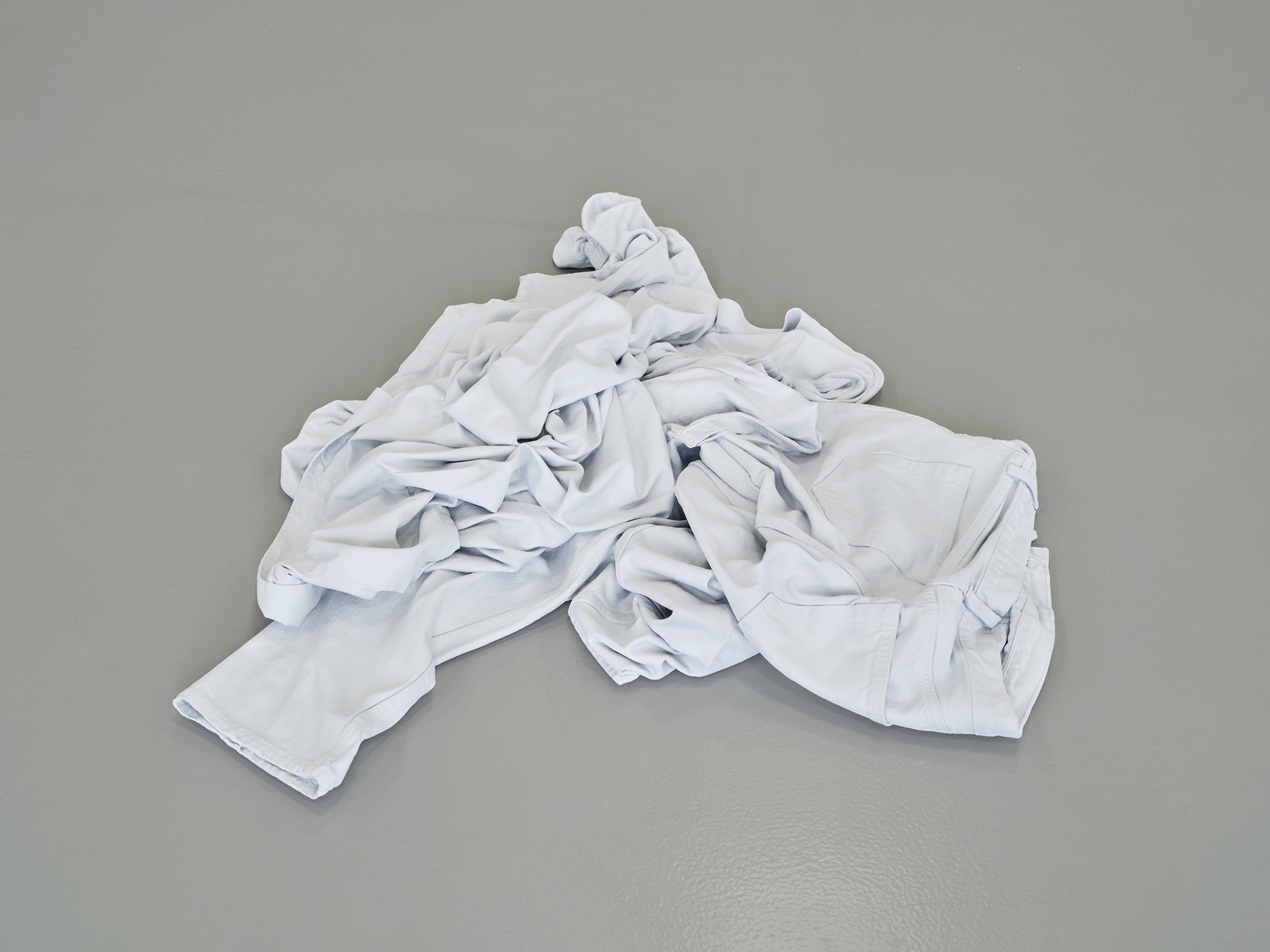
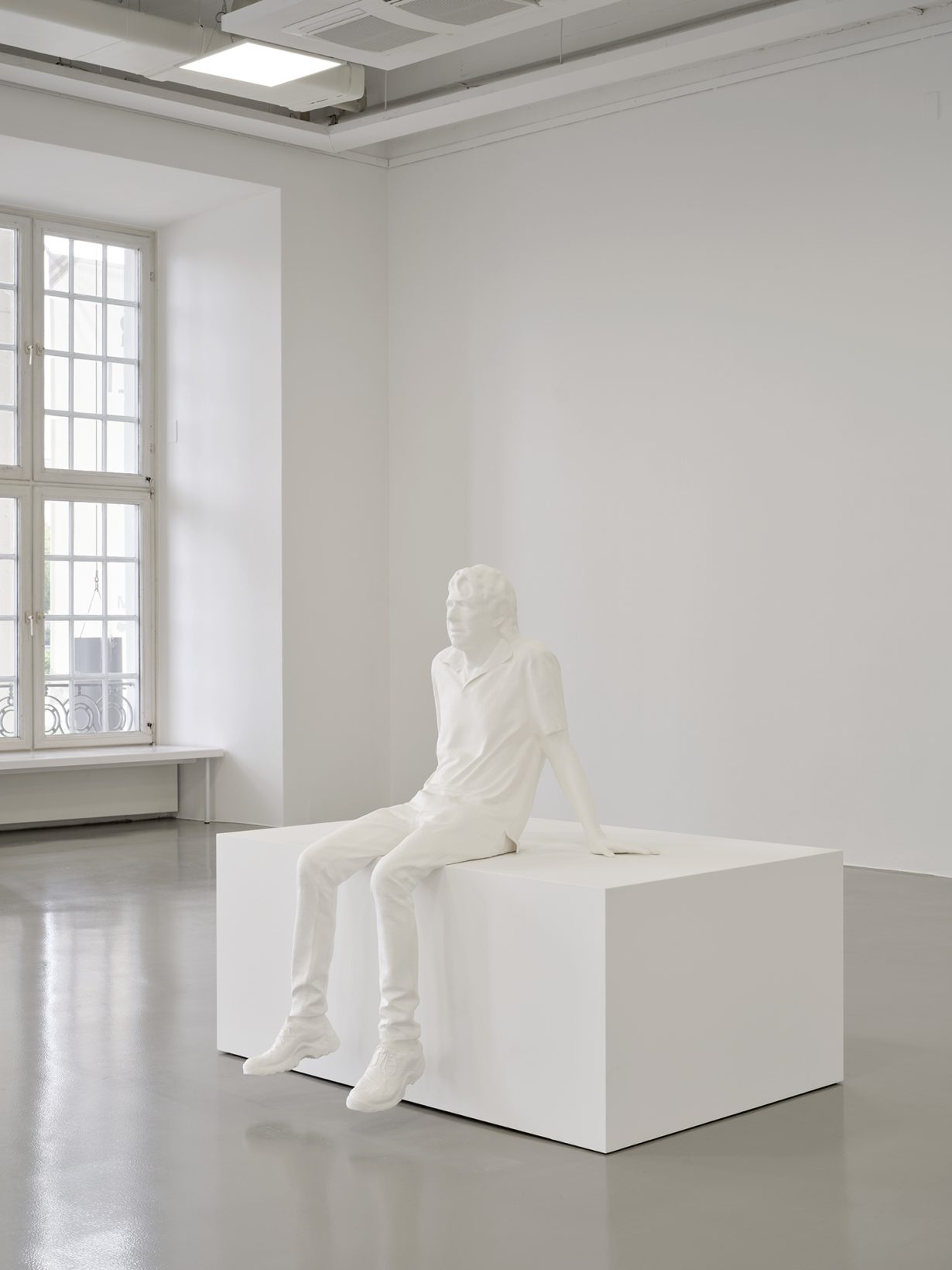
Clothes Pile (2020) – placed, cheekily, a few metres from the naked figures in Oh! Charley… – is exactly what it sounds like, made from aluminium and (you’re going to hear these words a lot) painted white. In the same room, Return to the One (2020), a lifesize self-portrait in stark white papier-mâché shows an older Charles, sitting and staring at his own orgy. The narrative suggestion, here, is of an older man looking back on more exuberant days, with an easy, slouching resignation. I tried out this perspective two or three times. But with each attempt, the self-referential circuit between the sculptures seemed too tight, throttling the potential for humour. (The room’s rigid layout doesn’t help: the three sculptures arranged in a line down the centre of the space, as if to prevent viewers from brushing against the walls.)
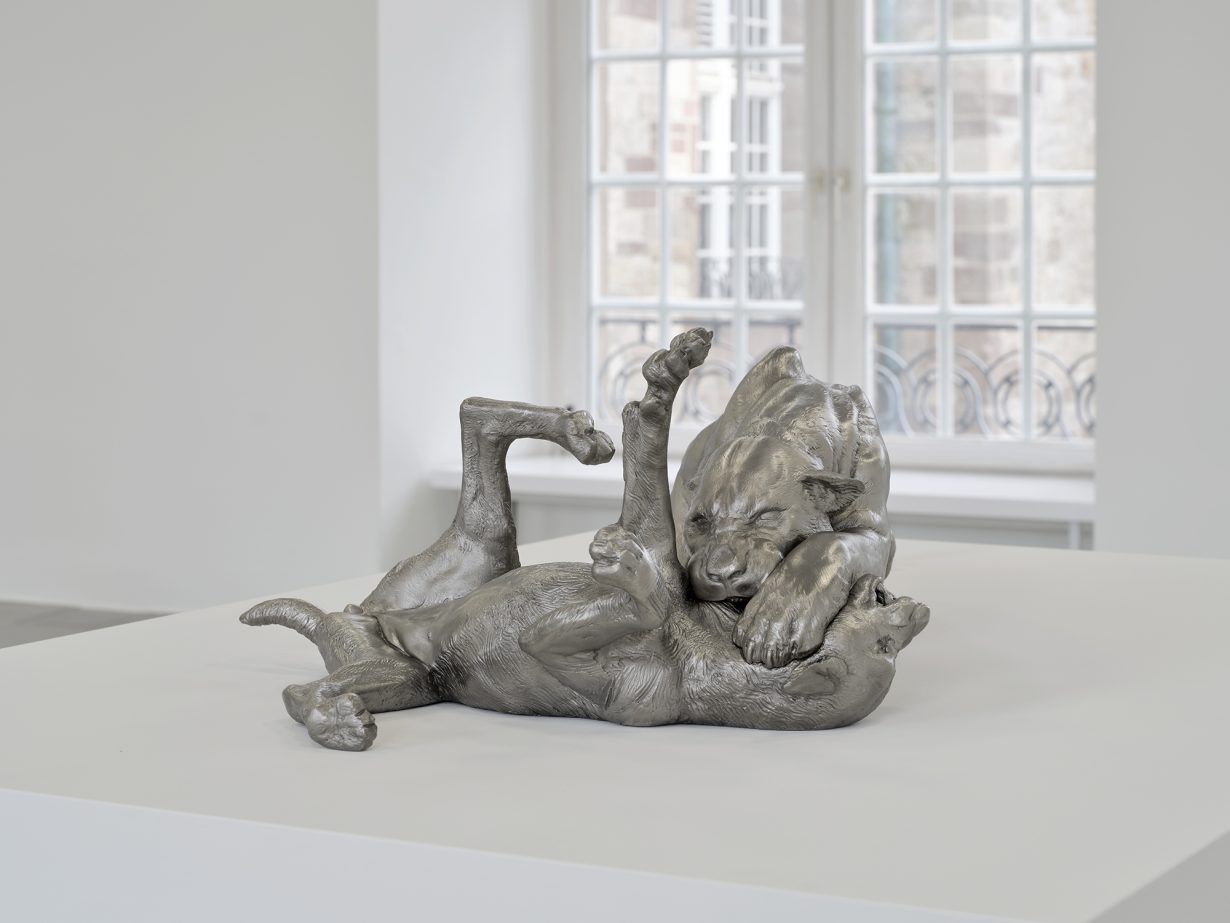
During his bachelor’s degree at the University of Iowa, Ray was influenced by sculptor Roland Brener, a pupil of Anthony Caro. Looking at Oh! Charley… with this in mind, you can see Caro’s trickledown influence, with the interlocking torsos and limbs of those eight bodies as figurative afterimages of Caro’s steel planes and cantilevered bars. In 1979 Ray completed his MFA at Rutgers. Unmistakably, he’s also a creature of 1980s postmodern simulacrum-mania. He bears kinship with Jeff Koons, whose Porcelain Series from the last decade enlarges figurines of Greek gods, aristocrats and animals, in mirrored stainless steel. Using machined aluminium to similar effect, Ray’s show features Mountain Lion Attacking a Dog (2018) as well as an oversize Madonna and Child (2026) in white-painted carbon fibre. Koons, unlike Ray, benefits from gall, which allows him to convert decadence into self-assured, repulsive humour.
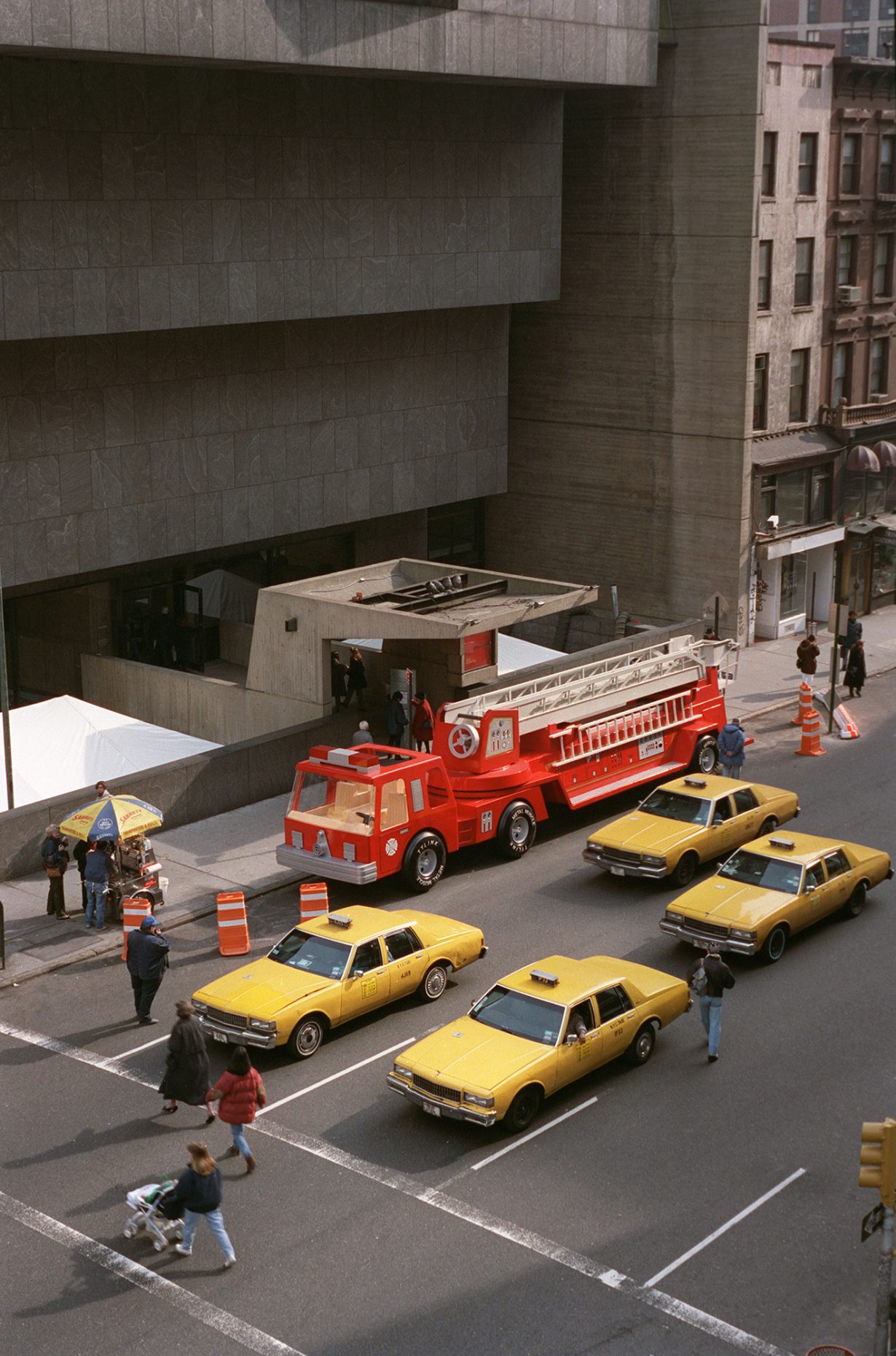
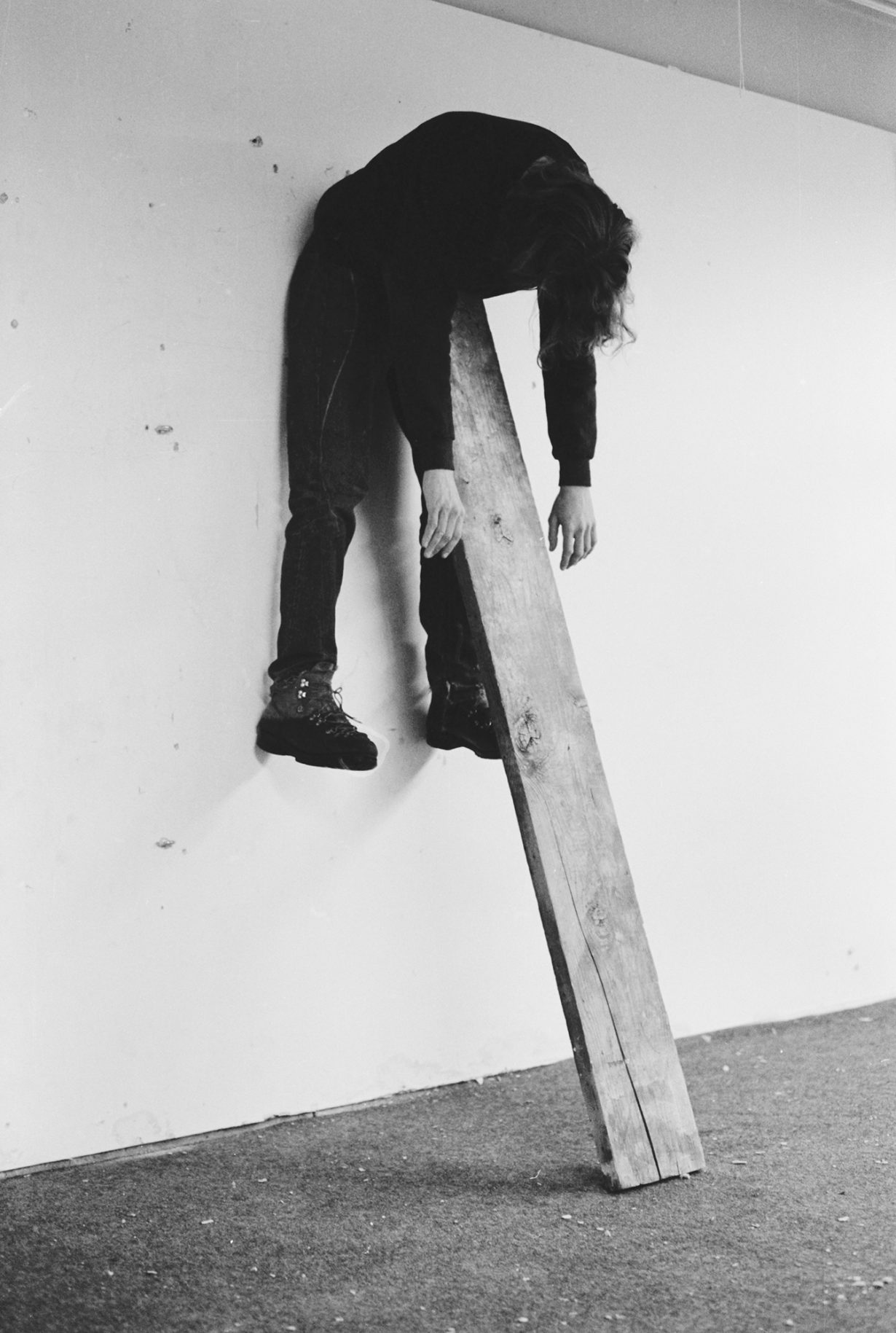
Impish curiosity, prankster wit and crystal-clear vision charged Ray’s best works, none of which, however – excepting the aforementioned – made it to Kassel. Firetruck (1993), a children’s toy enlarged to life size, was once parked on Manhattan’s Madison Avenue, outside the Whitney. Since 1981 Ray has taught at UCLA, and Firetruck shares the puerile humour of LA’s best pranksters – see the somewhat Ray-ish Sweet Brown Snail (2007) by Paul McCarthy and Jason Rhoades, for example, a toy snail enlarged to elephant size and installed outside Munich’s Transit Museum. Despite being simple ideas – cheap tricks, even – these pieces are very hard not to love. Ray’s student work, meanwhile, shows the piercing humour he’s capable of without blank-cheque budgets. Plank Piece (1973, not on show) consists of two old photographs, in which Ray hangs perilously, as the titular plank pinches his body against a wall. You can almost feel wood punishing rib, air leaving abdomen.
By the time I first saw Ray’s work in the flesh, in 2015, there were signs that glitz was blanching irreverence. In that year, New York’s Matthew Marks Gallery devoted a big room to Baled Truck (2014), a stainless-steel, three-metre-long facsimile of a compacted truck. Then a master’s student at Rutgers, I felt a quasi-familial identification with Ray. But as I stood over the mangled wreck, waiting for its aura to arrive, I was perplexed. Around that time I’d been experiencing sudden attacks of depressed nausea in other wealth-saturated Chelsea galleries. In hindsight I understand these moments as physiological responses to the awareness of being pulled into a black hole of abject wealth and financial speculation by art, a force that had once been inspiring, magical, freeing. Ray’s exhibition in Kassel triggered flashbacks to those disenchanted moments – an effect amplified, no doubt, by my anticipatory excitement at seeing it.
This unfortunate result seems not-incidental; a central principle of Ray’s work, emphasised in interviews and profiles, is that material communicates. For art historians, an interesting question may entail finding the precise moment in his career when a deliberately engineered alienation effect, which caused viewers to rethink their perception of reality, was eclipsed by a more simplistic and vulgar kind of alienation, decisively separating the sculptures from the lifeworlds of most people. Whatever its specific time frame, the tipping point surely had a lot to do with money. An original Ray will set you back a chilly $3 million. No wonder that the museum attendants in Kassel seemed so eager to keep me company.
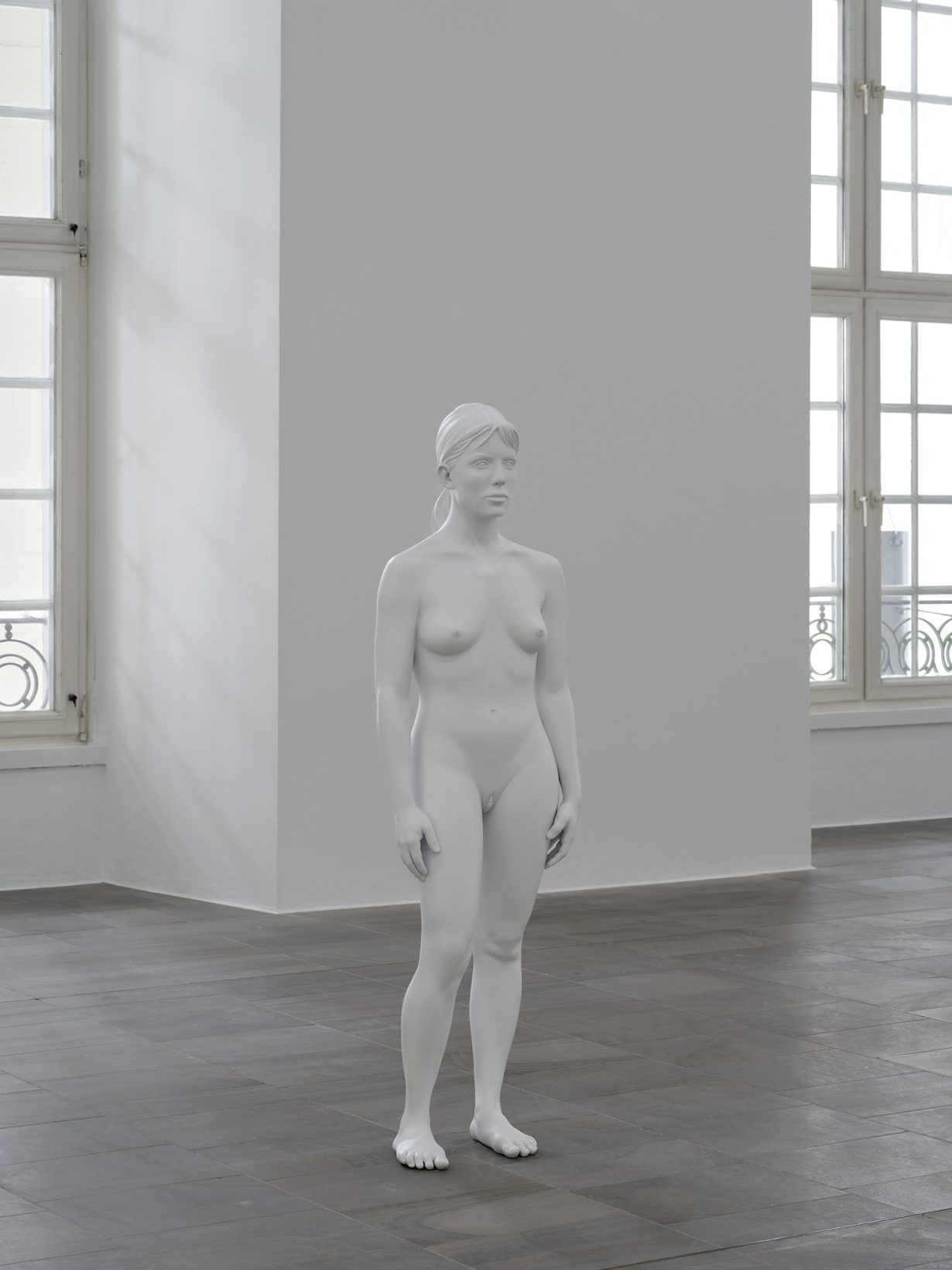
On paper, the show’s most intimate work should be Aluminum Girl, a slightly undersize rendition of Ray’s now-ex-girlfriend Jennifer Pastor. Pastor stands there naked, milky white and, for some reason that I’d rather not think about, void of expression, or pupils. The same is true of Boy with Frog (2009), in which an unclothed young boy dangles said amphibian from his outstretched hand. Here, as with Aluminum Girl, a conspicuous discrepancy opens between the affective potential of the sculpture and the flat effect of its execution. In an abstract sense, the image of a boy playing in nature is moving. It has become all the more so as children, once left to their own devices in nature, are lured into screens, to deleterious and tragic effect. Deep down, a sensitive disposition inhabits both Boy with Frog, and Aluminum Girl, albeit muffled by over-production and faux ethereality (more satin white paint).

Peter Schjeldahl opened his 1993 Parkett profile of Ray with a fancy sailboat outing, before praising Ray’s ability to fool perception using tricks of material and surface. His case study was Ink Box (1986), a steel cube filled with ink, whose glossy surface so closely mimicked the box’s dark metal sides that visitors ran their fingers over it, before cleaning them on the gallery walls. Subsequently, it seems, Ray became obsessed with the power of specific combinations of substance and form to baffle cognition. I imagine this belief growing over the years like an invasive plant, pushing out the other qualities which enspirited his work: colour, touch, humour, kink.
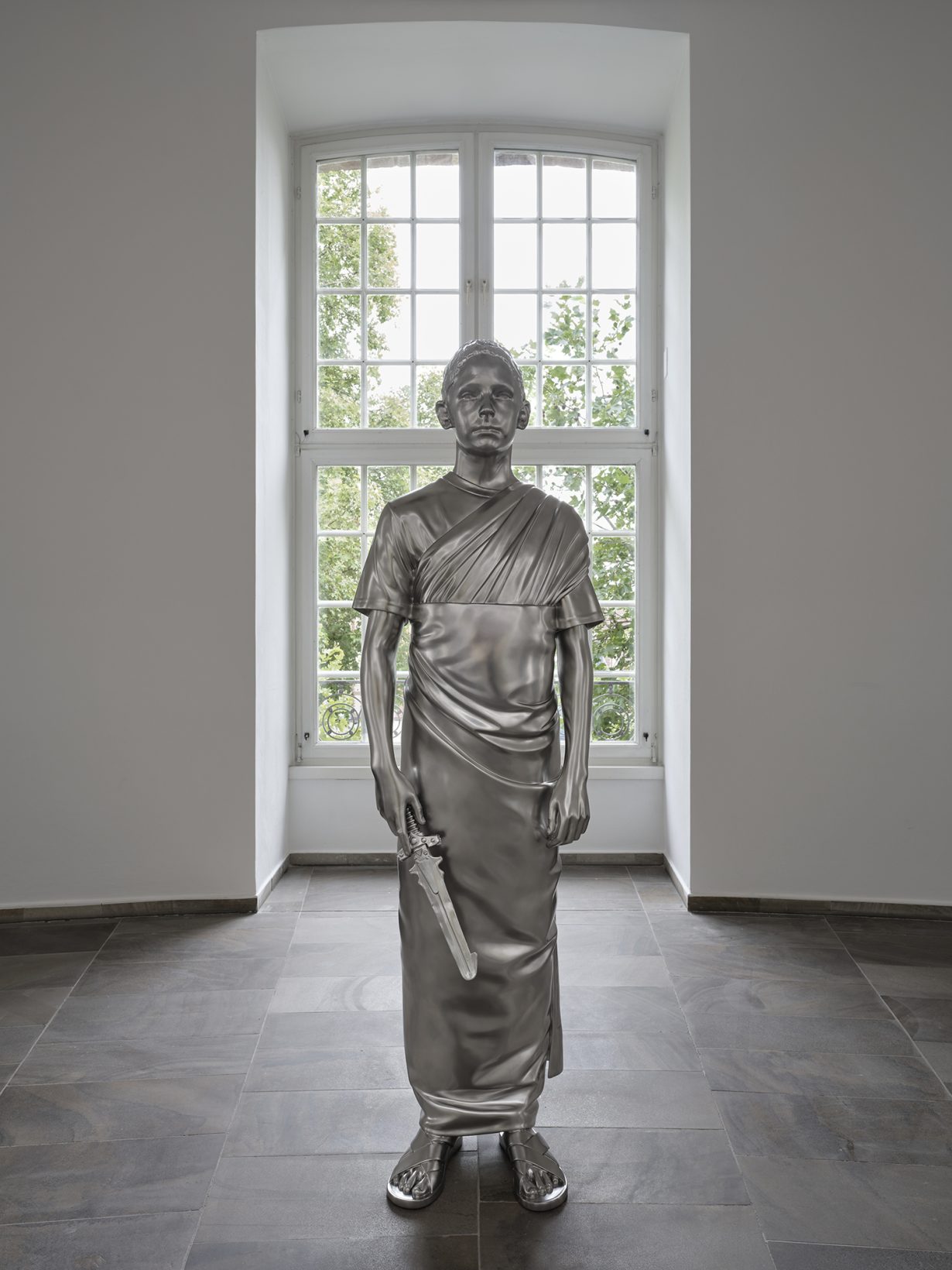
Of the newish works in Kassel, the only dazzler was School Play (2014), a slightly oversize recreation of a dagger-wielding boy, again stainless steel, this time matt. I thought I caught a trace of handwork in the form of several jagged patterns on his head. Excited, I pointed them out to a gallery attendant. “Yeah,” he replied, politely bored, “those are marks left by the machine that made it.” This situation used to be less troubling; now, it’s become embroiled in a high-stakes question of what art stands for. Through the 1990s and 2000s, machine fabrication felt like a welcome negation of the artist’s hand and thus sentimentality. But with AI oligarchs having supercharged the machinic mimicry of human creativity, things have changed. The generous read of this situation is that Ray’s art is incisively mirroring life. But he isn’t that guy. He lacks Koons’s evil genius.
Ray does do masterful impressions of European power statuary. Aesthetically speaking, the aforementioned Madonna and Child isn’t as far as Ray might like to think from the marble statue of Friedrich II, Landgrave of Hesse-Kassel, that faces the Fridericianum. The stone lion that rests around the corner from this figure could be a cousin of Ray’s miniature concrete bull (Bull, 2026). As sculpture, Flounder (2021) has no more life than the fish it pictures, expiring on a cube, in darkly patinaed bronze, but its subject’s small vulnerability is a breath of fresh air. In Tomkins’s profile, Ray is eloquent on time and art – how the former alters the latter’s meaning. It’s true. A couple of decades ago, these conservative sculptures might have enjoyed the assumptions of postmodernism: an abiding, protective irony. Not anymore. The necessary alliance of this profoundly expensive art with the gilded class flattens satiric distance and reveals macabre structural loyalties. At a certain point, the giant brick of custom-milled stainless steel that an artist has plopped in the gallery might not be so different from a silver brick; at a certain point, reactionary statues might just be reactionary statues, no matter how freaky and free, deep down, their maker is.
A poster for the exhibition shows Ray alone in his studio. The 1990s have just begun, and the artist is working on his one-man orgy, kneeling amid half-finished body parts, long before the 15 assistants, the addiction to milled steel and white paint. The scene is probably staged, but who cares. Like a model-train builder, Ray ponders his handiwork and grins. This is the Charley that gets me going.
Charles Ray is on view at Museum Fridericianum, Kassel, through 3 January
From the October 2026 issue of ArtReview – get your copy.


