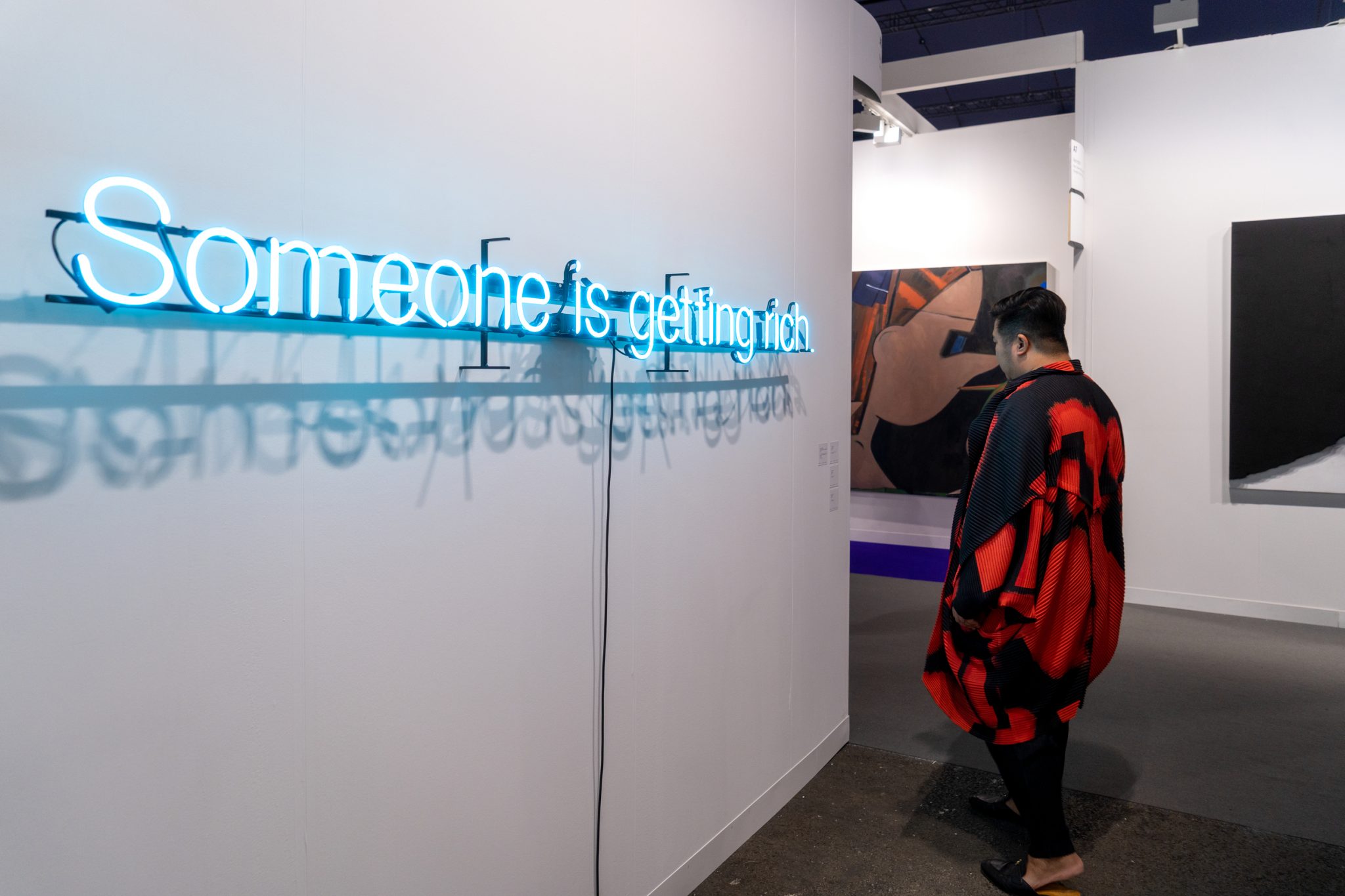
115 new public art installations are planned for Riyadh City through 2026 and beyond
Riyadh Art’s Permanent Collection continues to expand across the city, extending a model of public art that operates at the scale of the urban environment rather than within a defined cultural district. A further 115 works are planned through 2026 and beyond, adding to the 75 already installed across the capital.
One of the largest public art initiatives of its kind, Riyadh Art, led by the Royal Commission for Riyadh City and launched in 2019, distributes works across transport corridors, plazas, and urban spaces, embedding artworks within the rhythms of everyday movement and positioning the city itself as the primary site of encounter.
The collection develops through a combination of newly commissioned works and the acquisition of existing pieces, bringing together contemporary production with earlier artistic practices. This approach allows it to operate across different temporal registers, placing recent commissions alongside works that carry historical and cultural significance.
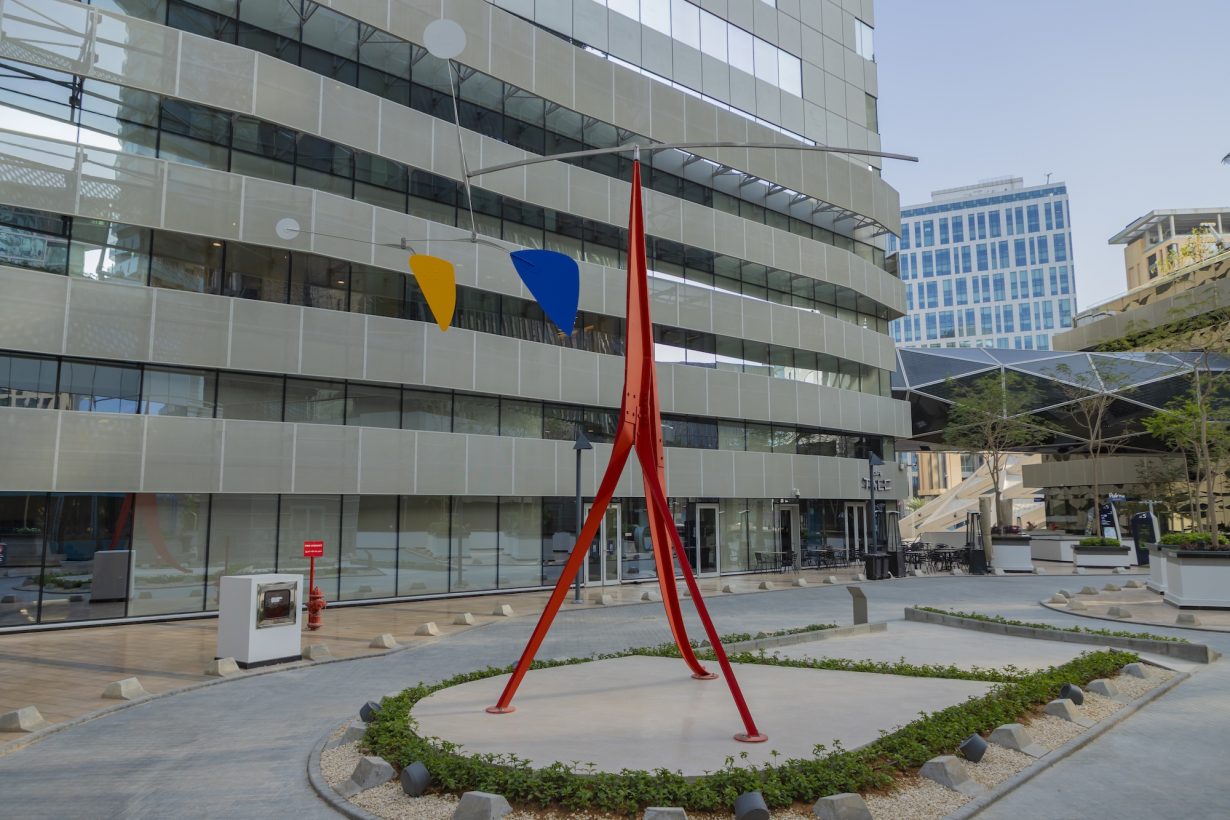
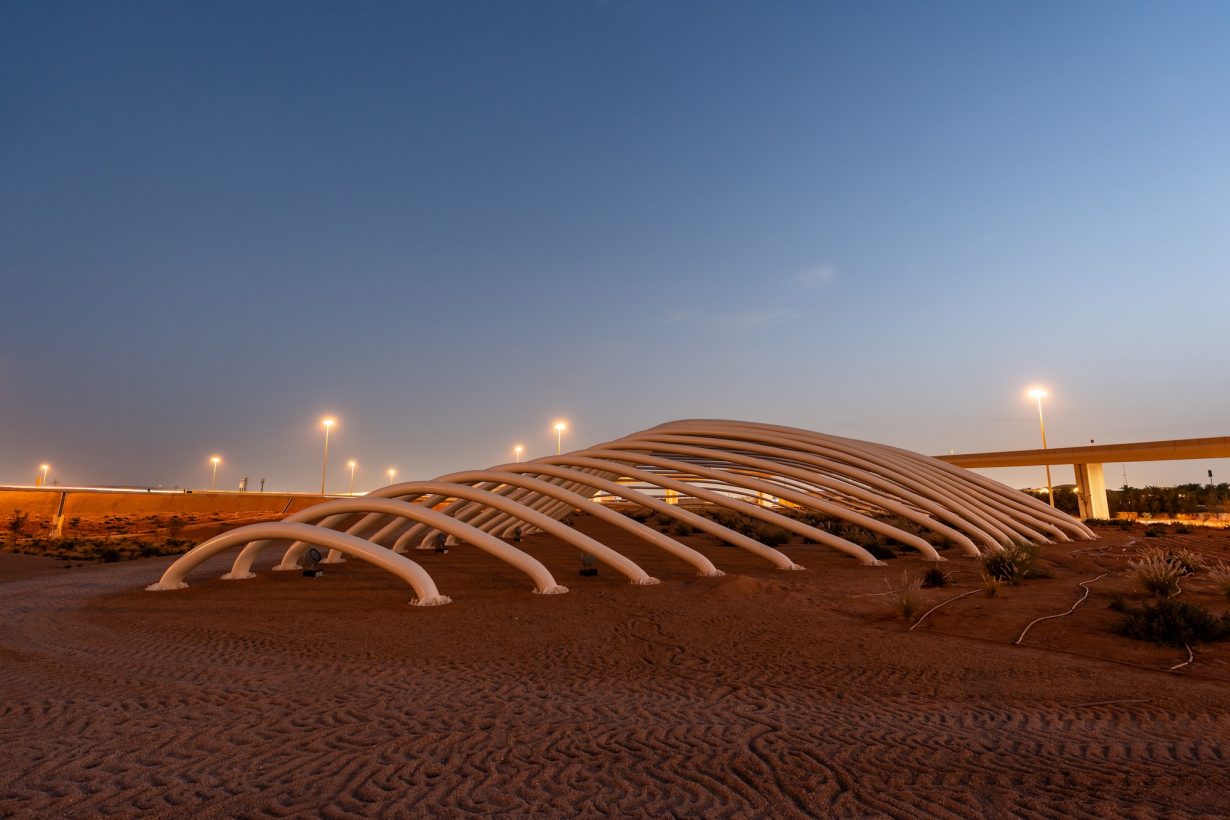
The Permanent Collection brings together artists working across a range of sculptural and conceptual practices, including Alexander Calder, Anish Kapoor, Jeff Koons, Giuseppe Penone, and Ugo Rondinone, alongside Saudi practitioners such as Zaman Jassim and Mohammed Al Saleem. The selection spans minimalism, conceptual sculpture, and large-scale public interventions, situating local practices within a broader international context.
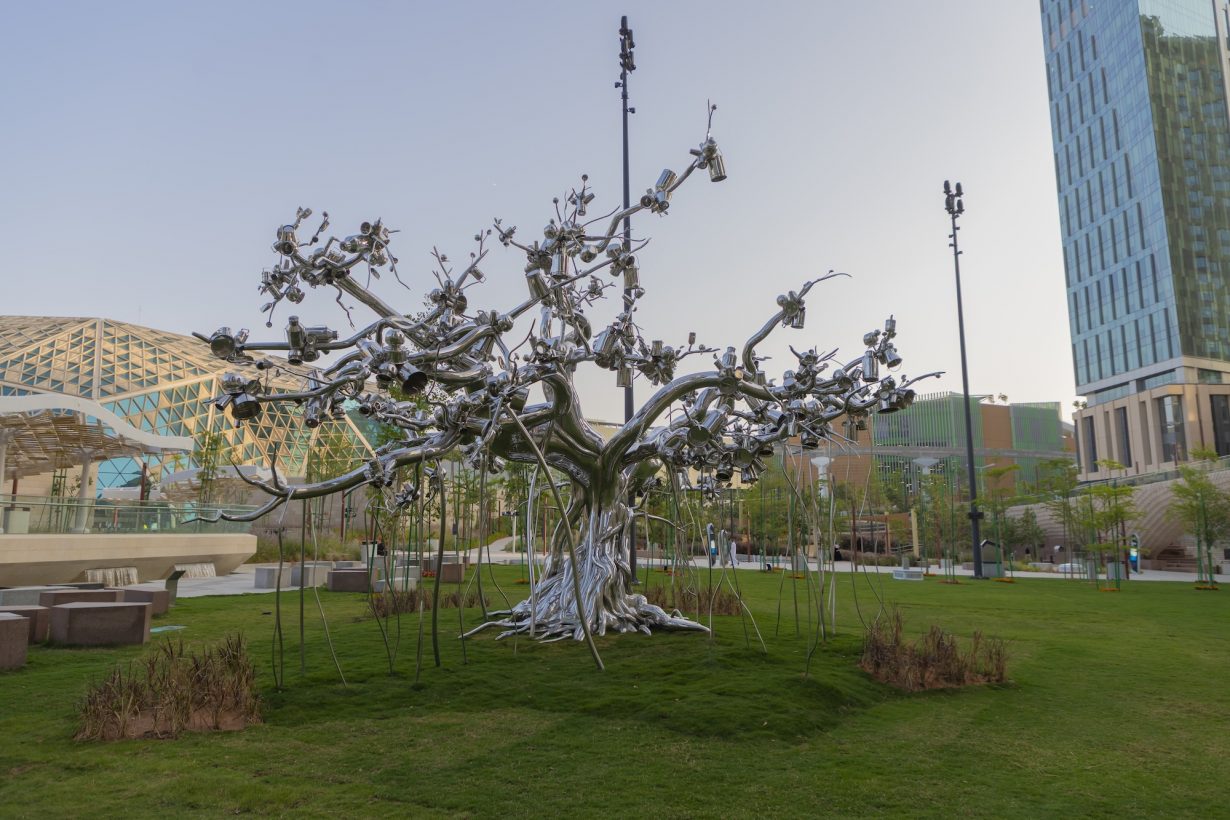
Recent installations include Calder’s Janey Waney, a large-scale standing mobile, and Phase of Nothingness by Nobuo Sekine, which emphasises material restraint and spatial balance. Works such as Giuseppe Penone’s In the Balance engage with processes of growth and transformation, while Subodh Gupta’s Family Tree draws on everyday materials to explore memory and shared cultural references.
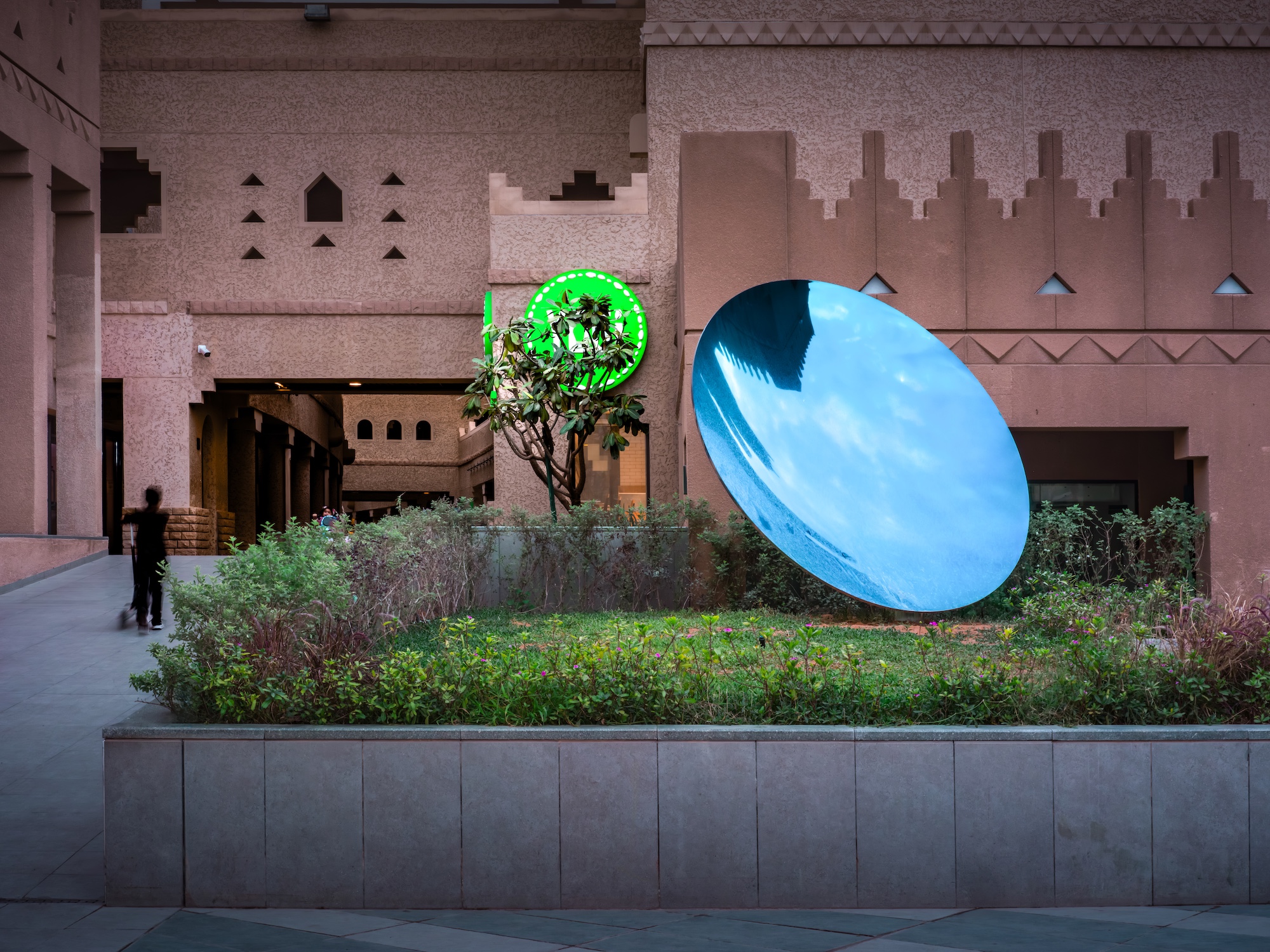
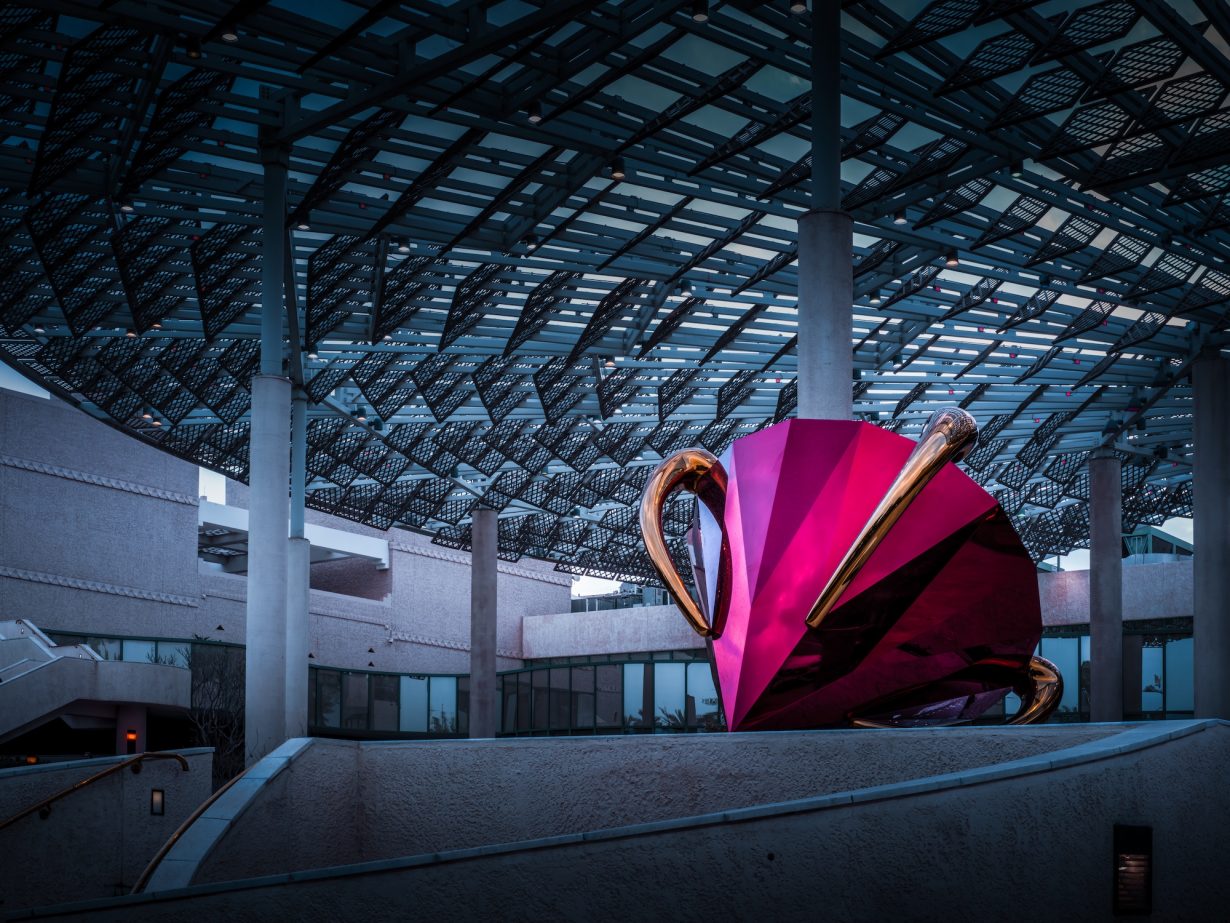
Other works extend this engagement with movement and perception. Angelo Bonello’s Run Beyond activates a crossing point through light and repetition, while Ahmed Angawi’s Untitled integrates geometric form and sound within the urban environment. Zaman Jassim’s Golden Dunes responds to the scale and flow of the surrounding city, while works by Jeff Koons and Anish Kapoor use reflection and surface to actively register and distort their surroundings. Across the collection, artworks shift how public space is experienced, operating not as isolated objects but as part of a wider spatial system.
“Public art operates within the rhythms of daily life,” said Bader Shenafi, Senior Director of Riyadh Art. “Each work responds to how people move through the city and gradually becomes part of public life.”
The collection also incorporates works by Mohammed Al Saleem (1939–1997), a foundational figure of Saudi modernism whose practice explored landscape and abstraction. Created in the 1980s and recently presented at Desert X AlUla, his sculptural works have been acquired and restored for permanent installation, bringing an earlier moment of Saudi modernism into dialogue with the present.
A further group of monumental, site-responsive works will be introduced along key urban routes through 2026, following an international competition that brought together artists including Manal AlDowayan, El Anatsui, Janet Echelman, Anselm Kiefer, Idris Khan, and Ryoji Ikeda.
As the collection expands, it continues to redefine how art is encountered across Riyadh, not as destination objects but as part of the city’s evolving urban environment.
For more information, visit the Riyadh Art website.