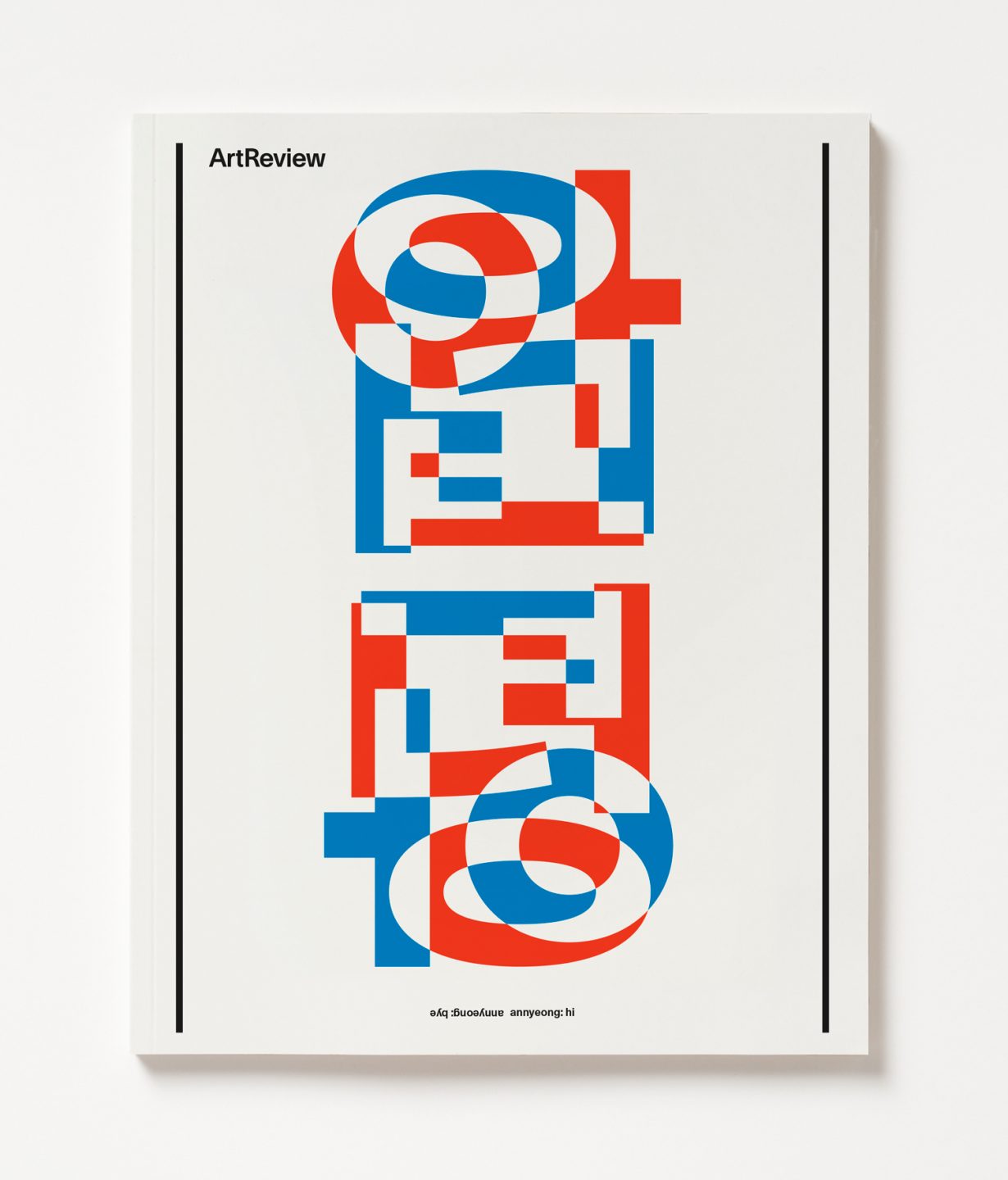
This special publication celebrating contemporary Korean art, supported by Korea Arts Management Service, is available for free with the September issue of ArtReview
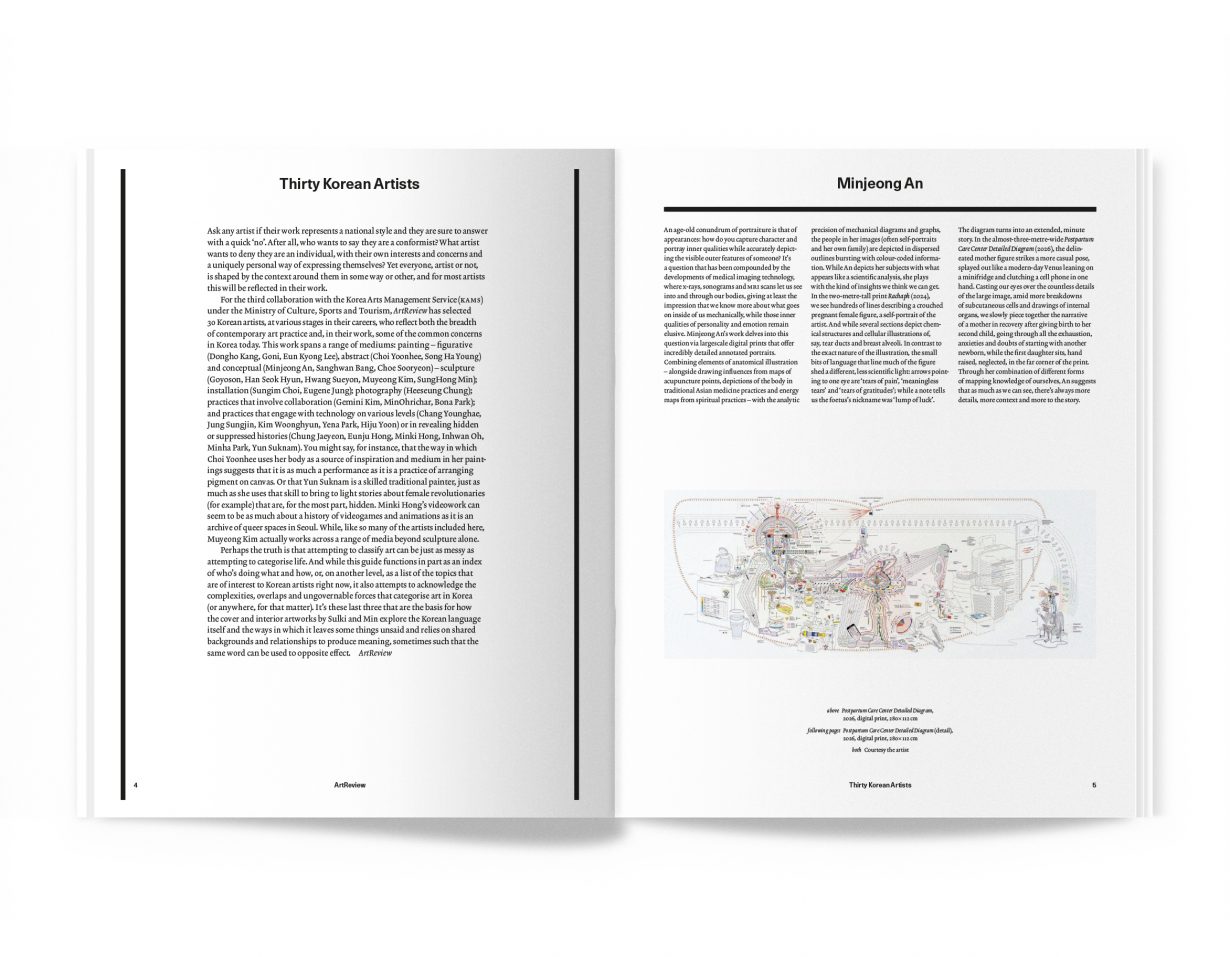
Ask any artist if their work represents a national style and they are sure to answer with a quick ‘no’. After all, who wants to say they are a conformist? What artist wants to deny they are an individual, with their own interests and concerns, and a uniquely personal way of expressing themselves? Yet everyone, artist or not, is shaped by the context around them in some way or other, and for most artists this will be reflected in their work.
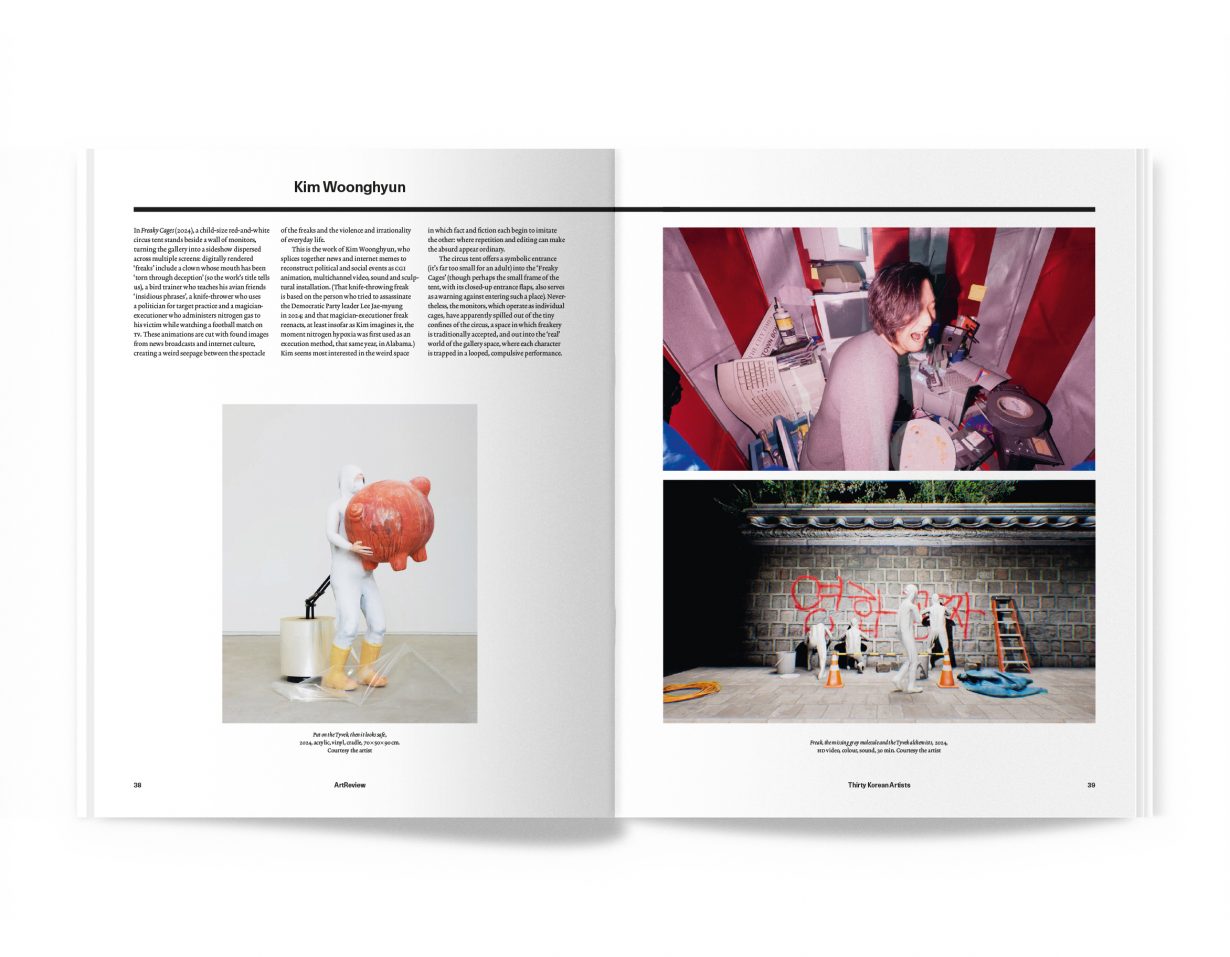
For the third collaboration with the Korea Arts Management Service (KAMS) under the Ministry of Culture, Sports and Tourism, ArtReview has selected 30 Korean artists, at various stages in their careers, who reflect both the breadth of contemporary art practice and, in their work, some of the common concerns in Korea today. This work spans a range of mediums: painting – figurative, abstract and conceptual; sculpture; installation; photography; practices that involve collaboration; and practices that engage with technology on various levels or in revealing hidden or suppressed histories.
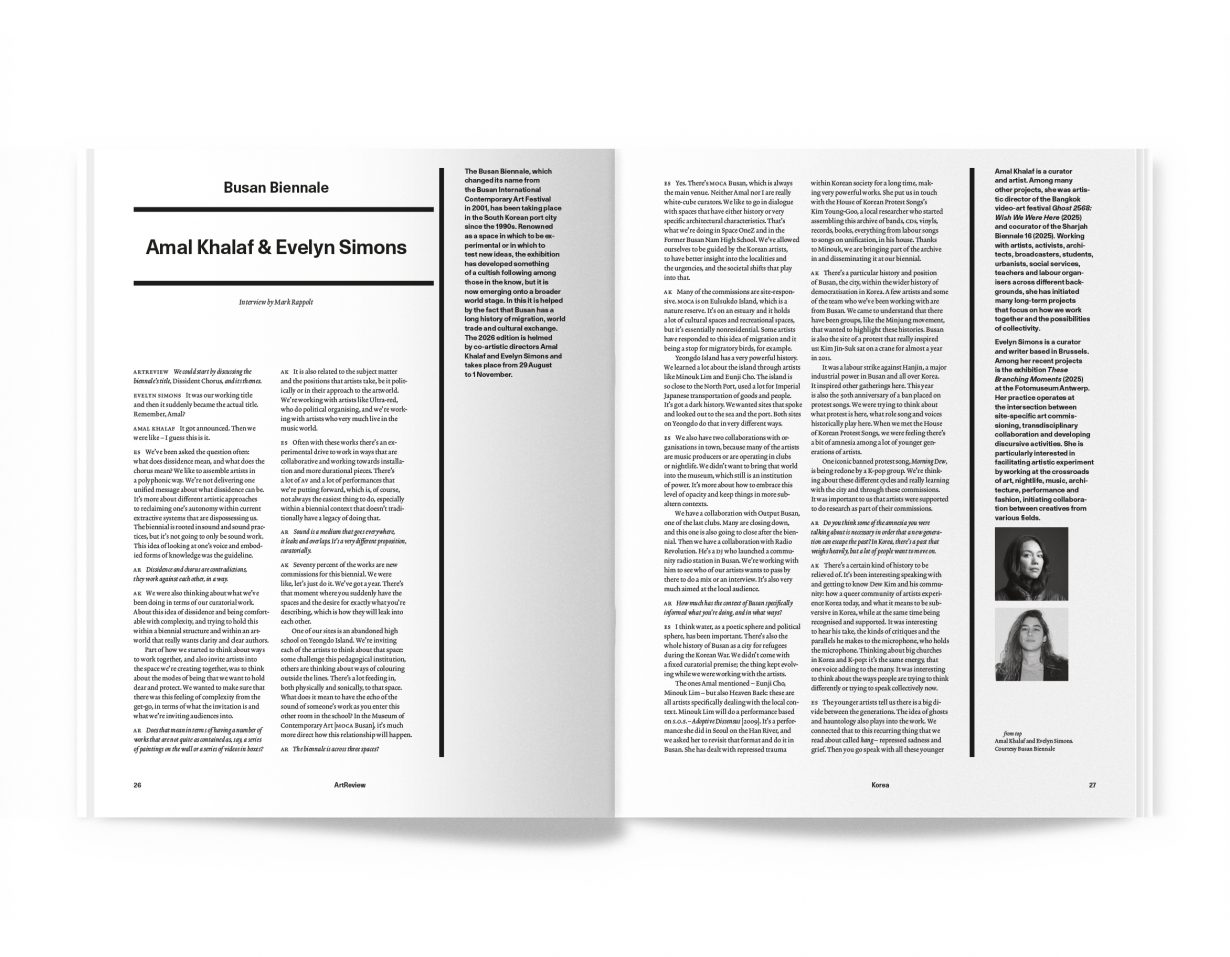
Exhibitions – and particularly largescale biennials – have the (often unenviable) task of holding all of the above together: bridging differences, creating distinctions, causing frictions. ArtReview editor-in-chief Mark Rappolt speaks with Busan Biennale co-artistic directors Amal Khalaf and Evelyn Simons, whose presentation Dissident Chorus explores what “being comfortable with complexity” might look like; and later with Gwangju Biennale artistic director Ho Tzu Nyen and curators Park Gahee & Brian Kuan Wood, for whom their edition, You Must Change Your Life, resembles, in various ways, something like “the completion of the fragment”. Ho, in his artist and curatorial practices, found himself “construct[ing] a series of parameters, and us[ing] them to generate something new”. Perhaps complexity and division are, in art, cousins.
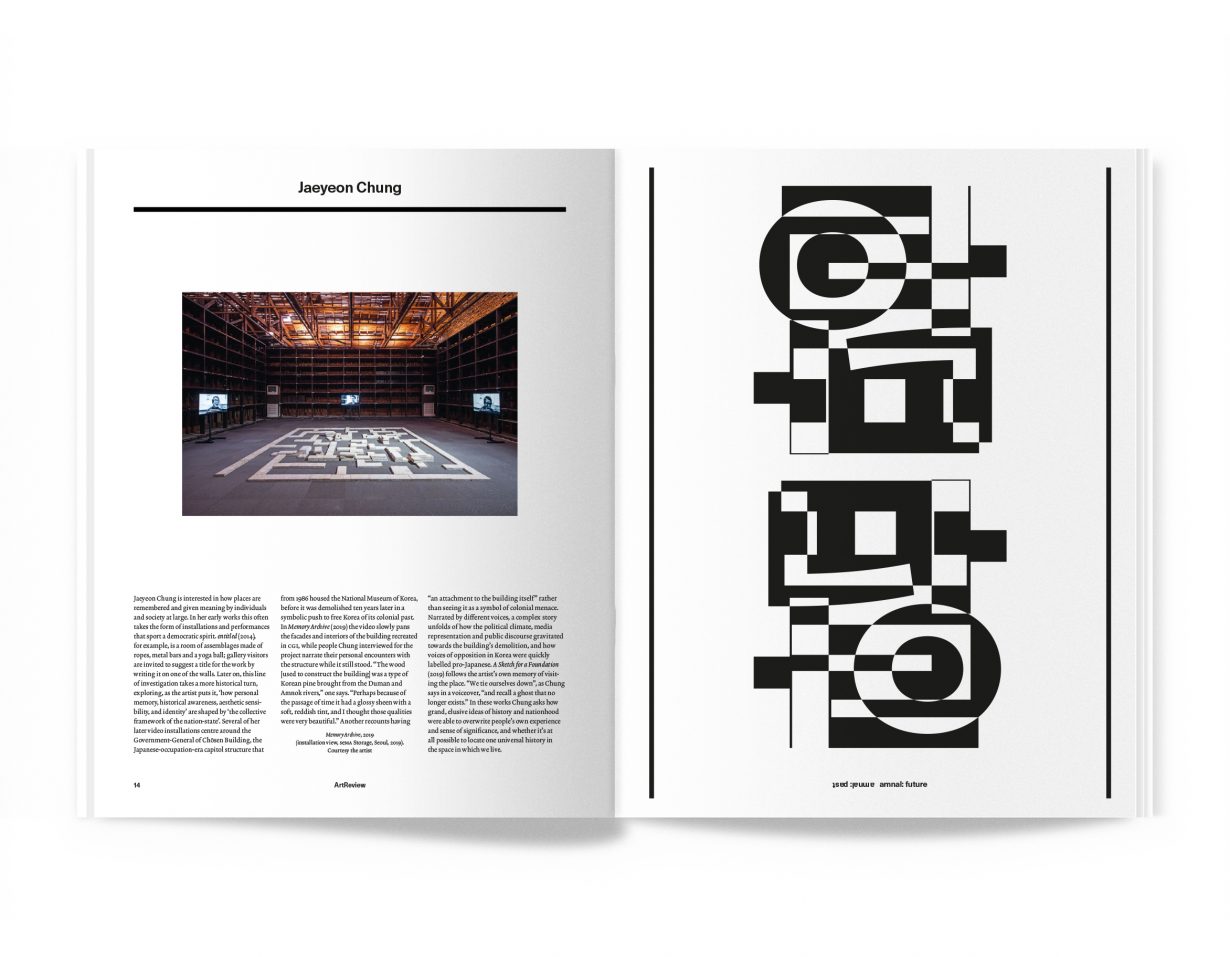
Or perhaps the truth is that attempting to classify art can be just as messy as attempting to categorise life. And while this guide functions in part as an index of who’s doing what and how, or, on another level, as a list of the topics that are of interest to Korean artists right now, it also attempts to acknowledge the complexities, overlaps and ungovernable forces that categorise art in Korea (or anywhere, for that matter). It’s these last three that are the basis for a project by Sulki and Min, appearing on the covers and in places throughout the publication, that explores the Korean language itself and the ways in which it leaves some things unsaid and relies on shared backgrounds and relationships to produce meaning, sometimes such that the same word can be used to opposite effect.
The ArtReview Korea Supplement, supported by Korea Arts Management Service, is available for free with the September 2026 issue of ArtReview