“Do not fear someone else’s power. In fact, step into your own. How do you write yourself into the universe? Make it big”
Nicholas Goodly’s second poetry collection, Star Power (2026), is an everyday manifesto for Black queer joy. Exploring basic desires – fame, fortune, sex, attention – the poet peacocks multiple personas through frothy and at times dejecting imagery, determined to embody what the title of the collection promises. Goodly’s tongue-in-cheek tone brings focus to the absurdity of everyday demands and the mundane habits that help us accept them. Star Power captures Goodly’s experimentation with glamorous personas, and their ability to ‘read’ a Black queer act of radical and unapologetic critique. Writing about celebrities such as musicians Grace Jones and Thundercat, Goodly’s poems question how to mirror their influence while not compromising authenticity or honesty. In poems like ‘Happy Black Genius (for Thundercat)’, Goodly writes, ‘He puts on a spectacular show with no misdirection. He is a confessional poet without embarrassment. I want to chase that uninhibited diva feeling. I want to be right about everything all the time. I want the sun beneath my feet.’ Goodly invites the reader to question why such wants are some of our most common dreams. What are the pressures at play in our world that make fame, fortune and attention such definitive signs of success and freedom? In the interview that follows we discuss poetic form, artistic pressure, the celebrities that appear in the collection and what the world can learn from Black queer becoming. Released in June, Star Power shares the survival tactics found in queer Black life with all readers, showing how we are all bound together through desire.
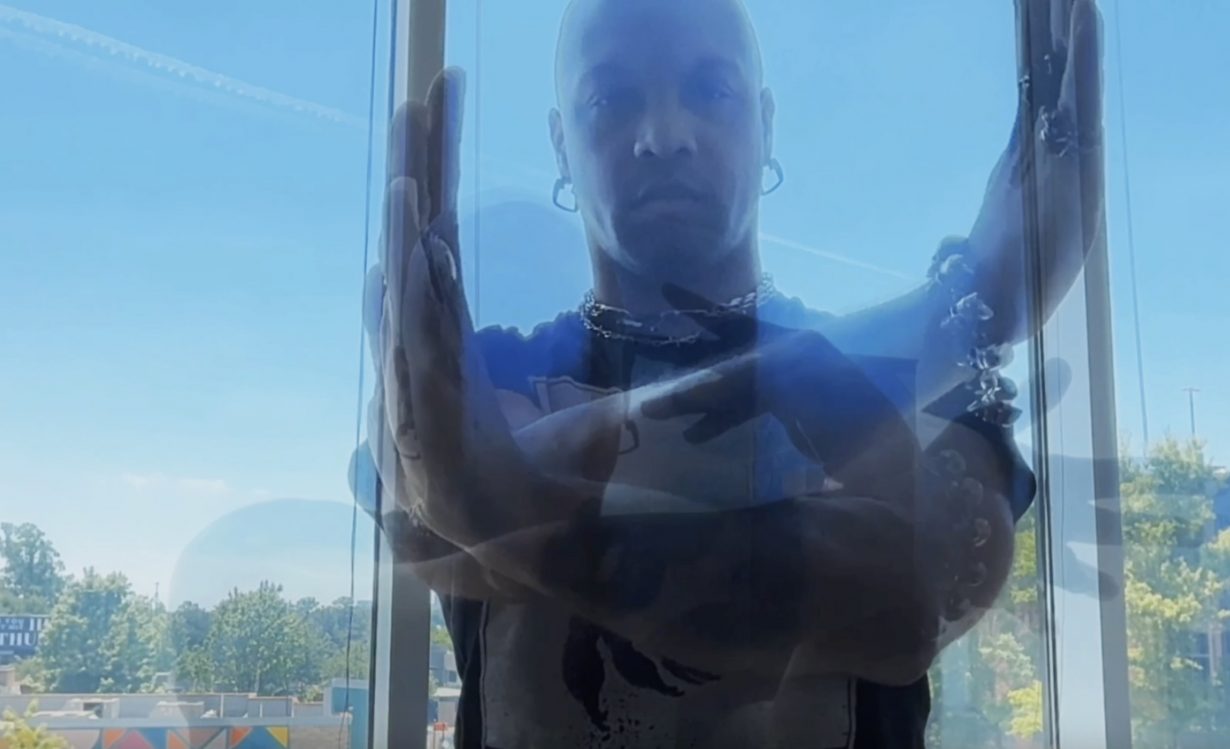
Ass to Ass
ArtReview The poems in Star Power push against the content expected of certain poetic forms. How does the book address literary mastery, needing to perfect form as proof of capacity?
Nicholas Goodly The first thing I think about is defiance. I’m turning these poems into mini-workshops for myself, as I am submitting them into writing workshops for critique. Often in workshops, I was the only Black student in the classes. I had to ask myself how I can really push what I want these people to read. How do I go beyond what I expect out of myself? What can I be so bold to bring into this space? How do I push myself to be a version of myself that makes my classmates uncomfortable? That was a loose kind of prompt for some of these poems. The idea of audacity, and how I can be audaciously vulnerable. In traditional poems vulnerability looks like writing about a breakup. I was like, no. What’s really the thing I don’t want to say to myself or to this room?
AR You’re also pushing against this expectation of trauma appearing in Black poetry. We’re trained to do it in our spaces, to share our most traumatic moments as some sort of climax or artistic place to start.
NG There is a poem in Star Power called ‘Who Needs Porn in a Moment Like This?’ It’s a haiku, but it’s about two fireflies strapped ass to ass. And I decided it was my version of a pastoral. I decided to use language that is immediate to me that comes directly from my mouth, and I’m not going to explain. I want to employ form in a way that is not concerned with any imagination other than my own, unconcerned with gaze. And that frees up so much. This book is such a grand version of me. It is an interesting thing to live as the person who wrote it and own up to these larger versions of myself. I have to live up to this ‘star-ness’. I have to embody that now. I think that’s an exciting challenge that I’ve given myself with this book.
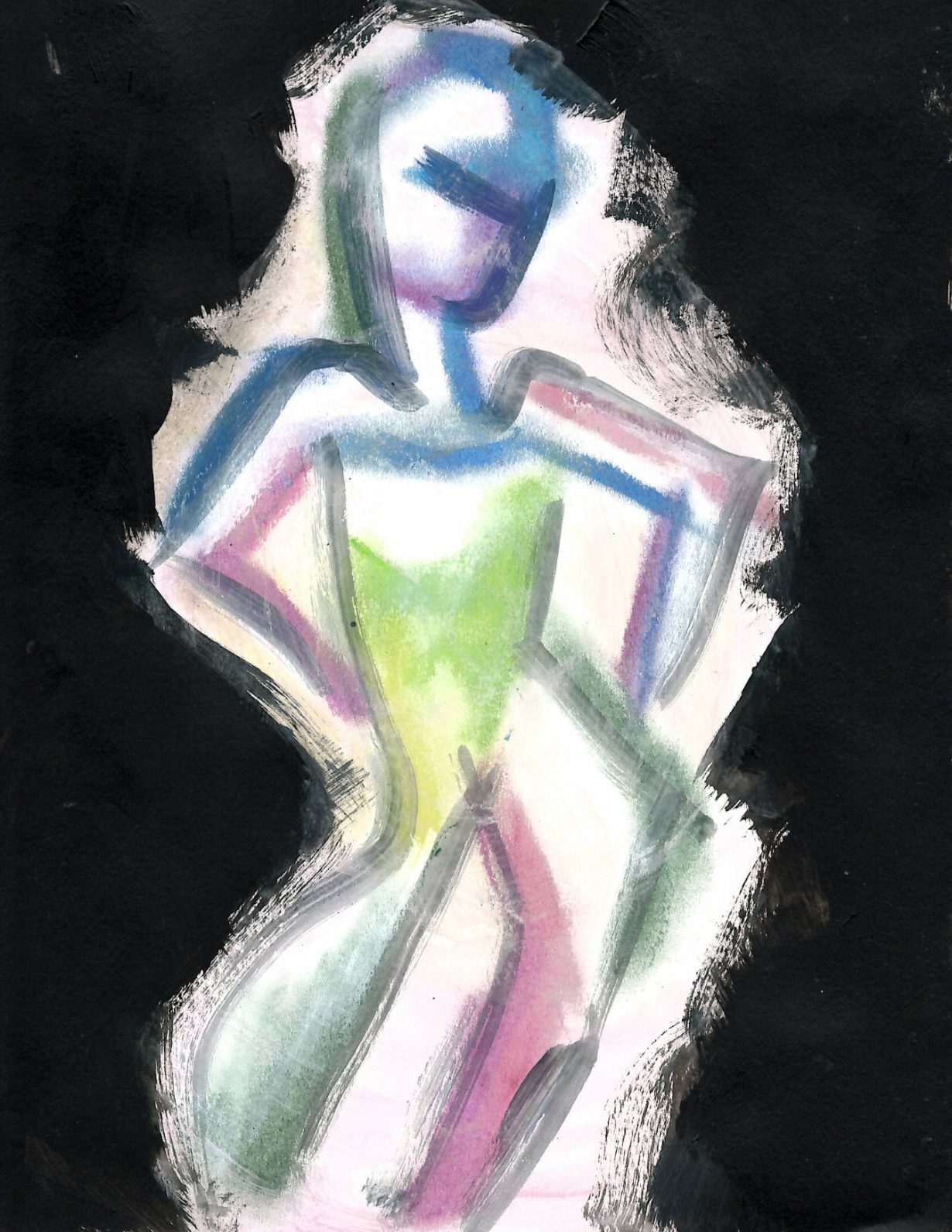
Go Big
AR Star Power is also very funny, which is a hard – but extremely overlooked – skill in poetry.
NG Humour is a trust thing. To be funny around somebody is trusting that they see who you are as a humorous person, but also know that you’re capable of depth at the same time. I feel that Black writers do have to keep our guard up. There is a fear of being that silly self in front of others. It brings into question your complexity or intellectualism.
AR Why Star Power now? It’s really a book about Black queer joy. The insistence about the joy is in poems like ‘Attitude’, in the lines ‘My waistline is a bad number. These curves need room to attitude. A creole starch and Wheaties attitude.’ The turns of phrase and subtle gender play provide a simple celebration of the everyday in a moment where anti-Trans policy and anti-LGBTIQA+ sentiment have serious but ignored consequences in Black communities. Even if it’s just a coincidence being released at this point in time, what do you think it means to the moment itself?
NG The book seems more and more urgent. It demands that you see value in marginalised lives, whether that’s Black lives, queer lives. It’s this demand for space and demand for power, it’s not a malicious force. To be loud, declarative and firm doesn’t have to be a threat. It is really important for readers to see this as a fight to see importance in someone else. I need you to see that my life is as important as yours, is as complex as yours, as multifaceted and rich as yours. And it doesn’t mean that I am taking something away from your life. I really want the world to see that this is a space of abundance. Do not fear someone else’s power. In fact, step into your own. How do you write yourself into the universe? Make it big. Then also just to offer queer joy, first of all for other queer people, and then for people to know that we are a joyful people, we are a celebratory people, we’re not a defeated people at all.
AR There is the repeated motif of reflectivity in the collection: bubbles, fire, mirrors, glitter, rhinestones. How do these images hold Star Power together?
NG My first collection, Black Swim [2022], felt like a heavy water elemental book. I was intentional about working with heat and fire, to spiritually put myself in a different place. The mirrors reference the epigraph, the Essex Hemphill quote, ‘Can invisible men see their own reflections?’ In my writing process I’m asking questions, and a poem feels finished when I see a reflection of myself in the moment. And if I’m making a queer dramatic version of myself, it’s almost like a drag version of myself. I’m choosing to present myself in these concentrated, poetic expressions. I’m thinking almost of drag as this queer way of exaggeration. And this book feels like a celebration, it needs shiny things, it needs glitter, it needs rhinestones. It is the Star Power-ness of it: I’m going to own up to, I’m going to meet that moment, I’m going to match it. I’m going to walk into the sparkly room and they’re still going to turn and look at me. I think about that when I get dressed. I love putting together little looks. In the same way a poem is a concentrated version of me. I put that outfit on, I’m donning that, and then when I walk out of the room and go amongst the world, into the streets, I have to match that moment and keep that fire with me because I’m wearing it.
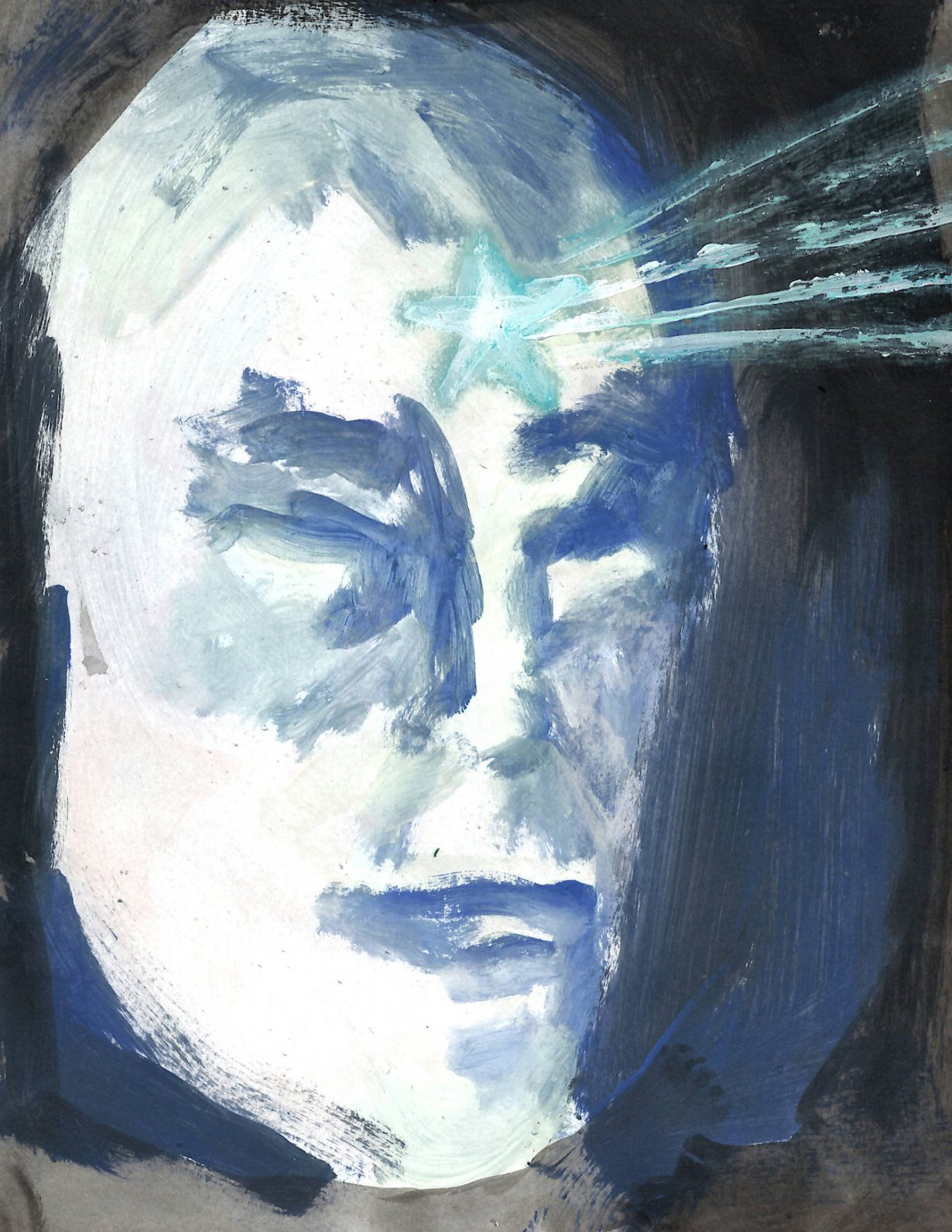
Playing with Expectation
AR In poems like ‘Vantablack’ and ‘Olsen Twin’ you’re offering critiques of the concept of the avant-garde and some of its anti-Black history. You’re offering a read of sorts. Especially in ‘Olsen Twin’ you’re making fun of the idea that literary or artistic authority is often given to people from privileged experiences informed by race and gender. In that poem you write:
it’s a trick of the eye. sparkling types of ice water for dinner. at a home. The others look just like that. Meekness gets you everywhere, and everyone love money and cabbage patch dolls.
NG Someone described the book and they’re like, “This is a shady book.”
AR It is shady!
NG Artfully shady, artfully shady. I want to show that I understand the matrix a little bit. I’m letting other queer people know I’m uplifting all this Blackness and I’m also going to criticise this whiteness that maybe is resistant or reticent to me being in the space of the poem right now. Like in ‘Olsen Twin’ I sneak it into the very middle of the poem using the palindrome form. Playing with a form can invite new things in. Let’s have fun and then poke fun at how I’m going to use this form. Same thing for ‘Vantablack’, I can make a joke and wink at the criticisms I have about the aesthetics that keep me out of certain spaces.
AR For those that are unfamiliar with what ‘read’ means. It is a Black-American queer culture terminology that means a brutally honest, unapologetic critique, a sort of testimony, often of refusal. In ‘Vantablack’ you’re explicit in your critiquing imagery. You write:
unmistakably negro irrevocably ethnic I am critical and ambitious a sheer billowing mass pumping my way into the imperial storehouse a beast that has come back from its death … some art is super white I am chipping at its pillar…
How does this speak to the tensions you’re addressing?
NG I see a lot of play and experimentation from white artists that do not necessarily have the same personal or professional level of stakes. But maybe Black poets have to perform stakes in a way different than whiteness does. So, I’m going to play. I’m going to have my fun. But let me make sure in the same space I can go back and speak something that I can stand behind amongst the play; both things can happen.
AR In Harryette Mullen’s essay ‘Poetry and Identity’ [1996], she discusses her experience transitioning from a poet practising traditional form and expected narratives to being a more experimental poet, and how race and gender determine how her work is received, interpreted and labelled by poetry publishers and even other poets. There is a tendency in the literary world in the US to shut up questions of race and gender and how they shape the entryways into being experimental or avant-garde. You have several poems touching on those same ideas. For example, in ‘Slave to the Rhythm’, you write, ‘Be the Oscar to melanated Wildes, swap spit in pandemonium, deep-tongued in gunmetal. You break the disco bread, finger-licking Dada.’ You capture Grace Jones’s unorthodox self-expression and relate it back to the avant-garde directly.
NG I love Harryette Mullen. It was influential for me to see that experimental side from a Black woman. There is an idea of primitiveness connected with Black experimentalism, there’s an assumption that we’re not coming from the same place of intellectualism when we’re not bringing all these other knowledges to the page. Like we have to prove that we are smart before we get to the feeling part. Maybe I’m playing with that expectation, dismissing our concern for it.
AR There’s also anger. Star Power has a lot of refreshing anger that is often considered crude in poetry if it isn’t beautiful as well.
NG That felt like the riskiest thing that I was doing in the book, showing sadness, depression, trauma. Anger is harder because it’s maybe not as permanent, or that it varies to degrees through time. I was taking risks when I’m showing these more fiery emotions. I’m thinking about Audre Lorde, those fiery angry essays, I felt validated in a way. Because someone who I respect and love and have been so inspired by has felt this too. A lot of the times in these poems – where I’m angry or I am the one that is defeated or I am the one doing the wrong thing – I hope someone’s going to read that and think, Nicholas, who is also capable of all this joy and intelligence and all this beauty, has also been there.
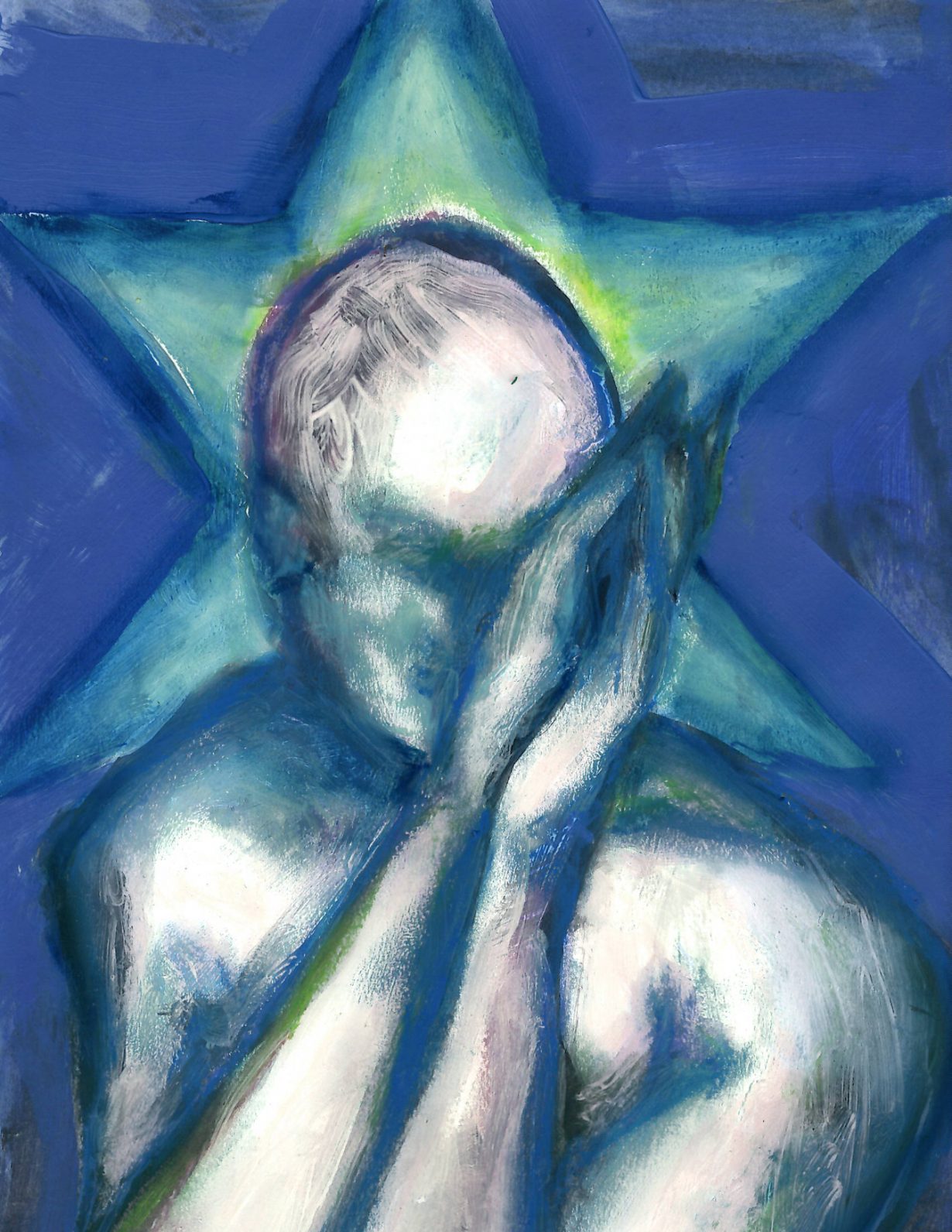
To Love and Be Loved
AR The book also reads like a manifestation and a manifesto for the achievements or success you imagine for yourself.
NG I mean why not ask for fame? Why not ask to be the glamorous one? Why not ask to be remembered and for people to love what I produce? Why not be obvious about that? That is a beautiful thing that I shouldn’t be afraid of. I needed to remove the fear from that. It has a power to it. I’m arranging mirrors to reflect myself, putting versions of myself out there that are true. Darkness and intensity have their own beauty, and I want to meet these selves. Otherwise it would just be darkness for darkness’s sake. All those selves are beautiful even if they’re at odds with each other. You can be a bitch, but you can be capable of loving someone for the rest of their life. It can be both things. If you have an intense darkness to you or you have what you perceive as a flaw or an evil, you may think you’re not deserving of love. You are still deserving of love. Maybe that’s a huge thing that I want people to feel. You still need love for yourself, and you still deserve others to love you. You’re never out of that possibility. And you should demand it.
AR I also think Star Power reminds the reader how to live. How to live through the moment, not only survive, even if it means having a direct engagement with pain. How does the boring quotidian inspire you?
NG I watch a lot of TV; I’m consuming a lot of media. Maybe I’m not doing much every day; I may spend a whole day in bed. But what I get to do every day is build myself up through the things around me, choose the things I want to identify and define me. Queer people do this because we don’t have as easy of a blueprint. You have to create yourself, and you can create yourself with things in your surroundings, and the people that you allow in your life. That’s what I’m doing through the journey of the book. Every figure I’m bringing into this is a little bit of a piece in me. I’m grateful for everything and everyone that’s contributed to my life. Even if it’s a small thing or a big thing, or leading by example or the works they’ve created, that’s community building. And I think the connections you make in real life, those are also the ones not only that you can kind of bring into your identity, but those are the ones you can lean on. So, you can lean on art, you can lean on TV, you could lean on any kind of cultural thing that is important to you. But those real-life connections and those real-life people, keep them close. And let them know that they’re close.
AR In the book gender is treated like a feeling, a state to be explored every day. It can be somewhat elusive as well, maybe even playful. You may wake up feeling girl and happy or you may wake up feeling sensitive and boy. Or you may wake up and be an emotion that is neither girl nor boy. It was very radical how inviting that is. The poem ‘Gender’ uses the complex imagery of octopus as a metaphor for the versatility of gender.
NG I always think about that. For those of us elsewhere on the gender spectrum, we’re not waking up and thinking hard about what gender we want for the day. It’s a feeling. And we move through our day. It’s not consuming us. It’s consuming these anti-LGBT people who seem to be thinking about it all day. Get a life. It is a way to practise greater empathy with myself: moving fluidly between the feminine and the masculine as a way to connect more deeply with the figures. That is a gift that my gender allows me.
AR What is the one thing that you could not survive people not getting out of Star Power after they read it?
NG Honestly, that. Star Power is about you. These personas, these people are you. See yourself there: your lows, your highs, having fun, being angry, fighting for space to live. Then celebrate with us. You are in this too.
Nicholas Goodly’s latest collection of poetry, Star Power (2026), is published by Simon & Schuster
Jessica Lanay is a writer, poet and art journalist based in Baltimore
From the Summer 2026 issue of ArtReview – get your copy.