It’s not just the earth that’s being turned over in the redeveloping London’s ‘creative quarter’, writes Clive Chijioke Nwonka
Along the Queen Elizabeth Olympic Park side of the River Lea in London stands the new V&A East Museum, and just half a mile north of it, closer to Hackney Wick, the V&A East Storehouse. Both V&A sites add an institutional blessing to the area’s established character as an informal haven for visual artists and creatives working across a range of media. Situated just across the River Lee Navigation from the Storehouse, via a pedestrian bridge that unifies the Olympic Park’s residents with Hackney Wick as an expanding conurbation, is Hackney Wick station. It’s an awardwinning construction completed in 2018 and designed to fit in as seamlessly as possible with the urban landscape that surrounds it.
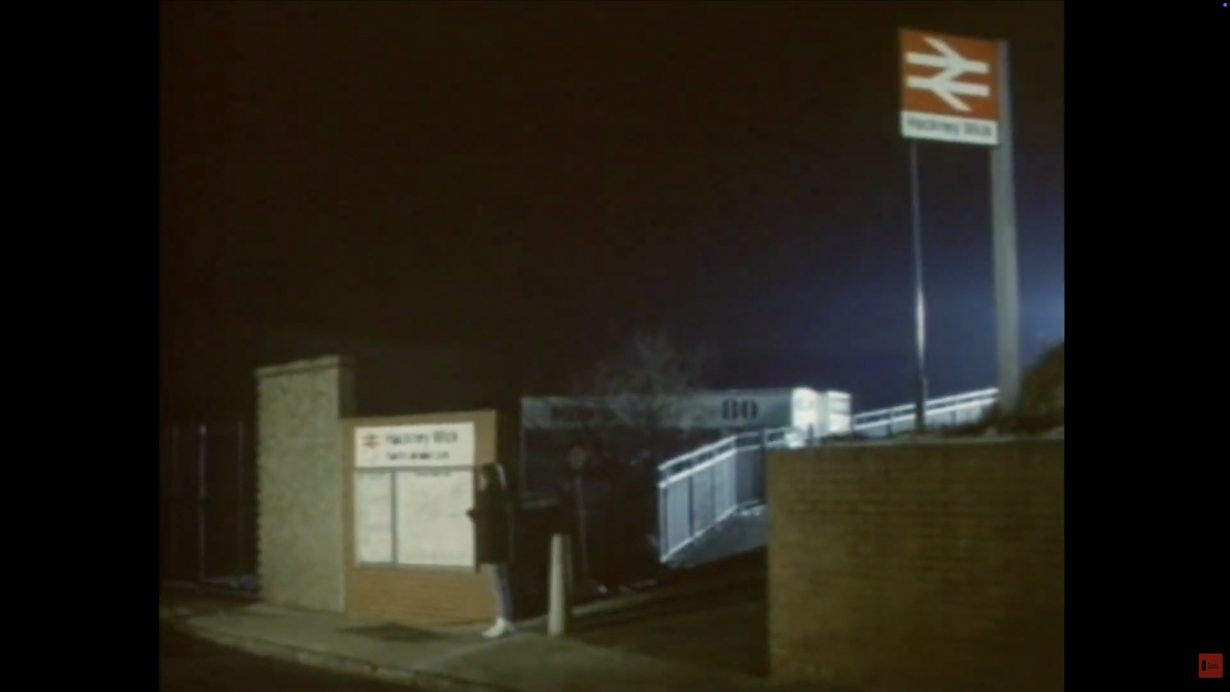
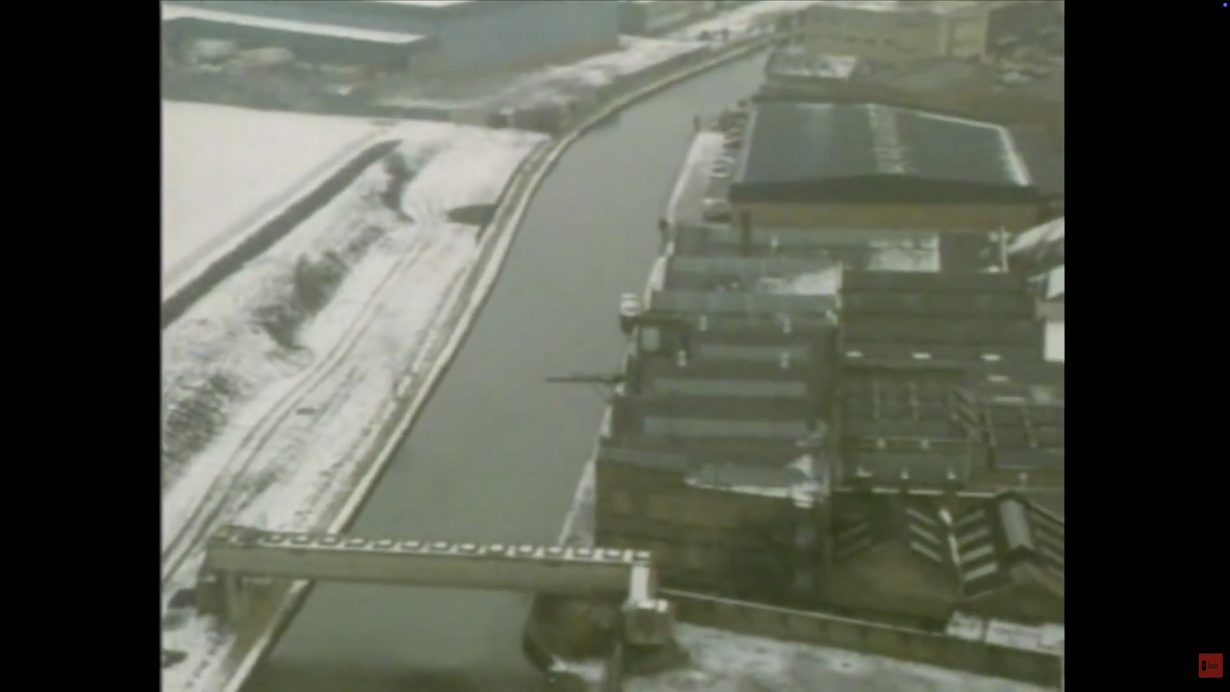
The original station opened in 1980 upon a rerouted track that bypassed the site of the former Victoria Park station. While undertaking archival research within the BBC’s archives, I inadvertently came across a contrasting documentation of the station and its surrounding areas dating from the mid-1980s that captures an area housing a local printing industry in decline. What piqued my curiosity about the material was the fact that this era has been thoroughly erased in the popular imaginary by a more historic connection between the area’s innovative textile and chemical manufacturing during the 1900s and the young artists and creatives attracted by the affordability of derelict warehouses repurposed as communal live-in studios during the early 1990s, both of which provide more ‘positive’ narratives.
The forgotten, more distressed iteration of Hackney Wick did feature as the site for the reconstruction (for the BBC’s Crimewatch UK television show broadcast in February 1986) of a murder that took place there on the evening of 29 December 1985. Alison Day, a secretary from Upminster, had travelled to Hackney Wick to meet her fiancé, who was working late at a printer on Berkshire Road. Such was its proximity to Hackney Wick station, where the overhead railway tracks seemed to be woven into the building’s rooftops, that he planned to look out for her from his office once he saw the train come into the platform from Stratford. However, also in the area awaiting their next victim were John Duffy and David Mulcahy, two of the decade’s most notorious serial rapists, dubbed ‘the Railway Killers’ by the press and responsible for carrying out dozens of violent sexual attacks across Northwest London during the early-to-mid-1980s in and around railway and underground stations, as well as three high-profile femicides along railway stations in the South East during the same period (these being Day, nineteen; Maartje Tamboezer, fifteen; and Anne Lock, twenty-nine).
The reconstruction captures all the chilling ambience of the forgotten Hackney Wick. On the evening she was murdered, no one witnessed Day either on the train or at Hackney Wick station, as she disembarked into the uncertainty of an otherwise deserted and unstaffed station and a surrounding area devoid of CCTV or adequate street lighting.
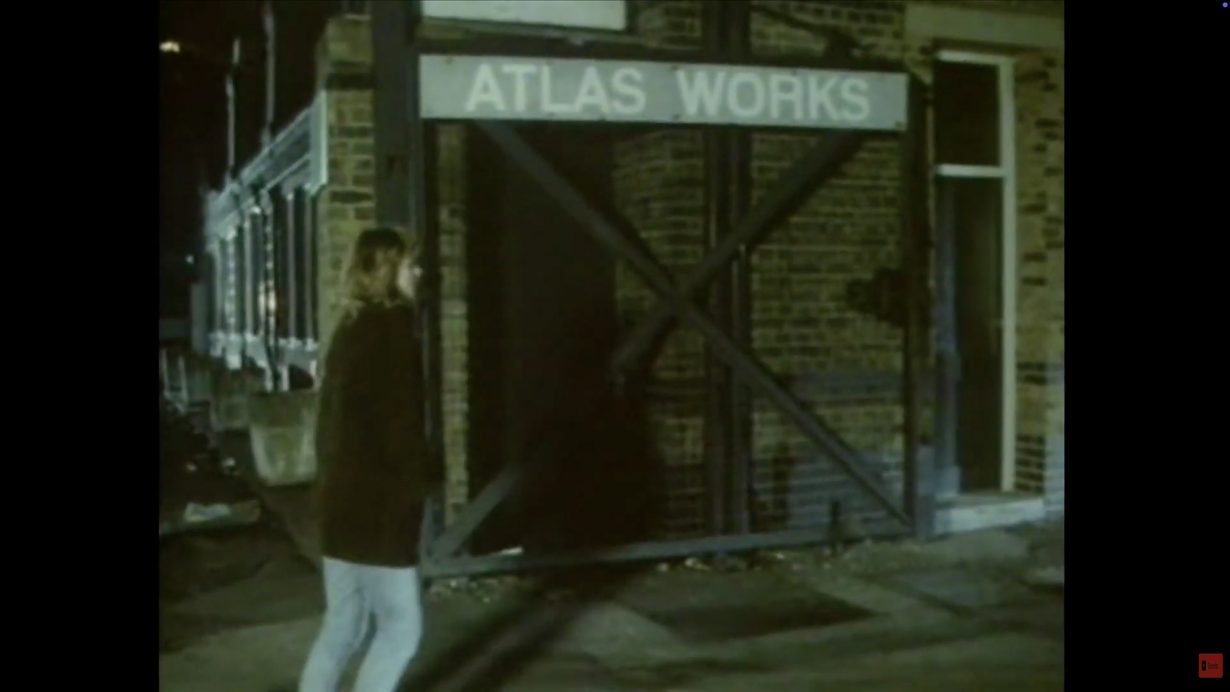
The reconstruction speculated that, arriving at Hackney Wick at 7.10pm, having never previously visited the area, Day had taken a wrong turn upon exiting the station, where she was confronted by Duffy and Mulcahy, or that she was followed from the train into the deserted Hackney Wick. Both suppositions would prove to be erroneous upon Duffy’s later admissions to the police: Day was abducted at knifepoint on the Hackney Wick station platform by the pair, and from this point was subjected to a prolonged period of sadistic sexual violence audible and observable to no one within Hackney Wick’s deserted darkness. She was then forced to walk across live track and over the outer edge of the railway bridge that carries trains over the River Lee Navigation. While doing so, Day had fallen into the canal and, having managed to swim to the canal side, attempted to escape. She was chased, caught and strangled using a ligature and tourniquet made from her own clothing. Her body was tied up and discarded in the River Lee Navigation, where it was discovered 17 days later, weighted down by granite slabs placed into her sheepskin overcoat pockets, at a point in the canal adjacent to a plot of wasteland once the site of the sprawling Clarnico Works factories. Today that same spot is shadowed by the Here East building, the V&A East Storehouse and the Hackney Bridge venue. It would not be until 1988 and 2001 respectively that both Duffy and Mulcahy would receive whole life sentences for the killings.
The story of Alison Day at Hackney Wick is one that has largely been consigned to the niche domain of true-crime documentaries on the Railway Killers. These involve interviewing since-retired investigators and forensic pathologists back at Hackney Wick, where their retracing of the incident is prefaced with their difficulty in fathoming how such a crime had occurred within what is now home to the observable, vibrant human activity of present-day Hackney Wick.
The position of Hackney Wick station at the epicentre of an expanding residential space of creative living and cultural production was driven by the Olympic Park Legacy Company, established in 2009 to redevelop the Olympic Park post the 2012 Olympic Games. Despite being subsumed that same year by the London Legacy Development Corporation (LLDC), the term ‘Olympic Legacy’ has persevered colloquially in the post-2012 discourse of urban renewal and development, with the familiar teleology of public purpose and promise. With that, of course, comes the enlisting of cultural institutions as essential components of such redevelopments in the recognition of cultural life as a social right. And yet, that very enlisting – which the familiar narratives of development describe as a uniformly good thing – subsequently encultured unevenness in the beneficiaries of this development.
The social processes that create that unevenness were taxonomised in American urban theorist Richard Florida’s much-denigrated theory of ‘the creative class’ (a socioeconomic grouping comprising everyone from people working in broadly knowledge-based industries – from finance to education – to full-on bohemians). The theory was most enlivened in Florida’s 2002 book, The Rise of the Creative Class, the central conceit of which was that the postindustrial city’s renewal could be expedited and made economically vibrant through a set of subjective principles that encourage the clustering of persons in professions requiring creativity. And that in turn would be encouraged by the creation of premium living units, museums and attractive transport hubs. For its many detractors, the creative class was a simple but callous manifesto for gentrification and social inequality. But for Hackney Wick, it seems to have been a theory that has been put into practice. Here, the embrace between arts and cultural institutions and the postindustrial is to be completed by the provision of premium vertical city-living. Here, the creative economy functions as a metonymy of creative class to be quietly schematised into a new regeneration project.
Returning to 2026 Hackney Wick station, even those most sceptical of urban regeneration would marvel at the building as the realisation of a fascinating architectural ambition that Landolt + Brown Architects had commenced in 2014. Completed in 2018, it presented as an attempt to, in their words, ‘refine the architecture and to make it more place specific and sensitive to its creative context’; or to make the station blend seamlessly into Hackney Wick’s prevailing physical aesthetic. With the completion of the latest phase of development by the not-for-profit NHG Homes, titled ‘Hackney Yards’, luxury apartments (available on a shared-ownership basis) hover over the station platform from both sides, their interiors directly visible though its distinctive chain of extruded glass hexagons running down to the underpasses that replaced the overhead footbridge that had provided passengers with access to its two platforms (in conformity with the design of the preceding Homerton Station). The developers’ marketing blurb promises it’s ‘a highly sought-after place to live for those seeking a blend of urban living and artistic inspiration’. But what we are witnessing is the building of the creative class, the official creative city; a construction that conjoins private and public spaces into unique bidirectionality.
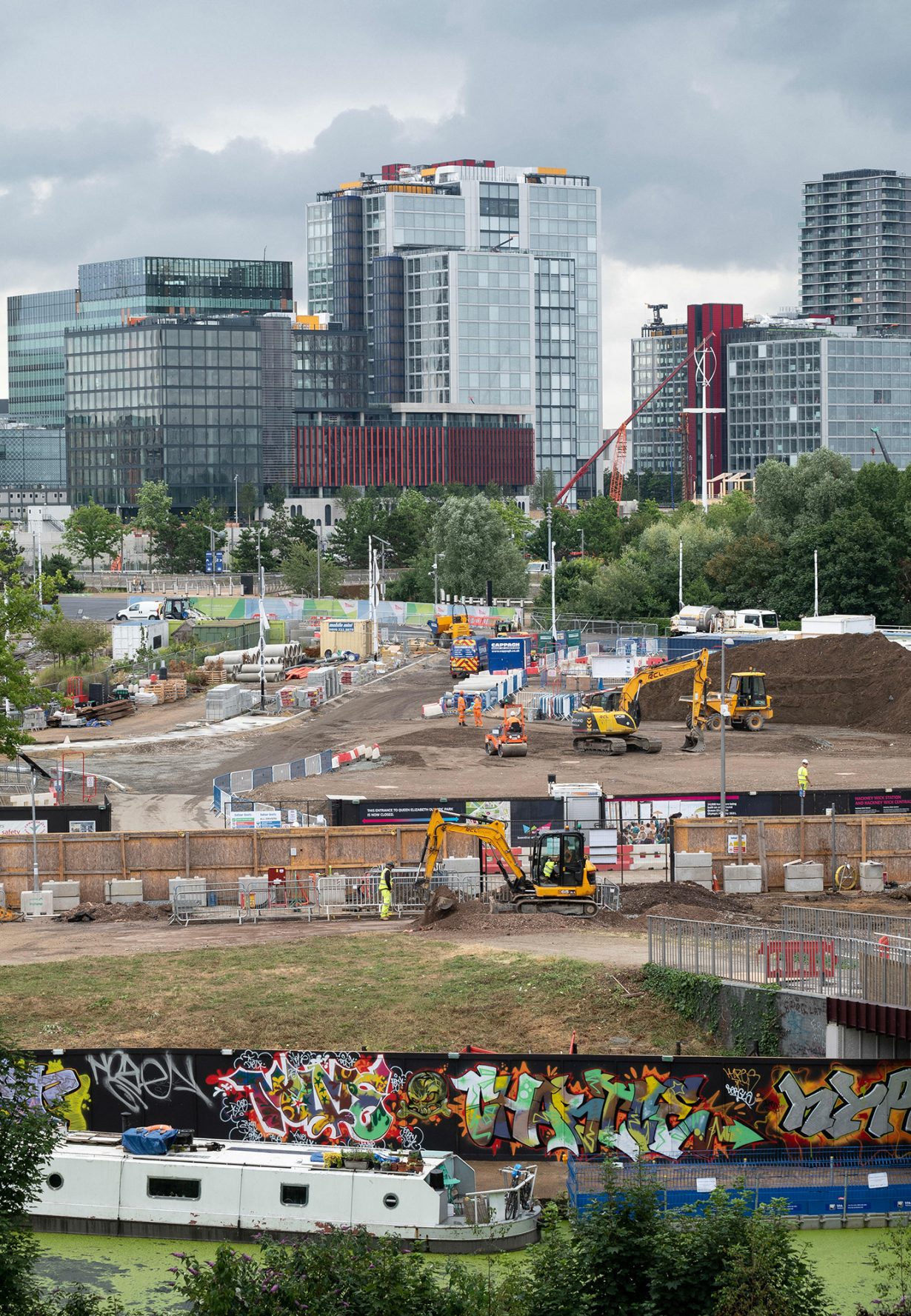
These observations invite us to consider what occurs when areas are subjected to rapid development and the centrality of art and cultural institutions as an accelerant in catalysing an environment readied for the creative community à la Florida. The outcome is a kind of mass conspicuousness, built into the practice of regeneration. It’s produced hubs of continuous communal activity and visibility, accentuated by the subjective interests of the changed nature of Hackney Wick. The interests of a new creative class that is less defined by economic austerity and a collaborative spirit, and more by cultural consumption, distinction and security. It’s an experience, with all its clear issues of erasure, that is far removed from the isolated Hackney Wick of 1985 that would meet Alison Day.
My interest here is not to revive Florida’s creative class as possessing any redemptive elements – the theory remains an exemplar of neoliberalism in the subterfuge of its processes and the ubiquity of its outcomes. Further, given it is the very same technological affordances of urban renewal that allow us to be recorded, tracked and illuminated, which equally allow some of us to be subjected to similar forms of unsafety and harm, regeneration does not and cannot perform as a contemporary panacea for gendered violence and femicide within public spaces. This right to personal safety demands preventative intervention on a human level, rather than simple visibility and digital observation. Rather, it is to argue that if urban revitalisation is to be accepted as the natural product of time, society, economics and culture, it can no longer be understood in terms of a straight dichotomy of new vs old, the periphery vs the centre and the organic vs the performed. It requires a periodising of an area beyond its gradient phases that tackles questions of who these developments are for, what they afford us, what came before it and the conditions of existence they produce and erase.
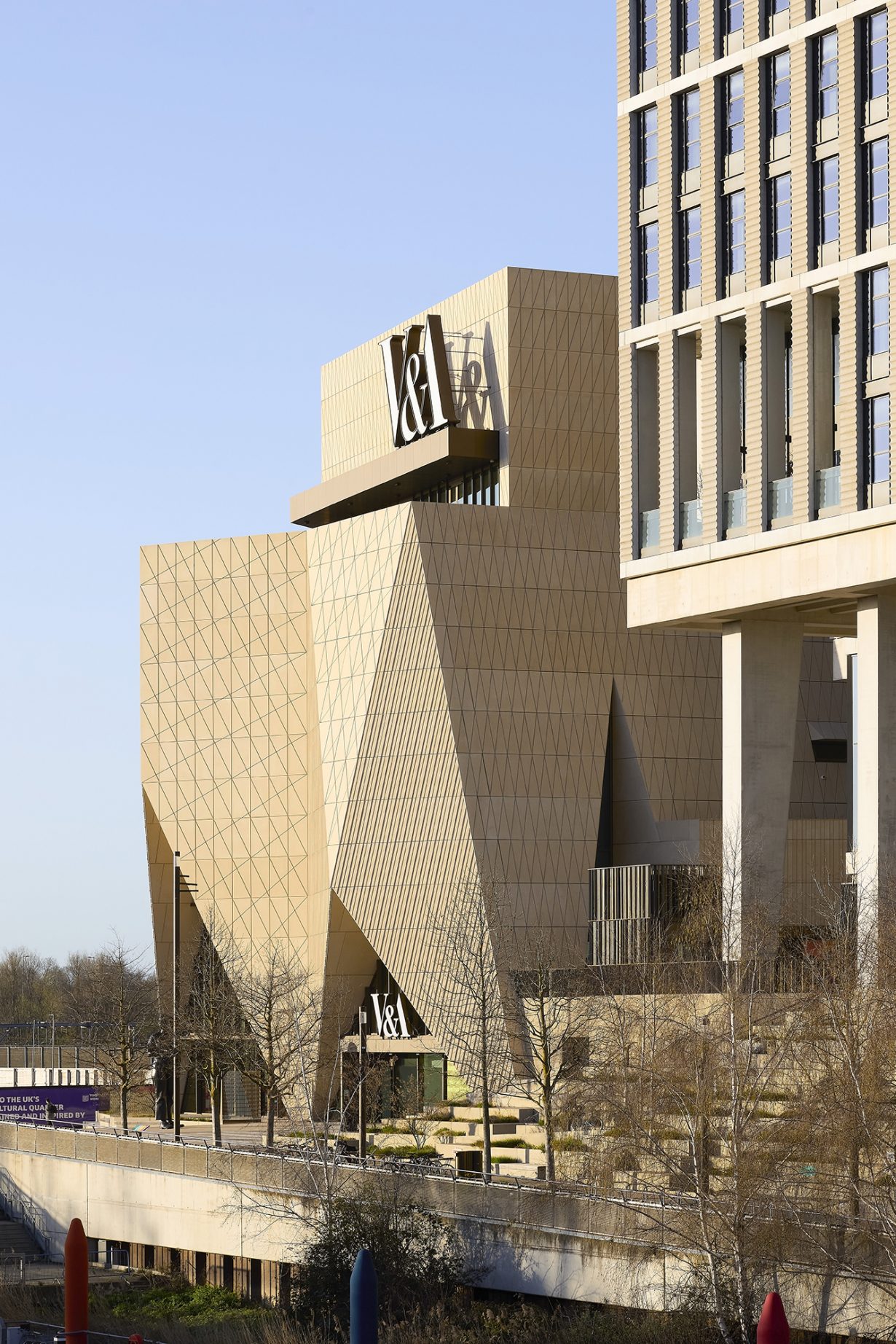
Earlier this year I viewed the entirety of the Queen Elizabeth Olympic Park from the vantage point of the V&A East’s roof terrace. It was a particular panorama of the Olympic Park, for it presented a geography of Hackney Wick as organised by an archival plurality, a vista marked by different planes of time. In our immediate view are the new institutions that now constitute the city’s most recent cultural quarter. However, in the near distance lies the very railway bridge where Alison Day was murdered, now laden with the primary signifiers of Hackney Wick’s creative capital: graffiti and mural artwork that has been overlayered and signatured by each passing generation’s dominant aesthetic sensibilities. Surrounding it are the array of new residential building-works and the equally mural-laden factories and warehouses, all of which now exist less as evidence of competing social tensions and more as evidence of Hackney Wick’s sustained artistic ambience. The graffiti, then, becomes a creative patina, even if that is, in reality, drawn from the residue of something more fraught and more dangerous.
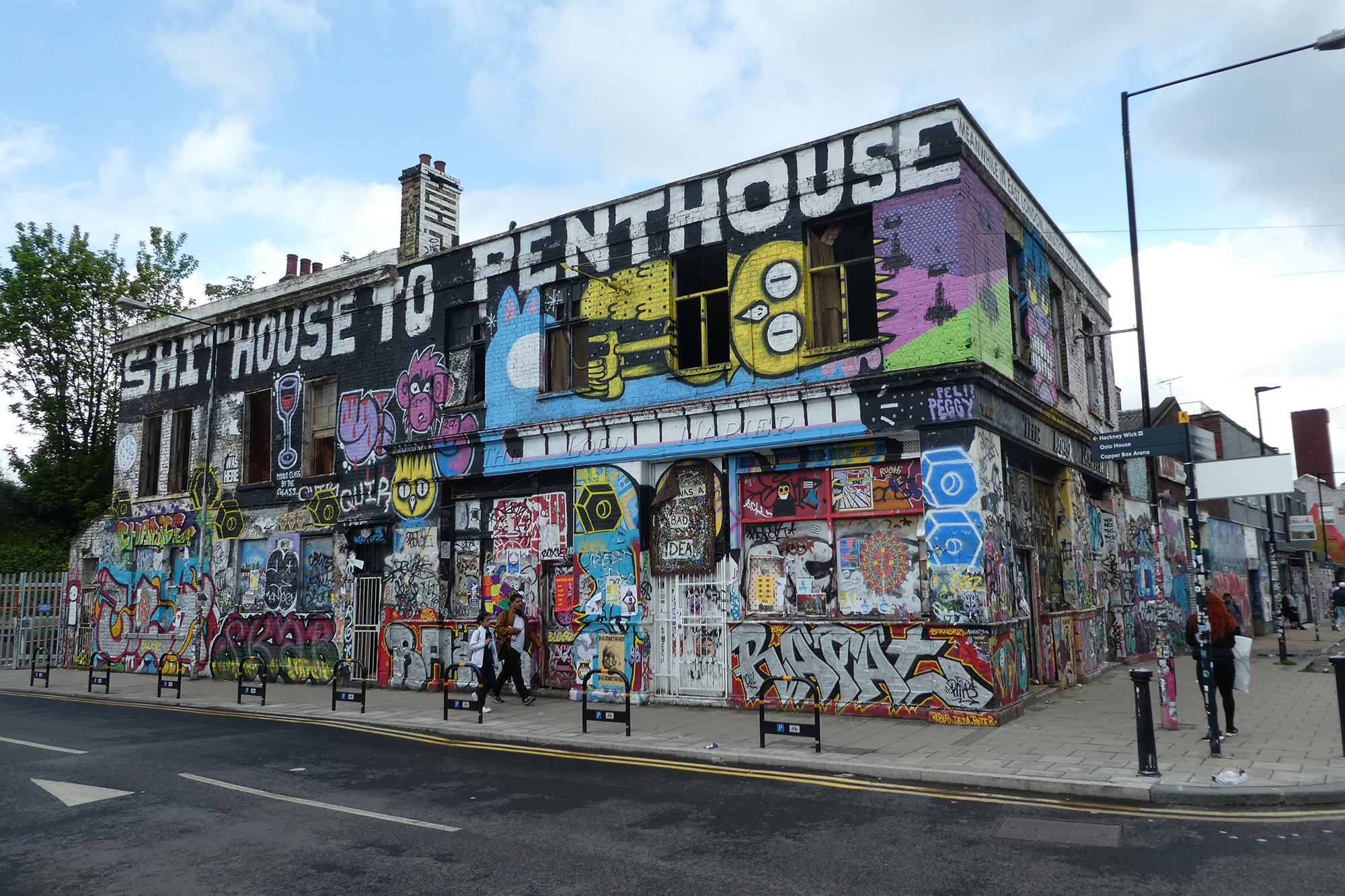
Later, I walked along the buildings that align White Post Lane and Wallis Road en route to Hackney Wick station. There are noticeable antiquated, graffitied buildings abutting the outer structures of the station that present us with a striking juxtaposition: a monolithic presence unintimidated by the physical scale of the developing highrise apartment blocks surrounding it. Indeed, these graffitied track-side buildings have been peering into the station’s platforms since 1980. Further down are three muralled warehouses that stand as the most prominent illustration of Hackney Wick as the city’s most creative neighbourhood, and provide the area with its ambassadorial character, positioned at the end of Wallis Road where it meets the edge of the canal, the very pathway that the Metropolitan Police hypothesised had been taken that evening in 1985 by Alison Day. But this will not survive the latest redevelopment of Hackney Wick: the warehouses have now been vacated and cordoned off for demolition, to be replaced by 337 new canal-side co-living units housed in two eight-storey blocks of shared-amenity live/work studios. Plus, a canal-side café and ground- floor affordable workspaces that, just as was ambitioned for the rebuilt Hackney Wick station, are informed by a design philosophy that has been ‘shaped with the vibrant character of Hackney Wick in mind, blending innovative co-living with dynamic public areas and creative enterprise’. Its desired residents are to be attracted by the same promise of a creative osmosis offered by what is marketed as a creative environment. The development firm’s online preamble professes an aim to retain the area’s character by creating a type of homage to Hackney Wick’s innovative historical industries and its twenty-first-century artistic community into its landscape features. No mention is made of the area’s abridging incarnation as a postindustrial hub for local grassroots printworks and community presses. Within days of the building being commandeered, the site office had been vandalised with the words ‘modern brutality’ graffitied across it. I’m unsure if this is a mark of indignation at the glacial erosion of an area that was an affordable, coarse, DIY-artist’s enclave, but when you combine it with the graffiti that reads ‘Hackney Keep Your Roots, 2026’, on the upper wall of the monolithic muralled building, you do get a sense of lamentation on the loss of the very last vestiges of a specific art culture. Hackney Wick has many roots, some in need of preservation, while others, once deracinated, may allow for its more generative byproducts, however inorganic in origin, to take seed.
From the September 2026 issue of ArtReview – get your copy.
Read next What Isn’t at the V&A Storehouse