Are loans ethical concessions wrestled from reluctant institutions, or are they institutional risk-management strategies?
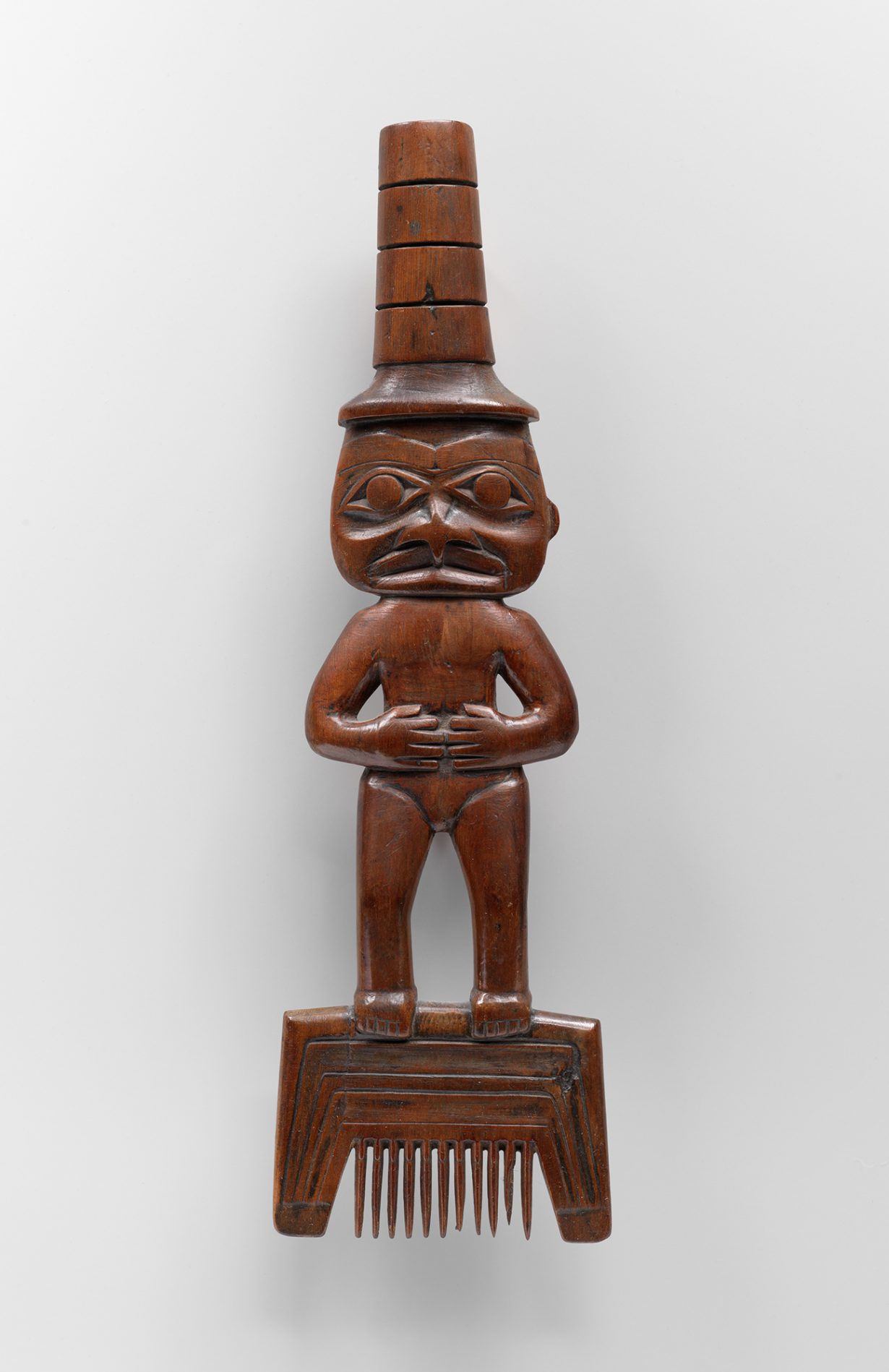
In recent years, calls for repatriation have met with an increasingly standard script from large European museums. Critics demand returns; institutions respond with appeals for ‘shared heritage’, ‘global access’ and the dangers of politicising collections. When that begins to wear thin, the long-term loan appears as a neat solution: seemingly flexible, collaborative, forward-looking.
Long-term loans are nothing new in museological practice. But in the context of repatriation demands, they take on the function of movement without concession. When museums talk about long-term loans, they do so with the air of proposing a reasonable compromise: not quite restitution, but not the bad old days of outright refusal either. At stake are several unresolved faultlines: whether legal ownership should outweigh historical injustice; whether ‘universal museums’ legitimately serve global audiences or perpetuate imperial collecting; and whether access for international visitors justifies withholding objects from their communities of origin. The loan is the route the British Museum has chosen: objects circulate, audiences remain enlightened and no one need feel robbed – least of all the museum itself.
Related tactics are visible in the United States, where some museums maintain objects in a legal or administrative limbo to avoid the exchange of ownership and the obligations that would typically follow. Loans sit in a deliberately diffuse legal space, pieced together from contract law, property law and trust law. In a context where federal laws such as the Native American Graves Protection and Repatriation Act (NAGPRA) can push institutions towards return or at least active consultation to facilitate repatriation, some museums maintain objects in a legal or administrative limbo to avoid such obligations. Other museums, including the Metropolitan Museum of Art in New York, exploit the fact that NAGPRA does not mandate repatriation for loaned artworks – even when Indigenous items, such as those in the Met’s Diker collection, have incomplete provenance records that raise serious questions about their original acquisition.
These moves should not be taken at face value. As the exemption of loans from repatriation legislation makes clear, loans are not ethical concessions wrestled from reluctant institutions. They are a means of protecting private property (the lender’s, however dubious the circumstances under which that property was acquired) and of managing institutional risk. Framed as compromise, the loan obscures the material reality of what museums like the British Museum and the Met actually are: not neutral repositories of human culture, but asset-heavy institutions embedded in dense webs of economic and political interest. In the UK, this dynamic has been reinforced by statutory constraints – notably the British Museum Act 1963. Although recent developments such as the Charities Act 2022 have led to cases that may expand deaccession on moral grounds, this shifting legal terrain has also resulted in a pick-and-choose kind of implementation. The Victoria and Albert Museum in London, for example, has made an exception for Nazi-era spoliation items under the Holocaust (Return of Cultural Objects) Act 2009, yet abides by the deaccession restrictions of the National Heritage Act 1983 for most other objects. In the case of the V&A, then, it seems holdings function as institutional capital.
This helps explain why ethical debates about museology, while necessary, so often stall. Advocates of repatriation rightly speak in moral terms – justice, repair, historical accountability – but institutions then reply with a mix of legalese and moral counterarguments. The British Museum’s claim to universal custodianship underpins everything from state funding and corporate sponsorship to donor confidence and London’s wider cultural economy; for the Met, reliance on loan status in lieu of due provenance research is likewise a strategic choice. Museums now routinely frame such positions through the rhetoric of diversity initiatives, inclusive interpretation panels, collaborative exhibitions and community advisory boards – gestures that may be meaningful in themselves, yet rarely alter ownership structures. As museums have become fluent in the language of social justice, they have also bolstered their legal and public-relations infrastructure to absorb ethical critique without materially altering their asset base.
From a political-economy perspective, the loan is a holding pattern. Ownership, insurance and legal control remain intact. Museums continue to dictate the terms under which objects move, how long they stay, and when – if ever – they are returned. Maintenance costs and security requirements are frequently externalised to receiving institutions, leaving nation-states still grappling with the material legacies of colonialism to shoulder the burden of compliance. Long-term loans can operate as a form of institutional prevarication – sometimes in good faith, sometimes not – that delays resolution while preserving control. Under these circumstances, persisting solely in moral or legal argument has proved ineffectual.
Museum trustees have largely convinced themselves that repatriation can only register as loss – of prestige, authority and assets – and that resistance is therefore the only rational response. This is not universally true: institutions such as the Horniman Museum in London or Cambridge colleges have pursued restitution where legal frameworks have allowed. But institutions like the British Museum, the V&A and the Met that remain preoccupied with preserving colonial power increasingly risk appearing disconnected from the societies they claim to serve, particularly in Europe and North America, where public attitudes towards empire are perhaps less indulgent than museum boards might wish to believe. ‘Colonial power’, here, pertains to the persistence of collecting logics developed under imperial rule: assumptions about Western custodianship, unequal bargaining power in acquisitions and the prioritisation of metropolitan audiences over source communities.
As younger publics – and, increasingly, international sponsors – grow less willing to associate with institutions that continue to warehouse colonial loot while posturing as ethical leaders, the damage incurred by resisting repatriation is rarely factored into trustees’ calculations, even as it threatens future relevance, funding streams and legitimacy. Museums often counter that major restitutions would reduce visitor numbers, yet evidence from past restitutions suggests audiences are also drawn by transparency, new narratives and collaborative exhibitions. A positive case in point is Manchester Museum’s repatriation of 43 Aboriginal objects in 2019, which resulted in a Memorandum of Understanding encompassing an ongoing commitment from both parties to collaborate and share knowledge on how to manage collections in future.
Ethics alone will not move institutions whose decision-making remains governed by asset protection and risk aversion. The debate must also ask what museums stand to gain – as well as lose – by relinquishing ownership of contested objects. The answer is not simply loss, but recalibration: a chance to redefine relevance beyond imperial inheritance. In practice this might mean revising statutes that prohibit moral deaccession; sharing governance with source communities over interpretation and display; redirecting conservation funding towards institutions in countries of origin; and supporting community-led or temporary cultural spaces rather than assuming permanent metropolitan custody. Such changes share a premise: that Western museums can move from being proprietors of global heritage to partners in its stewardship.
But we must also understand that decolonisation is not always an ‘everyone wins’ adjustment. If restitution prioritises communities from whom objects were taken, audiences in Europe and North America – though getting to enjoy more democratic museum spaces – may also see fewer artefacts on display. If decolonisation is to live up to its definition as a historical process of dismantling the legacies of colonialism and its living inequities today, then others must benefit. Part of the reason for this is that colonialism created a rift between a colonised people’s past and present: a break in their cultural history through theft, pillage, desecration and forced re-education. Perhaps this might, in part, be healed by reuniting with their own cultural objects and, by extension, reconnecting with their living histories through contextually relevant frameworks, rather than through the lens of Western museology.
We will continue to hear about long-term loans precisely because they allow museums to appear magnanimous while remaining structurally imperial. Under this model, objects will move, but power to dictate the terms of this movement will not. If the debate over museums is to move beyond abstract ethics and managed controversy, the task is not to wait for institutions to develop an anti-colonial conscience. It is to expose what assets they protect, who benefits from that protection, which mechanisms of the state and the market continue to shield them – and what this resistance will ultimately cost both museums and their publics. Only then will the demands of repatriation register not as a moral inconvenience, but as a material and existential threat.
Explore the full ArtReview symposium, The Museum in Crisis
From the March 2026 issue of ArtReview – get your copy.