Beyond the pull of Art Basel Hong Kong, a series of interventions and installations across the city probe the boundaries between art, design and everyday life
In the absence of any biennials or similarly large-scale art events, Hong Kong’s art fairs can seem like the black hole of culture: nothing escapes them. A three-day trade fair has morphed into the city’s art week (in relation to which Art Basel is often reverently referred to as the ‘anchor event’) or, in some calendars, art month (proving that some anchors come with a long length of chain). It’s as if art didn’t happen at other times; which of course it does via the many museums, pop-ups and galleries in the SAR. But saying that something happens all the time makes it seem ordinary. And no one wants that.
Art week is when the world knows that Hong Kong lies at ‘the heart of Asia’s international art scene’, according to some of the marketing puff. And, as with any selling event, there’s a lot of that around Hong Kong’s art month. There’s not so much of that here though. Beyond the art-month event horizon – on the safe side, a little over an hour or so by public bus from the heart of town – in a domestic living-room in a private home rather than a convention centre, somewhere in the New Territories. What’s going on in the living-room might best be described as something halfway between a skilled musician demonstrating a range of new instruments, some of which seem more-or-less homemade, and your uncle showing off his new hi-fi system. That the living-room belongs to a modern house that is, on the face of it, attractive but unremarkable, located in a neighbourhood that is attractive but unremarkable, only adds to a vibe the oscillates between the extraordinary and the ordinary.
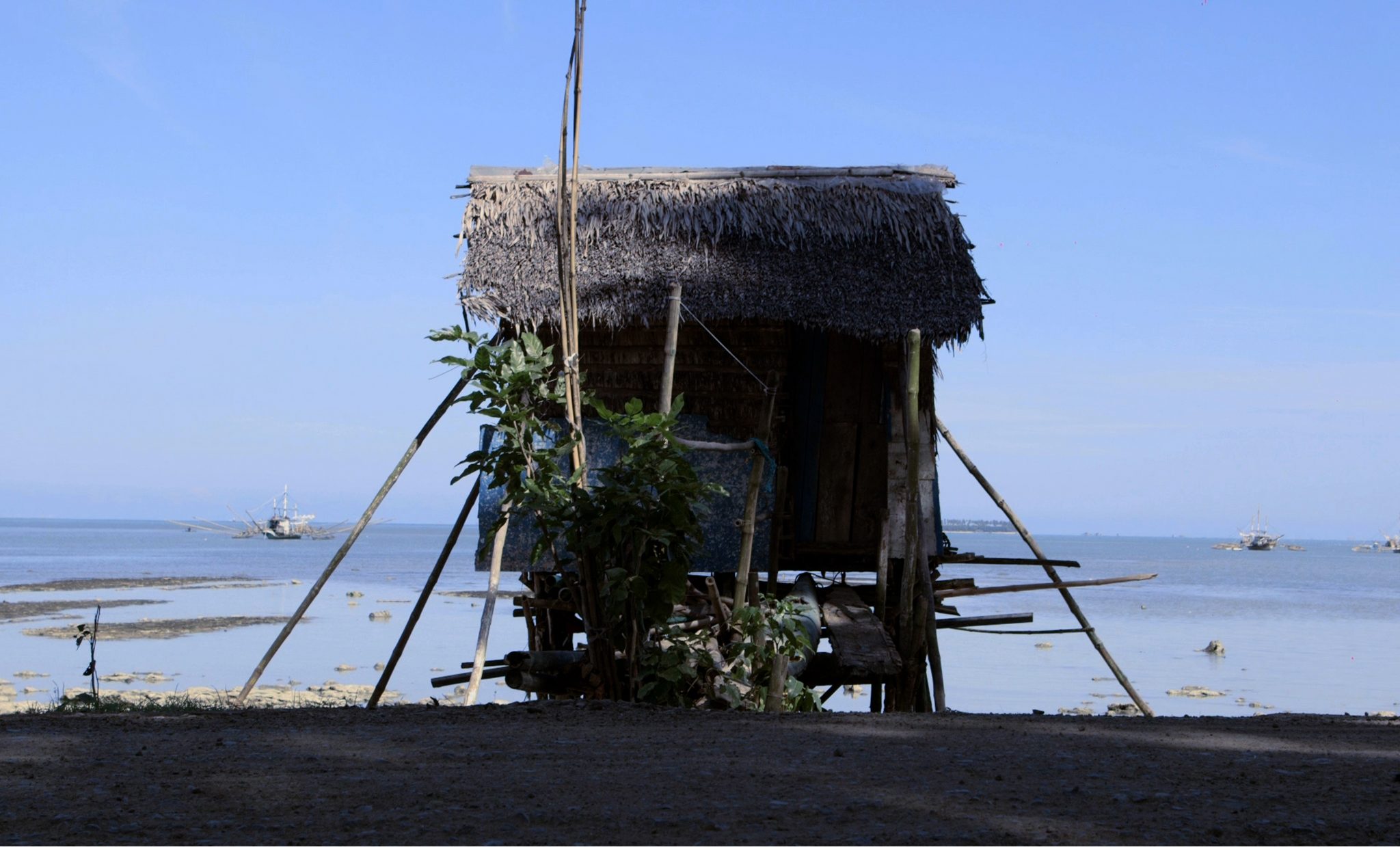
For this event, organised by Guangzhou’s Vitamin Creative Space, a group of around 30 people (most in Hong Kong because of art week and its ‘anchor’ event) gather for what’s being billed as a ‘Listening Session’ to mark the debut of two new ‘instruments’ that Lebanese artist-composer Tarek Atoui has added to the room. Which it might be fairer to say he is transforming into an instrument of sorts. Atoui himself switches between playing records on the player, having pulled them out of a collection on a shelf, toying with accumulations of what are recognisably drums and gongs, alongside less recognisable artefacts hanging from the ceiling, checking the controlled drips of water on the bookshelf and fidgeting with a mixer. There’s a sense that the sounds that fill the room are present both by design and by chance. Presumably when no one is playing the room it becomes some sort of sculpture or installation. As well as ‘just’ a living-room.
There’s a general blurriness or lack of distinction to proceedings. The object of our listening is the room and whatever the artist is doing in and to it. That’s punctuated by the creaking of people’s limbs as they (the limbs not the people) protest at sitting cross-legged for a protracted period of time. And as your mind drifts into that (the cross-legged thing, not the protest thing) you start to wonder about the extent to which it is part of the general aura of respect that most people tend to perform when they think that something is an art event. If we were simply here to listen to records you imagine there might be more of a loafing vibe. It’s a reminder of the extent to which art or the viewing of art exists in a kind of discomfort zone. In which the audience perform as much as the artists or artworks. Which is something that art fairs, with their VIP days and luxury-brand tie-ins encourage. Perhaps we’re not so clear of that event horizon as it seemed. Though here the loafing does eventually come, as the limbs start to give up, people uncross, unfurl and listen to themselves. Perhaps this was the point: to demonstrate the living-room is a living room and that there’s a lot to hear around you if you take the time to hear it out. Like I said, no one goes to an art show to hear the obvious stated. But sometimes we need that.
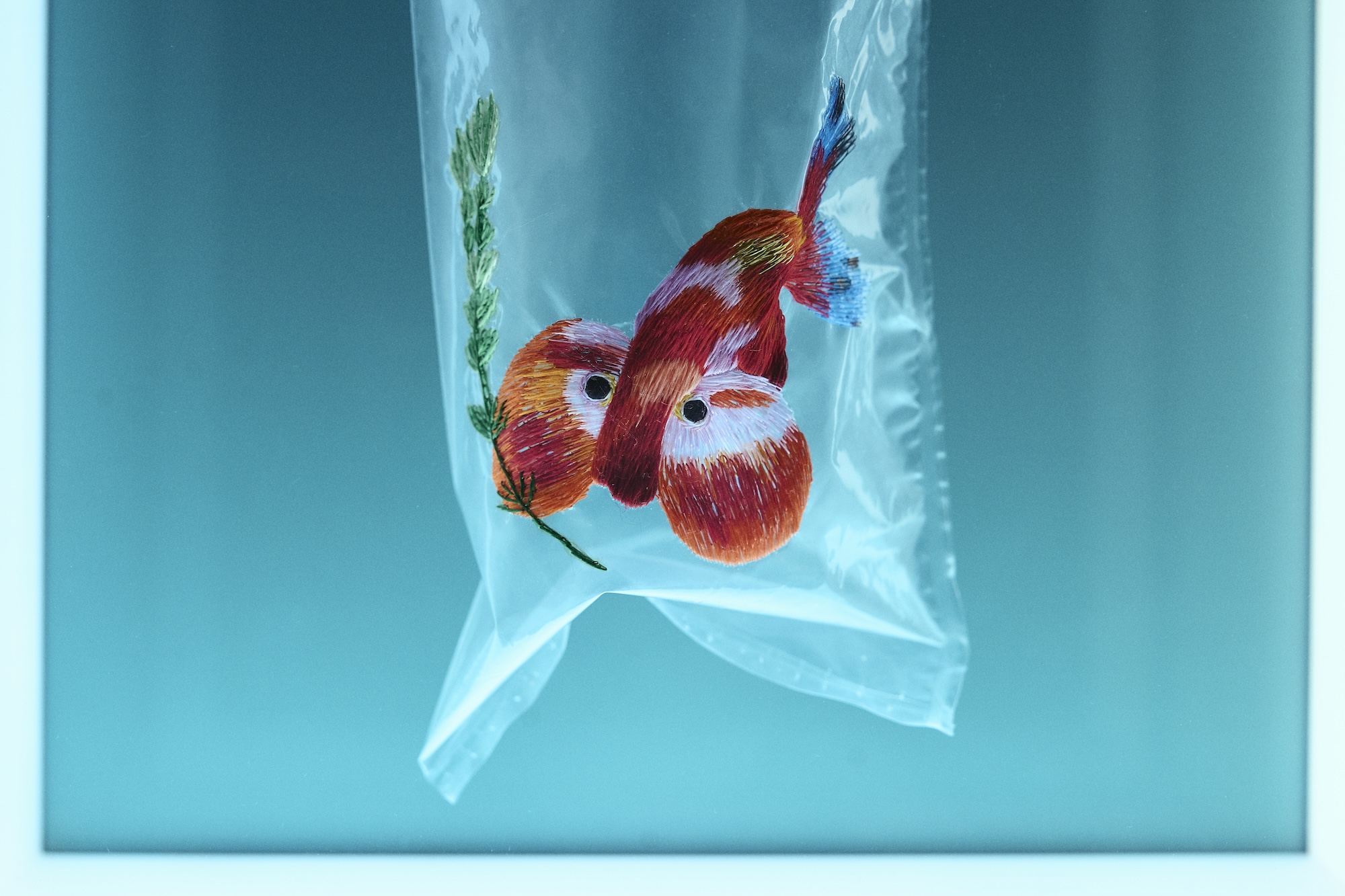
Over in Kowloon, in the SAR’s celebrated Peninsula Hotel (which has provided my living–room for the week), Angel Hui’s designs transform the iconic structure into a goldfish bowl. Renderings of the auspicious freshwater fish are installed on the first-floor windows of the Verandah Restaurant and on some of the cars in the Peninsula’s Rolls Royce fleet. It’s a symbol of good luck (perhaps for the art market – which might need it according to many reports) but also a wry commentary on the public-private nature of dining in the five-star hotel’s restaurant, where you’re both at home and on display. In that sense Hui offers a simple gag about seeing and being seen. Or a playful decoration. As is the case with Atoui’s performance, it’s hard to tell.
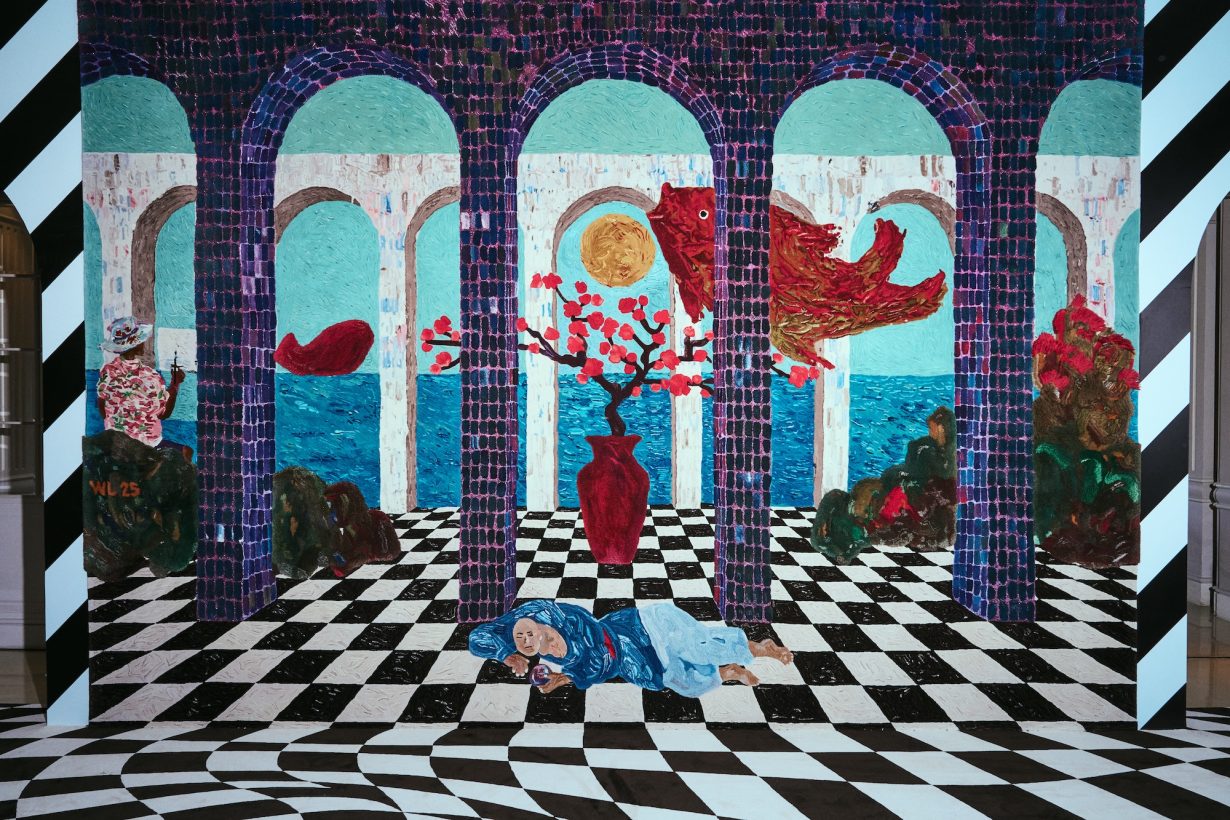
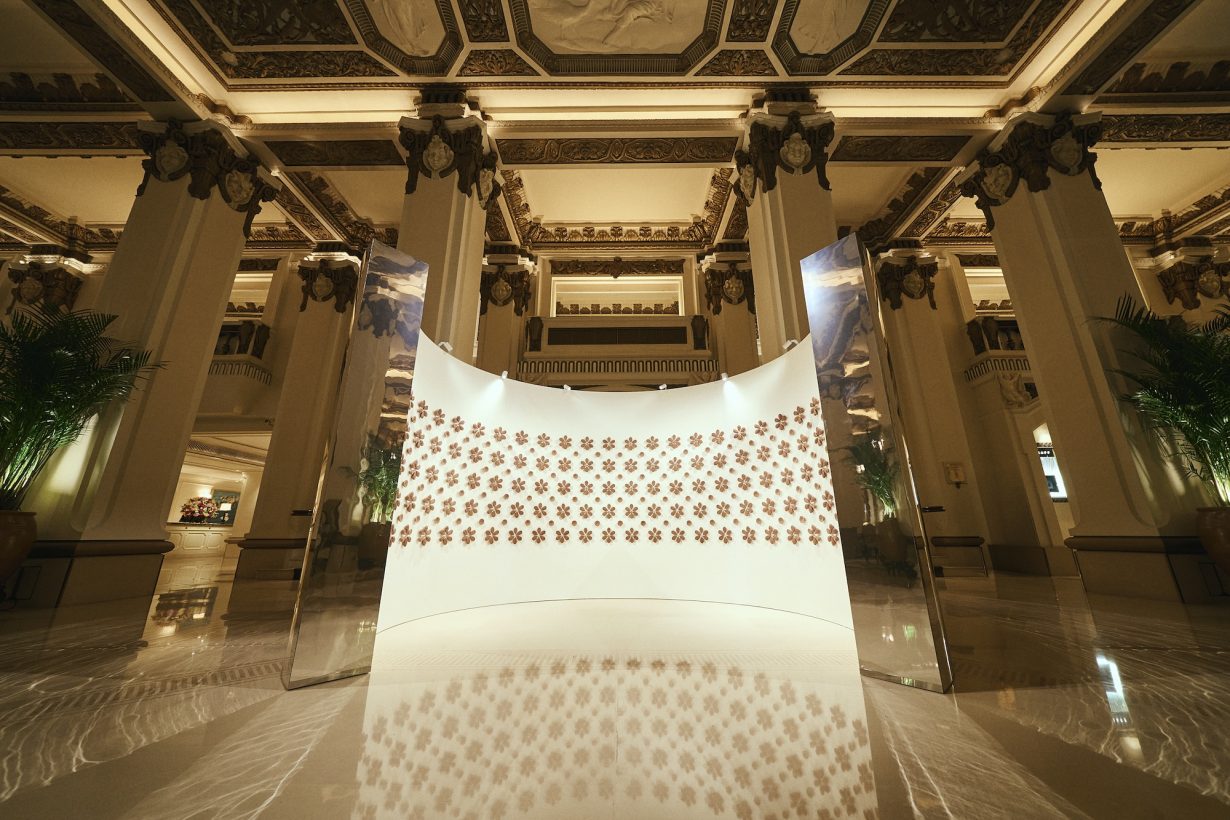
Examples of Hui’s embroidered fish in plastic bags sit at the restaurant entrance like prizes at a fun fair, or something from the Goldfish Market in Mong Kok. Hui will be one of two artists (the other is Kingsley Ng who participated in The Peninsula’s art programme – Art in Resonance – back in 2024) representing Hong Kong at this year’s Venice Biennale. When she presents the Venice project at the Hong Kong Art Museum, just over the road from the hotel, a few days after The Peninsula display is unveiled, the atmosphere is a lot more serious. Much like Albert Yonathan Setyam’s installation (presented in collaboration with London’s Victoria & Albert Museum), a series of red ceramic tiles is presented in a constructed niche that separates it from the general décor of the hotel, giving the work something of the protective aura of a white cube, in its lobby. In the hotel, in which all the rooms are decorated by items that hover between art and design, you get a chance to think about how and why you choose to decide which is which. It’s a thought that is brought to a head in architect, collector (he recently made a large donation to Hong Kong’s M+ museum) and artist William Lim’s contribution to The Peninsula, Walking on a Bright Future (2026), a surreal painting featuring a bonsai tree, a giant goldfish and a recumbent man-boy sprawled across a checkerboard floor, recreated as a giant textile tapestry whose checkered patterning extends over the floor and into a dining area. Where the room ends and the art begins (or vice versa) becomes open to doubt. In a hotel such as The Peninsula, in which every bit of it is the result of a carefully manicured design, you might not even distinguish much of the above as ‘art’. But sometimes we need that.
Read next The 11 Exhibitions to See in May 2026