“Perhaps the Biennale is the beginning but not the centre”
ArtReview sent a questionnaire to artists and curators exhibiting in and curating the various national pavilions of the 2026 Venice Biennale, the responses to which will be published daily in the leadup to and during the Venice Biennale, which runs from 9 May through 22 November.
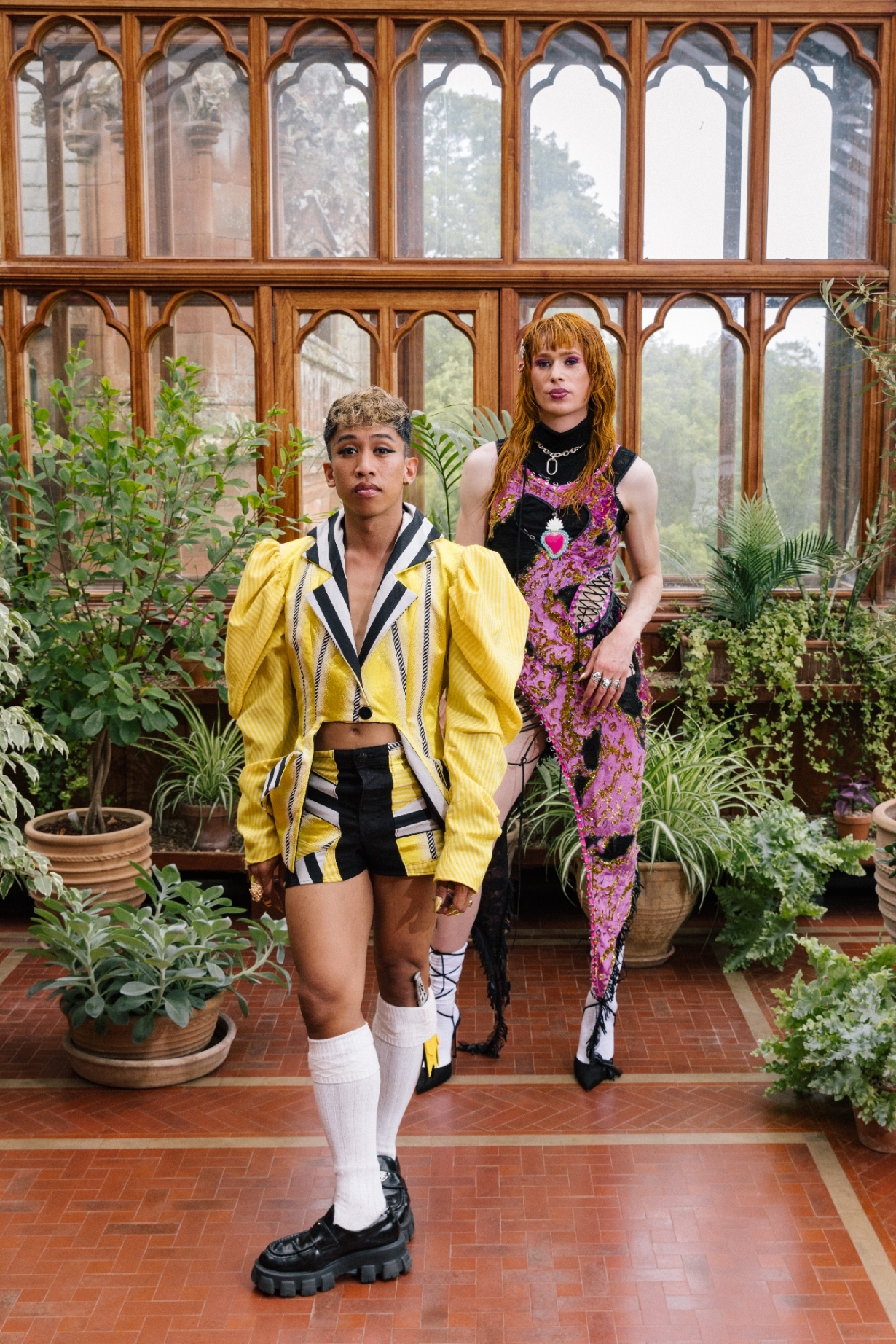
Bugarin + Castle are representing Scotland; the pavilion is at Olivolo, Castello.
Celebrating Visions. Versace partners with ArtReview to share stories from the 2026 Venice Biennale.
ArtReview Tell ArtReview what you plan to exhibit in Venice. What has influenced or inspired you?
Davide Bugarin Our exhibition, curated by Mount Stuart Trust, is called Shame Parade. It developed from our research into charivari: medieval public shaming rituals that used sound and costume as tools of control, in particular cross-dressing as a tool for mocking social transgressors. We were intrigued that the word itself – charivari – has carried on and uniquely appears in contemporary Filipino law where it is defined as a form of punishable public disturbance and is used to restrict sound. I am Filipino so I’m particularly fascinated by this connection.
As the title suggests, our work locates shame through an exploration of sound and music. The exhibition does not hide shame away nor does it cling to it. Shame becomes both a resource and a weapon. Looking back at historical records, we found that noise and music that was used as a form of disturbance was loud, excessive and often cruel. And that imagery, that cruelty, stayed with us and found its way into the work.
AR In what ways (if at all) does your work relate to the theme of the Biennale exhibition, In Minor Keys?
Angel Cohn Castle There’s a lot of connections to be made between our work and this year’s curatorial theme. In particular, how Shame Parade is first and foremost an exploration of sound and a tracing of the complexity and power of the minority. While sound is a starting point, the exhibition then unravels into different media: sculpture, print, moving image and a musical score newly-devised with our collaborators, the Manila-based band Kalye Teresa.
When making the work, something we’ve also thought a lot about is resisting a simple narrative. There seems to be an increasing sense of hostility in the UK and US, particularly around trans rights, that could lead us to take a solid, simply articulated defensive position. But actually our role as artists, and the space that we want to occupy and invite other people into, is one of intriguing complexity and stickiness around ways of living, thinking and making. That complexity is also found in the histories of the Philippines and criminality, and the way that contemporary life is heavily informed by the past.
DB Spatiality also plays a significant role in the development of our work: considering how the experience of occupying space from a certain perspective comes to define it. Our practice is interested in disrupting a power dynamic, in locating the periphery to negate the centre.
In a previous work called Sore Throat (2023) for example, we explored what happens to sound as it permeates through walls, travelling from outside to inside. We explored which sounds come through the small openings, the slits and windows – perhaps the sounds of shame – and how these reverberate and reshape the inside.
ACC Yes, our work engages with the impacts and effects of the phenomena that we’re interested in. In Sore Throat, we were thinking about monstrous mythologies, but we purposely weren’t depicting the monsters. We’re seeking to create moments of tension, of something about to happen or the memory of something, so that hopefully the viewer can think through the thing without us having to try to recreate it.
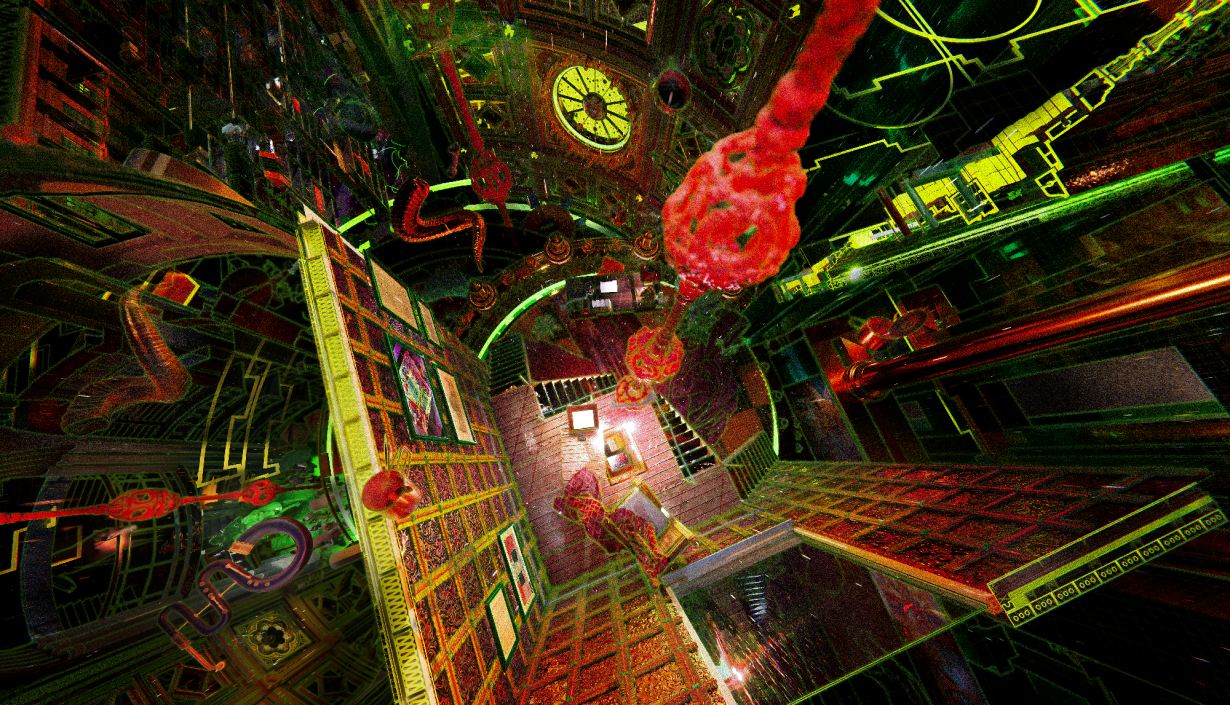
In our exhibition, you will enter via a long corridor. You need to pass between one room and the other. You can look through a sculpture and see a diorama. In all of the works, there’s an invitation to see from different perspectives: literally top down, through windows, through arrow slits; which echoes perhaps, the sense of looking at shame from the inside.
In the 5-channel video Submit to Sound (2026), the sense of interference within a space comes from the sound of a voice being altered or of a parade being prepared. There’s a recurring motif in the work that has to do with the idea of training and learning, of moving towards something that is not always positive.
AR Why is the Venice Biennale still important, if at all?
ACC I would say the Biennale is always relevant because it commissions artists to make really ambitious projects that will be seen by a lot of people, and that will likely travel back to the artists’ home countries and be seen by local audiences too. And you can’t take away the opportunity that it provides for artists.
DB Yes, it’s important in that it allows something unnecessary to exist. Not everything has to be efficient or condensed or immediately legible so that it can be rapidly analysed. The Biennale allows work to be excessive and unresolved. It’s a space to try something that might not fully hold, which is rare. And then the work leaves. It travels, it changes context and it’s seen differently. Perhaps the Biennale is the beginning but not the centre.
AR What role does a national pavilion play at a time of increasing confrontational nationalisms? Is it about expressing difference or commonality?
ACC The idea of national representation is unusual because, as an artist, you probably don’t make your art in order to be an ambassador for a nation. You might hope that the way a nation can be proud of itself is by enabling its artists to be artists in the way they choose.
DB I would rather ask, can you represent something that is a construct? The pavilion doesn’t resolve identity. It exposes how identity is constructed, how constructed it is and, at best, interrupts that story to show what it can become. Core identity is always negotiated and never given, never perfect.
AR Who, for you, is the most important artist (in any discipline) that your country has produced?
ACC Like many people in Scotland, we’re still mourning and missing the brilliant musician Sophie.
AR What is something you want people to know about your nation that they might not know already?
DB The first thing that always comes to mind is Scotland’s extended summer days. It’s great to be able to go out at 8 or 9pm when there is still daylight. And summer is also great for camping.
AR Given that you are exhibiting in a national pavilion, is there something (a quality or an issue or attitude) that distinguishes the art of that nation from that of others? That makes it particular? Are there specific contexts that it responds to? Or do you think that art is a universal language that goes beyond social, political or geographic boundaries?
ACC We were really excited to present work that speaks to issues that are important to us: the struggles experienced by people of trans and Filipino identity, both in the Philippines and its diaspora in the UK. And especially to do this in a way that engages with the complexities of the past by exploring more uncomfortable or confusing histories. For example, examining how cross-dressing was used as a form of punishment rather than a celebration. It is exciting that representing Scotland means being able to explore these histories with a local and international voice, which reflects the open energy of Scotland and Scottishness. We’re really excited that this is a work made by and about the people that live in Scotland today and how they interact with each other and the wider world.
AR What, other than art, are you looking forward to seeing – or doing – while you are in Venice?
DB After the show has opened, I’d like to return to Venice during the really cold days of autumn and winter and get properly lost. I’ve visited the city many times and have always got lost. Venice is the kind of city that doesn’t let you move in a straight line, you always have to adjust and reorient yourself, to refine and redefine the centre. I really loved Joseph Brodsky’s essay Watermark and how Brodsky has this anchor point – the Fondamenta degli Incurabili – in an otherwise drifting state of being in the city. I like that it relates to the idea of a city intertwined with the body as a site of learning. The city is something that you can pass through, but it also passes through you: through your senses and emotions.
AR Could you give us a brief overview of your average working day while creating your presentation in Venice?
ACC We tend to work together quite closely on everything but with the production of the installation now at full pace, we’ve had to spread ourselves out a little. You could say that we’ve merged our minds enough that we’re now free to operate independently.
I’m currently at a fabrication workshop in Glasgow with some brilliant makers. We’re working on a large sculptural element, At Certayne Tymes, that fuses mechanical, anatomical and vocal elements. As we’ve got lots left to do, it has come to the point where the team works on the sculpture during the day and then Davide and I take over and work through the night.
DB I’ve arrived in Florence to work with some local fabricators here, translating our digital renders into a physical manifestation of a large piece called Nocturnal Amusements that will traverse the spaces of the exhibition. This morning had me painting a miniature diorama of a silenced charivari procession that will be placed at the end of an optical illusion tunnel. It’s great to see it finally come to life after so much thought and planning.
AR Can art really change the world?
ACC I think that it would be nihilistic to think that art can do nothing. Imagine a world with no beauty, or one where people didn’t try to question or change things.
It would be egotistical to think that one thing could change the world, but you can certainly change a person’s world. You can invite them to see things in a different light, to consider how societal narratives are constructed and approached.
We make work about the things that are important to us: spatial politics, queer and trans politics, Scottish and Filipino cultures present and past, etc. and we hope that in putting our art out into the world it does have some impact on these issues, be it small or large.
For example, we’re both founding members of Pollyanna, which is a Scottish queer collective for arts and performance. It started ten years ago with the aim of expanding and accelerating what queer performance could be beyond drag. It has been really heartening to hear from those attending the shows how coming to Pollyanna has helped them come out or has helped them think about themselves in a different way. Some of them have gone on to be performers in Pollyanna and developed careers way beyond whatever Pollyanna ever was at the time. So you know, those are quite real ways in which art has changed something.
The 61st Venice Biennale runs 9 May through 22 November 2026