***Subscribe now or get your copy from our online shop***
In the April & May issue, ArtReview takes a look at boundaries and limitations: that which exceeds art’s capacity for expression, or even humanity’s ability to comprehend. As the 61st Venice Biennale opens in Italy, amid multiple international conflicts, what can we expect from such high-profile exhibitions?
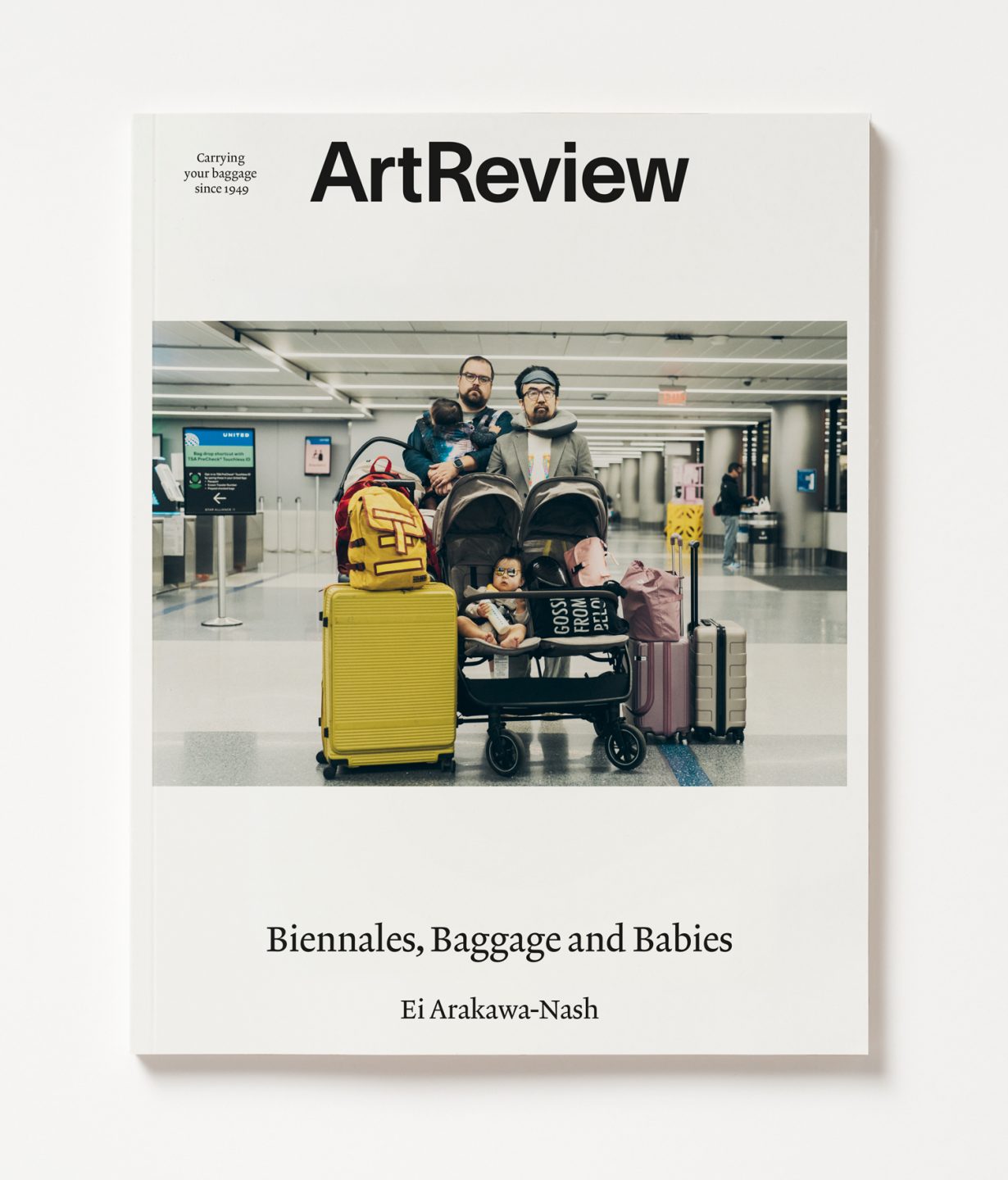
On the cover, Japanese-American performance artist Ei Arakawa-Nash poses with his husband and their twin babies. The care and unpredictability of babies form a central part of Arakawa-Nash’s collaborative performance installation at the Japanese Pavilion in Venice. ‘It’s very administrative to be a parent, but the babies always outperform the administration,’ he says in an interview with the editors of ArtReview’s new Japanese-language publication, Taro Nettleton and Noriko Yamakoshi. ‘This mirrors my participation in the Japan Pavilion.’
Arakawa-Nash’s plans include a collaboration with the neighbouring Korean Pavilion. Amid controversy over the Russian, Israeli and American pavilions, Oliver Basciano looks at how the Biennale has long embodied political tensions and reflected the state of the world. ‘The national pavilion at Venice’, Basciano writes, ‘has always been about propaganda and soft power.’
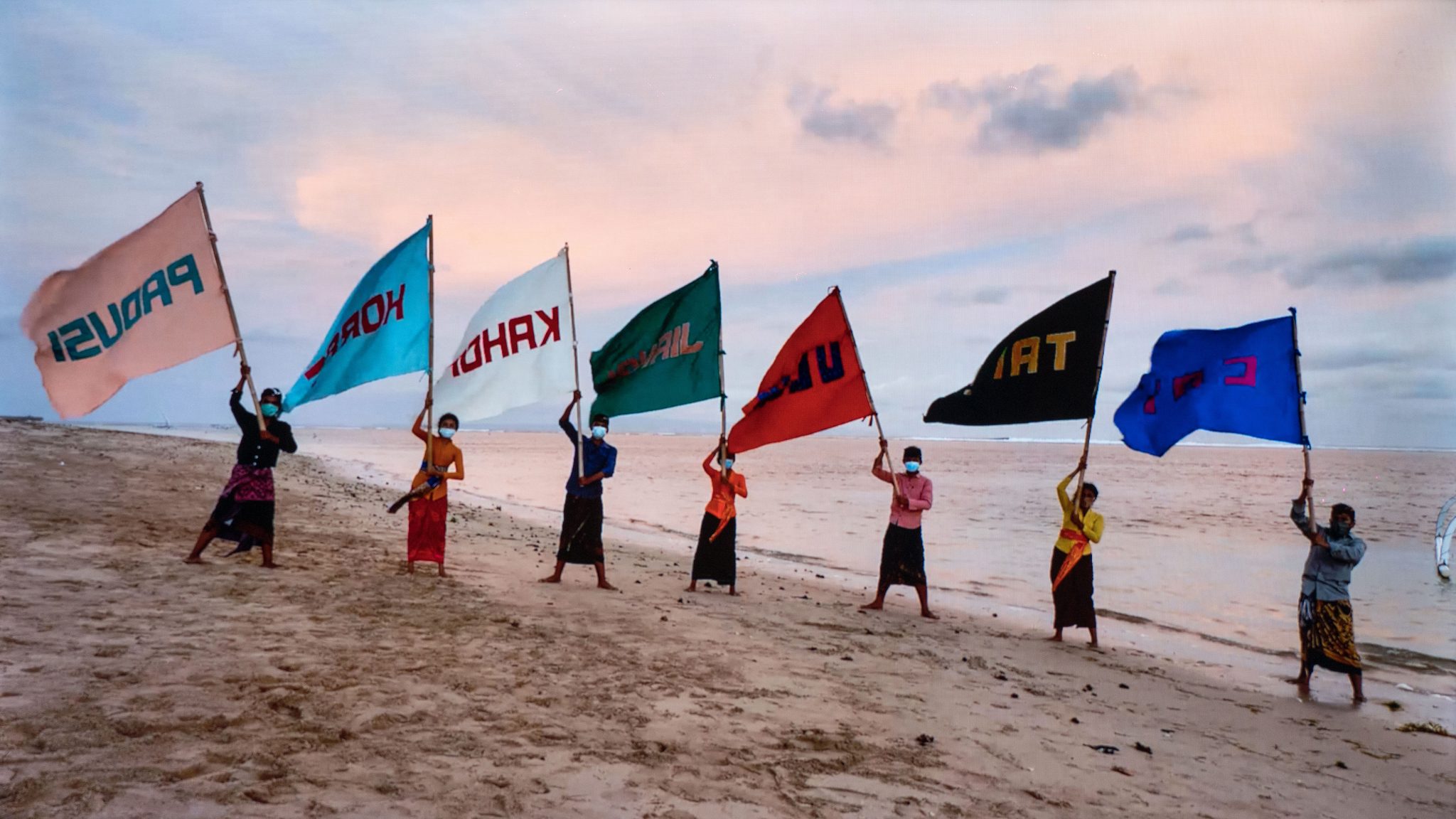
Max Crosbie-Jones looks at the animistic performances and videos of Tuguldur Yondonjamts, one of the artists representing Mongolia at the Biennale. Yondonjamts’s work – at times presenting as a snake, mosquito or crocodile, or comprising drawings that imagine how the saker falcon sees the Mongolian landscape – makes use of his homeland’s oral, musical and artistic traditions to create what Crosbie-Jones calls a ‘social commentary and arcane cross-species mystery’.
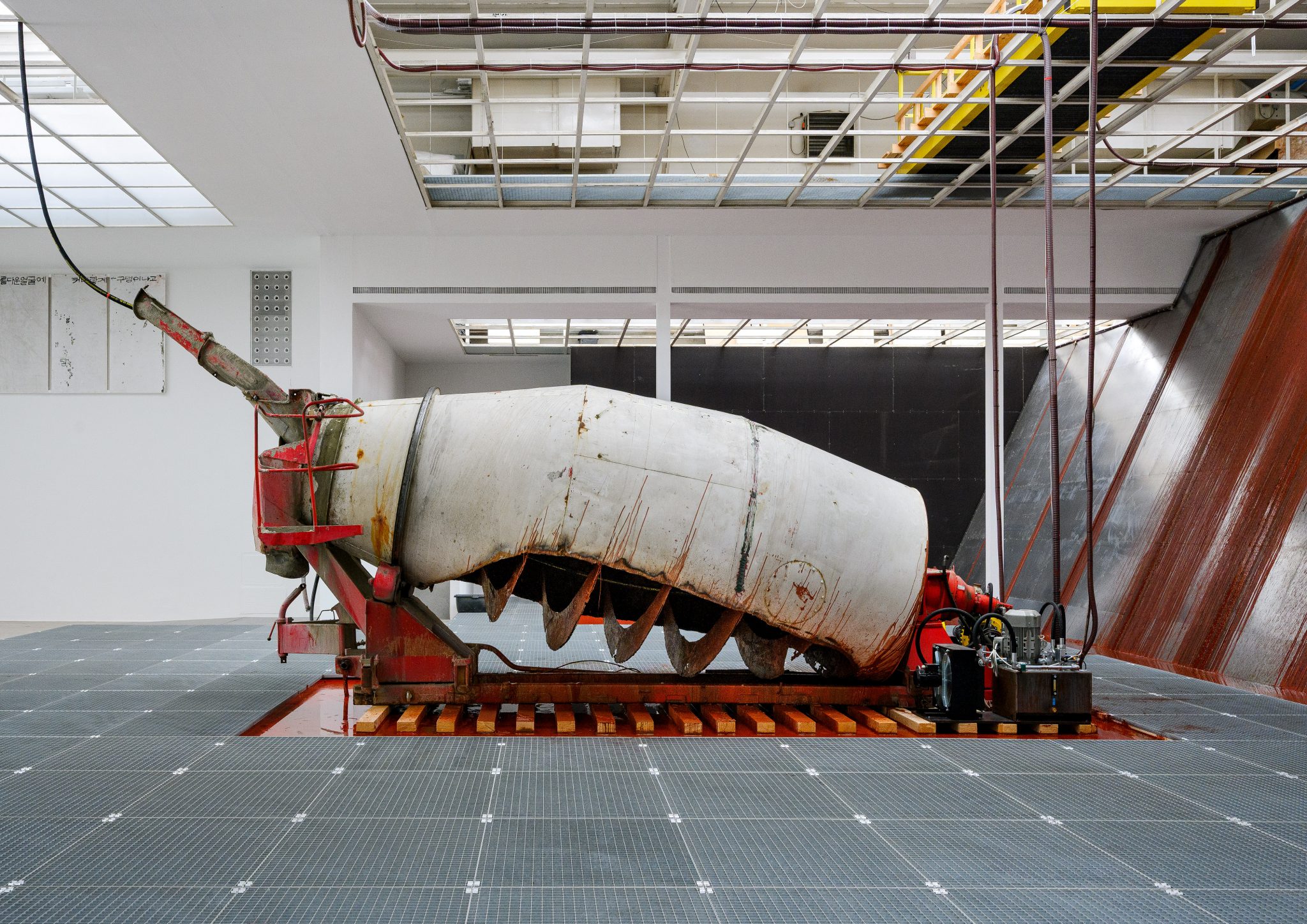
Venice Biennale artistic director Koyo Kouoh’s In Minor Keys, posthumously presented in the Giardini and Arsenale, will include the work of American artist Beverly Buchanan (1940–2015), who created paintings, sculptures and a series of deliberately eroding outdoor works. ‘With much of her work,’ writes Chris Fite-Wassilak, ‘Buchanan actively sought to create ruins, markers to quiet histories and what was unnoticed.’
Adeline Chia examines the pioneering performance, video and photography of Amanda Heng – ‘quieter works that engaged with the position of women in society’ – who will represent Singapore at the Biennale; while a two-person exhibition of Arthur Jafa and Richard Prince at the Fondazione Prada in Venice prompts Jenny Wu to consider their parallel practices of appropriation, and the matter of ‘who operates the camera, whose likeness is packaged and whose consent is needed for any of this to occur’.
Beyond the Biennale, however, are different considerations of power. Artist and journalist Zehra Doğan writes from Rojava about how artists are responding to and surviving in a war zone. ‘War is crude and ugly,’ she quotes the artist Diyar Hesso, ‘but resistance is a delicate act, and that is very artistic. To resist is an artistic struggle.’ For Doğan, ‘In a geography in which continuity is constantly interrupted, art is not representation. It is persistence.’
Also in this issue, David Terrien interviews filmmaker Amar Kanwar; Sam Jacob sees the future of the archive in a high-definition projection of Elvis; Jenny Wu pays a visit to Nancy Holt’s Sun Tunnels; Qingyuan Deng queries the framing of Lionel Wendt’s photos; and Zoé Samudzi praises art that doesn’t hold its tongue.
Plus reviews of the 82nd Whitney Biennial, the 25th Biennale of Sydney and the 15th Shanghai Biennale; Tarek Atoui at IMMA, Dublin; Marianna Simnett at the Max Ernst Museum Brühl des LVR; and Basel Abbas and Ruanne Abou-Rahme in Providence, RI; as well as Martin Herbert on Bruce Hainley’s new book of collected essays; and Chris Fite-Wassilak on the latest Yoko Ono biography.
***Subscribe now or get your copy from our online shop***