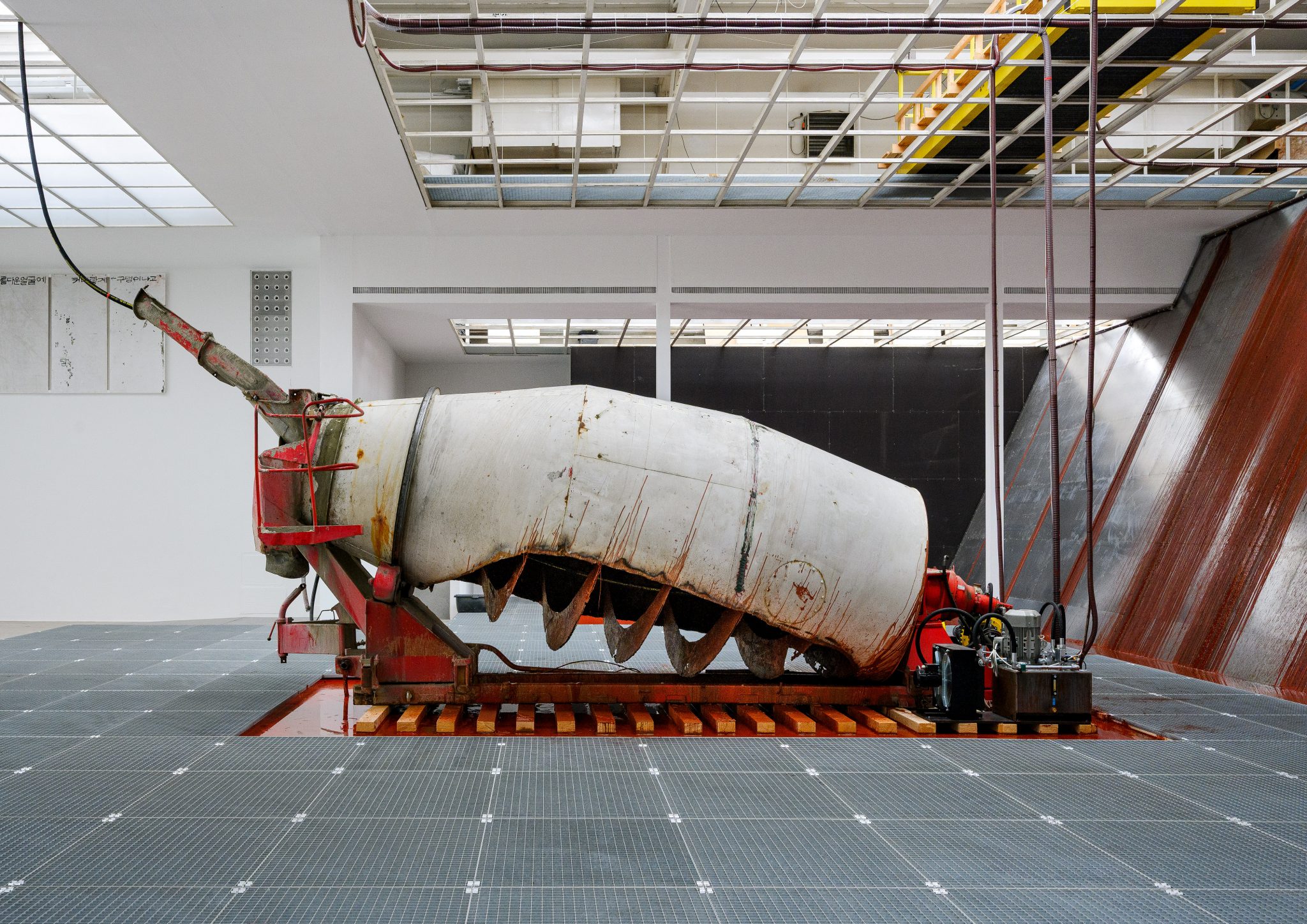
“I would say that I feel even more attuned to the cultural dimension of the Mediterranean region than to my Italian identity”
ArtReview sent a questionnaire to artists and curators exhibiting in and curating the various national pavilions of the 2026 Venice Biennale, the responses to which will be published daily in the leadup to and during the Venice Biennale, which runs from 9 May through 22 November.
Chiara Camoni is representing Italy; the pavilion is in the Arsenale.
Celebrating Visions. Versace partners with ArtReview to share stories from the 2026 Venice Biennale.
ArtReview Tell ArtReview what you plan to exhibit in Venice. What has influenced or inspired you?
Chiara Camoni Con te con tutto will be a single installation that encompasses the entire pavilion. The title is a declaration of openness to others, who are understood not only as other human beings but also as the entire world: everything beyond the self.
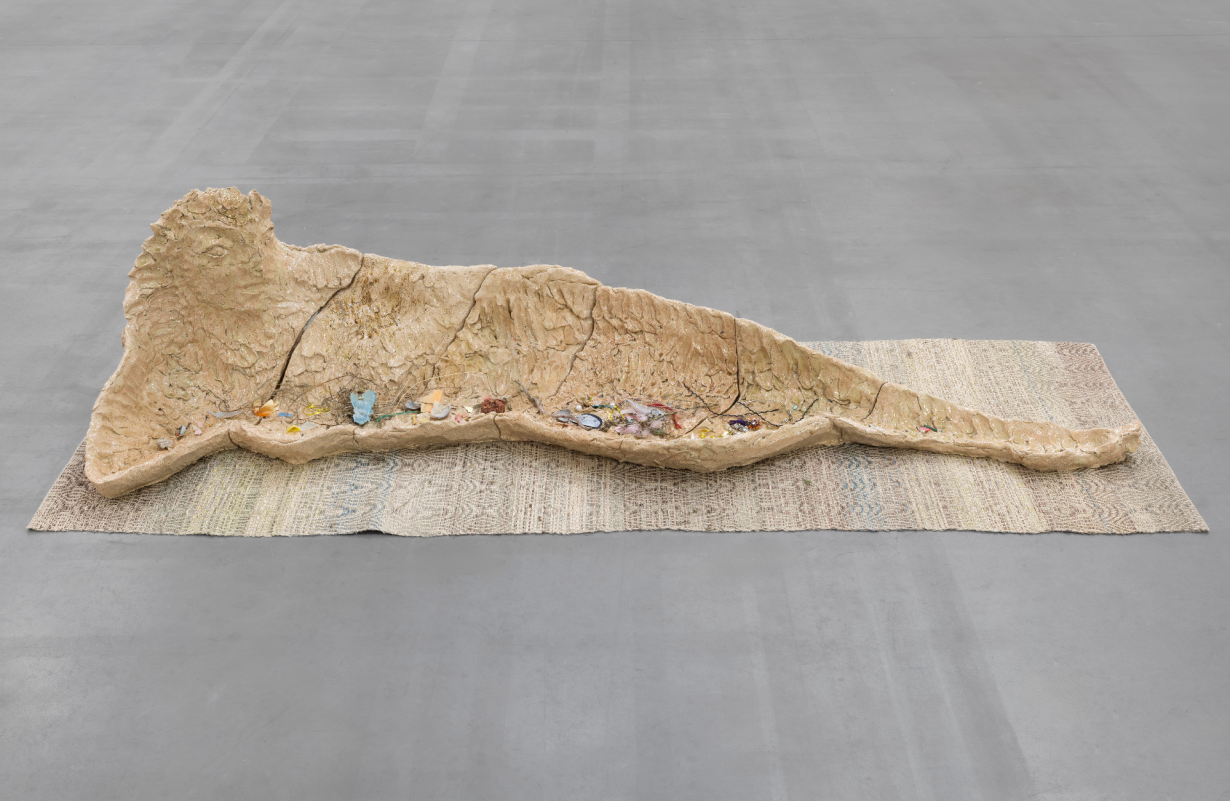
The exhibition is structured through a combination of existing works and new productions. Materials that have always been present in my practice, such as ceramic, stone and plant elements, are now joined by industrial waste, plastics and found objects.
The project also has a choral dimension, one that has increasingly characterised my work in recent years. Without any predetermined plan, the nature of the work has gradually allowed other people to become involved: first family members, neighbours and friends, and later schools, academies and organised groups within museum contexts. In this way, the concept of authorship expands; it no longer concerns only me but can also include others.
AR In what ways (if at all) does your work relate to the theme of the Biennale exhibition, In Minor Keys?
CC Without even realising it, we came to understand that our project was perfectly aligned with the curatorial proposal of Koyo Kouoh. It is likely that many people in this difficult historical moment resonate with the same profound needs.
The project begins with a reflection on sculpture, moves through the architectural dimension in order to welcome the collective body of visitors, and turns toward the everyday temporality evoked by the garden. I would say monumentality is not defined by heroic gestures or large scale but rather by reiteration, by the incisive presence of forms and their specific weight.
AR Why is the Venice Biennale still important, if at all?
CC La Biennale still stands today as a fundamental meeting point, a channel for dialogue and exchange for the international artistic community but also for a broader public. It offers the possibility to express positions, open debates and give rise to new visions of the world. Every edition has had a deep impression on me.
AR What role does a national pavilion play at a time of increasing confrontational nationalisms? Is it about expressing difference or commonality?
CC I want to believe that art, now and in the past, has the role of keeping spaces of speech and listening open and of becoming a vehicle for change, especially in times of heightened conflict.
AR Who, for you, is the most important artist (in any discipline) that your country has produced?
CC It’s impossible to answer this question! If I think of recent times and my own life, I might say Carla Lonzi, but she would be just the first name in a long genealogy.
AR What is something you want people to know about your nation that they might not know already?
CC Abroad, Italian contemporary art is often known only through a few artists who have gained significant international visibility. In reality, the Italian scene is far more complex, vibrant and diverse, and it deserves fuller representation and recognition.
AR Given that you are exhibiting in a national pavilion, is there something (a quality or an issue or attitude) that distinguishes the art of that nation from that of others? That makes it particular? Are there specific contexts that it responds to? Or do you think that art is a universal language that goes beyond social, political or geographic boundaries?
CC I feel a strong connection to history but even more so to the light and landscape that surround me. I would say that I feel even more attuned to the cultural dimension of the Mediterranean region than to my Italian identity. I am also convinced reaching and engaging with universal questions starts with one’s own situated personal experience.
AR What, other than art, are you looking forward to seeing – or doing – while you are in Venice?
CC After months of intense work in the studio, I want to let myself be carried by the flow of the city, see friends and enjoy the wonderful exhibitions that will surely be there. I want to celebrate!
AR Could you give us a brief overview of your average working day while creating your presentation in Venice?
CC I usually wake up quite early, so I wait for the rest of the team. We normally get started around 8am and finish by mid-afternoon. I’m lucky to work with a wonderful, diverse group, with people of different ages and backgrounds. We have so much fun together!
AR Can art really change the world?
CC Yes, of course.